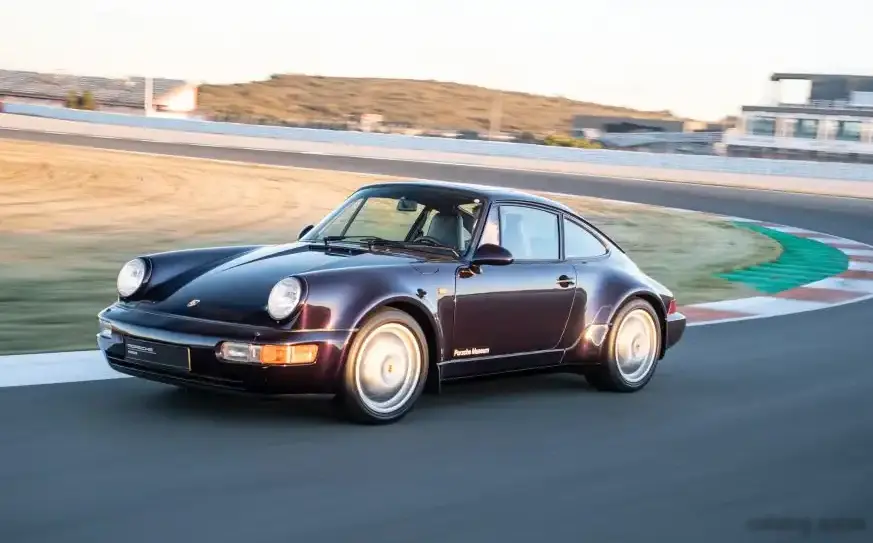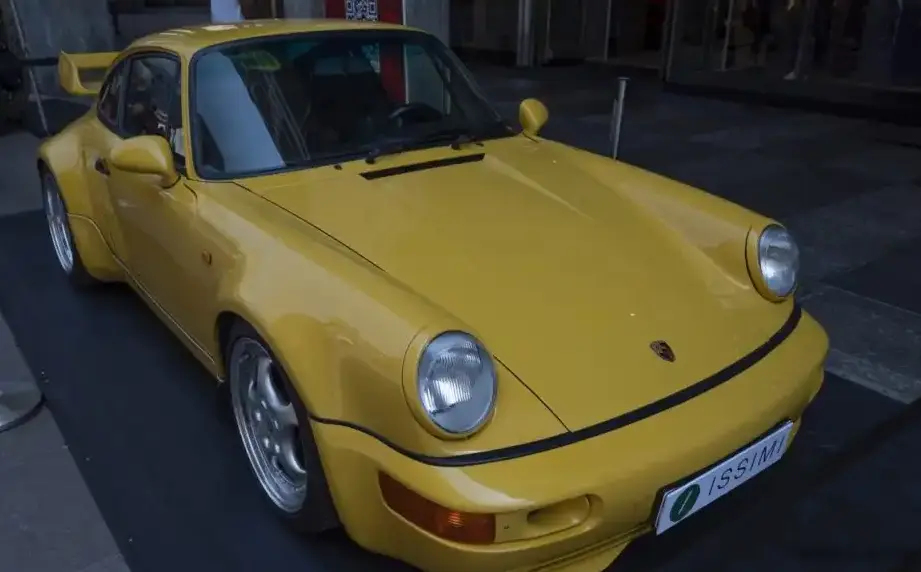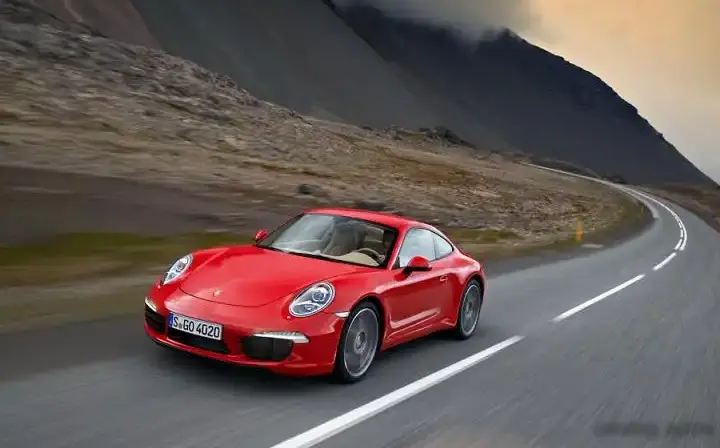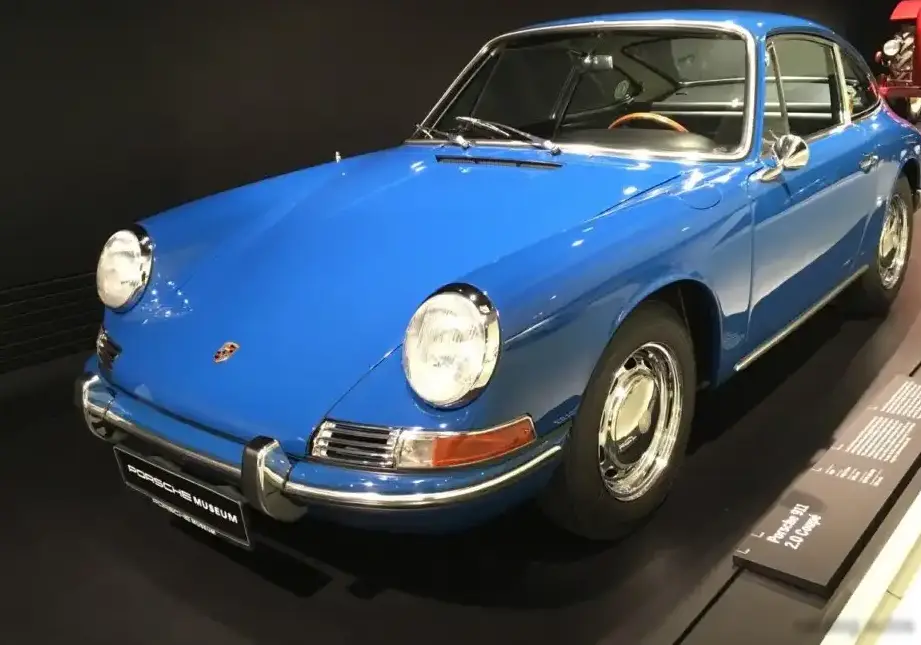
The Porsche 911 Coupe (F) 2.0 L, producing 130 horsepower, represents the foundational iteration of what would become an automotive icon. Produced between 1965 and 1968, this early 911 – internally designated as the 901 before a Peugeot naming conflict led to the 911 designation – established the core design principles and rear-engine, rear-wheel-drive layout that would define the model for decades. It served as the initial offering in the first generation (911 Coupe (F)) and laid the groundwork for the extensive range of 911 variants that followed. This model was crucial in establishing Porsche as a manufacturer of high-performance sports cars, particularly in the lucrative North American market.
Technical Specifications
| Brand | Porsche |
| Model | 911 |
| Generation | 911 Coupe (F) |
| Type (Engine) | 2.0 L (130 Hp) |
| Start of production | 1965 |
| End of production | 1968 |
| Powertrain Architecture | Internal Combustion engine |
| Body type | Coupe |
| Seats | 4 |
| Doors | 2 |
| Fuel Type | Petrol (Gasoline) |
| Weight-to-power ratio | 8.3 kg/Hp, 119.8 Hp/tonne |
| Weight-to-torque ratio | 6.2 kg/Nm, 160.4 Nm/tonne |
| Power | 130 Hp @ 6100 rpm |
| Power per litre | 65.3 Hp/l |
| Torque | 174 Nm @ 4200 rpm (128.34 lb.-ft. @ 4200 rpm) |
| Engine layout | Rear, Longitudinal |
| Engine Model/Code | 901.06 |
| Engine displacement | 1991 cm3 (121.5 cu. in.) |
| Number of cylinders | 6 |
| Engine configuration | Boxer |
| Cylinder Bore | 80 mm (3.15 in.) |
| Piston Stroke | 66 mm (2.6 in.) |
| Number of valves per cylinder | 2 |
| Fuel injection system | Carburettor |
| Engine aspiration | Naturally aspirated engine |
| Valvetrain | SOHC |
| Kerb Weight | 1085 kg (2392.02 lbs.) |
| Max. weight | 1365 kg (3009.31 lbs.) |
| Max load | 280 kg (617.29 lbs.) |
| Length | 4163 mm (163.9 in.) |
| Width | 1610 mm (63.39 in.) |
| Height | 1320 mm (51.97 in.) |
| Wheelbase | 2211 mm (87.05 in.) |
| Front track | 1337 mm (52.64 in.) |
| Rear (Back) track | 1317 mm (51.85 in.) |
| Minimum turning circle | 10.3 m (33.79 ft.) |
| Drivetrain Architecture | The Internal combustion engine (ICE) drives the rear wheels of the vehicle. |
| Drive wheel | Rear wheel drive |
| Number of gears and type of gearbox | 5 gears, manual transmission |
| Front suspension | Spring Strut, Wishbone |
| Rear suspension | Trailing arm |
| Front brakes | Disc |
| Rear brakes | Disc |
| Steering type | Steering rack and pinion |
| Wheel rims size | R15 |
Powertrain & Engine Architecture
The heart of the 911 Coupe (F) 2.0 L is the 901.06 engine, a 1991cc air-cooled, naturally aspirated flat-six (boxer) engine. This engine was a significant departure from Porsche’s previous 356, which utilized a four-cylinder engine. The boxer configuration, with opposing cylinders, provided a low center of gravity, contributing to the car’s handling characteristics. Fuel delivery was managed by three twin-choke Weber 40 IDA-3 carburetors, a relatively simple system for the time. The engine featured a single overhead camshaft (SOHC) operating two valves per cylinder. The engine’s longitudinal rear placement and rear-wheel-drive configuration were fundamental to the 911’s identity. The initial 2.0-liter engine produced 130 horsepower at 6,100 rpm and 174 Nm (128.34 lb-ft) of torque at 4,200 rpm. The engine was paired with a fully synchronized five-speed manual transmission, providing precise gear changes and contributing to the sporty driving experience.
Driving Characteristics
The 130 hp 2.0-liter 911 offered a spirited, albeit not overwhelming, driving experience. Acceleration was brisk, but the car’s relatively light weight (approximately 1085 kg or 2392 lbs) meant it felt nimble and responsive. The rear-engine layout, while contributing to traction, also introduced a unique handling characteristic – a tendency towards oversteer, particularly when pushing the car to its limits. Experienced drivers could exploit this characteristic for cornering agility, but it required respect and careful throttle control. Compared to later, more powerful 911 variants, the 2.0 L felt less urgent in its acceleration. The five-speed manual transmission offered well-spaced gear ratios, allowing the driver to keep the engine in its optimal power band. The steering, via a rack and pinion system, was direct and communicative, providing good feedback to the driver.
Equipment & Trim Levels
The early 911s were relatively spartan in terms of standard equipment, reflecting the car’s focus on performance. The interior featured simple, functional instrumentation, including a central tachometer – a nod to Porsche’s racing heritage. Seats were typically upholstered in vinyl or cloth. The dashboard was minimalist, with a focus on essential controls. Optional extras included leather upholstery, a Webasto heater, and a Blaupunkt radio. The 911 Coupe (F) was offered in a range of exterior colors, and buyers could specify various options to personalize their vehicle. The trim level was largely dictated by the options selected, as Porsche offered a high degree of customization even in the early years.
Chassis & Braking
The 911 Coupe (F) utilized a robust chassis with independent suspension all around. The front suspension employed a combination of spring struts and wishbones, while the rear suspension featured trailing arms and torsion bars. This suspension setup provided a good balance between ride comfort and handling precision. Braking was accomplished via disc brakes on all four wheels, a relatively advanced feature for a sports car of the era. The brakes were effective, but lacked the sophistication of modern anti-lock braking systems. The steering system was a rack and pinion design, providing precise and responsive steering feel. The car rode on 15-inch wheels, typically fitted with Dunlop or Pirelli tires.
Market Reception & Comparison
The 911 Coupe (F) 2.0 L was generally well-received by automotive critics, who praised its handling, performance, and distinctive design. However, some critics noted the car’s challenging handling characteristics, particularly its tendency towards oversteer. Compared to the later 911 variants, such as the 911S with its more powerful engine, the 2.0 L offered a more accessible entry point into the 911 range. It was also more affordable to maintain than the higher-performance models. Fuel economy was reasonable for a sports car of the era, and the engine proved to be relatively reliable. The 2.0L was often seen as the “base” 911, appealing to buyers who prioritized handling and driving enjoyment over outright speed.
Legacy
The Porsche 911 Coupe (F) 2.0 L holds a significant place in automotive history as the first iteration of a legendary sports car. The 901.06 engine, while relatively simple by modern standards, proved to be durable and reliable. Many examples of the early 911s are still on the road today, a testament to their build quality and engineering. In the used car market, the 2.0 L 911 is highly sought after by collectors and enthusiasts, particularly those who appreciate its historical significance and unique driving experience. Values have steadily increased in recent years, reflecting the growing demand for classic Porsche models. The early 911s established the core DNA of the 911, and their influence can still be seen in the current generation of the car.