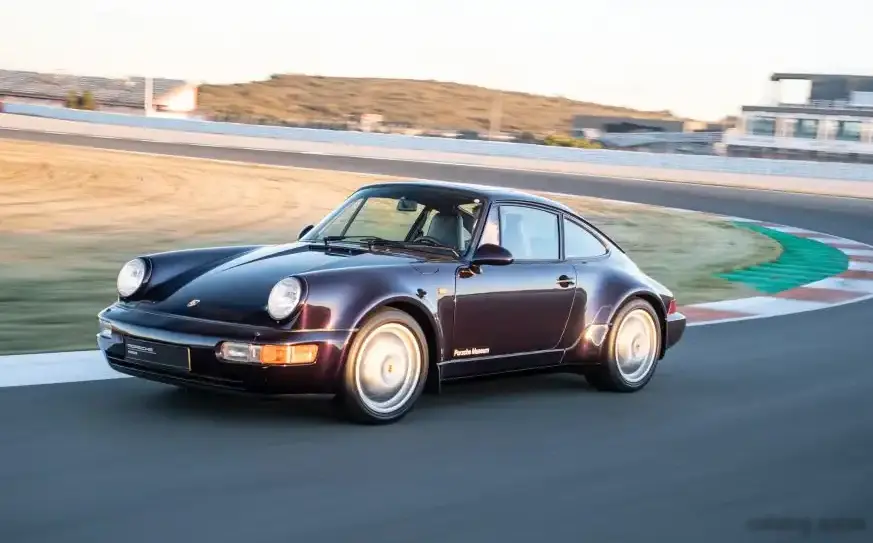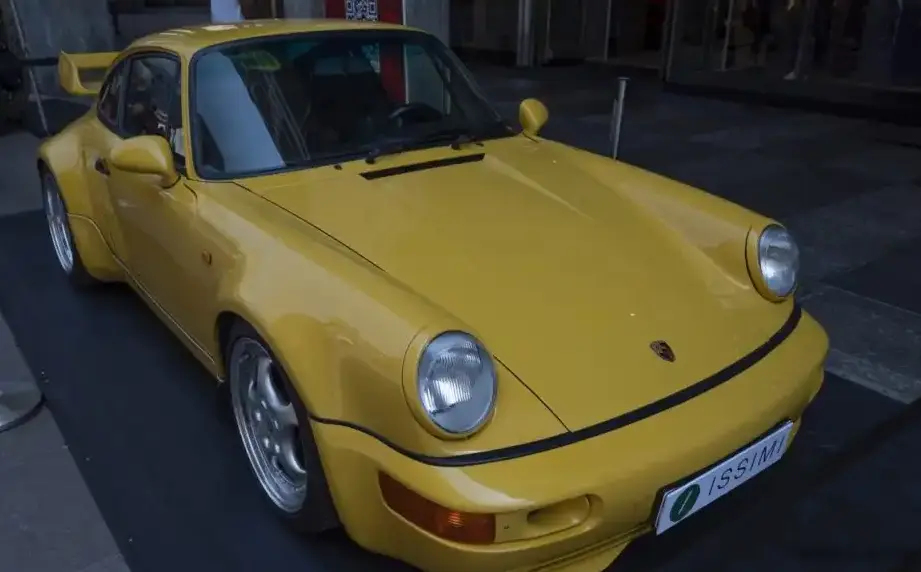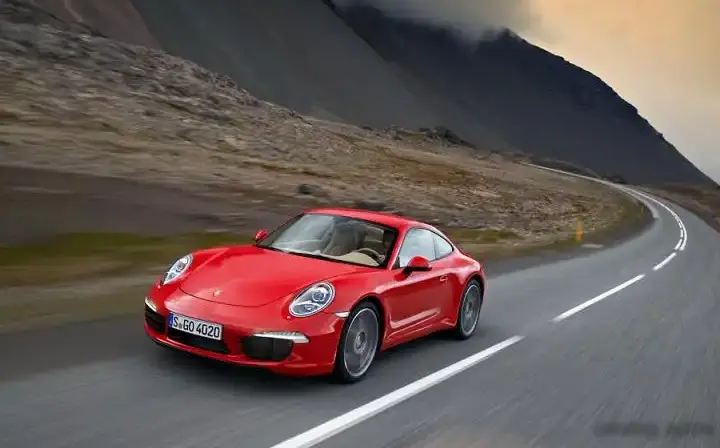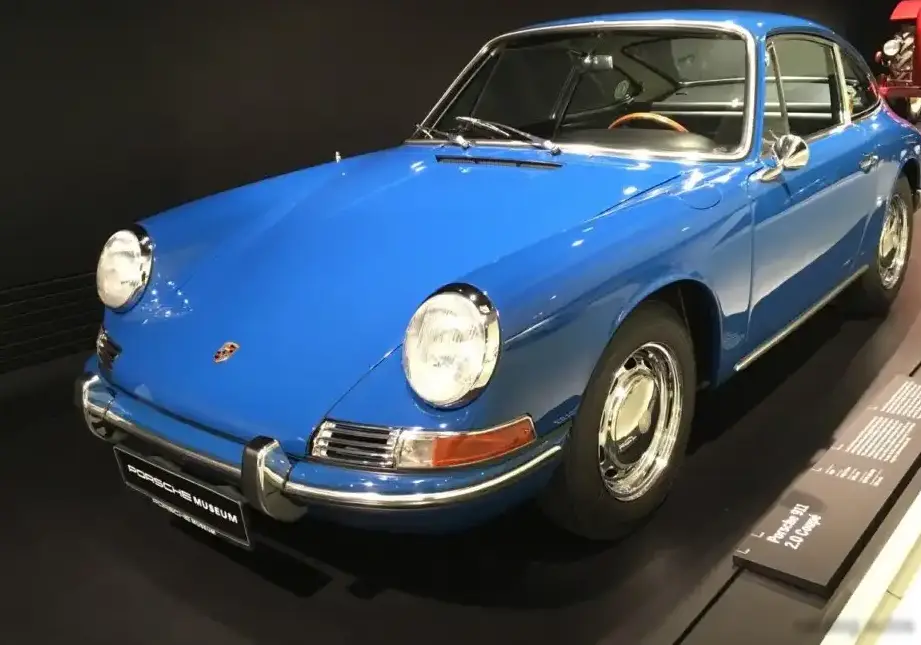
The Porsche 911 Coupe (F) 2.3 E (165 Hp) Sportomatic represents a pivotal point in the evolution of Porsche’s iconic sports car. Produced from 1972 to 1973, this variant occupied a middle ground within the ‘F’ series 911 lineup, offering a blend of performance and relative comfort through the adoption of Porsche’s then-novel Sportomatic automatic transmission. It was part of the initial wave of 911s to receive the 2.3-liter engine, a displacement increase intended to address concerns about power output in earlier models while adhering to increasingly stringent emissions regulations. This model is significant for being a transitional car, bridging the gap between the earlier, more raw 911s and the later, more refined iterations.
Technical Specifications
| Brand | Porsche |
| Model | 911 |
| Generation | 911 Coupe (F) |
| Type (Engine) | 2.3 E (165 Hp) Sportomatic |
| Start of production | 1972 |
| End of production | 1973 |
| Powertrain Architecture | Internal Combustion engine |
| Body type | Coupe |
| Seats | 4 |
| Doors | 2 |
| Fuel Type | Petrol (Gasoline) |
| Acceleration 0 – 100 km/h | 7.9 sec |
| Acceleration 0 – 62 mph | 7.9 sec |
| Acceleration 0 – 60 mph | 7.5 sec |
| Maximum speed | 220 km/h (136.7 mph) |
| Weight-to-power ratio | 6.5 kg/Hp, 153.5 Hp/tonne |
| Weight-to-torque ratio | 5.4 kg/Nm, 185.1 Nm/tonne |
| Power | 165 Hp @ 6200 rpm |
| Power per litre | 70.5 Hp/l |
| Torque | 199 Nm @ 4500 rpm (146.77 lb.-ft. @ 4500 rpm) |
| Maximum engine speed | 7100 rpm |
| Engine layout | Rear, Longitudinal |
| Engine Model/Code | 901.1, 911.1 |
| Engine displacement | 2341 cm3 (142.86 cu. in.) |
| Number of cylinders | 6 |
| Engine configuration | Boxer |
| Cylinder Bore | 84 mm (3.31 in.) |
| Piston Stroke | 70.4 mm (2.77 in.) |
| Compression ratio | 8:1 |
| Number of valves per cylinder | 2 |
| Fuel injection system | Multi-port manifold injection |
| Engine aspiration | Naturally aspirated engine |
| Valvetrain | SOHC |
| Engine oil capacity | 9 l (9.51 US qt | 7.92 UK qt) |
| Kerb Weight | 1075 kg (2369.97 lbs.) |
| Max. weight | 1400 kg (3086.47 lbs.) |
| Max load | 325 kg (716.5 lbs.) |
| Trunk (boot) space – maximum | 200 l (7.06 cu. ft.) |
| Fuel tank capacity | 62 l (16.38 US gal | 13.64 UK gal) |
| Permitted trailer load with brakes (12%) | 600 kg (1322.77 lbs.) |
| Permitted trailer load without brakes | 480 kg (1058.22 lbs.) |
| Length | 4163 mm (163.9 in.) |
| Width | 1610 mm (63.39 in.) |
| Height | 1320 mm (51.97 in.) |
| Wheelbase | 2271 mm (89.41 in.) |
| Front track | 1372 mm (54.02 in.) |
| Rear (Back) track | 1354 mm (53.31 in.) |
| Ride height (ground clearance) | 150 mm (5.91 in.) |
| Minimum turning circle (turning diameter) | 10.7 m (35.1 ft.) |
| Drivetrain Architecture | The Internal combustion engine (ICE) drives the rear wheels of the vehicle. |
| Drive wheel | Rear wheel drive |
| Number of gears and type of gearbox | 4 gears, automatic transmission Sportomatic |
| Front suspension | Spring Strut, Wishbone |
| Rear suspension | Trailing arm |
| Front brakes | Ventilated discs, 235 mm |
| Rear brakes | Ventilated discs, 244 mm |
| Steering type | Steering rack and pinion |
| Tires size | 185/70 R15 |
| Wheel rims size | 6J x 15 |
Powertrain & Engine Architecture
The heart of the 911 E was the 2.3-liter, air-cooled, flat-six engine. Designated with engine codes 901.1 and 911.1, this engine featured a bore of 84mm and a stroke of 70.4mm, resulting in a displacement of 2341cc. It utilized a single overhead camshaft (SOHC) design operating two valves per cylinder. Crucially, the ‘E’ designation signified the use of Bosch mechanical fuel injection – a multi-port system that improved upon the carburetors used in earlier 911s, offering better fuel atomization and increased power output. The 165 horsepower peak was achieved at 6200 rpm, with 199 Nm (146.77 lb-ft) of torque available at 4500 rpm. The engine’s longitudinal rear-mounted layout was a defining characteristic of the 911, contributing to its unique handling dynamics. Paired with this engine was Porsche’s Sportomatic transmission, a four-speed semi-automatic. It wasn’t a fully automatic in the modern sense; it used a torque converter and a clutch that was automatically engaged and disengaged, offering a degree of driver control not found in traditional automatics.
Driving Characteristics
The 2.3 E Sportomatic offered a different driving experience compared to its manual transmission siblings and the higher-output 911 S. While the manual versions provided a more direct and engaging connection to the engine, the Sportomatic prioritized ease of use. Acceleration from 0-60 mph was quoted around 7.5-7.9 seconds, respectable for the era but slower than the manual 911E. The Sportomatic’s gear ratios were optimized for comfortable cruising, and the torque converter smoothed out shifts, making it a more relaxed car to drive in traffic. However, the automatic operation did introduce a slight loss of power and responsiveness. The Sportomatic was favored by drivers who wanted the 911 experience without the complexity of a manual gearbox, particularly in urban environments.
Equipment & Trim Levels
The 911 E Sportomatic was positioned as a mid-range offering within the 911 lineup. Standard equipment included comfortable cloth upholstery, a leather-wrapped steering wheel, and a basic AM/FM radio. The interior was relatively spartan by modern standards, but focused on functionality and driver engagement. Optional extras included power windows, a sunroof, and upgraded sound systems. Exterior options included a variety of paint colors, and buyers could specify various wheel trims. The ‘E’ trim generally received a slightly more refined interior finish compared to the base 911T.
Chassis & Braking
The 911 E Sportomatic utilized a torsion bar suspension system, providing a good balance between ride comfort and handling. The front suspension featured spring struts and wishbones, while the rear employed trailing arms. Braking duties were handled by ventilated disc brakes on all four wheels, with the front discs measuring 235mm and the rear discs at 244mm. Steering was via a rack and pinion system, offering precise control. The car’s relatively light curb weight of 1075 kg (2369.97 lbs) contributed to its nimble handling characteristics.
Market Reception & Comparison
The 911 E Sportomatic was generally well-received by automotive critics. It was praised for its comfortable ride, refined engine, and ease of use. However, some reviewers noted that the Sportomatic transmission lacked the engagement of a manual gearbox and slightly diminished performance. Compared to the 911 T, the ‘E’ offered more power and a more sophisticated driving experience. Compared to the 911 S, it provided a more relaxed and comfortable ride, albeit with less outright performance. Fuel economy was reasonable for the time, averaging around 18-22 mpg.
Legacy
The Porsche 911 Coupe (F) 2.3 E (165 Hp) Sportomatic remains a desirable classic car today. The 2.3-liter engine is considered relatively robust, although regular maintenance is essential. The Sportomatic transmission, while not as sought-after as the manual, is generally reliable if properly maintained. These cars are appreciated for their blend of classic Porsche styling, comfortable driving characteristics, and relative affordability compared to higher-performance 911 variants. In the used car market, well-maintained examples command a premium, and the model continues to be a popular choice for enthusiasts seeking a classic Porsche experience.