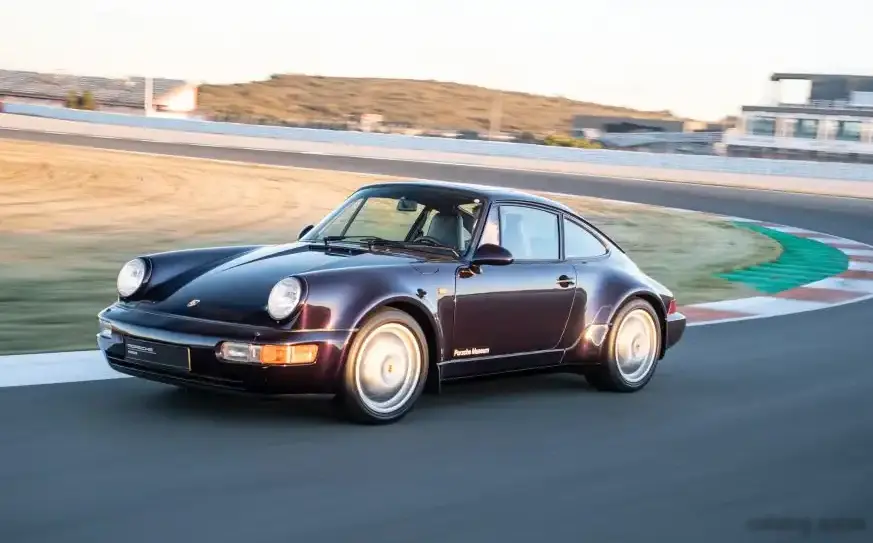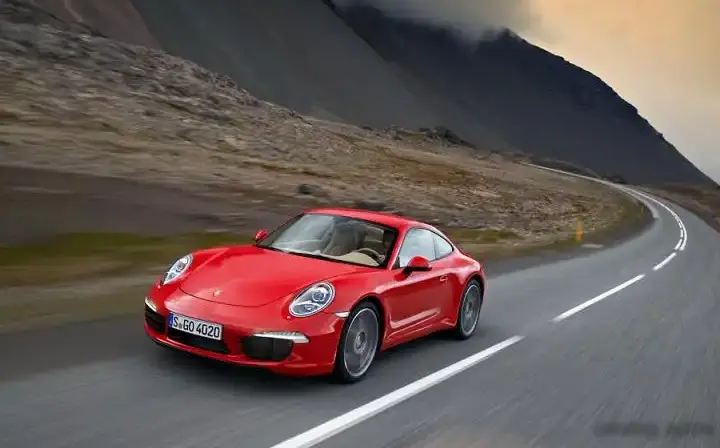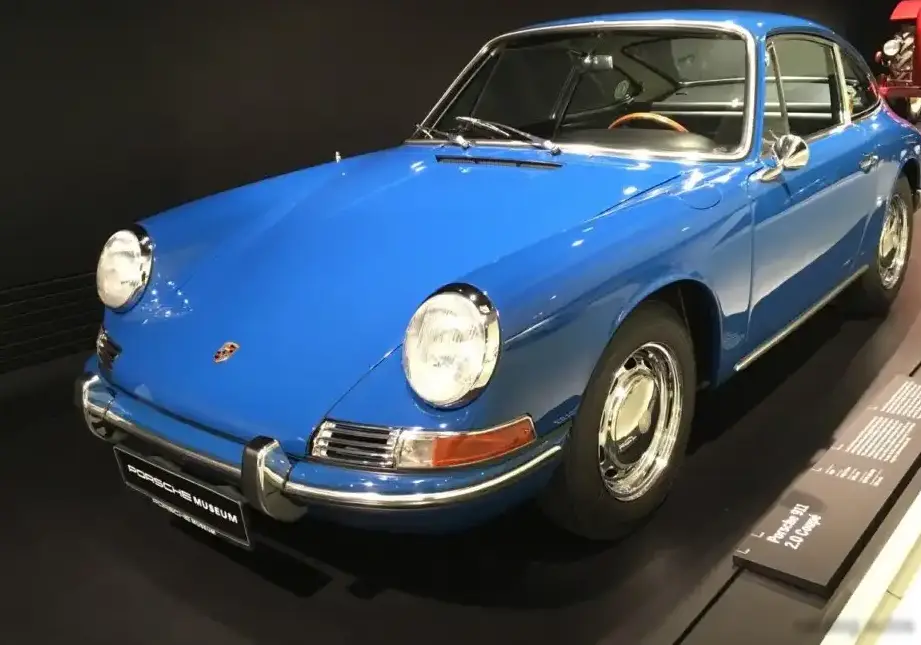
The Porsche 911 Coupe (F) 2.3 T, produced between 1972 and 1973, represents a pivotal moment in the evolution of Porsche’s iconic sports car. Falling within the early “G-Series” (911/930) generation, this variant was characterized by its 2.3-liter turbocharged flat-six engine, delivering 130 horsepower. It served as an entry point into the 911 range, offering a taste of the model’s performance potential while remaining relatively accessible. The “F” designation refers to the internal production series, and the “T” denoted a Touring model, emphasizing a balance between performance and everyday usability. This model was a key step in establishing the 911’s reputation for engineering excellence and driving enjoyment.
Technical Specifications
| Brand | Porsche |
| Model | 911 |
| Generation | 911 Coupe (F) |
| Type (Engine) | 2.3 T (130 Hp) |
| Start of production | 1972 |
| End of production | 1973 |
| Powertrain Architecture | Internal Combustion engine |
| Body type | Coupe |
| Seats | 4 |
| Doors | 2 |
| Fuel Type | Petrol (Gasoline) |
| Acceleration 0 – 100 km/h | 9.5 sec |
| Acceleration 0 – 62 mph | 9.5 sec |
| Acceleration 0 – 60 mph | 9 sec |
| Maximum speed | 205 km/h (127.38 mph) |
| Weight-to-power ratio | 8.1 kg/Hp, 123.8 Hp/tonne |
| Weight-to-torque ratio | 5.4 kg/Nm, 186.7 Nm/tonne |
| Power | 130 Hp @ 5600 rpm |
| Power per litre | 55.5 Hp/l |
| Torque | 196 Nm @ 4000 rpm (144.56 lb.-ft. @ 4000 rpm) |
| Engine layout | Rear, Longitudinal |
| Engine Model/Code | 901.1, 911.1 |
| Engine displacement | 2341 cm3 (142.86 cu. in.) |
| Number of cylinders | 6 |
| Engine configuration | Boxer |
| Cylinder Bore | 84 mm (3.31 in.) |
| Piston Stroke | 70.4 mm (2.77 in.) |
| Compression ratio | 7.5:1 |
| Number of valves per cylinder | 2 |
| Engine aspiration | Turbocharger |
| Engine oil capacity | 9 l (9.51 US qt | 7.92 UK qt) |
| Kerb Weight | 1050 kg (2314.85 lbs.) |
| Max. weight | 1400 kg (3086.47 lbs.) |
| Max load | 350 kg (771.62 lbs.) |
| Trunk (boot) space – maximum | 500 l (17.66 cu. ft.) |
| Fuel tank capacity | 62 l (16.38 US gal | 13.64 UK gal) |
| Permitted trailer load with brakes (12%) | 600 kg (1322.77 lbs.) |
| Permitted trailer load without brakes | 480 kg (1058.22 lbs.) |
| Length | 4147 mm (163.27 in.) |
| Width | 1610 mm (63.39 in.) |
| Height | 1320 mm (51.97 in.) |
| Wheelbase | 2271 mm (89.41 in.) |
| Front track | 1360 mm (53.54 in.) |
| Rear (Back) track | 1342 mm (52.83 in.) |
| Front overhang | 884 mm (34.8 in.) |
| Rear overhang | 992 mm (39.06 in.) |
| Minimum turning circle (turning diameter) | 10.7 m (35.1 ft.) |
| Drivetrain Architecture | The Internal combustion engine (ICE) drives the rear wheels of the vehicle. |
| Drive wheel | Rear wheel drive |
| Number of gears and type of gearbox | 4 gears, manual transmission |
| Front suspension | Spring Strut, Wishbone |
| Rear suspension | Trailing arm |
| Front brakes | Ventilated discs, 282 mm |
| Rear brakes | Ventilated discs, 290 mm |
| Steering type | Steering rack and pinion |
| Tires size | 185/70 R15 |
| Wheel rims size | 6J x 15; 7J x 15 |
Powertrain & Engine Architecture
The heart of the 911 Coupe (F) 2.3 T is its 2.3-liter, air-cooled, horizontally-opposed six-cylinder engine. This “flat-six” configuration, a Porsche hallmark, provides a low center of gravity, contributing to the car’s renowned handling. The engine, designated as the 901.1 and later 911.1, featured a single overhead camshaft per cylinder bank, operating two valves per cylinder. The introduction of turbocharging was a significant development, boosting power output to 130 hp. This was achieved through a KKK turbocharger, which forced more air into the engine, increasing combustion efficiency. Fuel delivery was managed by Bosch mechanical fuel injection, a sophisticated system for its time. The engine’s longitudinal rear-engine layout, coupled with a four-speed manual transmission, delivered power to the rear wheels. This configuration, while providing excellent traction, also presented unique handling characteristics that required driver skill and awareness.
Driving Characteristics
The 911 2.3 T offered a distinct driving experience. While the 130 hp output wasn’t overwhelming by modern standards, it was sufficient to provide brisk acceleration and a top speed of 127 mph. The turbocharger introduced a degree of turbo lag, meaning there was a slight delay between pressing the accelerator and feeling the full power delivery. However, once the turbo spooled up, the engine provided a noticeable surge of torque. The four-speed manual transmission offered precise shifts, and the rear-engine layout contributed to a unique weight distribution that demanded respect from the driver. Compared to the later, more powerful 911 variants, the 2.3 T prioritized usability and a more linear power delivery. It was less demanding to drive at lower speeds and more forgiving than the higher-performance models.
Equipment & Trim Levels
As a “Touring” model, the 911 2.3 T was equipped with a relatively comfortable interior. Standard features included cloth upholstery, basic instrumentation, and a four-spoke steering wheel. While not lavishly appointed, the interior was functional and focused on the driving experience. Optional extras included leather upholstery, a sunroof, and upgraded sound systems. The exterior was typically finished in a range of solid colors, with chrome trim accents. The 911 2.3 T occupied a middle ground in the 911 lineup, offering a balance between performance and comfort. It was positioned above the base 911T, which had a naturally aspirated engine, and below the more expensive and powerful 911S.
Chassis & Braking
The 911 2.3 T utilized a robust chassis with independent suspension on all four wheels. The front suspension featured spring struts and wishbones, while the rear employed a trailing arm design. This setup provided a good balance between ride comfort and handling precision. Braking duties were handled by ventilated disc brakes on all four wheels, offering adequate stopping power for the car’s weight and performance. The steering was a rack-and-pinion system, providing precise and responsive control. The car’s relatively light weight of around 2315 lbs contributed to its agility and handling prowess.
Market Reception & Comparison
The 911 2.3 T was generally well-received by automotive critics. It was praised for its handling, braking, and overall driving experience. The turbocharger was seen as a significant upgrade, providing a noticeable boost in performance. However, some critics noted the turbo lag and the car’s demanding handling characteristics. Compared to the naturally aspirated 911T, the 2.3 T offered a more exciting driving experience. Compared to the 911S, it was less expensive and slightly less powerful, making it a more accessible option for a wider range of buyers. Fuel economy was reasonable for a sports car of its era, and reliability was generally good, although maintenance could be costly.
Legacy
The Porsche 911 Coupe (F) 2.3 T holds a significant place in the 911’s history. It was one of the first 911s to feature turbocharging, paving the way for the iconic 911 Turbo models that followed. Today, these cars are highly sought after by collectors and enthusiasts. The 2.3 T’s relatively low production numbers and its historical significance contribute to its value. While maintenance can be challenging due to the car’s age and complexity, a well-maintained 911 2.3 T offers a unique and rewarding driving experience. The engine, while requiring careful attention, is known for its durability and potential for restoration. The 911 2.3 T remains a testament to Porsche’s engineering prowess and its commitment to creating iconic sports cars.