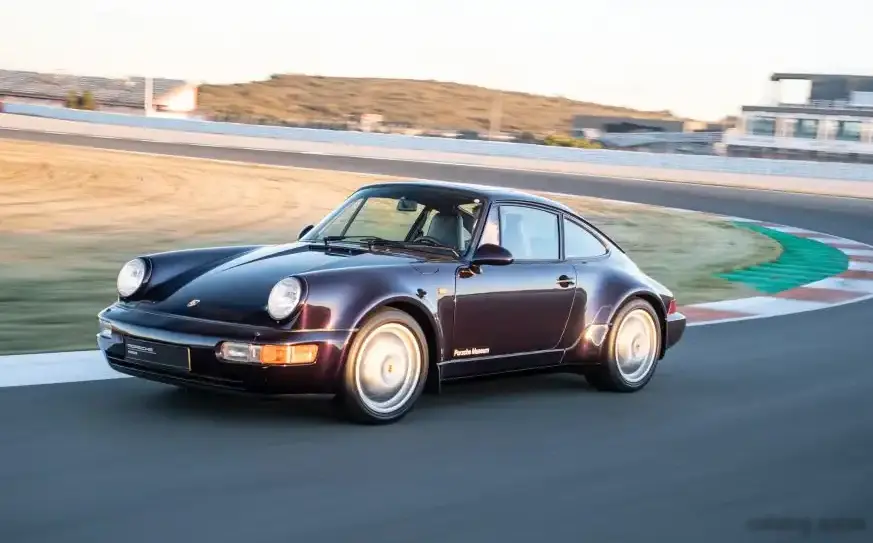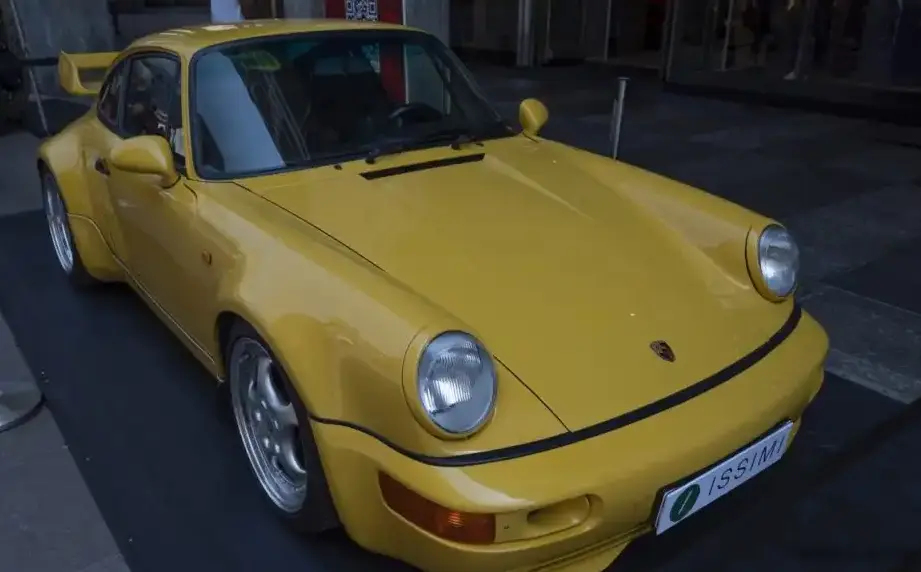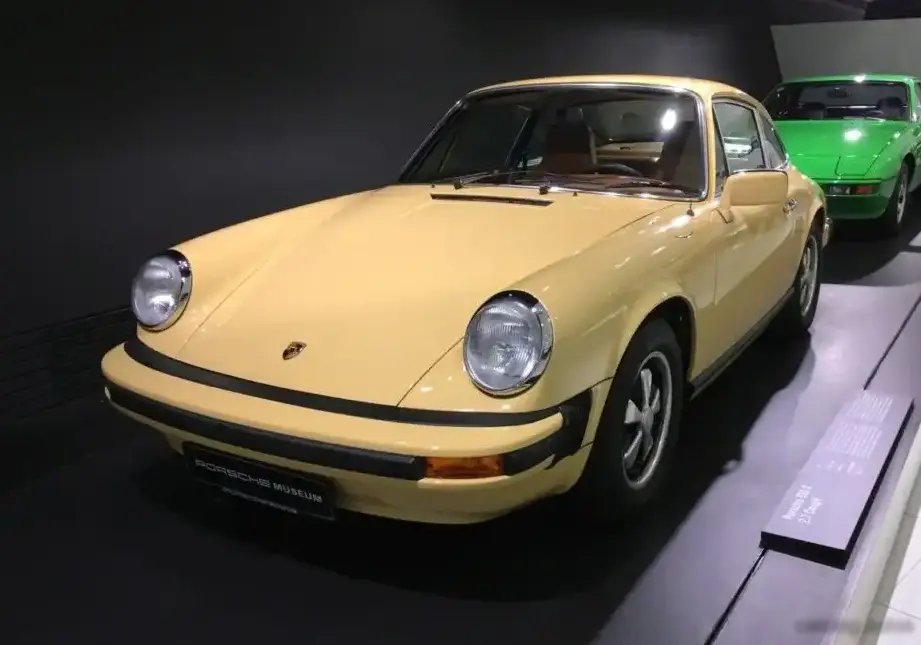
The Porsche 911 Coupe (G) 2.7 S, produced from 1974 to 1975, represents a pivotal moment in the evolution of Porsche’s iconic sports car. Falling within the “G-Series” (1974-1989) of the 911, the 2.7 S was positioned as the high-performance variant of the newly enlarged 2.7-liter engine family. It bridged the gap between the standard 911 and the more exotic 911 Turbo, offering a compelling blend of performance and relative usability. This model marked a significant step forward in terms of engine displacement and refinement, addressing criticisms of the earlier 2.4-liter models while retaining the classic 911 driving experience. The 2.7 S was a key component in solidifying the 911’s reputation as a world-class sports car, particularly in the North American market where larger displacement engines were highly valued.
Technical Specifications
| Brand | Porsche |
| Model | 911 |
| Generation | 911 Coupe (G) |
| Type (Engine) | 2.7 S (175 Hp) |
| Start of production | 1974 |
| End of production | 1975 |
| Powertrain Architecture | Internal Combustion engine |
| Body type | Coupe |
| Seats | 4 |
| Doors | 2 |
| Fuel consumption (combined) | 13-15 l/100 km (18.1 – 15.7 US mpg, 21.7 – 18.8 UK mpg, 7.7 – 6.7 km/l) |
| Fuel Type | Petrol (Gasoline) |
| Acceleration 0 – 100 km/h | 7.6 sec |
| Acceleration 0 – 62 mph | 7.6 sec |
| Acceleration 0 – 60 mph | 7.2 sec |
| Maximum speed | 225 km/h (139.81 mph) |
| Weight-to-power ratio | 6.1 kg/Hp, 163.6 Hp/tonne |
| Weight-to-torque ratio | 4.6 kg/Nm, 219.6 Nm/tonne |
| Power | 175 Hp @ 5800 rpm |
| Power per litre | 65.1 Hp/l |
| Torque | 235 Nm @ 4000 rpm (173.33 lb.-ft. @ 4000 rpm) |
| Engine layout | Rear, Longitudinal |
| Engine Model/Code | 911.42 |
| Engine displacement | 2687 cm3 (163.97 cu. in.) |
| Number of cylinders | 6 |
| Engine configuration | Boxer |
| Cylinder Bore | 90 mm (3.54 in.) |
| Piston Stroke | 70.4 mm (2.77 in.) |
| Compression ratio | 8.5:1 |
| Number of valves per cylinder | 2 |
| Fuel injection system | Multi-port manifold injection |
| Engine aspiration | Naturally aspirated engine |
| Valvetrain | SOHC |
| Kerb Weight | 1070 kg (2358.95 lbs.) |
| Max. weight | 1350 kg (2976.24 lbs.) |
| Max load | 280 kg (617.29 lbs.) |
| Permitted trailer load with brakes (12%) | 800 kg (1763.7 lbs.) |
| Permitted trailer load without brakes | 480 kg (1058.22 lbs.) |
| Length | 4291 mm (168.94 in.) |
| Width | 1610 mm (63.39 in.) |
| Height | 1320 mm (51.97 in.) |
| Wheelbase | 2271 mm (89.41 in.) |
| Front track | 1372-1398 mm (54.02 – 55.04 in.) |
| Rear (Back) track | 1357-1408 mm (53.43 – 55.43 in.) |
| Front overhang | 932 mm (36.69 in.) |
| Rear overhang | 1088 mm (42.83 in.) |
| Drivetrain Architecture | Rear wheel drive |
| Number of gears and type of gearbox | 5 gears, manual transmission |
| Front suspension | Spring Strut, Wishbone |
| Rear suspension | Trailing arm |
| Front brakes | Disc |
| Rear brakes | Disc |
| Steering type | Steering rack and pinion |
| Tires size | Front wheel tires: 185/70 R15, Rear wheel tires: 185/70 R15; 215/60 R15 |
| Wheel rims size | Front wheel rims: 6J x 15; 7J x 15, Rear wheel rims: 6J x 15; 7J x 15; 8J x 15 |
Powertrain & Engine Architecture
The heart of the 911 2.7 S is its 2687cc air-cooled, horizontally-opposed six-cylinder “boxer” engine, designated the 911.42. This engine represented a significant increase in displacement over the previous 2.4-liter units, contributing to a noticeable boost in power and torque. The 2.7 S featured Bosch K-Jetronic mechanical fuel injection, a sophisticated system for its time that improved fuel atomization and delivery compared to earlier carbureted setups. This system, combined with a higher compression ratio of 8.5:1, helped unlock the engine’s potential. The engine utilized a single overhead camshaft (SOHC) design operating two valves per cylinder. The engine’s longitudinal rear-engine layout, a defining characteristic of the 911, contributed to its unique handling characteristics. The standard transmission for the 2.7 S was a robust five-speed manual gearbox, optimized for the engine’s powerband.
Driving Characteristics
The 911 2.7 S offered a distinctly engaging driving experience. With 175 horsepower and 173 lb-ft of torque, it provided brisk acceleration – 0 to 60 mph in around 7.2 seconds – and a top speed of approximately 140 mph. The five-speed manual transmission allowed drivers to fully exploit the engine’s powerband, with well-spaced gear ratios. Compared to the standard 2.7-liter 911, the ‘S’ model benefited from a more responsive throttle and a higher redline. While not as raw or visceral as earlier 911s, the 2.7 S offered a more refined and accessible driving experience, making it a more comfortable choice for everyday use. The rear-engine layout and relatively soft suspension (by modern standards) contributed to a unique handling balance, requiring a skilled driver to fully master.
Equipment & Trim Levels
The 2.7 S was relatively well-equipped for a sports car of its era, though options were plentiful. Standard features included comfortable cloth seats, a leather-wrapped steering wheel, and a basic stereo system. The interior was functional and driver-focused, with a minimalist dashboard layout. Optional extras included power windows, a sunroof, air conditioning, and upgraded sound systems. The ‘S’ designation also included some cosmetic enhancements, such as a front spoiler and distinctive “S” badging. Interior trim options allowed for some personalization, with various colors and materials available.
Chassis & Braking
The 911 2.7 S utilized a robust chassis with independent suspension all around. The front suspension featured spring struts and wishbones, while the rear employed a trailing arm setup. Disc brakes were fitted on all four wheels, providing adequate stopping power for the car’s performance capabilities. Steering was via a rack and pinion system, offering precise control. The 2.7 S typically rode on 6J or 7J x 15 inch wheels, shod with 185/70 R15 tires. Rear track width varied slightly depending on the specific configuration.
Market Reception & Comparison
The 911 2.7 S was generally well-received by automotive critics, who praised its improved performance, refinement, and handling. It was seen as a significant step forward for the 911, addressing many of the criticisms leveled at earlier models. Compared to the standard 2.7-liter 911, the ‘S’ offered a noticeable performance advantage, justifying its higher price tag. It also provided a more accessible alternative to the more expensive and demanding 911 Turbo. Fuel economy, while not a primary concern for sports car buyers, was reasonable for the time, averaging around 18-22 mpg. Reliability was generally good, though the air-cooled engine required regular maintenance.
Legacy
The Porsche 911 2.7 S remains a highly sought-after classic car today. Its combination of performance, style, and relative usability has made it a favorite among collectors and enthusiasts. The 2.7 S powertrain is known for its durability, though regular maintenance is essential to keep it running smoothly. Values for well-maintained examples have steadily increased in recent years, reflecting the car’s enduring appeal and historical significance. The 2.7 S represents a sweet spot in the 911 lineage, offering a classic Porsche driving experience without the extreme demands of earlier or later models. It stands as a testament to Porsche’s commitment to engineering excellence and its enduring legacy in the world of sports cars.