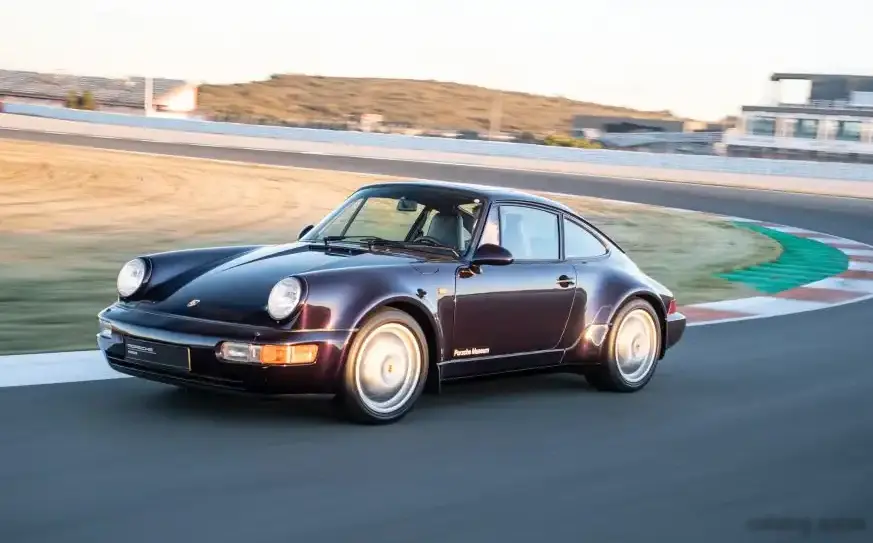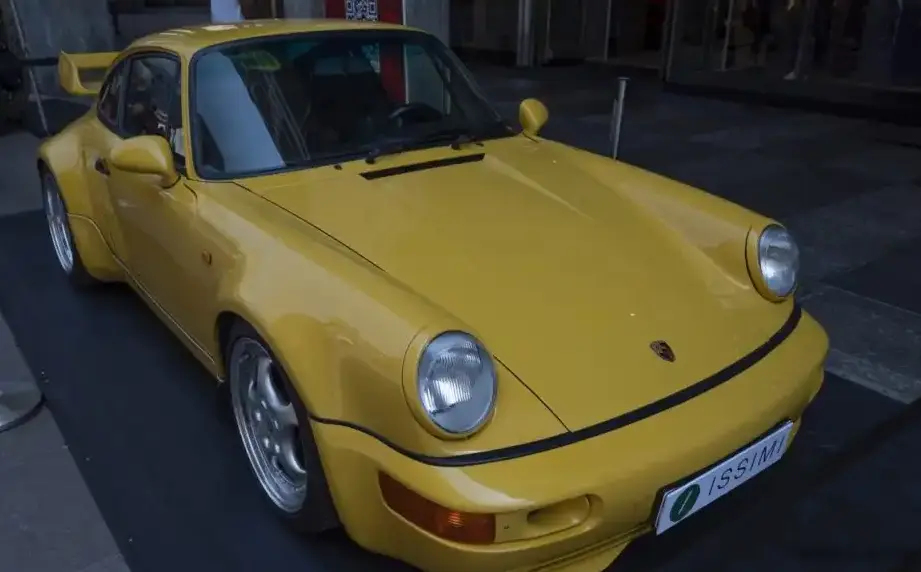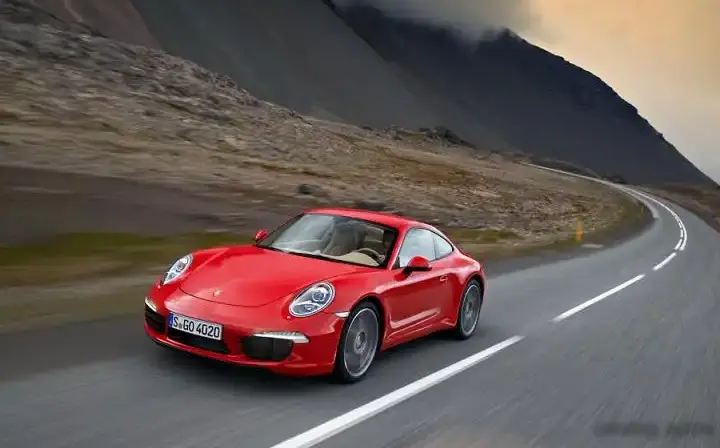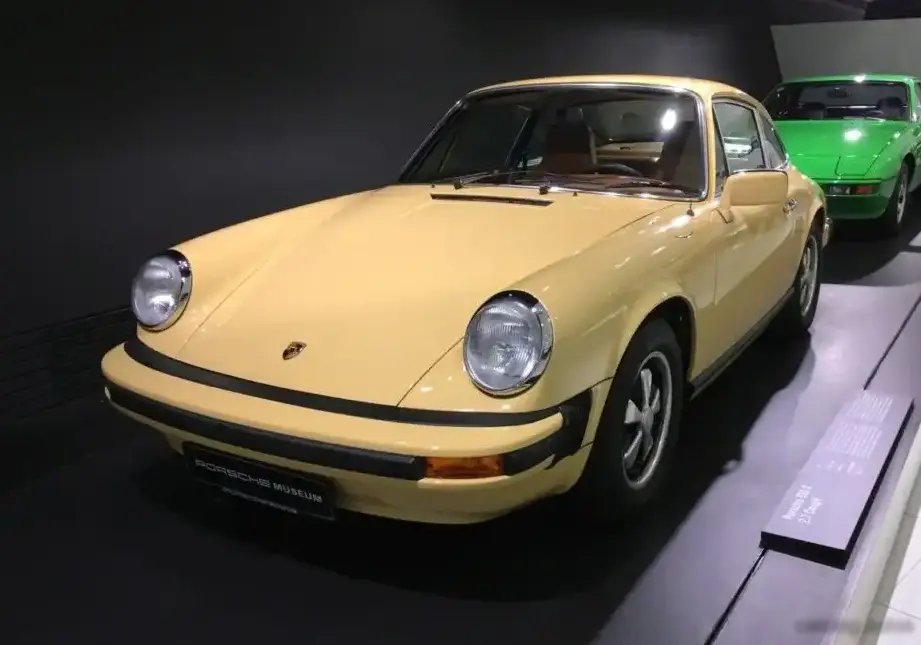
The Porsche 911 Coupe (G) 3.2 Carrera CAT, produced from 1984 to 1987, represents a pivotal moment in the iconic 911’s evolution. This variant, powered by a 3.2-liter flat-six engine producing 207 horsepower, was the final iteration of the original, long-running G-Series (1974-1989). It bridged the gap between the earlier, more raw 911s and the technologically advanced 964 generation, offering a compelling blend of classic Porsche feel and improved performance. The “CAT” designation refers to the catalytic converter, mandated in many markets during this period to meet increasingly stringent emissions regulations. This model served as the mainstream, readily available 911, positioned above the base Carrera but below the more focused and expensive M30 and Turbo models.
Technical Specifications
| Brand | Porsche |
| Model | 911 |
| Generation | 911 Coupe (G) |
| Type (Engine) | 3.2 Carrera CAT (207 Hp) |
| Start of production | 1984 |
| End of production | 1987 |
| Powertrain Architecture | Internal Combustion engine |
| Body type | Coupe |
| Seats | 4 |
| Doors | 2 |
| Fuel consumption (economy) – urban | 15.5 l/100 km (15.2 US mpg, 18.2 UK mpg, 6.5 km/l) |
| Fuel consumption (economy) – extra urban | 7.9 l/100 km (29.8 US mpg, 35.8 UK mpg, 12.7 km/l) |
| Fuel Type | Petrol (Gasoline) |
| Acceleration 0 – 100 km/h | 6.5 sec |
| Acceleration 0 – 62 mph | 6.5 sec |
| Acceleration 0 – 60 mph | 6.2 sec |
| Maximum speed | 235 km/h (146.02 mph) |
| Weight-to-power ratio | 5.8 kg/Hp, 171.1 Hp/tonne |
| Weight-to-torque ratio | 4.6 kg/Nm, 216.5 Nm/tonne |
| Power | 207 Hp @ 5900 rpm |
| Power per litre | 65.4 Hp/l |
| Torque | 262 Nm @ 4800 rpm (193.24 lb.-ft. @ 4800 rpm) |
| Engine layout | Rear, Longitudinal |
| Engine Model/Code | 930.21 |
| Engine displacement | 3164 cm3 (193.08 cu. in.) |
| Number of cylinders | 6 |
| Engine configuration | Boxer |
| Cylinder Bore | 95 mm (3.74 in.) |
| Piston Stroke | 74.4 mm (2.93 in.) |
| Compression ratio | 9.5:1 |
| Number of valves per cylinder | 2 |
| Fuel injection system | Multi-port manifold injection |
| Engine aspiration | Naturally aspirated engine |
| Valvetrain | SOHC |
| Engine oil capacity | 13 l (13.74 US qt | 11.44 UK qt) |
| Kerb Weight | 1210 kg (2667.59 lbs.) |
| Max. weight | 1530 kg (3373.07 lbs.) |
| Max load | 320 kg (705.48 lbs.) |
| Fuel tank capacity | 85 l (22.45 US gal | 18.7 UK gal) |
| Length | 4291 mm (168.94 in.) |
| Width | 1652 mm (65.04 in.) |
| Height | 1320 mm (51.97 in.) |
| Wheelbase | 2272 mm (89.45 in.) |
| Front track | 1372 mm (54.02 in.) |
| Rear (Back) track | 1380 mm (54.33 in.) |
| Ride height (ground clearance) | 130 mm (5.12 in.) |
| Minimum turning circle (turning diameter) | 10.95 m (35.93 ft.) |
| Drivetrain Architecture | The Internal combustion engine (ICE) drives the rear wheels of the vehicle. |
| Drive wheel | Rear wheel drive |
| Number of gears and type of gearbox | 5 gears, manual transmission |
| Front suspension | Spring Strut, Wishbone |
| Rear suspension | Trailing arm |
| Front brakes | Ventilated discs |
| Rear brakes | Ventilated discs |
| Steering type | Steering rack and pinion |
| Tires size | Front wheel tires: 185/70 R15 Rear wheel tires: 215/60 R15 |
| Wheel rims size | Front wheel rims: 6J x 15 Rear wheel rims: 7J x 15 |
Powertrain & Engine Architecture
The heart of the 3.2 Carrera CAT is the 930.21 engine, a 3.2-liter air-cooled flat-six. This engine represented a significant upgrade over the earlier 3.0-liter versions, offering increased displacement and improved torque. The engine utilizes a Bosch K-Jetronic fuel injection system, a mechanical system known for its reliability and consistent fuel delivery. The single overhead camshaft (SOHC) design, while relatively simple, proved durable and effective. The engine’s boxer configuration, with horizontally opposed cylinders, contributes to a low center of gravity, enhancing handling. The 3.2-liter engine produced 207 hp at 5900 rpm and 193 lb-ft of torque at 4800 rpm. This power was delivered to the rear wheels through a robust five-speed manual transmission, the standard offering for this model. While an automatic transmission was available, it was less common and generally considered to diminish the driving experience.
Driving Characteristics
The 3.2 Carrera CAT offered a distinctly Porsche driving experience. The rear-engine layout and relatively light weight (around 2668 lbs) contributed to a unique balance and responsiveness. Acceleration from 0 to 60 mph took approximately 6.2 seconds, and the car could reach a top speed of 146 mph. Compared to the earlier 3.0-liter Carreras, the 3.2 offered noticeably improved torque, making it more tractable in everyday driving. While not as brutally fast as the 911 Turbo, the 3.2 Carrera provided a satisfying level of performance for spirited driving. The manual transmission offered precise shifts, and the steering provided excellent feedback. The car’s handling was predictable, though it required respect and a skilled driver to exploit its full potential.
Equipment & Trim Levels
The 3.2 Carrera CAT came reasonably well-equipped, though options were plentiful. Standard features included leatherette upholstery, power windows, and a basic sound system. Optional extras included full leather interiors, air conditioning, a sunroof, and upgraded audio systems. The interior design was functional and understated, reflecting the Porsche ethos of prioritizing driving experience over lavish luxury. The dashboard layout was clean and straightforward, with clearly marked gauges providing essential information. The 3.2 Carrera CAT was available in a range of exterior colors, and buyers could customize their cars with various options to suit their preferences.
Chassis & Braking
The 911’s chassis remained largely unchanged from previous G-Series models. It featured a torsion bar suspension system, which provided a good balance of ride comfort and handling. The front suspension utilized spring struts and wishbones, while the rear suspension employed trailing arms. Braking duties were handled by ventilated disc brakes on all four wheels, providing ample stopping power. The steering system was a rack-and-pinion setup, offering precise and responsive steering feel. The car rode on 15-inch wheels, with 185/70 R15 tires at the front and 215/60 R15 tires at the rear.
Market Reception & Comparison
The 3.2 Carrera CAT was well-received by automotive critics and enthusiasts alike. It was praised for its improved performance, refined handling, and overall usability. Compared to the earlier 3.0-liter Carreras, the 3.2 offered a more civilized driving experience without sacrificing the core 911 character. It was also considered a more reliable and easier-to-maintain alternative to the high-strung Turbo models. Fuel economy was reasonable for a sports car of its era, averaging around 18 mpg in mixed driving. However, the 3.2 Carrera CAT was not inexpensive, and its price positioned it as a premium sports car.
Legacy
The Porsche 911 Coupe (G) 3.2 Carrera CAT holds a significant place in Porsche history. It represents the culmination of years of development of the original 911 formula and served as a bridge to the next generation. Today, these cars are highly sought after by collectors and enthusiasts. The 3.2-liter engine is known for its durability and relatively straightforward maintenance. Well-maintained examples command strong prices in the used car market. The 3.2 Carrera CAT remains a testament to Porsche’s commitment to engineering excellence and its enduring passion for creating iconic sports cars.