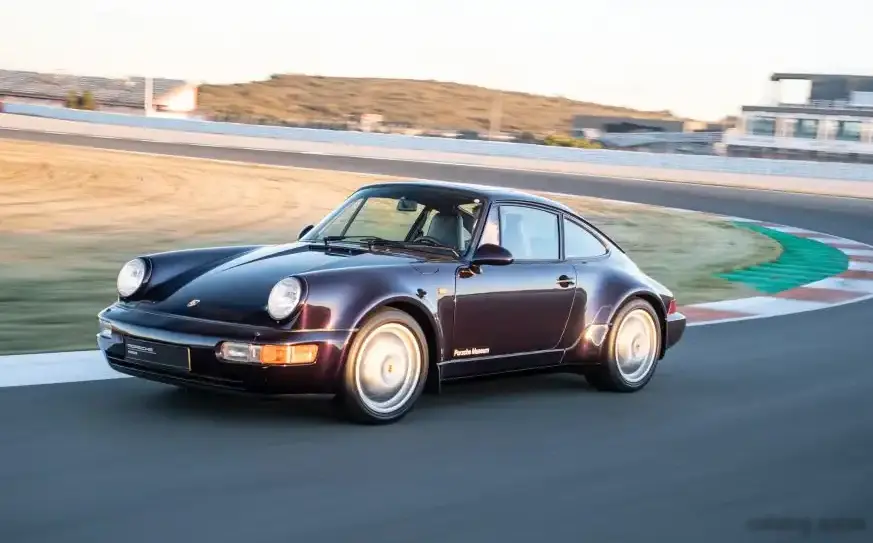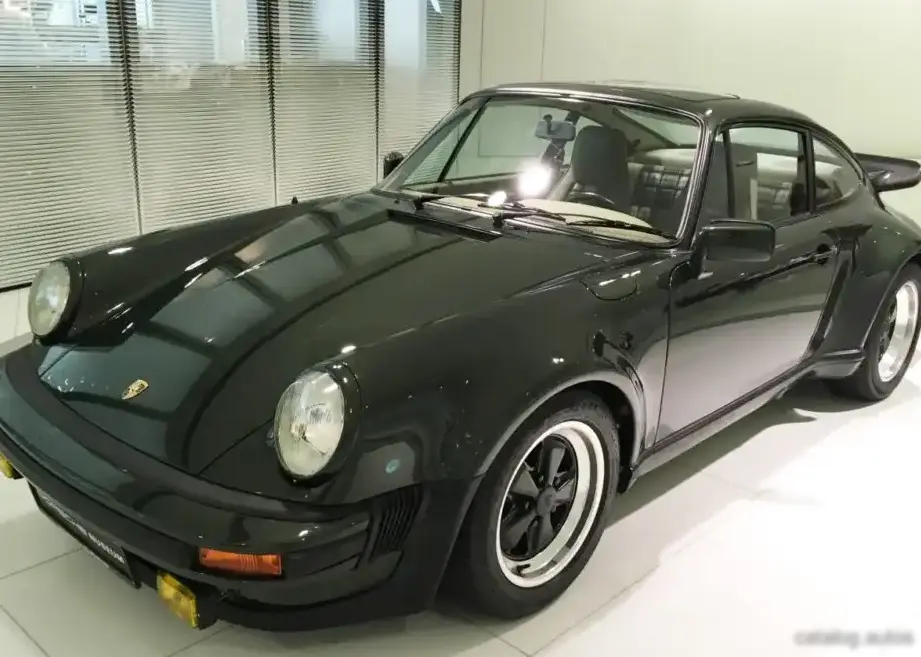
The Porsche 911 Coupe (Type 930) 3.0 Turbo Carrera, produced from 1975 to 1977, represents a pivotal moment in the evolution of Porsche’s iconic sports car. This model was the first 911 to receive forced induction, marking Porsche’s entry into the turbocharged performance arena. It was built upon the 911/930 platform, and served as a technological demonstrator, paving the way for future turbocharged 911 variants. The 3.0 Turbo Carrera was positioned as the flagship performance model within the 911 range, offering a significant step up in power and exclusivity compared to the standard 911 models.
Technical Specifications
| Brand | Porsche |
| Model | 911 |
| Generation | 911 Coupe (Type 930) |
| Type (Engine) | 3.0 Turbo Carrera (245 Hp) |
| Start of production | 1975 |
| End of production | 1977 |
| Powertrain Architecture | Internal Combustion engine |
| Body type | Coupe |
| Seats | 4 |
| Doors | 2 |
| Fuel consumption (combined) | 14-18 l/100 km (16.8 – 13.1 US mpg, 20.2 – 15.7 UK mpg, 7.1 – 5.6 km/l) |
| Fuel Type | Petrol (Gasoline) |
| Acceleration 0 – 100 km/h | 5.5 sec |
| Acceleration 0 – 62 mph | 5.5 sec |
| Acceleration 0 – 60 mph | 5.2 sec |
| Maximum speed | 250 km/h (155.34 mph) |
| Weight-to-power ratio | 4.9 kg/Hp, 205 Hp/tonne |
| Weight-to-torque ratio | 3.5 kg/Nm, 287 Nm/tonne |
| Power | 245 Hp @ 5500 rpm |
| Power per litre | 81.9 Hp/l |
| Torque | 343 Nm @ 4000 rpm (252.98 lb.-ft. @ 4000 rpm) |
| Maximum engine speed | 7000 rpm |
| Engine layout | Rear, Longitudinal |
| Engine Model/Code | 930.51 |
| Engine displacement | 2993 cm3 (182.64 cu. in.) |
| Number of cylinders | 6 |
| Engine configuration | Boxer |
| Cylinder Bore | 95 mm (3.74 in.) |
| Piston Stroke | 70.4 mm (2.77 in.) |
| Compression ratio | 6.5:1 |
| Number of valves per cylinder | 2 |
| Fuel injection system | Multi-port manifold injection |
| Engine aspiration | Turbocharger |
| Valvetrain | SOHC |
| Engine oil capacity | 10 l (10.57 US qt | 8.8 UK qt) |
| Kerb Weight | 1195 kg (2634.52 lbs.) |
| Max. weight | 1525 kg (3362.05 lbs.) |
| Max load | 330 kg (727.53 lbs.) |
| Fuel tank capacity | 80 l (21.13 US gal | 17.6 UK gal) |
| Max. roof load | 35 kg (77.16 lbs.) |
| Length | 4291 mm (168.94 in.) |
| Width | 1775 mm (69.88 in.) |
| Height | 1320 mm (51.97 in.) |
| Wheelbase | 2272 mm (89.45 in.) |
| Front track | 1438 mm (56.61 in.) |
| Rear (Back) track | 1511 mm (59.49 in.) |
| Ride height (ground clearance) | 120 mm (4.72 in.) |
| Drivetrain Architecture | Rear wheel drive |
| Number of gears and type of gearbox | 4 gears, manual transmission |
| Front suspension | Spring Strut, Wishbone |
| Rear suspension | Trailing arm |
| Front brakes | Ventilated discs, 282.5 mm |
| Rear brakes | Ventilated discs, 290 mm |
| Steering type | Steering rack and pinion |
| Front wheel tires | 205/50 R15; 185/70 R15 |
| Rear wheel tires | 225/50 R5, 215/60 R15 |
| Front wheel rims | 7J x 15 |
| Rear wheel rims | 8J x 15 |
Powertrain & Engine Architecture
The heart of the 930 is its 2.993-liter, air-cooled, flat-six engine, designated the 930.51. This engine builds upon the existing 911 engine architecture but incorporates a KKK turbocharger and intercooler to significantly boost power output. The engine utilizes a single overhead camshaft (SOHC) design with two valves per cylinder. Fuel delivery is managed by Bosch K-Jetronic mechanical fuel injection, a system known for its precision and reliability. The turbocharger provides approximately 0.8 bar (11.6 psi) of boost. The engine’s 6.5:1 compression ratio was lowered compared to naturally aspirated 911s to accommodate the turbocharging. The 930 was exclusively offered with a four-speed manual transmission, designed to handle the increased torque. This transmission featured a robust construction to withstand the stresses of the turbocharged engine.
Driving Characteristics
The 3.0 Turbo Carrera offered a dramatically different driving experience compared to other 911 variants of the time. The turbocharger introduces a noticeable lag, meaning there’s a slight delay between pressing the accelerator and feeling the full surge of power. However, once the turbo spools up, the acceleration is exhilarating. The car could sprint from 0 to 60 mph in around 5.2 seconds and reach a top speed of 155 mph. The four-speed manual transmission requires precise shifting, and the driver needs to be mindful of keeping the engine in its power band. Compared to the standard 911, the Turbo Carrera felt more planted and stable at high speeds, thanks to its wider tires and revised suspension. However, the turbo lag and the car’s tendency to oversteer demanded respect and skill from the driver.
Equipment & Trim Levels
The 3.0 Turbo Carrera was relatively sparsely equipped compared to modern luxury cars, but it did offer a few key features. Standard equipment included leatherette upholstery, a leather steering wheel, and a basic sound system. Optional extras included air conditioning, a sunroof, and upgraded sound systems. The interior design was functional and focused on the driving experience. The dashboard featured a prominent central speedometer and a tachometer, along with gauges for oil pressure, oil temperature, and boost pressure. The exterior was distinguished by its flared wheel arches, a large rear spoiler, and distinctive “Turbo” badging.
Chassis & Braking
The 930 chassis was based on the standard 911 chassis but featured several modifications to handle the increased power. The suspension was stiffened, and wider tires were fitted to improve grip and stability. The front suspension utilized spring struts and wishbones, while the rear suspension employed trailing arms. Braking duties were handled by ventilated disc brakes on all four wheels. The front brakes measured 282.5 mm in diameter, while the rear brakes were slightly larger at 290 mm. The braking system was effective for the time, but it lacked the sophistication of modern anti-lock braking systems.
Market Reception & Comparison
The 3.0 Turbo Carrera was met with considerable excitement and acclaim upon its release. Automotive journalists praised its performance and handling, but also noted its challenging driving characteristics. Compared to the standard 911, the Turbo Carrera was significantly more expensive and exclusive. It was also more complex and required more specialized maintenance. Compared to the later 3.3 Turbo Carrera, the 3.0 Turbo was considered more raw and visceral, offering a more engaging driving experience for those willing to master its quirks. Fuel economy was predictably poor, averaging around 14-18 liters per 100 kilometers.
Legacy
The Porsche 911 3.0 Turbo Carrera holds a significant place in Porsche history as the first turbocharged 911. It established the Turbo as a performance icon within the 911 lineup and paved the way for future turbocharged models. Today, the 3.0 Turbo Carrera is a highly sought-after collectible car. Its rarity, historical significance, and unique driving experience make it a prized possession for Porsche enthusiasts. While maintenance can be expensive due to the age and complexity of the car, the 3.0 Turbo Carrera remains a rewarding and exhilarating machine to drive, offering a glimpse into the early days of turbocharged performance.