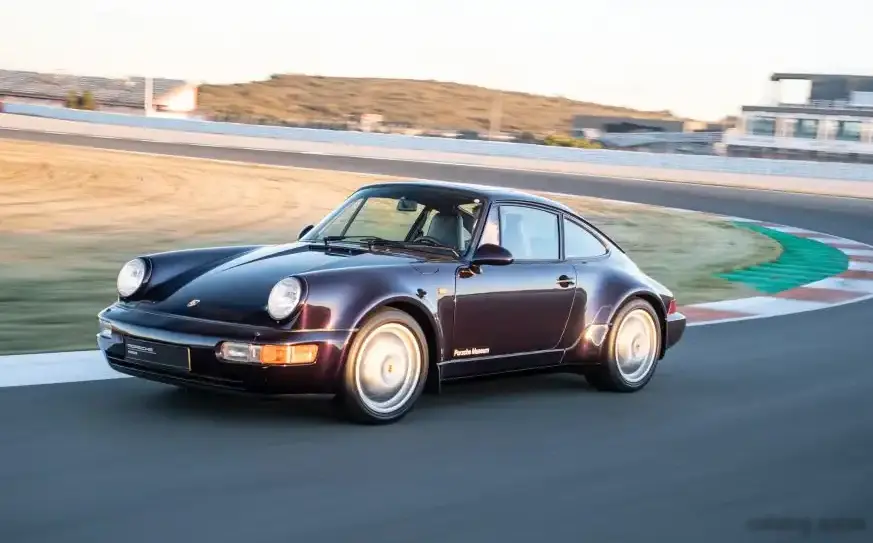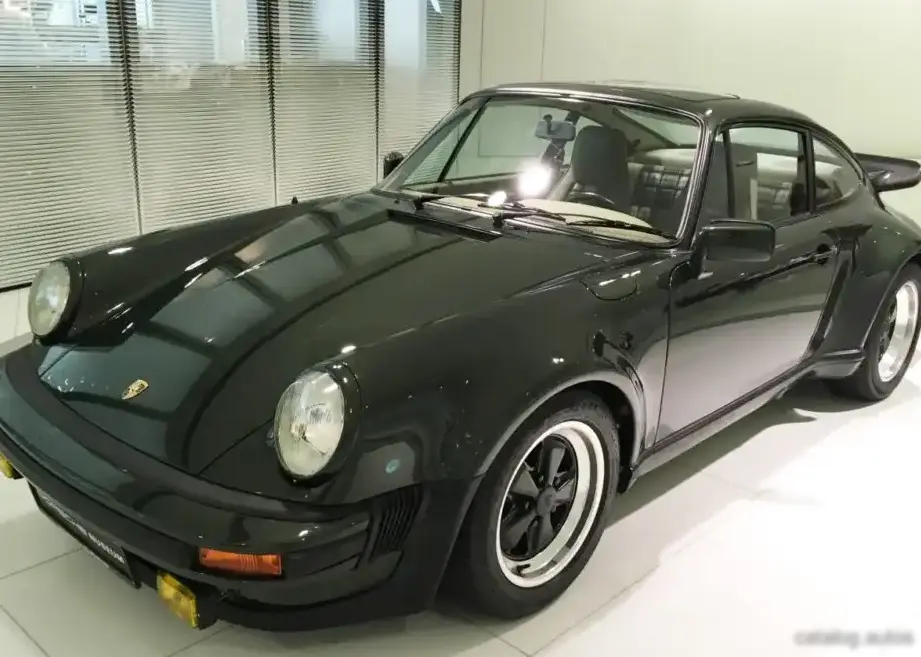
The Porsche 911 Coupe (Type 930) 3.3 Turbo, produced between 1984 and 1989, represents a pivotal moment in the evolution of Porsche’s iconic sports car. This variant, part of the long-running 911 lineage, brought forced induction to the forefront, establishing the 911 Turbo as a performance benchmark. It sat at the top of the 911 range during its production run, offering significantly more power and performance than the naturally aspirated Carrera models. The 930 generation, built on the G-body platform, is highly sought after by collectors and enthusiasts for its raw driving experience and classic Porsche aesthetics.
Technical Specifications
| Brand | Porsche |
| Model | 911 |
| Generation | 911 Coupe (Type 930) |
| Type (Engine) | 3.3 Turbo (282 Hp) |
| Start of production | 1984 |
| End of production | 1989 |
| Powertrain Architecture | Internal Combustion engine |
| Body type | Coupe |
| Seats | 4 |
| Doors | 2 |
| Fuel consumption (economy) – urban | 15.5 l/100 km (15.2 US mpg, 18.2 UK mpg, 6.5 km/l) |
| Fuel consumption (economy) – extra urban | 9.7 l/100 km (24.2 US mpg, 29.1 UK mpg, 10.3 km/l) |
| Fuel Type | Petrol (Gasoline) |
| Acceleration 0 – 100 km/h | 5.4 sec |
| Acceleration 0 – 62 mph | 5.4 sec |
| Acceleration 0 – 60 mph | 5.1 sec |
| Maximum speed | 260 km/h (161.56 mph) |
| Weight-to-power ratio | 4.7 kg/Hp, 211.2 Hp/tonne |
| Weight-to-torque ratio | 3.4 kg/Nm, 292.1 Nm/tonne |
| Power | 282 Hp @ 5500 rpm |
| Power per litre | 85.5 Hp/l |
| Torque | 390 Nm @ 4000 rpm (287.65 lb.-ft. @ 4000 rpm) |
| Maximum engine speed | 6000 rpm |
| Engine layout | Rear, Longitudinal |
| Engine Model/Code | 930.68 |
| Engine displacement | 3299 cm3 (201.32 cu. in.) |
| Number of cylinders | 6 |
| Engine configuration | Boxer |
| Cylinder Bore | 97 mm (3.82 in.) |
| Piston Stroke | 74.4 mm (2.93 in.) |
| Compression ratio | 7:1 |
| Number of valves per cylinder | 2 |
| Fuel injection system | Multi-port manifold injection |
| Engine aspiration | Turbocharger |
| Valvetrain | SOHC |
| Engine oil capacity | 10 l (10.57 US qt, 8.8 UK qt) |
| Kerb Weight | 1335 kg (2943.17 lbs.) |
| Max. weight | 1680 kg (3703.77 lbs.) |
| Max load | 345 kg (760.59 lbs.) |
| Fuel tank capacity | 85 l (22.45 US gal, 18.7 UK gal) |
| Length | 4291 mm (168.94 in.) |
| Width | 1775 mm (69.88 in.) |
| Height | 1310 mm (51.57 in.) |
| Wheelbase | 2272 mm (89.45 in.) |
| Front track | 1432 mm (56.38 in.) |
| Rear (Back) track | 1501 mm (59.09 in.) |
| Ride height (ground clearance) | 120 mm (4.72 in.) |
| Minimum turning circle | 10.95 m (35.93 ft.) |
| Front tires | 205/55 R16 |
| Rear tires | 225/50 R16, 245/45 R16 |
| Front wheel rims | 7J x 16 |
| Rear wheel rims | 8J x 16, 9J x 16 |
| Number of gears | 5 |
| Gearbox type | Manual transmission |
INTRODUCTION
The 930 Turbo, introduced in 1975 and continuing through 1989, was Porsche’s first production vehicle to feature turbocharging. The 3.3-liter version, launched in 1984, represented a significant upgrade over the earlier 3.0-liter model. It addressed concerns about turbo lag and improved overall drivability while substantially increasing power output. This iteration of the 911 Turbo was sold primarily in Europe and North America, becoming a status symbol and a highly desirable sports car for those seeking exhilarating performance. The 930 Turbo was a technological showcase for Porsche, incorporating features like a whale-tail rear spoiler for improved aerodynamics and a more robust drivetrain to handle the increased power.
Powertrain & Engine Architecture
At the heart of the 930 Turbo lies the 930.68 engine, a 3.3-liter, air-cooled, flat-six (boxer) engine. This engine utilized a single KKK turbocharger with a wastegate to regulate boost pressure. The compression ratio was lowered to 7:1 to accommodate the turbocharging, and Bosch K-Jetronic fuel injection was employed for precise fuel delivery. The engine featured a single overhead camshaft (SOHC) design with two valves per cylinder. The turbocharger itself was a significant component, providing substantial boost to increase power and torque. The 3.3-liter engine produced 282 horsepower at 5500 rpm and 390 Nm (287.65 lb-ft) of torque at 4000 rpm. The engine’s longitudinal rear-mounted layout contributed to the 911’s distinctive handling characteristics. The 930 Turbo was exclusively offered with a 5-speed manual transmission, designed to withstand the engine’s considerable output.
Driving Characteristics
The 930 Turbo offered a driving experience that was both exhilarating and demanding. While the turbocharger provided a significant power boost, it also introduced a degree of turbo lag, requiring drivers to anticipate and manage power delivery. The 5-speed manual transmission allowed for precise control, but demanded skillful operation to maximize performance. Acceleration from 0 to 60 mph was achieved in approximately 5.1 seconds, and the car could reach a top speed of 161.56 mph. The rear-wheel-drive layout and relatively short wheelbase contributed to a lively and engaging driving experience, but also required respect and careful handling, especially in adverse conditions. Compared to the naturally aspirated Carrera models, the 930 Turbo offered a dramatically different level of performance, but also demanded a higher level of driver skill.
Equipment & Trim Levels
The 930 Turbo was relatively sparsely equipped compared to modern luxury cars, but it offered a range of features considered desirable for a high-performance sports car of its era. Standard equipment included leather upholstery, power windows, and a basic sound system. Air conditioning was often an optional extra. The interior design was functional and focused on the driving experience, with a three-spoke steering wheel and analog gauges. Optional extras included a limited-slip differential, sport seats, and upgraded audio systems. The exterior was characterized by its distinctive whale-tail rear spoiler, flared wheel arches, and front air dam, all designed to improve aerodynamics and cooling.
Chassis & Braking
The 930 Turbo utilized a robust chassis designed to handle the increased power and stresses of turbocharging. The suspension consisted of independent spring-strut and wishbone front suspension and a trailing arm rear suspension. Ventilated disc brakes were fitted to all four wheels, providing ample stopping power. The braking system was not assisted by ABS in the early models, requiring skilled drivers to modulate braking force effectively. The car’s relatively lightweight construction, with a kerb weight of 1335 kg (2943.17 lbs), contributed to its agile handling. The rear track was wider than the front track, further enhancing stability.
Market Reception & Comparison
The 930 Turbo was widely praised by automotive journalists for its exceptional performance and exhilarating driving experience. However, it was also criticized for its turbo lag and demanding handling characteristics. Compared to the naturally aspirated Carrera models, the 930 Turbo offered a significant performance advantage, but it also came with a higher price tag and a steeper learning curve. The 930 Turbo was often compared to other high-performance sports cars of the era, such as the Ferrari 308 GTB and the Lamborghini Countach. While these cars offered comparable performance, the 930 Turbo was often considered to be more practical and reliable.
Legacy
The Porsche 930 Turbo holds a significant place in automotive history as a pioneering example of a turbocharged sports car. Its success paved the way for future generations of 911 Turbos and established Porsche as a leader in forced induction technology. Today, the 930 Turbo is a highly sought-after collectible, with prices continuing to rise as demand increases. The engine, while complex, is generally considered reliable when properly maintained. Common issues include turbocharger wear and oil leaks. The 930 Turbo remains a testament to Porsche’s engineering prowess and a thrilling driving machine that continues to captivate enthusiasts around the world.