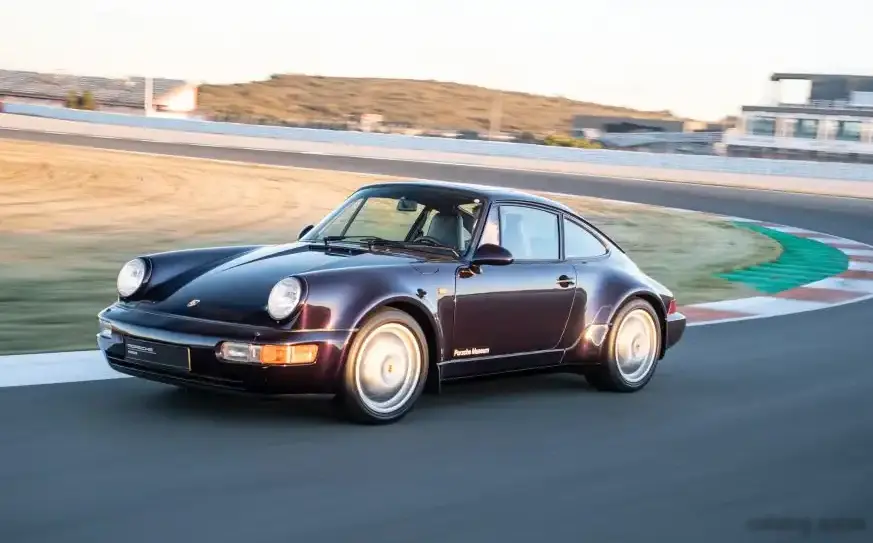
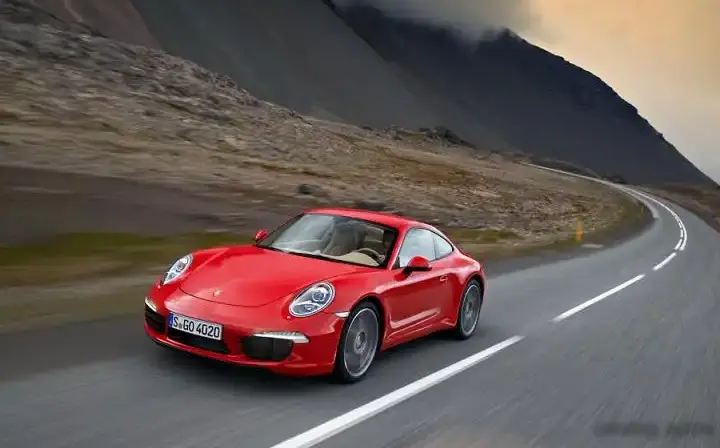
The Porsche 911 RSR (991) 4.0, producing 510 horsepower, represents a significant evolution in Porsche’s long-standing tradition of racing-derived sports cars. Introduced for the 2017 and 2018 model years, this iteration of the 911 RSR was specifically designed to compete in the FIA World Endurance Championship (WEC) and the IMSA WeatherTech SportsCar Championship, marking Porsche’s return to top-level GT racing. It was a pivotal development within the 991 generation, showcasing advancements in aerodynamics, engine technology, and drivetrain efficiency aimed at maximizing performance on the track. This particular variant, equipped with a six-speed automatic transmission, offered a unique driving experience compared to the paddle-shifted sequential gearbox typically found in dedicated race cars, though still geared towards professional drivers.
Technical Specifications
| Brand | Porsche |
| Model | 911 |
| Generation | 911 RSR (991) |
| Type (Engine) | 4.0 (510 Hp) Automatic |
| Start of production | 2017 year |
| End of production | 2019 year |
| Powertrain Architecture | Internal Combustion engine |
| Body type | Coupe |
| Seats | 2 |
| Doors | 2 |
| Fuel Type | Petrol (Gasoline) |
| Weight-to-power ratio | 2.4 kg/Hp, 410.3 Hp/tonne |
| Power | 510 Hp |
| Engine layout | Rear, Longitudinal |
| Number of cylinders | 6 |
| Engine configuration | Boxer |
| Cylinder Bore | 102 mm (4.02 in.) |
| Piston Stroke | 81.5 mm (3.21 in.) |
| Number of valves per cylinder | 4 |
| Fuel injection system | Direct injection |
| Engine aspiration | Naturally aspirated engine |
| Kerb Weight | 1243 kg (2740.35 lbs.) |
| Length | 4557 mm (179.41 in.) |
| Width | 2042-2048 mm (80.39 – 80.63 in.) |
| Wheelbase | 2516 mm (99.06 in.) |
| Drivetrain Architecture | The Internal combustion engine (ICE) drives the rear wheels of the vehicle. |
| Drive wheel | Rear wheel drive |
| Number of gears and type of gearbox | 6 gears, automatic transmission |
| Front suspension | Double wishbone |
| Rear suspension | Double wishbone |
| Front brakes | Ventilated discs |
| Rear brakes | Ventilated discs |
| Assisting systems | ABS (Anti-lock braking system) |
| Steering type | Steering rack and pinion |
| Tires size | 30/68 R18; 31/71 R18 |
| Wheel rims size | 12.5J x 18; 13J x 18 |
Powertrain & Engine Architecture
The heart of the 911 RSR 4.0 is a naturally aspirated 4.0-liter flat-six engine, designated as the 4.0-liter water-cooled boxer engine. This engine represents a departure from previous RSR models which utilized smaller displacement engines. The engine boasts a bore of 102mm and a stroke of 81.5mm, contributing to its high-revving nature and substantial power output. Direct fuel injection is employed to optimize combustion efficiency and deliver a responsive throttle. The engine’s valvetrain features four valves per cylinder, enhancing breathing and contributing to the engine’s ability to reach high RPMs. The six-speed automatic transmission, while unusual for a dedicated race car, was chosen for its robustness and ease of use in certain racing conditions. It allowed drivers to focus more on driving and less on gear changes, particularly during long-distance endurance races. The transmission was specifically tuned for quick and precise shifts, maximizing power delivery.
Driving Characteristics
The 911 RSR 4.0 Automatic delivers a unique driving experience. While the automatic transmission might seem counterintuitive for a purebred race car, it provided a smooth and consistent power delivery, particularly beneficial during extended stints. The 510 horsepower, coupled with the relatively lightweight construction (1243 kg), resulted in a potent power-to-weight ratio of 2.4 kg/Hp. The rear-wheel-drive configuration, combined with sophisticated traction control systems, allowed for precise handling and excellent cornering ability. Compared to earlier 911 RSR variants with smaller engines, the 4.0-liter version offered significantly more torque across the rev range, making it more forgiving to drive and easier to extract maximum performance. The automatic transmission, while not as immediately responsive as a sequential gearbox, offered a level of consistency that some drivers preferred, especially in traffic or during periods of fatigue.
Equipment & Trim Levels
As a dedicated race car, the 911 RSR 4.0 was sparsely equipped in terms of luxury features. The interior was stripped down to the essentials, focusing solely on functionality and driver safety. A racing seat with a six-point harness, a roll cage, and a fire suppression system were standard features. The dashboard was minimalist, displaying only critical information such as speed, RPM, and lap times. Optional extras included data logging systems, adjustable steering wheels, and customized seat inserts. The focus was entirely on providing the driver with the tools necessary to compete at the highest level of GT racing. Interior materials were chosen for their lightweight properties and durability, rather than aesthetic appeal.
Chassis & Braking
The 911 RSR 4.0 features a lightweight chassis constructed from aluminum and carbon fiber reinforced polymer (CFRP). The suspension system utilizes a double wishbone configuration at both the front and rear, providing exceptional handling and stability. Adjustable dampers and anti-roll bars allowed teams to fine-tune the suspension to suit specific track conditions. The braking system consists of ventilated discs at all four corners, providing ample stopping power. An advanced ABS (Anti-lock braking system) system helped to maintain control during hard braking. The car’s aerodynamic package, including a large rear wing and aggressive front splitter, generated significant downforce, enhancing grip and stability at high speeds.
Market Reception & Comparison
The Porsche 911 RSR 4.0 was widely praised by racing teams and automotive journalists for its performance, reliability, and advanced technology. It proved to be a formidable competitor in both the WEC and IMSA championships, achieving numerous victories and podium finishes. Compared to other GT cars in its class, the 911 RSR 4.0 stood out for its sophisticated engine, advanced aerodynamics, and robust construction. While some critics questioned the use of an automatic transmission in a race car, many acknowledged its benefits in terms of consistency and ease of use. The car’s fuel efficiency was also commendable, allowing teams to run longer stints between pit stops.
Legacy
The Porsche 911 RSR (991) 4.0 represents a high point in the development of the 911 as a racing platform. Its innovative engine technology, advanced aerodynamics, and robust construction set a new standard for GT racing cars. The car’s success on the track helped to solidify Porsche’s reputation as a leading manufacturer of high-performance sports cars. Today, the 911 RSR 4.0 is highly sought after by collectors and racing enthusiasts. Its limited production run and impressive racing pedigree make it a valuable and iconic piece of automotive history. The lessons learned from the development of the 911 RSR 4.0 have been incorporated into subsequent generations of Porsche race cars and road cars, continuing the brand’s legacy of innovation and performance.