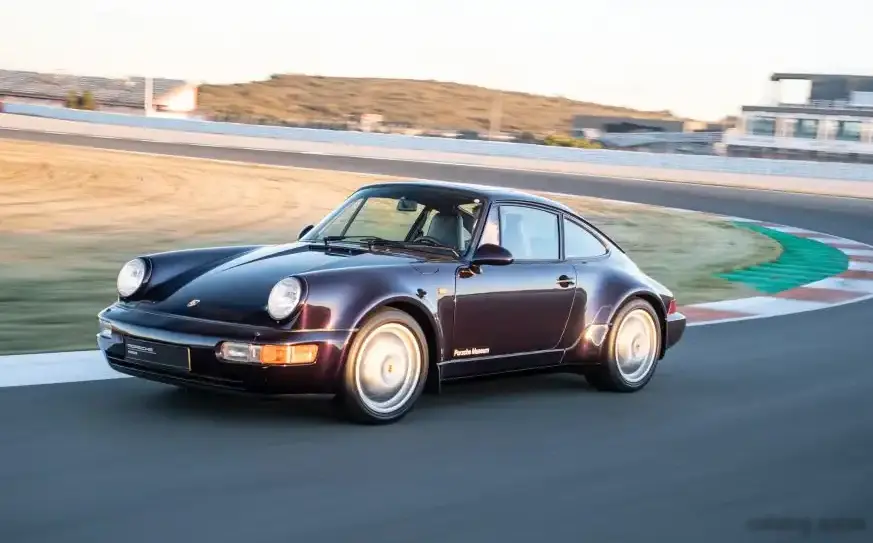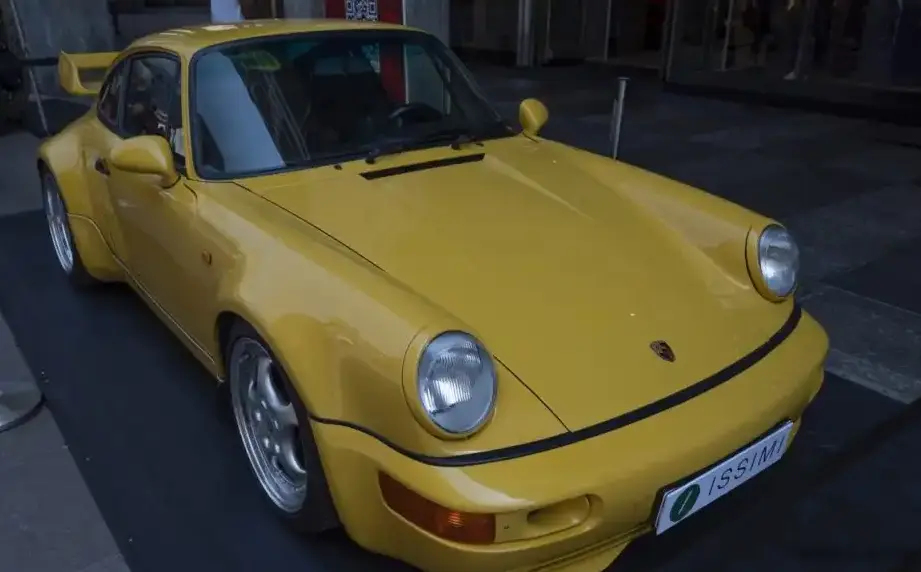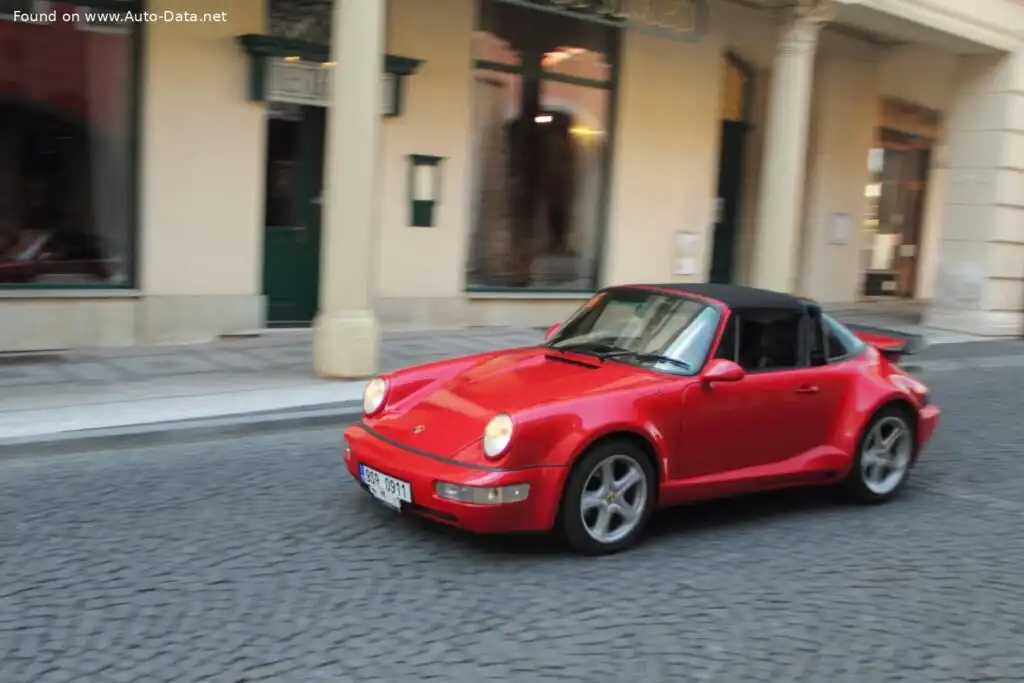
The Porsche 911 Targa (964) Carrera 2 3.6, equipped with the Tiptronic transmission, represents a significant evolution in the iconic 911 lineage. Produced between 1989 and December 1993, this variant occupied a middle ground within the 964 generation, offering a blend of performance and convenience. It was positioned above the base Carrera 2 models with the smaller 3.6-liter engine and below the more focused and expensive Carrera 4 and Turbo variants. The 964 generation itself was a crucial step in modernizing the 911, addressing criticisms of the preceding 3.2 Carrera while retaining the core characteristics that defined the model for decades.
Technical Specifications
| Brand | Porsche |
| Model | 911 |
| Generation | 911 Targa (964) |
| Type (Engine) | Carrera 2 3.6 (250 Hp) Tiptronic |
| Start of production | 1989 |
| End of production | December, 1993 |
| Powertrain Architecture | Internal Combustion engine |
| Body type | Targa |
| Seats | 4 |
| Doors | 2 |
| Fuel consumption (economy) – urban | 17.1 l/100 km (13.8 US mpg, 16.5 UK mpg, 5.8 km/l) |
| Fuel consumption (economy) – extra urban | 7.9-9.6 l/100 km (29.8 – 24.5 US mpg, 35.8 – 29.4 UK mpg, 12.7 – 10.4 km/l) |
| Fuel Type | Petrol (Gasoline) |
| Acceleration 0 – 100 km/h | 6.6 sec |
| Acceleration 0 – 62 mph | 6.6 sec |
| Acceleration 0 – 60 mph | 6.3 sec |
| Maximum speed | 256 km/h (159.07 mph) |
| Weight-to-power ratio | 5.5 kg/Hp, 181.2 Hp/tonne |
| Weight-to-torque ratio | 4.5 kg/Nm, 224.6 Nm/tonne |
| Power | 250 Hp @ 6100 rpm |
| Power per litre | 69.4 Hp/l |
| Torque | 310 Nm @ 4800 rpm (228.64 lb.-ft. @ 4800 rpm) |
| Engine layout | Rear, Longitudinal |
| Engine Model/Code | M64.02 |
| Engine displacement | 3600 cm3 (219.69 cu. in.) |
| Number of cylinders | 6 |
| Engine configuration | Boxer |
| Cylinder Bore | 100 mm (3.94 in.) |
| Piston Stroke | 76.4 mm (3.01 in.) |
| Compression ratio | 11.3:1 |
| Number of valves per cylinder | 2 |
| Fuel injection system | Multi-port manifold injection |
| Engine aspiration | Naturally aspirated engine |
| Valvetrain | SOHC |
| Engine oil capacity | 11.5 l (12.15 US qt | 10.12 UK qt) |
| Kerb Weight | 1380 kg (3042.38 lbs.) |
| Max. weight | 1720 kg (3791.95 lbs.) |
| Max load | 340 kg (749.57 lbs.) |
| Fuel tank capacity | 77 l (20.34 US gal | 16.94 UK gal) |
| Length | 4250 mm (167.32 in.) |
| Width | 1652 mm (65.04 in.) |
| Height | 1310 mm (51.57 in.) |
| Wheelbase | 2272 mm (89.45 in.) |
| Front track | 1380 mm (54.33 in.) |
| Rear (Back) track | 1374 mm (54.09 in.) |
| Ride height (ground clearance) | 120 mm (4.72 in.) |
| Minimum turning circle (turning diameter) | 11.95 m (39.21 ft.) |
| Drivetrain Architecture | The Internal combustion engine (ICE) drives the rear wheels of the vehicle. |
| Drive wheel | Rear wheel drive |
| Number of gears and type of gearbox | 4 gears, automatic transmission Tiptronic |
| Front suspension | Independent type McPherson, Transverse stabilizer |
| Rear suspension | Transverse stabilizer, Trailing arm, Coil spring |
| Front brakes | Ventilated discs |
| Rear brakes | Ventilated discs |
| Assisting systems | ABS (Anti-lock braking system) |
| Steering type | Steering rack and pinion |
| Power steering | Hydraulic Steering |
| Tires size | Front wheel tires: 205/55 R16Rear wheel tires: 225/50 R16 |
| Wheel rims size | Front wheel rims: 6J x 16Rear wheel rims: 8J x 16 |
Powertrain & Engine Architecture
At the heart of the 964 Carrera 2 3.6 Tiptronic lies the M64.02, a 3.6-liter naturally aspirated flat-six engine. This engine represented a significant increase in displacement over the 3.2-liter engines found in earlier 911s. The M64.02 featured multi-port fuel injection, a single overhead camshaft (SOHC) design per cylinder bank, and a compression ratio of 11.3:1. These specifications contributed to its output of 250 horsepower at 6100 rpm and 310 Nm (228.64 lb-ft) of torque at 4800 rpm. The engine’s dry-sump lubrication system, a hallmark of Porsche engineering, ensured reliable oil supply even under demanding driving conditions. Paired with this engine was the Tiptronic four-speed automatic transmission. This wasn’t a conventional automatic; it allowed for driver-selected gear changes via buttons on the steering wheel, offering a degree of control not found in traditional automatics. The transmission featured adaptive shift programming, adjusting shift points based on driving style.
Driving Characteristics
The 964 Carrera 2 3.6 Tiptronic offered a distinct driving experience compared to its manual transmission counterparts and other 964 variants. While the Tiptronic transmission provided convenience, it did introduce a slight performance penalty. Acceleration from 0 to 60 mph took approximately 6.3 seconds, slightly slower than the manual version. The automatic transmission’s shift logic, while improved over earlier iterations, wasn’t as immediate or engaging as a skilled driver using a manual gearbox. However, the Tiptronic allowed drivers to enjoy the 911’s handling characteristics without the constant need to shift. The 3.6-liter engine delivered a broad torque curve, providing ample power for everyday driving and spirited acceleration. The rear-wheel-drive layout and the 911’s inherent balance made for a rewarding driving experience, though it required respect and careful throttle control, especially in adverse conditions.
Equipment & Trim Levels
The Carrera 2 3.6 Tiptronic came standard with a well-appointed interior. Upholstery typically consisted of leather seats, with options for different colors and materials. The dashboard featured a classic 911 layout with analog gauges, including a speedometer, tachometer, oil pressure gauge, and oil temperature gauge. Standard equipment included power windows, central locking, and an upgraded sound system. Optional extras were plentiful, including a sunroof, limited-slip differential, sport suspension, and various interior trim packages. The Targa top, a defining feature of this variant, offered an open-air driving experience while maintaining a degree of structural rigidity.
Chassis & Braking
The 964 Carrera 2 3.6 Tiptronic utilized a torsion bar suspension system, a traditional Porsche design. This system provided a good balance between ride comfort and handling precision. The front suspension featured McPherson struts with a transverse stabilizer, while the rear suspension employed trailing arms with a transverse stabilizer and coil springs. Braking duties were handled by ventilated disc brakes on all four wheels, assisted by an Anti-lock Braking System (ABS). The ABS system helped to maintain stability during hard braking. The car’s relatively light curb weight of 1380 kg (3042.38 lbs) contributed to its agile handling.
Market Reception & Comparison
The 964 Carrera 2 3.6 Tiptronic was generally well-received by automotive critics. It was praised for its improved performance, refined interior, and overall driving experience. However, some critics noted that the Tiptronic transmission didn’t fully capture the engaging feel of the manual gearbox. Compared to the base Carrera 2 with the smaller engine, the 3.6-liter version offered a noticeable performance upgrade. Compared to the Carrera 4, which featured all-wheel drive, the Carrera 2 was lighter and more agile, but offered less traction in slippery conditions. Fuel economy was reasonable for a sports car of its era, averaging around 17.1 l/100 km (13.8 US mpg) in urban driving and 7.9-9.6 l/100 km (29.8 – 24.5 US mpg) on the highway.
Legacy
The 964 Carrera 2 3.6 Tiptronic has proven to be a reliable and desirable classic Porsche. The M64.02 engine is known for its durability, and the Tiptronic transmission, while not as sought-after as the manual, has also proven to be relatively robust. Today, these cars are highly regarded by collectors and enthusiasts. Well-maintained examples command strong prices in the used car market. The 964 generation, and the Carrera 2 3.6 Tiptronic in particular, represents a pivotal moment in the 911’s history, bridging the gap between the classic air-cooled era and the modern water-cooled era.