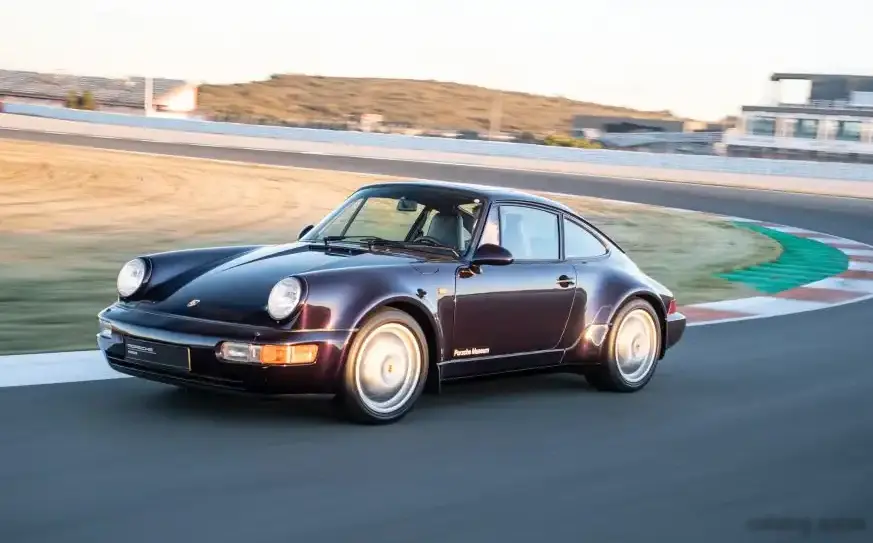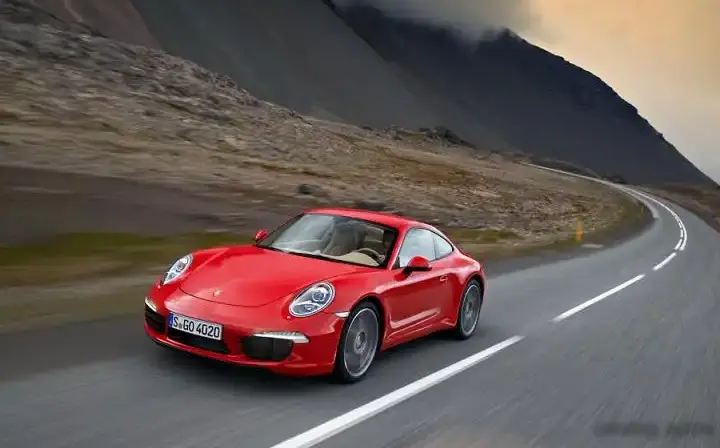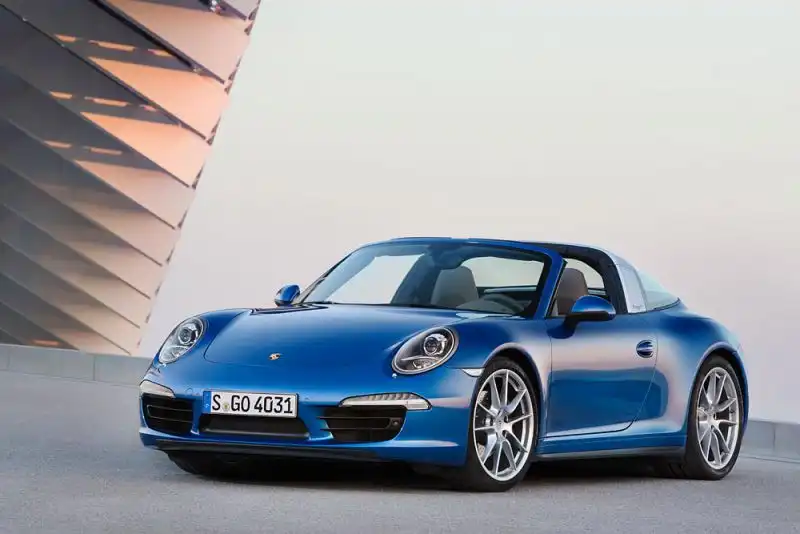
The Porsche 911 Targa 4S (991) 3.8, produced from 2014 to 2015, represents a compelling blend of performance, open-air driving enjoyment, and everyday usability within the broader 991 generation of the iconic 911. Positioned as a mid-range offering within the Targa lineup, it slotted above the base Targa models and below the even more potent Targa 4S Exclusive Design editions. This variant distinguished itself with its all-wheel-drive system and naturally aspirated 3.8-liter flat-six engine, delivering a uniquely Porsche driving experience. The 991 generation, introduced in 2011, marked a significant evolution for the 911, incorporating a longer wheelbase, a wider track, and a more sophisticated chassis, all contributing to improved handling and comfort.
Technical Specifications
| Brand | Porsche |
| Model | 911 |
| Generation | 911 Targa (991) |
| Type (Engine) | 4S 3.8 (400 Hp) |
| Start of production | 2014 |
| End of production | 2015 |
| Powertrain Architecture | Internal Combustion engine |
| Body type | Targa |
| Seats | 4 |
| Doors | 2 |
| Fuel consumption (economy) – urban | 13.9 l/100 km (16.9 US mpg, 20.3 UK mpg, 7.2 km/l) |
| Fuel consumption (economy) – extra urban | 7.7 l/100 km (30.5 US mpg, 36.7 UK mpg, 13 km/l) |
| Fuel consumption (economy) – combined | 10 l/100 km (23.5 US mpg, 28.2 UK mpg, 10 km/l) |
| CO2 emissions | 237 g/km |
| Fuel Type | Petrol (Gasoline) |
| Acceleration 0 – 100 km/h | 4.8 sec |
| Acceleration 0 – 62 mph | 4.8 sec |
| Acceleration 0 – 60 mph | 4.6 sec |
| Maximum speed | 296 km/h (183.93 mph) |
| Emission standard | Euro 6 |
| Weight-to-power ratio | 3.9 kg/Hp, 257.2 Hp/tonne |
| Weight-to-torque ratio | 3.5 kg/Nm, 283 Nm/tonne |
| Power | 400 Hp @ 7400 rpm |
| Power per litre | 105.3 Hp/l |
| Torque | 440 Nm @ 5600 rpm (324.53 lb.-ft. @ 5600 rpm) |
| Engine layout | Rear, Longitudinal |
| Engine Model/Code | MA1.03 |
| Engine displacement | 3800 cm3 (231.89 cu. in.) |
| Number of cylinders | 6 |
| Engine configuration | Boxer |
| Cylinder Bore | 102 mm (4.02 in.) |
| Piston Stroke | 77.5 mm (3.05 in.) |
| Compression ratio | 12.5:1 |
| Number of valves per cylinder | 4 |
| Fuel injection system | Direct injection |
| Engine aspiration | Naturally aspirated engine |
| Engine oil capacity | 7.5 l (7.93 US qt | 6.6 UK qt) |
| Coolant | 29 l (30.64 US qt | 25.52 UK qt) |
| Kerb Weight | 1555 kg (3428.19 lbs.) |
| Max. weight | 1960 kg (4321.06 lbs.) |
| Max load | 405 kg (892.87 lbs.) |
| Trunk (boot) space – minimum | 285 l (10.06 cu. ft.) |
| Fuel tank capacity | 68 l (17.96 US gal | 14.96 UK gal) |
| Length | 4491 mm (176.81 in.) |
| Width | 1852 mm (72.91 in.) |
| Height | 1291 mm (50.83 in.) |
| Wheelbase | 2450 mm (96.46 in.) |
| Front track | 1538 mm (60.55 in.) |
| Rear (Back) track | 1552 mm (61.1 in.) |
| Drag coefficient (Cd) | 0.30 |
| Minimum turning circle (turning diameter) | 10.4 m (34.12 ft.) |
| Drive wheel | All wheel drive (4×4) |
| Number of gears and type of gearbox | 7 gears, manual transmission |
| Front suspension | Independent type McPherson |
| Rear suspension | Independent multi-link suspension |
| Front brakes | Ventilated discs, 330 mm |
| Rear brakes | Ventilated discs, 330 mm |
| Assisting systems | ABS (Anti-lock braking system) |
| Steering type | Steering rack and pinion |
| Power steering | Electric Steering |
| Tires size | 245/35 ZR20; 305/30 ZR20 |
| Wheel rims size | 8.5J x 20; 11J x 20 |
Powertrain & Engine Architecture
At the heart of the 911 Targa 4S (991) lies the MA1.03 engine, a 3.8-liter naturally aspirated flat-six. This engine, a hallmark of Porsche engineering, benefits from direct fuel injection, optimizing combustion efficiency and power delivery. The flat-six configuration, with its horizontally opposed cylinders, contributes to a low center of gravity, enhancing stability and handling. The engine produces 400 horsepower at 7,400 rpm and 324.53 lb-ft of torque at 5,600 rpm. The engine’s valvetrain utilizes four valves per cylinder, further improving breathing and performance. The 7-speed manual transmission was standard, offering precise gear changes and a direct connection to the engine. Porsche’s PDK (Porsche Doppelkupplung) dual-clutch transmission was also available as an option, providing lightning-fast shifts and enhanced efficiency.
Driving Characteristics
The 911 Targa 4S (991) delivers a driving experience that is both engaging and refined. The all-wheel-drive system provides exceptional traction, particularly in inclement weather, and contributes to confident handling. While not as brutally quick as the Turbo models, the 400 horsepower engine provides ample power for spirited driving. The manual transmission offers a rewarding, tactile experience, while the PDK transmission delivers seamless and incredibly quick shifts. The Targa top, a signature Porsche feature, allows for open-air motoring while maintaining a degree of structural rigidity. Compared to the base Carrera models, the 4S offers a noticeable increase in performance and a more planted feel. It doesn’t quite match the raw acceleration of the higher-spec Turbo models, but provides a more accessible and balanced driving experience.
Equipment & Trim Levels
The 911 Targa 4S (991) came standard with a generous array of features, including leather upholstery, automatic climate control, a high-quality audio system, and Porsche’s Communication Management system with a touchscreen display. Optional extras were plentiful, allowing buyers to personalize their vehicles. These included features such as adaptive sport seats, a sunroof, a premium sound system, and various interior trim options. The Targa model specifically featured the iconic retractable roof mechanism, which automatically opens and closes in approximately 19 seconds. Exterior options included a wide range of paint colors and wheel designs.
Chassis & Braking
The 991 generation 911 benefited from a significantly revised chassis compared to its predecessor. The longer wheelbase and wider track contribute to improved stability and handling. The suspension utilizes independent McPherson struts at the front and a multi-link setup at the rear. The 4S model featured larger brakes than the base Carrera, with ventilated discs at all four corners. ABS (Anti-lock Braking System) was standard, providing enhanced stopping power and control. Porsche’s optional PASM (Porsche Active Suspension Management) system allowed drivers to adjust the damping characteristics to suit their preferences.
Market Reception & Comparison
The 911 Targa 4S (991) was generally well-received by automotive critics, who praised its blend of performance, comfort, and open-air driving enjoyment. It was often lauded for its responsive engine, precise handling, and luxurious interior. Compared to the base Targa models, the 4S offered a significant performance upgrade, justifying its higher price tag. Fuel economy was respectable for a high-performance sports car, with combined figures around 23.5 US mpg. Reliability was generally good, although maintenance costs could be substantial, as with any Porsche.
Legacy
The 911 Targa 4S (991) remains a desirable and well-regarded sports car in the used car market. The MA1.03 engine is known for its durability and relatively straightforward maintenance. The 991 generation 911 is considered by many to be a sweet spot in the model’s evolution, offering a blend of classic 911 character and modern technology. Values for well-maintained examples have remained strong, reflecting the enduring appeal of the Porsche 911 and the unique charm of the Targa body style.