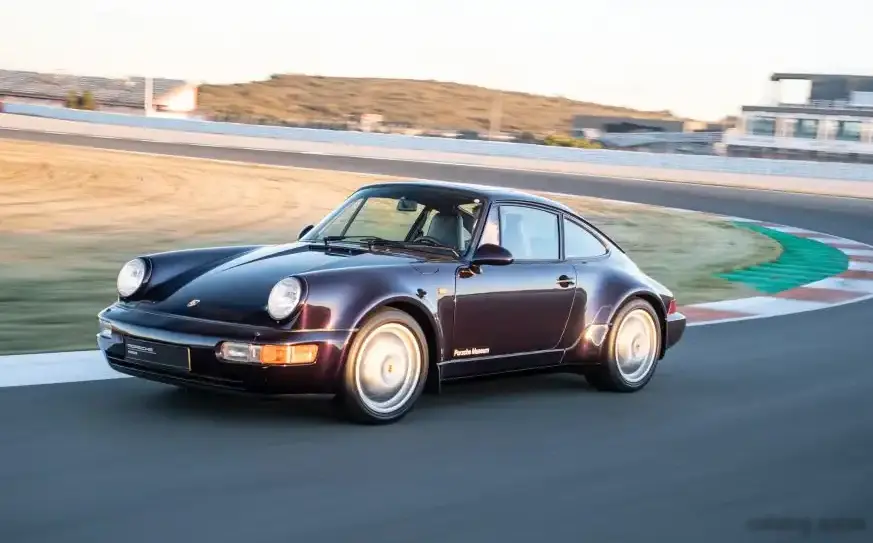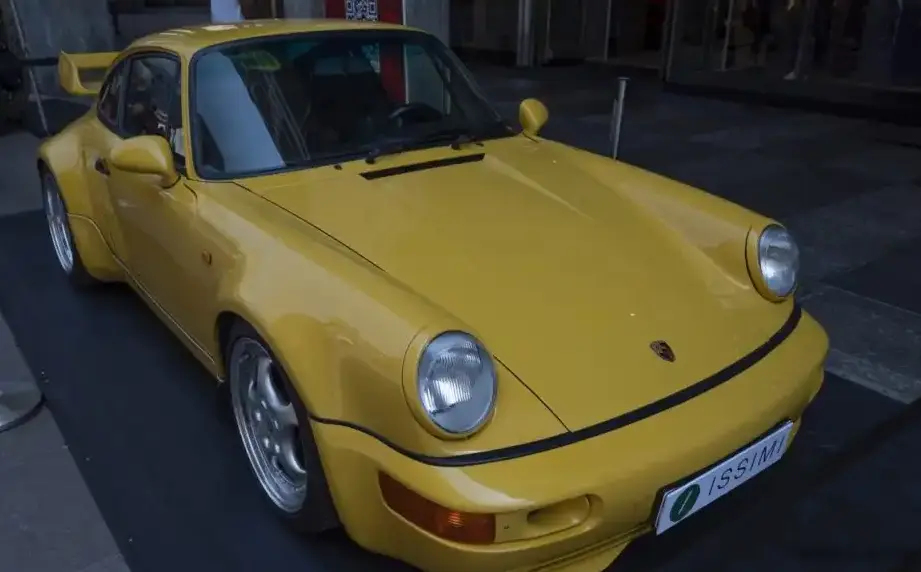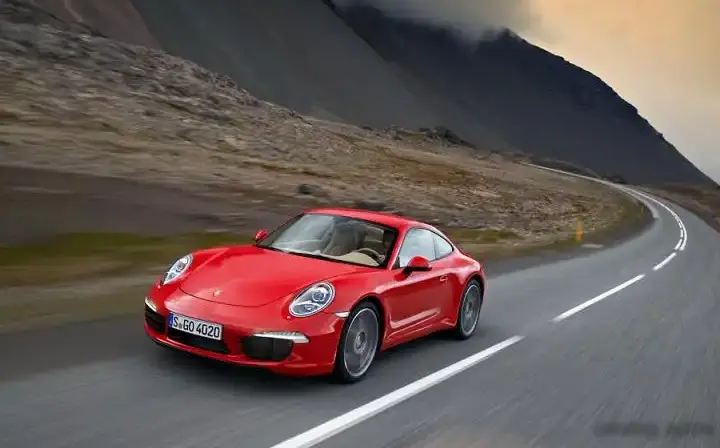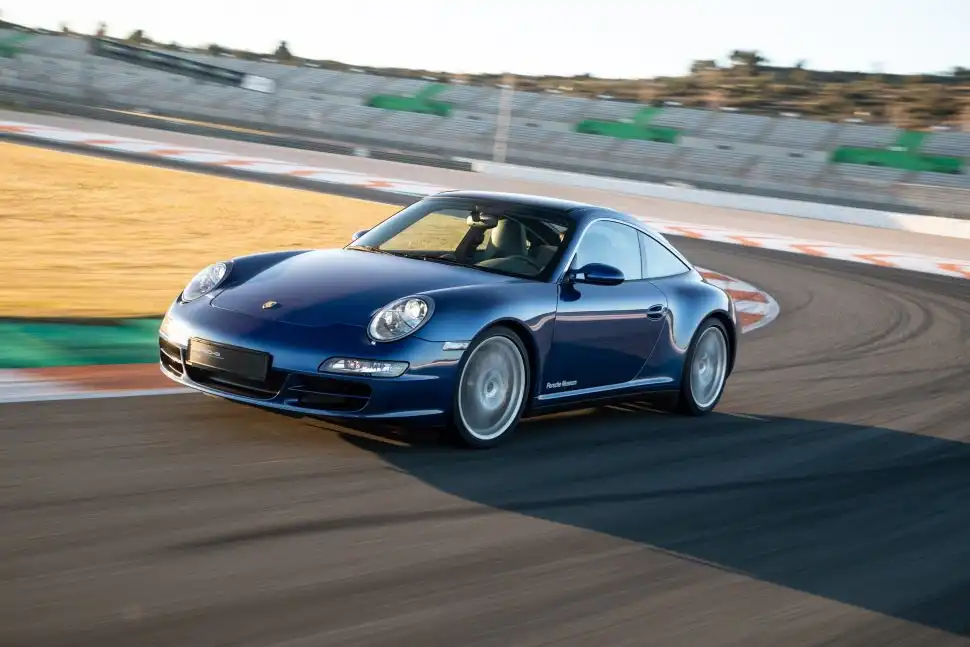
The Porsche 911 Targa 4S 3.8 (355 Hp), produced between 2006 and 2008, represents a compelling blend of open-air motoring and all-weather capability within the 997 generation of the iconic 911. Positioned as a premium variant within the Targa lineup, it offered a significant step up in performance and features compared to the base Targa models. The 997 generation, launched in 2004, marked a significant evolution for the 911, incorporating more modern technology and improved refinement while retaining the classic rear-engine layout and distinctive Porsche driving experience. The Targa models, specifically, aimed to bridge the gap between the coupe and convertible, offering a unique retractable roof design.
Technical Specifications
| Brand | Porsche |
| Model | 911 |
| Generation | 911 Targa (997) |
| Type (Engine) | Targa 4S 3.8 (355 Hp) |
| Start of production | 2006 |
| End of production | 2008 |
| Powertrain Architecture | Internal Combustion engine |
| Body type | Targa |
| Seats | 4 |
| Doors | 2 |
| Fuel consumption (economy) – urban | 17.5 l/100 km (13.4 US mpg, 16.1 UK mpg, 5.7 km/l) |
| Fuel consumption (economy) – extra urban | 8.5 l/100 km (27.7 US mpg, 33.2 UK mpg, 11.8 km/l) |
| Fuel consumption (economy) – combined | 11.8 l/100 km (19.9 US mpg, 23.9 UK mpg, 8.5 km/l) |
| CO2 emissions | 285 g/km |
| Fuel Type | Petrol (Gasoline) |
| Acceleration 0 – 100 km/h | 4.9 sec |
| Acceleration 0 – 62 mph | 4.9 sec |
| Acceleration 0 – 60 mph | 4.7 sec |
| Maximum speed | 288 km/h (178.95 mph) |
| Weight-to-power ratio | 4.3 kg/Hp, 231.3 Hp/tonne |
| Weight-to-torque ratio | 3.8 kg/Nm, 260.6 Nm/tonne |
| Power | 355 Hp @ 6600 rpm |
| Power per litre | 92.8 Hp/l |
| Torque | 400 Nm @ 4600 rpm (295.02 lb.-ft. @ 4600 rpm) |
| Engine layout | Rear, Longitudinal |
| Engine Model/Code | M97.01 |
| Engine displacement | 3824 cm3 (233.35 cu. in.) |
| Number of cylinders | 6 |
| Engine configuration | Boxer |
| Compression ratio | 11.8:1 |
| Fuel injection system | Multi-port manifold injection |
| Engine aspiration | Naturally aspirated engine |
| Engine oil capacity | 8.5 l (8.98 US qt | 7.48 UK qt) |
| Coolant | 31 l (32.76 US qt | 27.28 UK qt) |
| Kerb Weight | 1535 kg (3384.1 lbs) |
| Max. weight | 1915 kg (4221.85 lbs) |
| Max load | 380 kg (837.76 lbs) |
| Trunk (boot) space – maximum | 105 l (3.71 cu. ft.) |
| Fuel tank capacity | 67 l (17.7 US gal | 14.74 UK gal) |
| Length | 4427 mm (174.29 in) |
| Width | 1852 mm (72.91 in) |
| Height | 1300 mm (51.18 in) |
| Wheelbase | 2350 mm (92.52 in) |
| Drag coefficient (Cd) | 0.29 |
| Minimum turning circle | 10.9 m (35.76 ft) |
| Drive wheel | All wheel drive (4×4) |
| Number of gears and type of gearbox | 6 gears, manual transmission |
| Front suspension | Independent type McPherson |
| Rear suspension | Independent multi-link suspension |
| Front brakes | Ventilated discs |
| Rear brakes | Ventilated discs |
| Assisting systems | ABS (Anti-lock braking system) |
| Steering type | Steering rack and pinion |
| Power steering | Hydraulic Steering |
| Tires size | 235/35 ZR19; 305/30 ZR19 |
| Wheel rims size | 8J x 19; 11J x 19 |
Powertrain & Engine Architecture
At the heart of the 911 Targa 4S 3.8 lies the M97.01 engine, a 3.8-liter naturally aspirated flat-six (boxer) engine. This engine, a hallmark of Porsche engineering, delivers 355 horsepower at 6,600 rpm and 400 Nm (295 lb-ft) of torque at 4,600 rpm. The engine utilizes a multi-port fuel injection system, a proven technology for its time, providing precise fuel delivery for optimal combustion. The boxer configuration, with its horizontally opposed cylinders, contributes to a low center of gravity, enhancing handling and stability. The 6-speed manual transmission was standard, offering precise gear changes and a direct connection to the engine. While a Tiptronic S automatic transmission was available as an option, the manual was favored by enthusiasts for its engaging driving experience.
Driving Characteristics
The 911 Targa 4S 3.8, with its 355 hp and all-wheel-drive system, offered exhilarating performance. Acceleration from 0 to 60 mph was achieved in approximately 4.7 seconds, and it could reach a top speed of 178.95 mph. The all-wheel-drive system provided exceptional traction, particularly in adverse weather conditions, making it a more practical option than the rear-wheel-drive Carrera models. Compared to the base Targa models with smaller engines, the 4S delivered a significantly more potent driving experience, with noticeably stronger acceleration and improved responsiveness. The manual transmission’s gear ratios were well-matched to the engine’s power curve, providing strong pull throughout the rev range. The steering was precise and communicative, offering excellent feedback to the driver.
Equipment & Trim Levels
The Targa 4S 3.8 came standard with a generous array of features, including leather upholstery, automatic climate control, a Bose sound system, and bi-xenon headlights. The Targa roof, a defining feature of the model, consisted of a glass roof panel that retracted electrically, providing an open-air experience. Optional extras included sport seats, a navigation system, and a limited-slip differential. Interior trim options allowed for personalization, with a range of leather colors and materials available. The dashboard layout was typical of the 997 generation, with a central tachometer flanked by gauges for speed, fuel level, and coolant temperature.
Chassis & Braking
The 911 Targa 4S 3.8 featured a robust chassis designed for both performance and comfort. The suspension utilized independent McPherson struts at the front and a multi-link setup at the rear, providing excellent handling and ride quality. Ventilated disc brakes were fitted on all four wheels, providing ample stopping power. The all-wheel-drive system distributed power between the front and rear axles, optimizing traction and stability. The car’s weight distribution was carefully balanced, contributing to its neutral handling characteristics.
Market Reception & Comparison
The 911 Targa 4S 3.8 was well-received by automotive critics, who praised its performance, handling, and unique open-air experience. It was often seen as a compelling alternative to the 911 Carrera 4S coupe, offering a similar level of performance with the added appeal of the Targa roof. Fuel economy, while not a primary concern for 911 buyers, was reasonable for a high-performance sports car, averaging around 19.9 US mpg in combined driving. Compared to the base Targa models, the 4S offered a significant performance upgrade, justifying its higher price tag. Reliability was generally good, although maintenance costs could be substantial, as with all Porsche models.
Legacy
The 911 Targa 4S 3.8 remains a desirable collector’s car today. The M97.01 engine, while not immune to issues like intermediate shaft bearing failure (IMS), is generally considered reliable when properly maintained. The 997 generation 911 is widely regarded as a sweet spot in the model’s history, offering a blend of classic Porsche character and modern technology. Well-maintained examples of the Targa 4S 3.8 command strong prices in the used car market, reflecting their performance, exclusivity, and enduring appeal.