
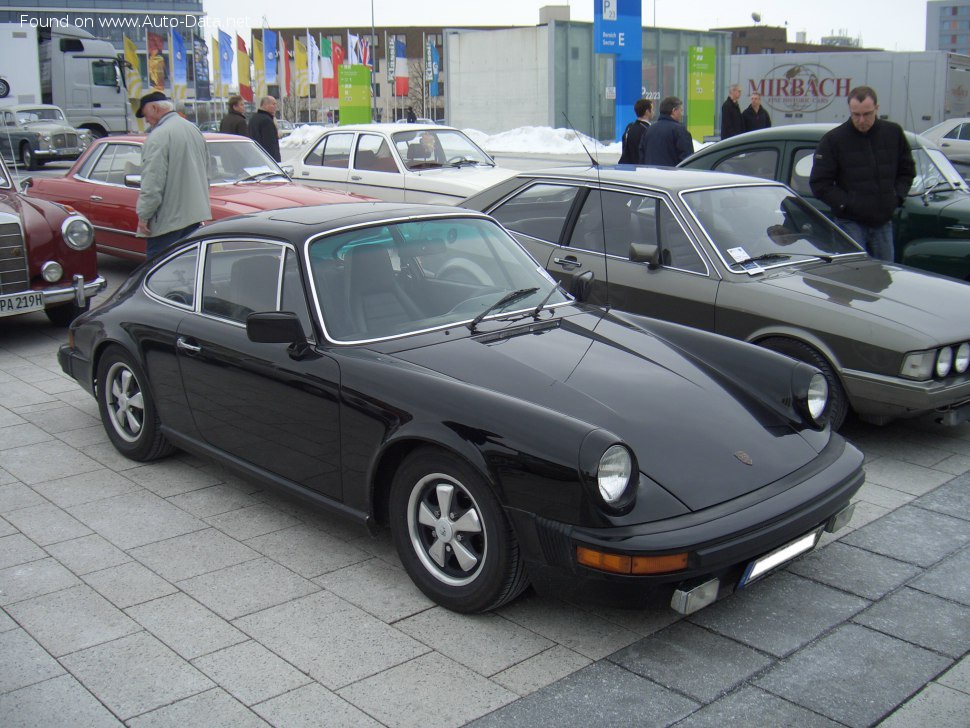
The Porsche 912E, produced for a single model year in 1976, represents a unique chapter in the storied history of Porsche. Positioned as a more affordable alternative to the iconic 911, the 912E aimed to retain the Porsche driving experience within a tighter budget. It was primarily intended for the North American market, where emissions regulations and a desire for a less expensive entry point into the Porsche brand created a demand. While not a large-volume seller, the 912E offered a distinctive blend of classic Porsche styling and a simplified, yet engaging, driving experience.
The Porsche 912E: A Return to Simplicity
The 912E (the “E” denoting “Einspritzung,” German for fuel injection) was a response to changing market conditions and increasingly stringent safety and emissions standards in the United States. Porsche had discontinued the original 912 in 1970, but demand for a more accessible Porsche persisted. The 912E essentially revived the concept, utilizing many 911 components but with a smaller, less powerful engine. This allowed Porsche to offer a vehicle that captured the essence of the brand at a lower price point, appealing to a broader customer base.
Engine & Performance
At the heart of the 912E lies a 1,971 cc (120.28 cu. in.) naturally aspirated, air-cooled, flat-four “boxer” engine, designated the 923.02. This engine produced 86 horsepower at 4,900 rpm and 98.1 lb.-ft. of torque at 4,000 rpm. While significantly less powerful than the 911’s six-cylinder engine, the 912E’s powerplant delivered a characteristically smooth and responsive driving experience. Power is delivered to the rear wheels via a five-speed manual transmission.
Performance figures reflect the engine’s modest output. Acceleration from 0 to 60 mph was achieved in approximately 12.8 seconds, and 0 to 100 km/h (0-62 mph) took 13.5 seconds. The top speed was recorded at 110.6 mph (178 km/h). Fuel economy was a respectable 27.7 US mpg (8.5 l/100 km) combined, making it a relatively efficient sports car for its time. The weight-to-power ratio of 13.5 kg/Hp and a weight-to-torque ratio of 8.7 kg/Nm contributed to a nimble feel, despite the car’s overall weight.
Design & Features
The 912E shared its body shell with the 911, featuring the classic Porsche coupe silhouette. It retained the iconic sloping roofline, flared fenders, and overall aesthetic that defined the 911 series. However, the 912E distinguished itself with several key differences. Most notably, it featured impact bumpers, mandated by US safety regulations, which were more prominent than those found on earlier 911 models. The wheels were also different, typically featuring a simpler design than the Fuchs wheels often seen on 911s.
Inside, the 912E offered a relatively spartan but functional interior. It provided seating for four passengers, although rear space was limited. The dashboard layout was similar to the 911, with a central speedometer and tachometer. The 912E lacked some of the luxury features found in higher-end 911 models, contributing to its lower price point. Safety features, while basic by modern standards, included disc brakes on all four wheels and the aforementioned impact bumpers. The focus was on providing a pure driving experience rather than opulent comfort.
Technical Specifications
| Brand | Porsche |
| Model | 912 |
| Generation | 912E |
| Type (Engine) | 2.0 (86 Hp) |
| Start of production | 1976 |
| End of production | 1976 |
| Powertrain Architecture | Internal Combustion engine |
| Body type | Coupe |
| Seats | 4 |
| Doors | 2 |
| Fuel consumption (combined) | 8.5 l/100 km |
| Fuel consumption (US mpg) | 27.7 US mpg |
| Fuel consumption (UK mpg) | 33.2 UK mpg |
| Fuel consumption (km/l) | 11.8 km/l |
| Fuel Type | Petrol (Gasoline) |
| Acceleration 0 – 100 km/h | 13.5 sec |
| Acceleration 0 – 62 mph | 13.5 sec |
| Acceleration 0 – 60 mph | 12.8 sec |
| Maximum speed | 178 km/h (110.6 mph) |
| Weight-to-power ratio | 13.5 kg/Hp |
| Hp/tonne | 74.1 Hp/tonne |
| Weight-to-torque ratio | 8.7 kg/Nm |
| Nm/tonne | 114.7 Nm/tonne |
| Power | 86 Hp @ 4900 rpm |
| Power per litre | 43.6 Hp/l |
| Torque | 133 Nm @ 4000 rpm (98.1 lb.-ft. @ 4000 rpm) |
| Maximum engine speed | 5800 rpm |
| Engine layout | Rear, Longitudinal |
| Engine Model/Code | 923.02 |
| Engine displacement | 1971 cm3 (120.28 cu. in.) |
| Number of cylinders | 4 |
| Engine configuration | Boxer |
| Cylinder Bore | 94 mm (3.7 in.) |
| Piston Stroke | 71 mm (2.8 in.) |
| Compression ratio | 7.6:1 |
| Number of valves per cylinder | 2 |
| Fuel injection system | Multi-port manifold injection |
| Engine aspiration | Naturally aspirated |
| Engine oil capacity | 3.5 l (3.7 US qt | 3.08 UK qt) |
| Kerb Weight | 1160 kg (2557.36 lbs.) |
| Max. weight | 1400 kg (3086.47 lbs.) |
| Max load | 240 kg (529.11 lbs.) |
| Fuel tank capacity | 80 l (21.13 US gal | 17.6 UK gal) |
| Max. roof load | 35 kg (77.16 lbs.) |
| Length | 4291 mm (168.94 in.) |
| Width | 1610 mm (63.39 in.) |
| Height | 1340 mm (52.76 in.) |
| Wheelbase | 2271 mm (89.41 in.) |
| Front track | 1360 mm (53.54 in.) |
| Rear track | 1330 mm (52.36 in.) |
| Ride height (ground clearance) | 140-180 mm (5.51 – 7.09 in.) |
| Minimum turning circle | 10.9 m (35.76 ft.) |
| Front suspension | Spring Strut, Wishbone |
| Rear suspension | Trailing arm |
| Front brakes | Disc, 282 mm |
| Rear brakes | Disc, 290 mm |
| Steering type | Steering rack and pinion |
| Tires size | 185/70 R15 |
| Wheel rims size | 5.5J x 15 |
| Number of gears | 5 |
| Gearbox type | Manual transmission |
Despite its limited production run, the Porsche 912E holds a special place in Porsche history. It offered a more accessible entry point into the Porsche world, appealing to enthusiasts who appreciated the brand’s engineering and driving dynamics without the higher price tag of the 911. Today, the 912E is a sought-after classic, appreciated for its simplicity, reliability, and classic Porsche charm.
