
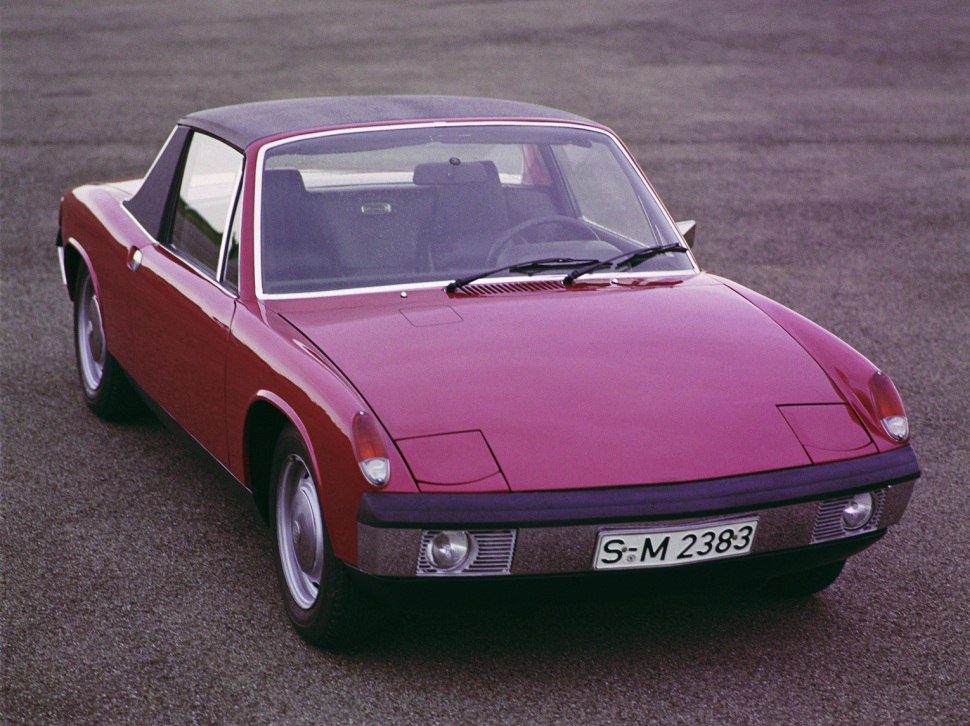
The Porsche 914, introduced in 1969, represents a unique chapter in the storied history of Porsche. Designed as a more affordable sports car, it aimed to fill a gap in the market between the iconic 911 and the Volkswagen-based 912. The 914 was a collaborative effort between Porsche and Volkswagen, initially intended to replace both the 912 and the Volkswagen Karmann Ghia. The model, particularly the 1.7-liter variant producing 86 horsepower, offered a distinctive mid-engine layout and a targa top, making it a popular choice for enthusiasts seeking a nimble and engaging driving experience. Production continued through 1976, with various engine upgrades and iterations, but the original 1.7-liter model remains a significant piece of automotive history.
Porsche 914 1.7: A Detailed Overview
The 914 was a departure for Porsche in several ways. Unlike the traditional rear-engine configuration of the 911, the 914 featured a mid-engine layout, contributing to its balanced handling characteristics. This placement of the engine, behind the driver but ahead of the rear axle, provided a lower center of gravity and improved weight distribution. The car’s design, while controversial at the time, was modern and functional, prioritizing aerodynamics and driver engagement. The targa top, a semi-convertible design with a removable roof panel, became a defining feature of the 914, offering an open-air driving experience without sacrificing structural rigidity.
Engine & Performance
The 1.7-liter version of the Porsche 914 was powered by a naturally aspirated, four-cylinder boxer engine. This engine, derived from the Volkswagen Type 4, produced 86 horsepower at 5000 rpm and 135 Nm (99.57 lb.-ft.) of torque at 3500 rpm. While not exceptionally powerful by modern standards, the engine’s lightweight construction and the car’s relatively low curb weight of 898 kg (1979.75 lbs.) resulted in a respectable power-to-weight ratio of 10.4 kg/Hp. The engine’s displacement of 1679 cm³ (102.46 cu. in.) and a compression ratio of 8.2:1 contributed to its efficiency and reliability. Power delivery was smooth and predictable, making the 914 a forgiving and enjoyable car to drive. The engine was paired with a five-speed manual transmission, allowing drivers to fully exploit the engine’s capabilities. The 914 1.7 could achieve a maximum speed of 176 km/h (109.36 mph).
Design & Features
The Porsche 914’s body style is best described as a targa, a design popularized by Porsche itself with the 911 Targa. The removable roof panel stored in a compartment behind the seats allowed for open-air motoring. The car’s sleek, low-slung profile and distinctive curves were penned by Butzi Porsche, grandson of Ferdinand Porsche. The 914’s interior was minimalist and functional, focusing on the driving experience. Seats were supportive, and the dashboard layout was straightforward, with essential gauges clearly visible. Safety features, while limited by the standards of the late 1960s and early 1970s, included disc brakes on all four wheels, providing adequate stopping power. The 914’s suspension system, featuring torsion bars at the front and independent coil springs at the rear, contributed to its excellent handling and ride quality. The car’s relatively compact dimensions – a length of 3988 mm (157.01 in.), a width of 1592 mm (62.68 in.), and a height of 1220 mm (48.03 in.) – made it easy to maneuver in urban environments.
Technical Specifications
| Brand | Porsche |
| Model | 914 |
| Generation | 914 |
| Type (Engine) | 1.7 (86 Hp) |
| Start of production | 1969 |
| End of production | 1972 |
| Powertrain Architecture | Internal Combustion engine |
| Body type | Targa |
| Seats | 2 |
| Doors | 2 |
| Fuel consumption (combined) | 10.9 l/100 km |
| Fuel consumption (US mpg) | 21.6 US mpg |
| Fuel consumption (UK mpg) | 25.9 UK mpg |
| Fuel consumption (km/l) | 9.2 km/l |
| Fuel Type | Petrol (Gasoline) |
| Maximum speed | 176 km/h (109.36 mph) |
| Weight-to-power ratio | 10.4 kg/Hp |
| Weight-to-torque ratio | 6.7 kg/Nm |
| Power | 86 Hp @ 5000 rpm |
| Power per litre | 51.2 Hp/l |
| Torque | 135 Nm @ 3500 rpm (99.57 lb.-ft. @ 3500 rpm) |
| Engine layout | Middle, Longitudinal |
| Engine displacement | 1679 cm3 (102.46 cu. in.) |
| Number of cylinders | 4 |
| Engine configuration | Boxer |
| Cylinder Bore | 90 mm (3.54 in.) |
| Piston Stroke | 66 mm (2.6 in.) |
| Compression ratio | 8.2:1 |
| Number of valves per cylinder | 2 |
| Engine aspiration | Naturally aspirated |
| Engine oil capacity | 3.5 l (3.7 US qt | 3.08 UK qt) |
| Kerb Weight | 898 kg (1979.75 lbs.) |
| Max. weight | 1220 kg (2689.64 lbs.) |
| Max load | 322 kg (709.89 lbs.) |
| Length | 3988 mm (157.01 in.) |
| Width | 1592 mm (62.68 in.) |
| Height | 1220 mm (48.03 in.) |
| Wheelbase | 2451 mm (96.5 in.) |
| Front track | 1341 mm (52.8 in.) |
| Rear track | 1379 mm (54.29 in.) |
| Drivetrain Architecture | Rear wheel drive |
| Number of gears | 5 gears, manual transmission |
| Front suspension | Torsion |
| Rear suspension | Independent coil spring |
| Front brakes | Disc, 281 mm |
| Rear brakes | Disc, 282 mm |
| Steering type | Steering rack and pinion |
| Tires size | 155 R15 |
| Wheel rims size | 4.5J x 15 |
The Porsche 914 1.7, despite its initial reception, has become a beloved classic among Porsche enthusiasts. Its unique mid-engine layout, engaging driving dynamics, and distinctive styling have secured its place in automotive history. The car’s relative affordability and ease of maintenance have also contributed to its enduring popularity, making it a viable entry point into the world of Porsche ownership.
