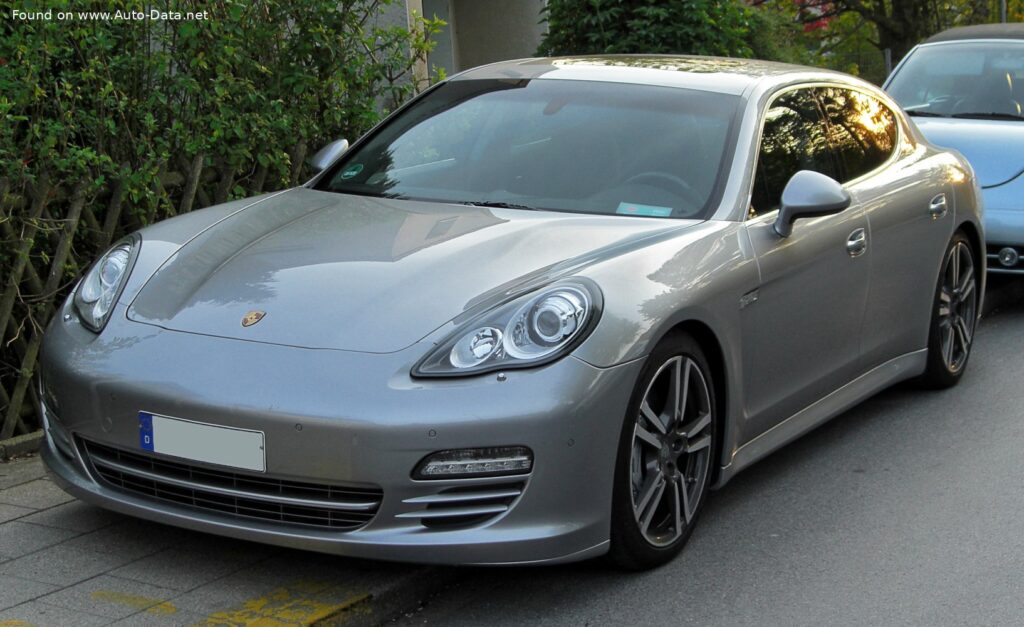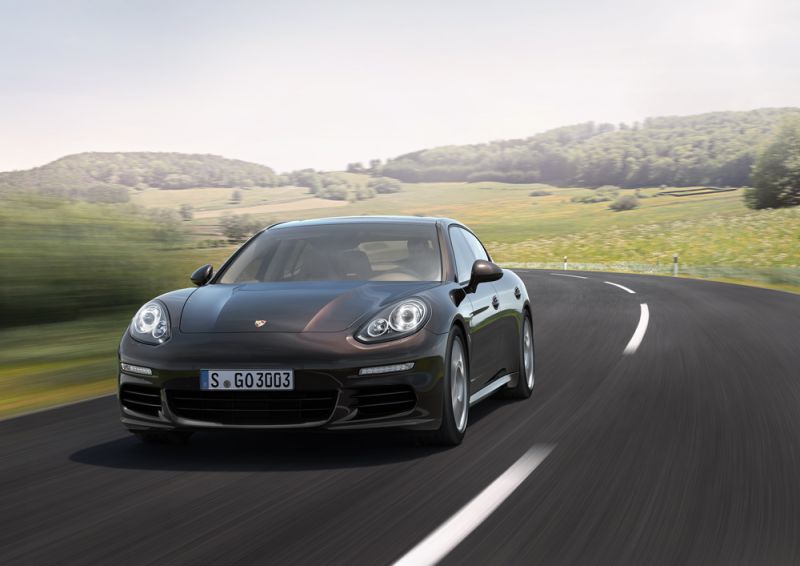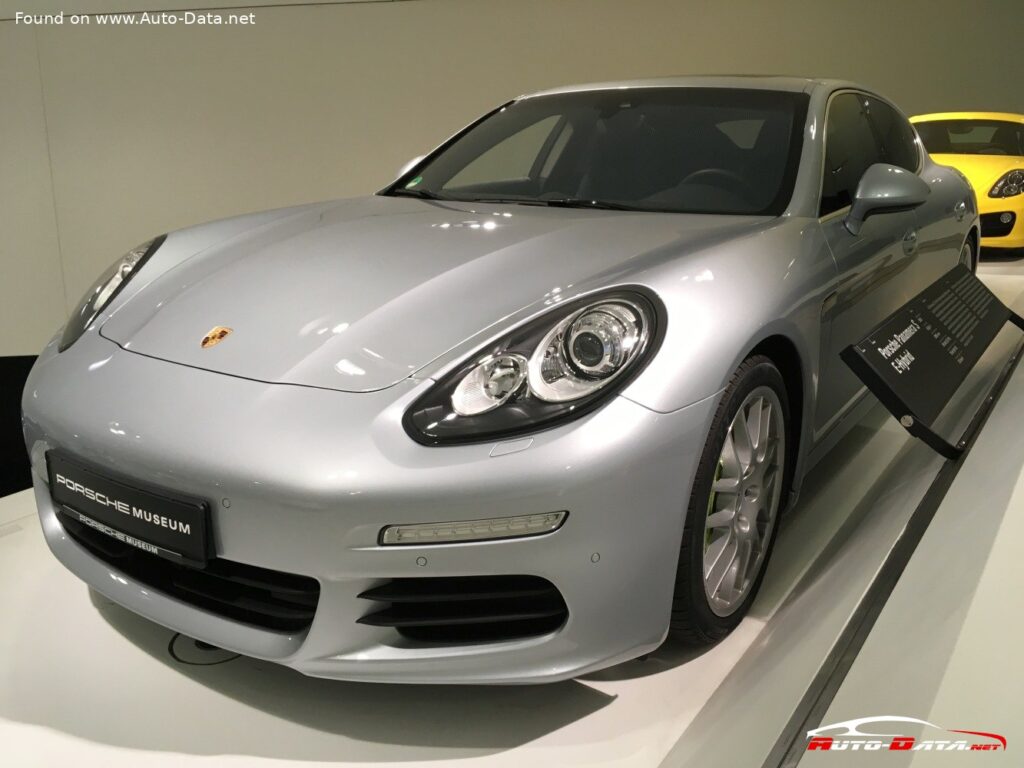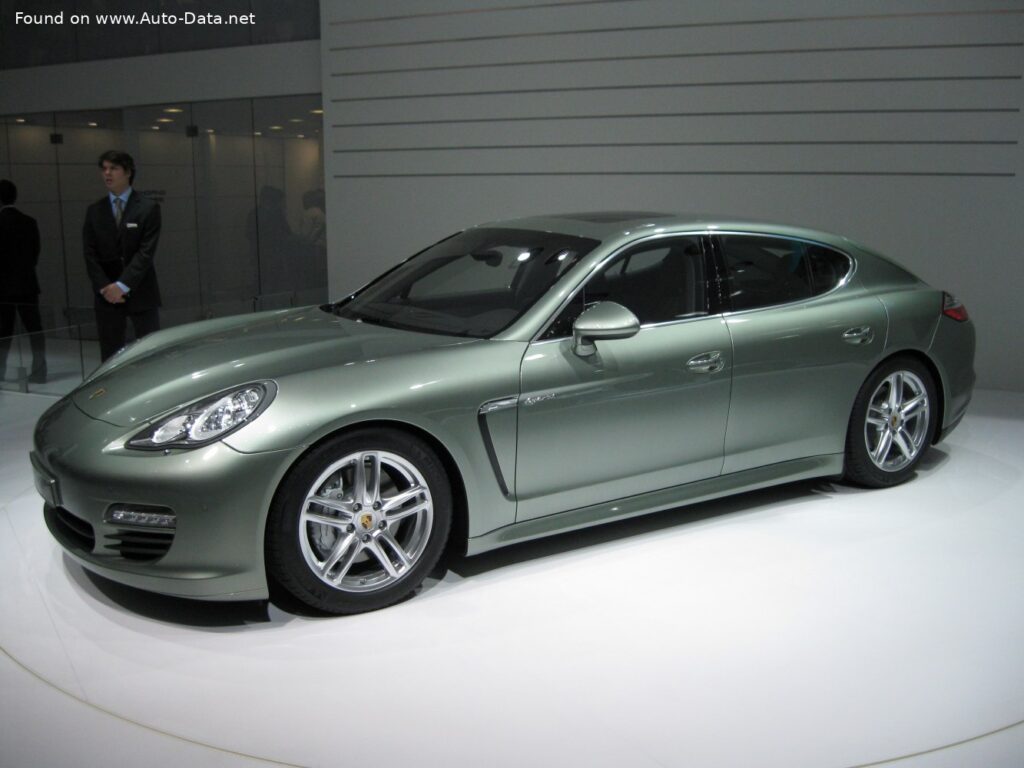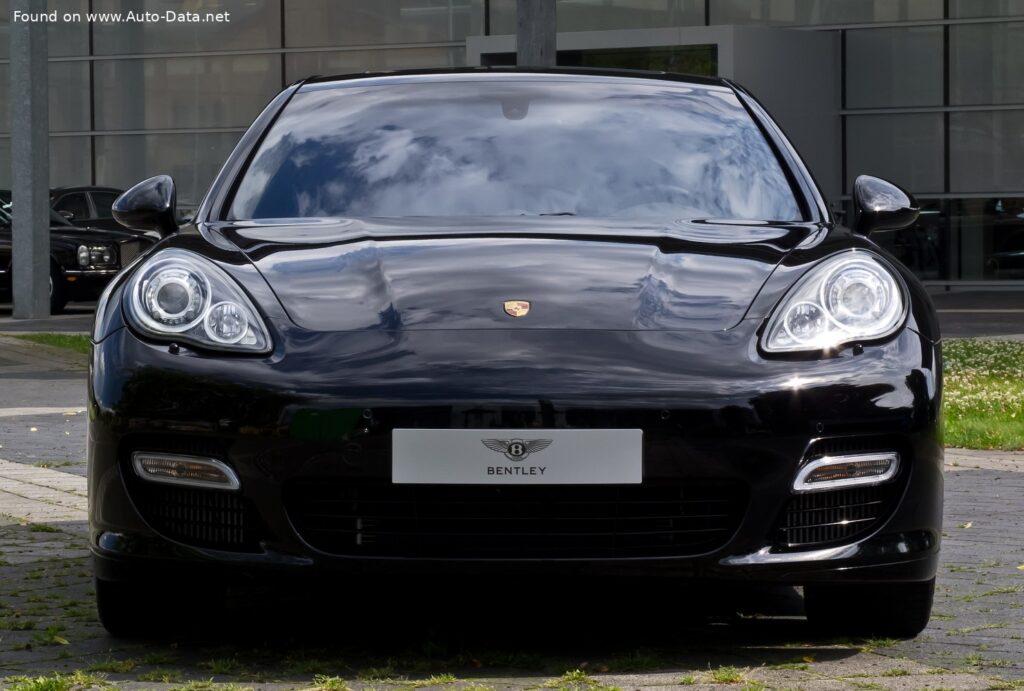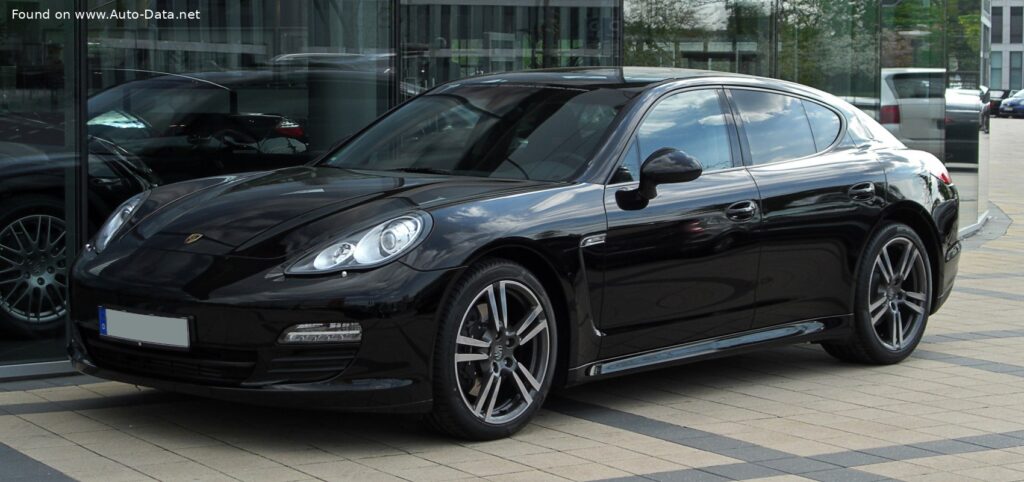
The Porsche Panamera (G1), specifically the 3.6 V6 (300 Hp) PDK model, represents Porsche’s ambitious entry into the luxury four-door grand touring segment. Introduced in April 2010 and produced through June 2013, this initial generation Panamera aimed to blend the performance and driving dynamics traditionally associated with the Porsche brand with the practicality of a larger, more accommodating vehicle. Positioned as a competitor to established marques like Mercedes-Benz and BMW, the G1 Panamera sought to attract customers desiring a sports car experience in a more versatile package. The 3.6 V6 variant served as the entry point to the Panamera range, offering a balance of performance and efficiency.
Porsche Panamera (G1) 3.6 V6: An Overview
The Panamera G1 was a significant departure for Porsche, marking the first time the manufacturer offered a four-door, five-seat vehicle. Its liftback design, while initially controversial, proved practical, offering a large and accessible cargo area. The 3.6-liter V6 model was designed to broaden the Panamera’s appeal, providing a more accessible price point and fuel economy compared to the V8-powered variants. It utilized Porsche’s innovative PDK (Porsche Doppelkupplung) dual-clutch transmission, contributing to its quick acceleration and responsive driving experience. The G1 Panamera established the foundation for the subsequent generations, setting the stage for Porsche’s continued success in the luxury sedan market.
Engine & Performance
At the heart of the Panamera 3.6 V6 lies a naturally aspirated 3.6-liter V6 engine, producing 300 horsepower at 6,200 rpm and 400 Newton-meters (295.02 lb.-ft.) of torque at 3,750 rpm. This engine, designated as the 4620 model, features direct fuel injection and a compression ratio of 12.5:1, contributing to its efficiency and power output. The engine is longitudinally mounted at the front of the vehicle. Paired with the seven-speed PDK dual-clutch transmission, the Panamera 3.6 V6 achieves a 0-60 mph (0-97 km/h) acceleration time of approximately 5.8 seconds, and a 0-100 km/h (0-62 mph) time of 6.1 to 6.3 seconds. Its maximum speed is electronically limited to 259 km/h (160.94 mph). The power-to-weight ratio stands at 5.9 kg/Hp, and the torque-to-weight ratio is 4.4 kg/Nm, highlighting the vehicle’s performance capabilities. Fuel consumption is rated at 9.3 liters per 100 kilometers (25.3 US mpg) combined, with urban figures of 12.7 l/100km (18.5 US mpg) and extra-urban figures of 6.9 l/100km (34.1 US mpg).
Design & Features
The Porsche Panamera G1 is characterized by its distinctive liftback body style, offering a blend of coupe-like aesthetics and sedan practicality. The vehicle accommodates four passengers comfortably and provides 445 liters (15.72 cu. ft.) of trunk space, expandable to 1263 liters (44.6 cu. ft.) with the rear seats folded down. The exterior design, while initially polarizing, emphasizes aerodynamic efficiency, evidenced by its drag coefficient of 0.30. The 3.6 V6 model typically came equipped with 18-inch alloy wheels (8J x 18 front, 9J x 18 rear) and tires sized 245/50 ZR18 (front) and 275/45 ZR18 (rear). Safety features included ABS (Anti-lock Braking System) and ventilated disc brakes on all four wheels (360mm front, 330mm rear). The steering system utilizes a rack and pinion setup. The interior focused on luxury and driver engagement, featuring high-quality materials and a driver-centric cockpit layout.
Technical Specifications
| Brand | Porsche |
| Model | Panamera |
| Generation | Panamera (G1) |
| Type (Engine) | 3.6 V6 (300 Hp) PDK |
| Start of production | April, 2010 |
| End of production | June, 2013 |
| Powertrain Architecture | Internal Combustion engine |
| Body type | Liftback |
| Seats | 4 |
| Doors | 5 |
| Fuel consumption (urban) | 12.7 l/100 km (18.5 US mpg) |
| Fuel consumption (extra urban) | 6.9 l/100 km (34.1 US mpg) |
| Fuel consumption (combined) | 9.3 l/100 km (25.3 US mpg) |
| CO2 emissions | 218 g/km |
| Fuel Type | Petrol (Gasoline) |
| Acceleration 0 – 100 km/h | 6.1-6.3 sec |
| Acceleration 0 – 62 mph | 6.1-6.3 sec |
| Acceleration 0 – 60 mph | 5.8 sec |
| Maximum speed | 259 km/h (160.94 mph) |
| Weight-to-power ratio | 5.9 kg/Hp |
| Weight-to-torque ratio | 4.4 kg/Nm |
| Power | 300 Hp @ 6200 rpm |
| Torque | 400 Nm @ 3750 rpm (295.02 lb.-ft. @ 3750 rpm) |
| Engine layout | Front, Longitudinal |
| Engine Model/Code | 4620 |
| Engine displacement | 3605 cm3 (219.99 cu. in.) |
| Number of cylinders | 6 |
| Engine configuration | V-engine |
| Compression ratio | 12.5:1 |
| Number of valves per cylinder | 4 |
| Fuel injection system | Direct injection |
| Engine oil capacity | 8.5 l (8.98 US qt | 7.48 UK qt) |
| Kerb Weight | 1760 kg (3880.14 lbs.) |
| Max. weight | 2365 kg (5213.93 lbs.) |
| Max load | 605 kg (1333.8 lbs.) |
| Trunk (boot) space – minimum | 445 l (15.72 cu. ft.) |
| Trunk (boot) space – maximum | 1263 l (44.6 cu. ft.) |
| Fuel tank capacity | 80 l (21.13 US gal | 17.6 UK gal) |
| Length | 4970 mm (195.67 in.) |
| Width | 1931 mm (76.02 in.) |
| Width including mirrors | 2114 mm (83.23 in.) |
| Height | 1418 mm (55.83 in.) |
| Wheelbase | 2920 mm (114.96 in.) |
| Drag coefficient (Cd) | 0.30 |
| Drivetrain Architecture | Rear wheel drive |
| Number of gears and type of gearbox | 7 gears, automatic transmission PDK |
| Front suspension | Double wishbone |
| Rear suspension | Independent multi-link suspension |
| Front brakes | Ventilated discs, 360 mm |
| Rear brakes | Ventilated discs, 330 mm |
| Assisting systems | ABS (Anti-lock braking system) |
| Steering type | Steering rack and pinion |
| Front wheel tires | 245/50 ZR18 |
| Rear wheel tires | 275/45 ZR18 |
| Front wheel rims | 8J x 18 |
| Rear wheel rims | 9J x 18 |