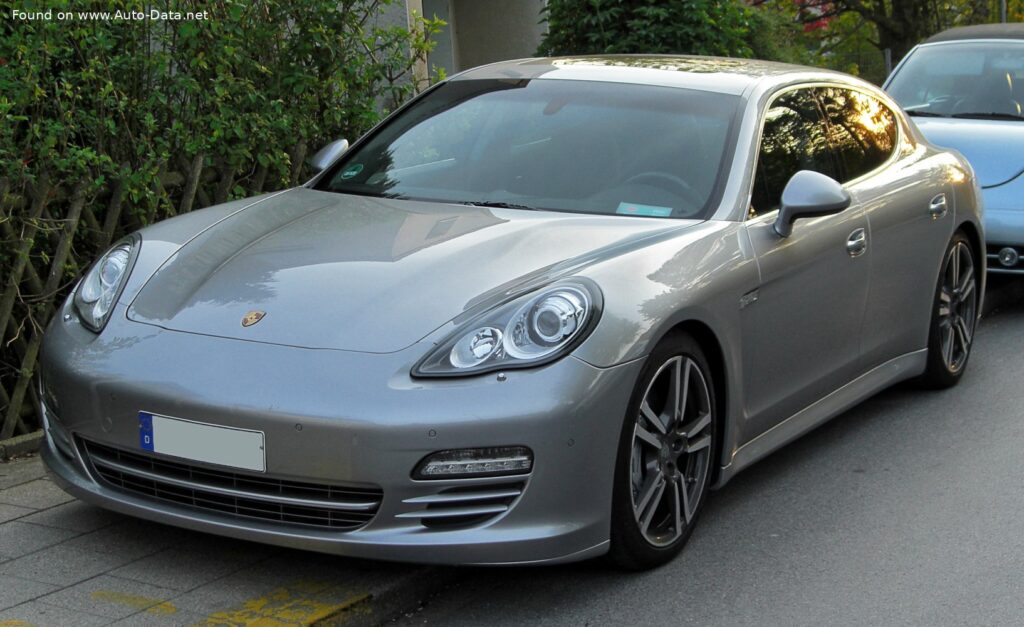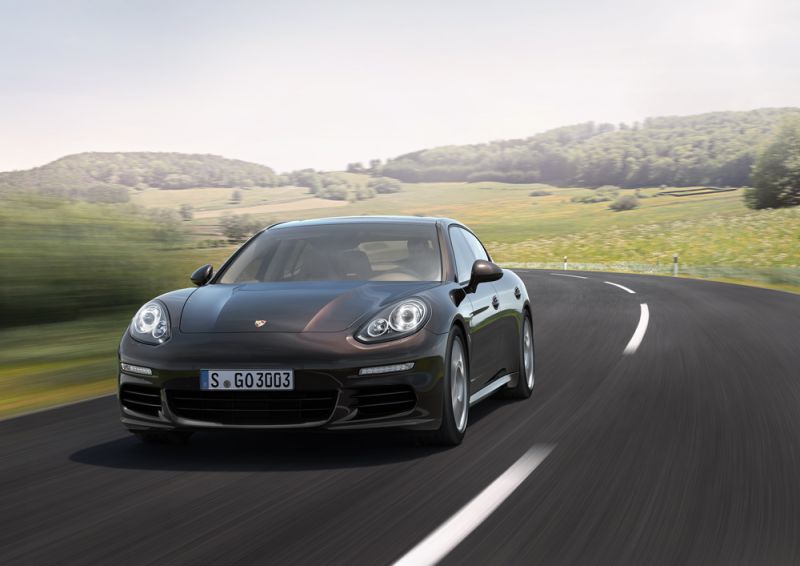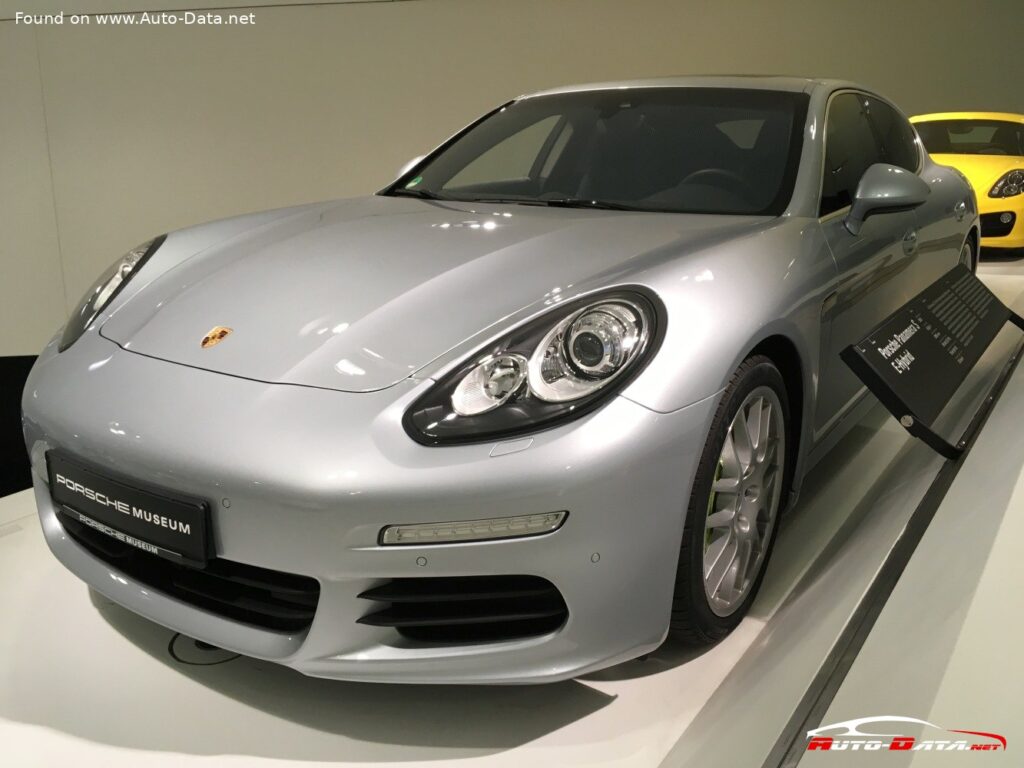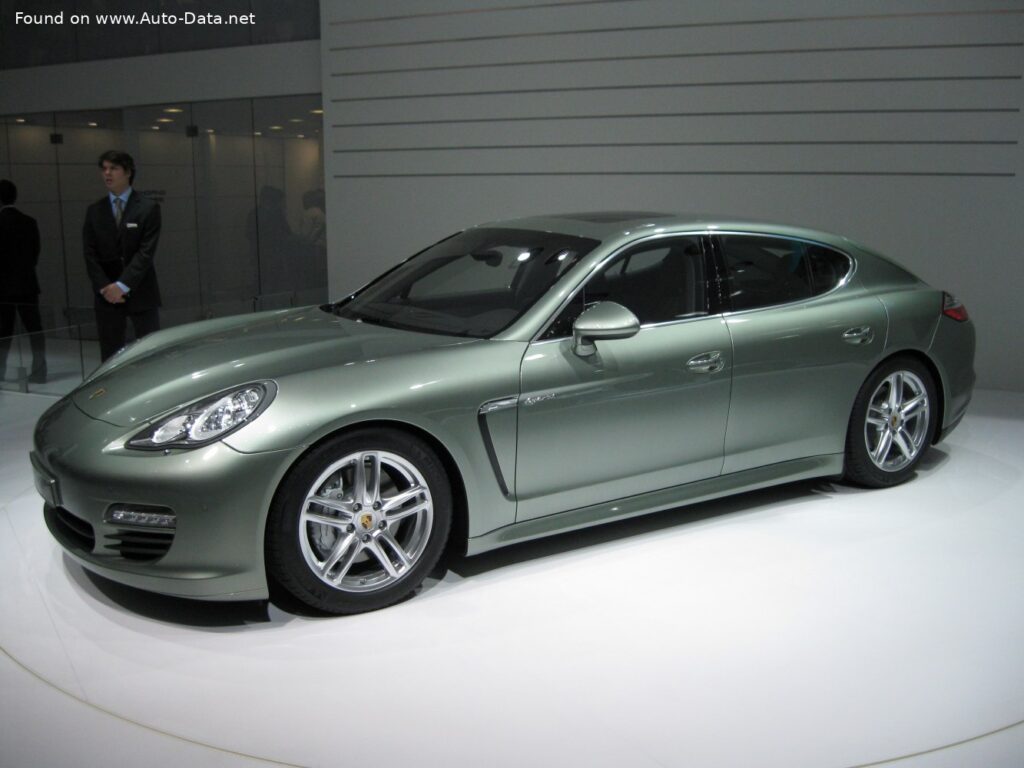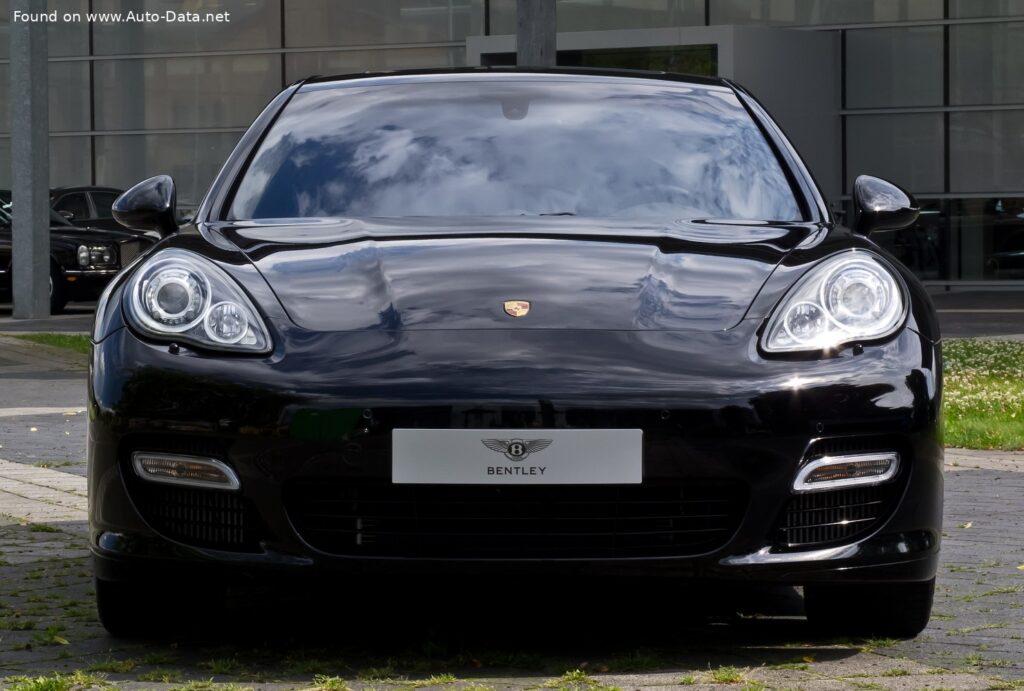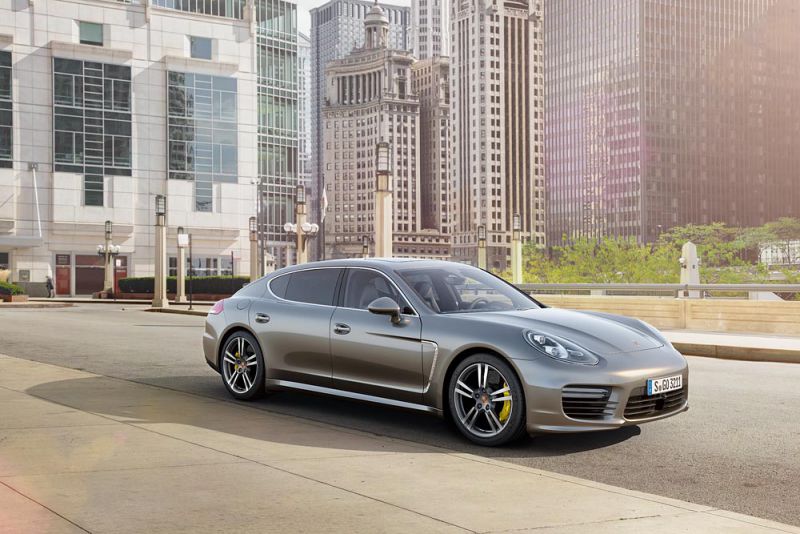
The Porsche Panamera (G1 II) Executive Turbo S represents the pinnacle of luxury and performance within the second generation of Porsche’s groundbreaking four-door coupé. Introduced for the 2015 model year and continuing through 2016, this variant catered to buyers seeking an even more refined and spacious Panamera experience. The “Executive” designation signifies a lengthened wheelbase, providing increased rear legroom, making it particularly appealing to chauffeur-driven executives or families prioritizing comfort. Positioned in the luxury performance segment, the Panamera Turbo S competed with vehicles like the Mercedes-Benz S-Class and BMW 7 Series, but offered a uniquely sporty driving experience characteristic of the Porsche brand.
Porsche Panamera (G1 II) Executive Turbo S: A Detailed Overview
The G1 II generation Panamera, launched in 2013, was a significant evolution of the original model introduced in 2009. It addressed criticisms of the first-generation’s styling and interior, offering a more sophisticated and user-friendly experience. The Executive models, including the Turbo S, further enhanced the Panamera’s appeal by prioritizing rear passenger comfort without sacrificing the dynamic driving characteristics Porsche is renowned for. This model year saw refinements to the engine and transmission, solidifying its position as a leader in the luxury performance market.
Engine & Performance
At the heart of the Panamera Turbo S Executive lies a potent 4.8-liter twin-turbocharged V8 engine, designated the CWBA. This powerplant delivers a formidable 570 horsepower at 6000 rpm and a massive 800 Nm (590.05 lb.-ft.) of torque available from a low 2500 rpm, sustained through 4500 rpm. This broad torque curve, coupled with Porsche’s seven-speed PDK (Porsche Doppelkupplung) dual-clutch transmission, enables breathtaking acceleration. Officially, the 0-100 km/h (0-62 mph) sprint takes just 3.9 seconds, while a calculated 0-60 mph time is an impressive 3.7 seconds. Top speed is electronically limited to 310 km/h (192.63 mph). The engine’s specific output is a remarkable 118.6 horsepower per liter. The engine utilizes direct fuel injection and an intercooler to maximize efficiency and power output. A Start & Stop system was included to improve fuel economy in urban driving conditions.
Design & Features
The Panamera Turbo S Executive retains the distinctive liftback body style of the Panamera, offering a unique blend of coupé elegance and hatchback practicality. The lengthened wheelbase, a defining characteristic of the Executive models, adds 150 mm (5.9 inches) to the overall length, translating into significantly more rear legroom. The exterior design incorporates subtle styling cues that denote its high-performance status, including unique front and rear fascias, larger air intakes, and distinctive wheels. Inside, the cabin is lavishly appointed with premium materials, including high-quality leather, wood trim, and aluminum accents. Standard features include a comprehensive infotainment system, adaptive air suspension, and a host of driver-assistance technologies. The trunk offers a generous 432 liters (15.26 cu. ft.) of space, expanding to 1385 liters (48.91 cu. ft.) with the rear seats folded down. The focus on luxury is evident in the available options, which included massaging seats, a rear-seat entertainment system, and a premium sound system.
Technical Specifications
| Brand | Porsche |
| Model | Panamera |
| Generation | Panamera (G1 II) Executive |
| Type (Engine) | Turbo S 4.8 V8 (570 Hp) PDK |
| Start of production | 2015 |
| End of production | 2016 |
| Powertrain Architecture | Internal Combustion engine |
| Body type | Liftback |
| Seats | 4 |
| Doors | 4 |
| Fuel consumption (economy) – urban (NEDC) | 15.1 l/100 km (15.6 US mpg, 18.7 UK mpg, 6.6 km/l) |
| Fuel consumption (economy) – extra urban (NEDC) | 7.9 l/100 km (29.8 US mpg, 35.8 UK mpg, 12.7 km/l) |
| Fuel consumption (economy) – combined (NEDC) | 10.5 l/100 km (22.4 US mpg, 26.9 UK mpg, 9.5 km/l) |
| CO2 emissions (NEDC) | 245 g/km |
| Fuel Type | Petrol (Gasoline) |
| Acceleration 0 – 100 km/h | 3.9 sec |
| Acceleration 0 – 62 mph | 3.9 sec |
| Acceleration 0 – 60 mph | 3.7 sec |
| Acceleration 0 – 200 km/h | 13.2 sec |
| Maximum speed | 310 km/h (192.63 mph) |
| Emission standard | Euro 6 |
| Weight-to-power ratio | 3.6 kg/Hp, 274 Hp/tonne |
| Weight-to-torque ratio | 2.6 kg/Nm, 384.6 Nm/tonne |
| Power | 570 Hp @ 6000 rpm |
| Power per litre | 118.6 Hp/l |
| Torque | 800 Nm @ 2500-4500 rpm (590.05 lb.-ft. @ 2500-4500 rpm) |
| Maximum engine speed | 6700 rpm |
| Engine layout | Front, Longitudinal |
| Engine Model/Code | CWBA |
| Engine displacement | 4806 cm3 (293.28 cu. in.) |
| Number of cylinders | 8 |
| Engine configuration | V-engine |
| Cylinder Bore | 96 mm (3.78 in.) |
| Piston Stroke | 83 mm (3.27 in.) |
| Compression ratio | 10.5:1 |
| Number of valves per cylinder | 4 |
| Fuel injection system | Direct injection |
| Engine aspiration | BiTurbo, Intercooler |
| Valvetrain | DOHC |
| Engine oil capacity | 9 l (9.51 US qt | 7.92 UK qt) |
| Kerb Weight | 2080 kg (4585.62 lbs.) |
| Max. weight | 2560 kg (5643.83 lbs.) |
| Max load | 480 kg (1058.22 lbs.) |
| Trunk (boot) space – minimum | 432 l (15.26 cu. ft.) |
| Trunk (boot) space – maximum | 1385 l (48.91 cu. ft.) |
| Fuel tank capacity | 100 l (26.42 US gal | 22 UK gal) |
| Length | 5165 mm (203.35 in.) |
| Width | 1931 mm (76.02 in.) |
| Width including mirrors | 2114 mm (83.23 in.) |
| Height | 1425 mm (56.1 in.) |
| Wheelbase | 3070 mm (120.87 in.) |
| Front track | 1646 mm (64.8 in.) |
| Rear (Back) track | 1642 mm (64.65 in.) |
| Ride height (ground clearance) | 144 mm (5.67 in.) |
| Drag coefficient (Cd) | 0.32 |
| Drivetrain Architecture | The Internal combustion engine (ICE) drives permanently the four wheels of the vehicle. |
| Drive wheel | All wheel drive (4×4) |
| Number of gears and type of gearbox | 7 gears, automatic transmission PDK |
| Front suspension | Double wishbone |
| Rear suspension | Independent multi-link suspension |
| Front brakes | Ventilated discs, 420×40 mm |
| Rear brakes | Ventilated discs, 350×28 mm |
| Assisting systems | ABS (Anti-lock braking system) |
| Steering type | Steering rack and pinion |
| Power steering | Hydraulic Steering |
| Tires size | Front wheel tires: 255/45 R19; 255/40 R20Rear wheel tires: 285/40 R19; 295/35 R20 |
| Wheel rims size | Front wheel rims: 9J x 19; 9.5J x 20Rear wheel rims: 10J x 19; 11.5J x 20 |