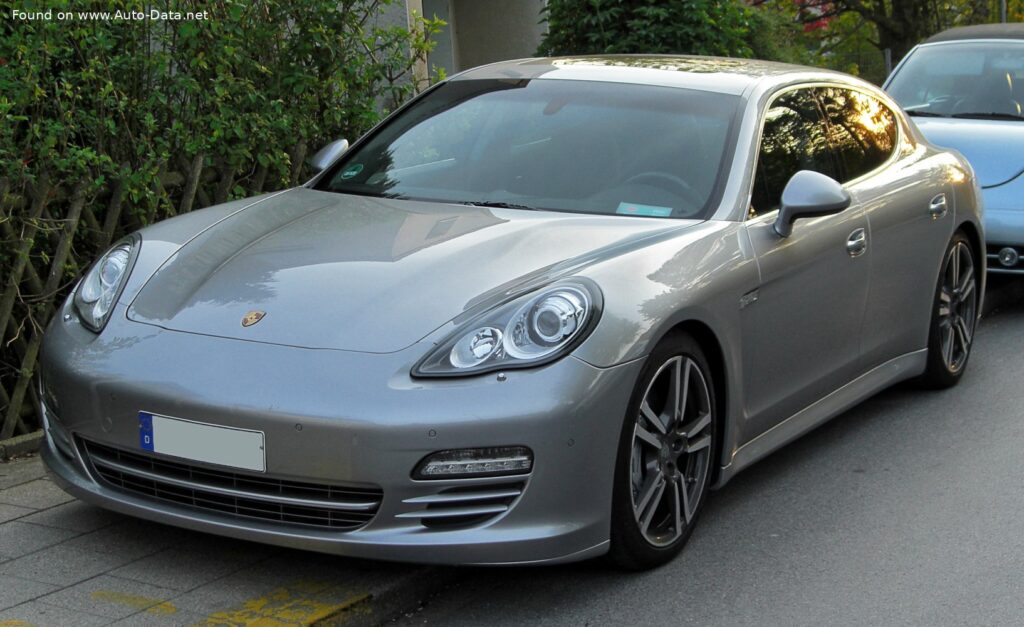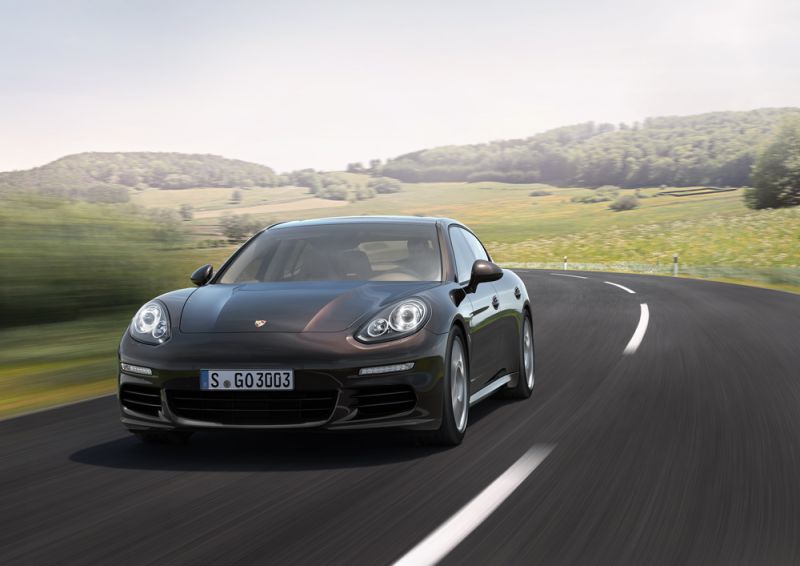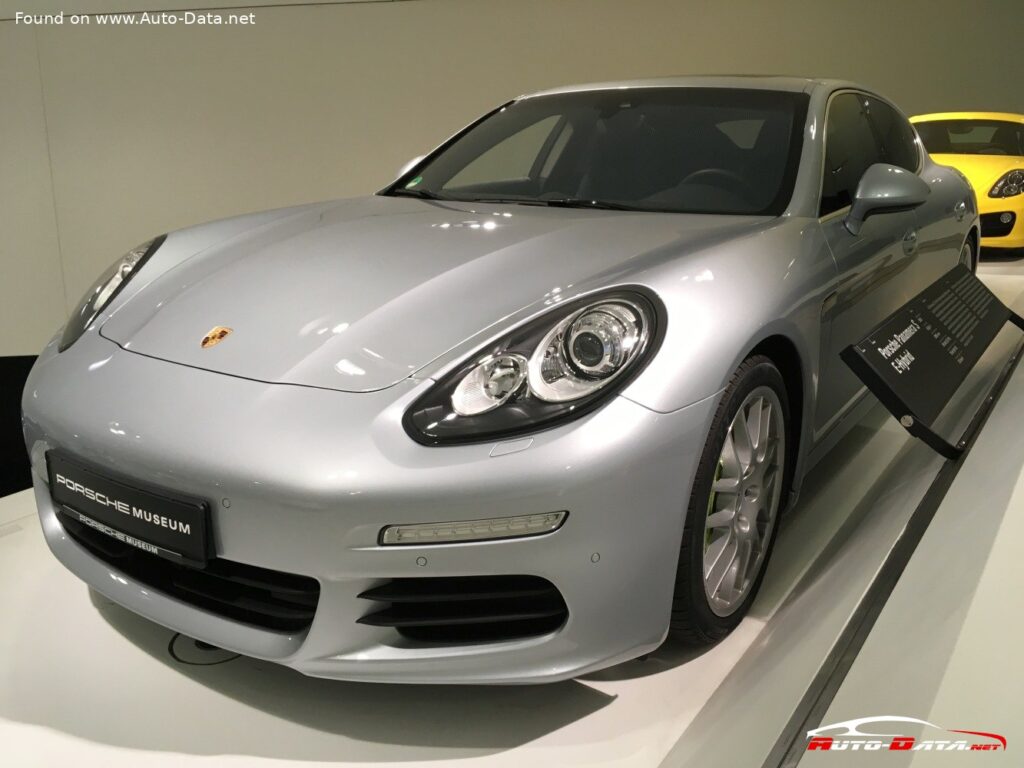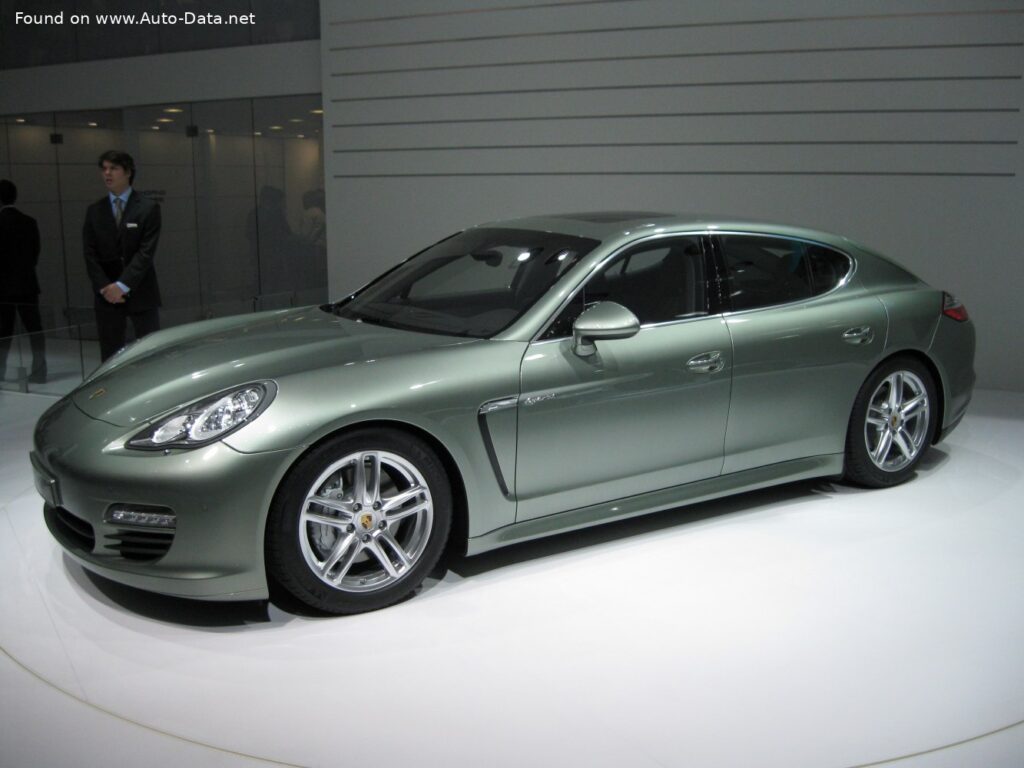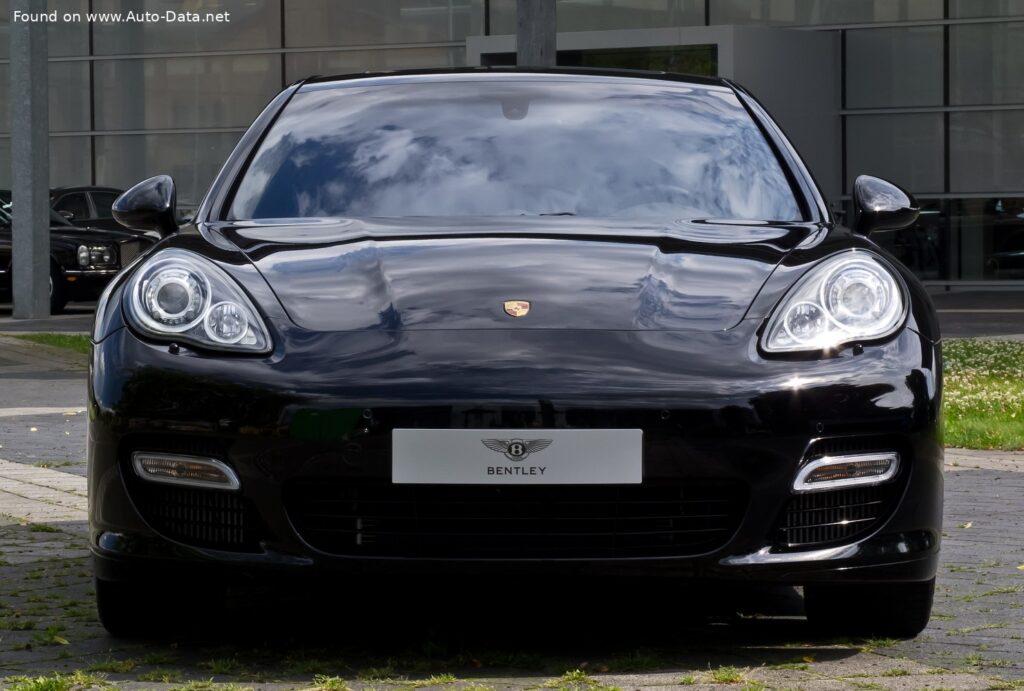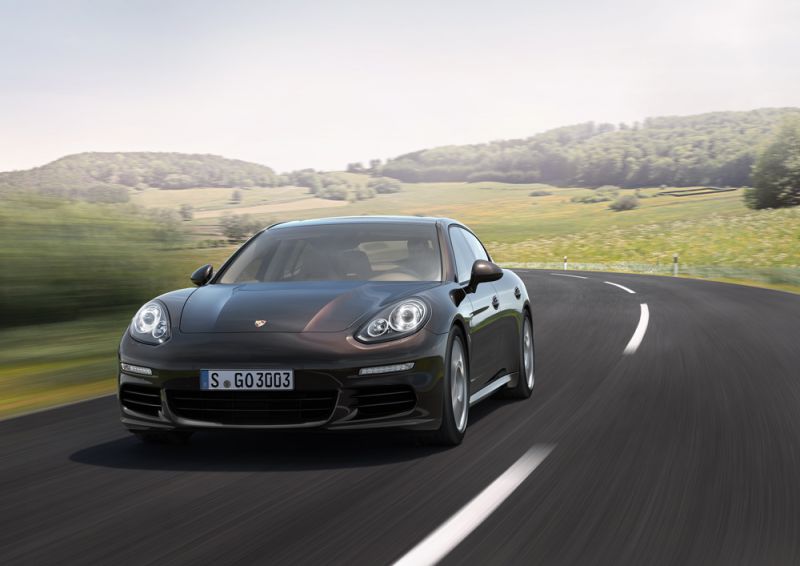
The Porsche Panamera (G1 II) Turbo S, produced from 2015 to 2016, represents a significant evolution of Porsche’s foray into the luxury performance sedan market. As the second generation of the Panamera (internally designated G1 II), this model aimed to refine the original’s design and enhance its driving dynamics, solidifying Porsche’s position as a competitor to established brands like Mercedes-Benz and BMW. The Turbo S variant, equipped with a potent 4.8-liter twin-turbocharged V8 engine, served as the flagship model, offering blistering performance and a luxurious interior. This liftback sedan, seating four, combined sports car characteristics with the practicality of a four-door vehicle, appealing to a discerning clientele seeking both exhilaration and everyday usability.
Porsche Panamera (G1 II) Turbo S: A Performance Overview
The core of the Panamera Turbo S is its 4.8-liter twin-turbocharged V8 engine, designated CWBA. This powerplant delivers a formidable 570 horsepower at 6000 rpm and 800 Nm (590.05 lb.-ft.) of torque between 2500 and 4500 rpm. The engine’s direct injection system and bi-turbocharging contribute to both its impressive power output and relatively efficient operation. Power is channeled to all four wheels via Porsche’s seven-speed PDK (Porsche Doppelkupplung) dual-clutch automatic transmission, ensuring rapid and seamless gear changes. This combination results in a 0-60 mph (0-97 km/h) acceleration time of just 3.6 seconds, and a 0-100 km/h (0-62 mph) time of 3.8 seconds. The vehicle boasts a maximum speed of 310 km/h (192.63 mph). The weight-to-power ratio of 3.5 kg/Hp and a weight-to-torque ratio of 2.5 kg/Nm further emphasize the car’s performance capabilities.
Engine and Technical Details
The engine itself features a longitudinal mounting and a V8 configuration, with a bore of 96 mm (3.78 in.) and a stroke of 83 mm (3.27 in.). The compression ratio is set at 10.5:1, and each cylinder utilizes four valves. The engine requires 9 liters (9.51 US qt | 7.92 UK qt) of oil, adhering to Porsche’s specific oil specifications. The drivetrain is an all-wheel-drive (4×4) system, providing optimal traction and stability. The Panamera Turbo S meets Euro 6 emission standards, reflecting Porsche’s commitment to environmental responsibility.
Design and Features
The Panamera G1 II retained the distinctive liftback design of the original, offering a unique blend of coupe-like styling and hatchback practicality. The 2015-2016 model year saw subtle refinements to the exterior, enhancing its aesthetic appeal. The vehicle measures 5015 mm (197.44 in.) in length, 1931 mm (76.02 in.) in width, and 1418 mm (55.83 in.) in height, with a wheelbase of 2920 mm (114.96 in.). The front and rear tracks measure 1646 mm (64.8 in.) and 1642 mm (64.65 in.), respectively. The drag coefficient of 0.32 contributes to aerodynamic efficiency.
Inside, the Panamera Turbo S offers a luxurious and technologically advanced cabin. Standard features included high-quality leather upholstery, advanced infotainment systems, and a range of driver-assistance technologies. Safety features such as ABS (Anti-lock braking system) were standard, reflecting Porsche’s dedication to occupant protection. The liftback design provides a versatile cargo area, offering a minimum of 432 liters (15.26 cu. ft.) and a maximum of 1250 liters (44.14 cu. ft.) of storage space. The fuel tank capacity is 100 liters (26.42 US gal | 22 UK gal).
Suspension and Brakes
The Panamera Turbo S features a sophisticated suspension system, employing a double wishbone configuration at the front and an independent multi-link suspension at the rear. This setup provides a comfortable ride while maintaining precise handling characteristics. Ventilated discs are used for both front and rear brakes, ensuring powerful and consistent stopping performance. The vehicle is equipped with 255/40 ZR 20 tires on 9.5J x 20 inch rims at the front and 295/35 ZR 20 tires on 11J x 20 inch rims at the rear.
Technical Specifications
| Brand | Porsche |
| Model | Panamera |
| Generation | Panamera (G1 II) |
| Type (Engine) | Turbo S 4.8 V8 (570 Hp) PDK |
| Start of production | 2015 |
| End of production | 2016 |
| Powertrain Architecture | Internal Combustion engine |
| Body type | Liftback |
| Seats | 4 |
| Doors | 4 |
| Fuel consumption (economy) – urban | 14.9 l/100 km (15.8 US mpg, 19 UK mpg, 6.7 km/l) |
| Fuel consumption (economy) – extra urban | 7.8 l/100 km (30.2 US mpg, 36.2 UK mpg, 12.8 km/l) |
| Fuel consumption (economy) – combined | 10.4 l/100 km (22.6 US mpg, 27.2 UK mpg, 9.6 km/l) |
| CO2 emissions | 242 g/km |
| Fuel Type | Petrol (Gasoline) |
| Acceleration 0 – 100 km/h | 3.8 sec |
| Acceleration 0 – 62 mph | 3.8 sec |
| Acceleration 0 – 60 mph | 3.6 sec |
| Maximum speed | 310 km/h (192.63 mph) |
| Emission standard | Euro 6 |
| Weight-to-power ratio | 3.5 kg/Hp |
| Weight-to-torque ratio | 2.5 kg/Nm |
| Power | 570 Hp @ 6000 rpm |
| Torque | 800 Nm @ 2500-4500 rpm (590.05 lb.-ft. @ 2500-4500 rpm) |
| Engine layout | Front, Longitudinal |
| Engine Model/Code | CWBA |
| Engine displacement | 4806 cm3 (293.28 cu. in.) |
| Number of cylinders | 8 |
| Engine configuration | V-engine |
| Cylinder Bore | 96 mm (3.78 in.) |
| Piston Stroke | 83 mm (3.27 in.) |
| Compression ratio | 10.5:1 |
| Number of valves per cylinder | 4 |
| Fuel injection system | Direct injection |
| Engine aspiration | BiTurbo, Intercooler |
| Engine oil capacity | 9 l (9.51 US qt | 7.92 UK qt) |
| Kerb Weight | 1995 kg (4398.22 lbs.) |
| Max. weight | 2500 kg (5511.56 lbs.) |
| Max load | 505 kg (1113.33 lbs.) |
| Trunk (boot) space – minimum | 432 l (15.26 cu. ft.) |
| Trunk (boot) space – maximum | 1250 l (44.14 cu. ft.) |
| Fuel tank capacity | 100 l (26.42 US gal | 22 UK gal) |
| Max. roof load | 75 kg (165.35 lbs.) |
| Length | 5015 mm (197.44 in.) |
| Width | 1931 mm (76.02 in.) |
| Width including mirrors | 2114 mm (83.23 in.) |
| Height | 1418 mm (55.83 in.) |
| Wheelbase | 2920 mm (114.96 in.) |
| Front track | 1646 mm (64.8 in.) |
| Rear (Back) track | 1642 mm (64.65 in.) |
| Drag coefficient (Cd) | 0.32 |
| Drive wheel | All wheel drive (4×4) |
| Number of gears and type of gearbox | 7 gears, automatic transmission PDK |
| Front suspension | Double wishbone |
| Rear suspension | Independent multi-link suspension |
| Front brakes | Ventilated discs |
| Rear brakes | Ventilated discs |