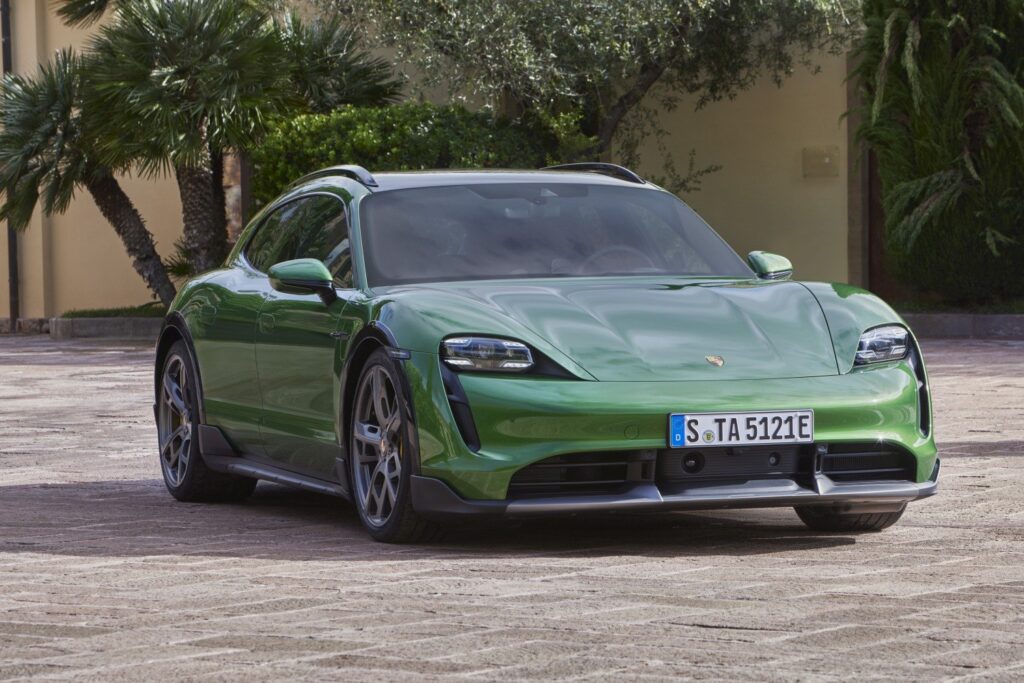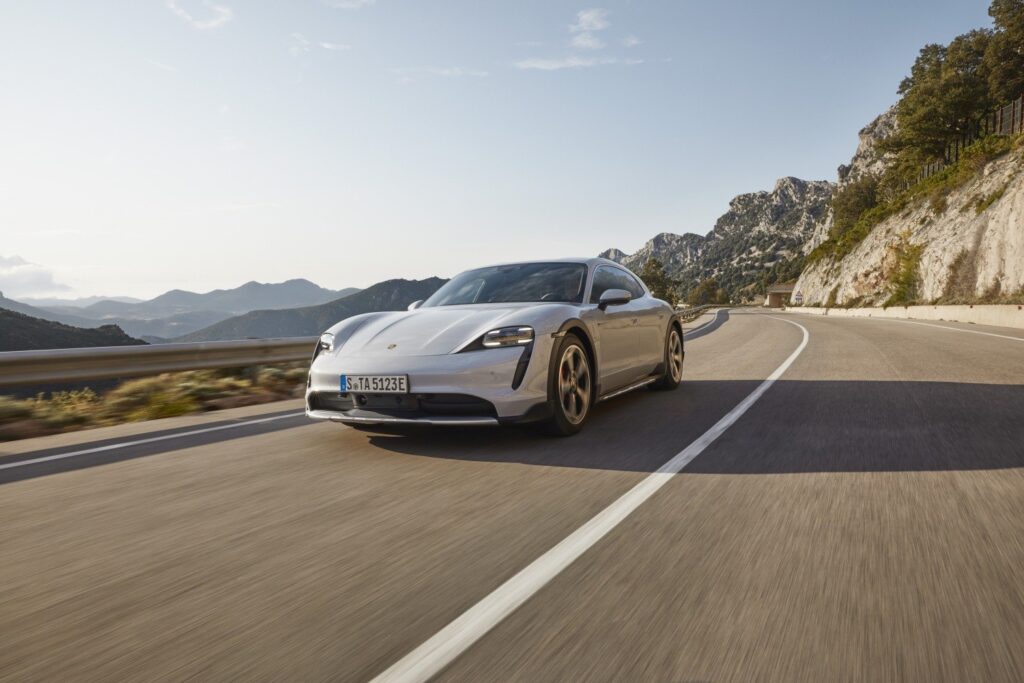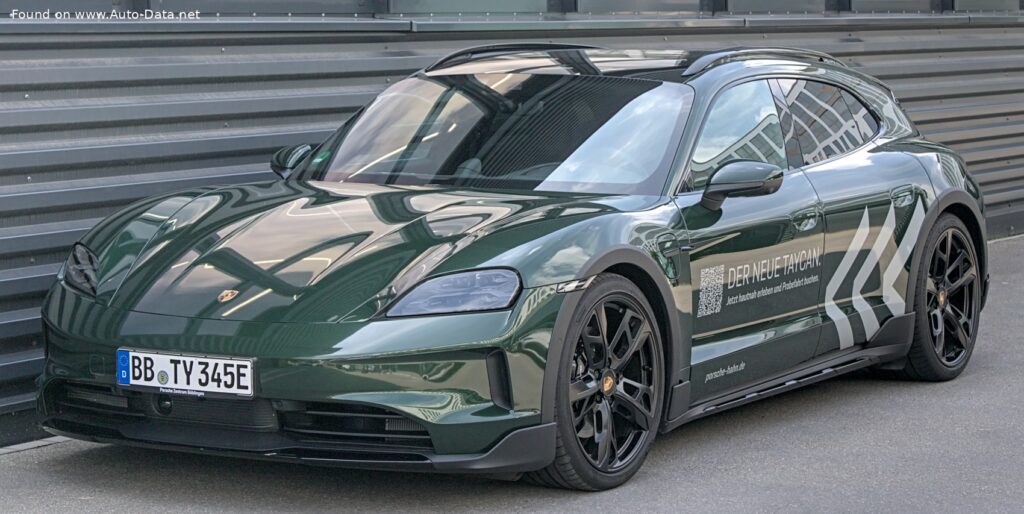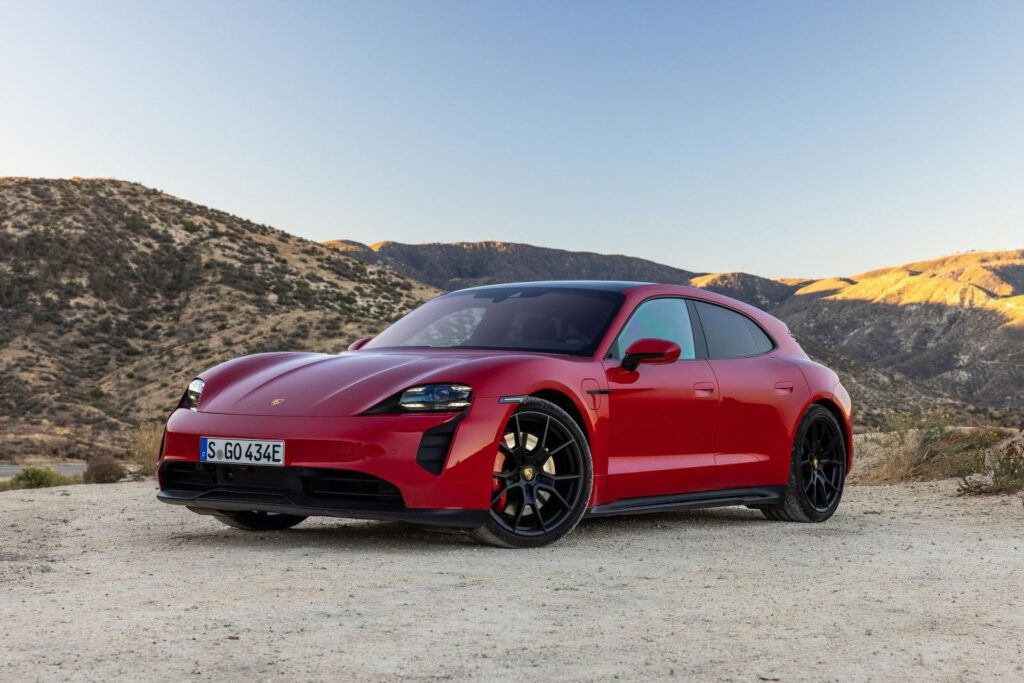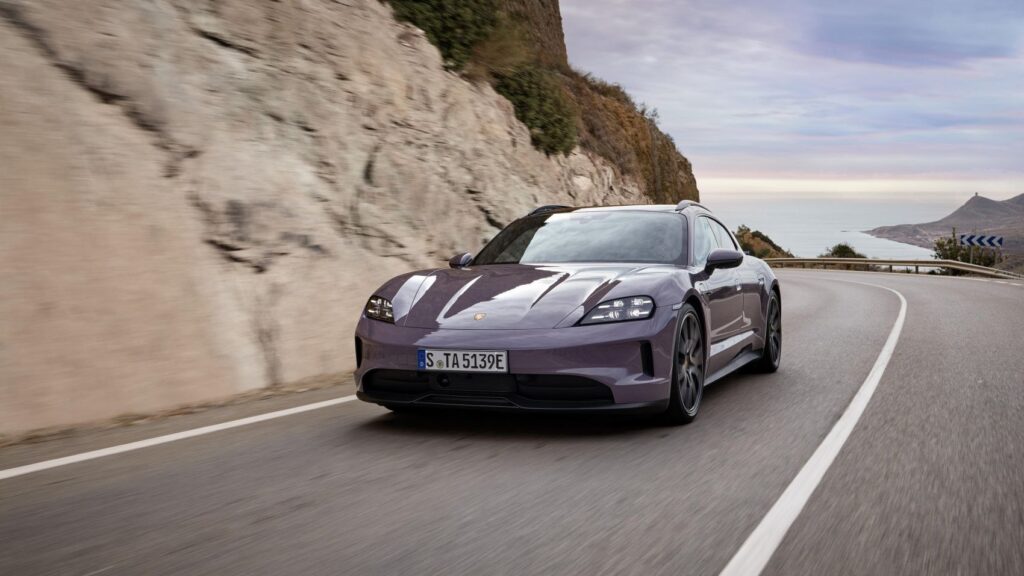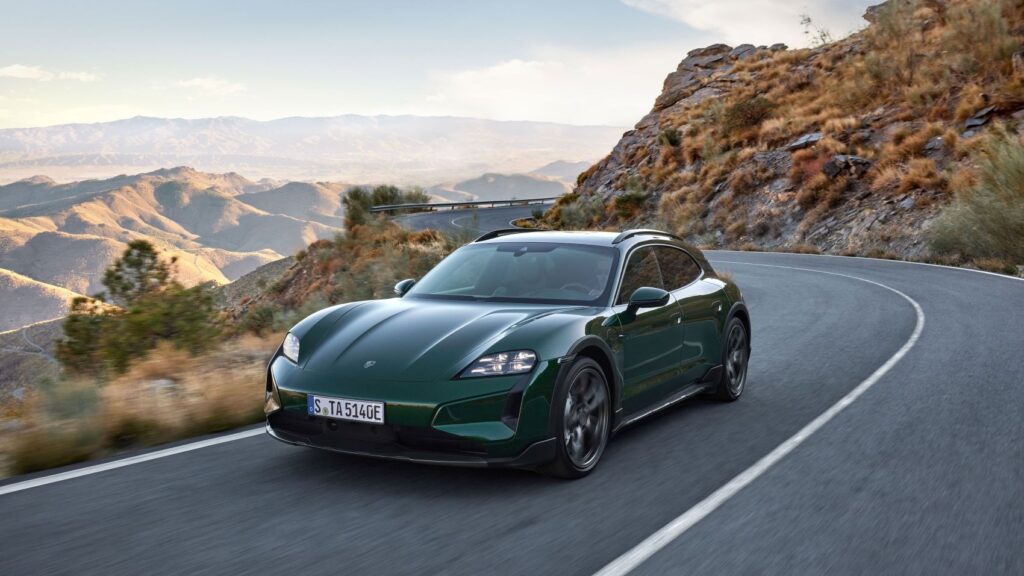
The Porsche Taycan Cross Turismo Turbo S represents Porsche’s foray into the burgeoning all-electric, performance station wagon segment. Introduced in February 2024 as part of the Taycan’s mid-cycle refresh (Y1A), this model builds upon the original Taycan Cross Turismo, offering increased practicality without sacrificing the brand’s hallmark driving dynamics. Positioned as a premium offering, the Turbo S variant sits at the top of the Cross Turismo lineup, delivering exceptional acceleration, range, and technological sophistication. It’s a vehicle designed to appeal to buyers seeking a high-performance EV with the versatility of a wagon body style, blending Porsche’s sporting heritage with a commitment to sustainable mobility.
Porsche Taycan Cross Turismo Turbo S: A Detailed Overview
The Taycan Cross Turismo distinguishes itself from the standard Taycan sedan with its raised ride height, increased ground clearance, and more spacious interior. This makes it a more practical option for those who require additional cargo capacity or frequently encounter varied road conditions. The “Cross Turismo” designation signifies Porsche’s intent to broaden the Taycan’s appeal beyond the traditional sports car enthusiast, attracting buyers who prioritize both performance and everyday usability. The 2024 facelift brought subtle but significant updates to the exterior styling, interior technology, and powertrain efficiency.
Engine & Performance
At the heart of the Taycan Cross Turismo Turbo S lies a dual-motor, all-wheel-drive powertrain. Utilizing a permanent magnet synchronous motor on both the front and rear axles, the system delivers a combined output of 952 horsepower and 1110 Nm (818.69 lb.-ft.) of torque. This prodigious power enables breathtaking acceleration figures: 0 to 60 mph in just 2.4 seconds, 0 to 100 km/h in 2.5 seconds, and 0 to 200 km/h in 7.9 seconds. The top speed is electronically limited to 250 km/h (155.34 mph).
Power is drawn from a 105 kWh gross (97 kWh net/usable) lithium-ion battery pack, operating at an 800-volt architecture. This high-voltage system allows for exceptionally fast charging times – capable of adding significant range in a short period when connected to a compatible DC fast charger. The vehicle boasts a recuperation output of 400 kW, maximizing energy recovery during deceleration and contributing to its impressive range. The two-speed automatic transmission on the rear axle optimizes both acceleration and efficiency.
Design & Features
The Porsche Taycan Cross Turismo Turbo S is a five-door station wagon (estate) designed with a focus on both aerodynamic efficiency and aesthetic appeal. Its sleek silhouette is characterized by a sloping roofline, sculpted body panels, and a distinctive front fascia. The raised ride height and ruggedized body cladding differentiate it from the standard Taycan. Inside, the cabin is a masterclass in modern luxury, featuring high-quality materials, comfortable seating for up to five passengers, and a minimalist dashboard layout dominated by multiple digital displays.
Key features include Porsche’s advanced Porsche Communication Management (PCM) infotainment system, a curved digital instrument cluster, and a head-up display. The vehicle is equipped with a comprehensive suite of driver-assistance systems, including adaptive cruise control, lane-keeping assist, and automatic emergency braking. The air suspension provides a comfortable ride and allows for adjustable ride height. Practicality is enhanced by the 405-liter (14.3 cu. ft.) trunk, expandable to 1171 liters (41.35 cu. ft.) with the rear seats folded down.
Technical Specifications
| Brand | Porsche |
| Model | Taycan |
| Generation | Taycan Cross Turismo (Y1A, facelift 2024) |
| Type | Turbo S 105 kWh (952 Hp) |
| Start of production | February, 2024 |
| Powertrain Architecture | BEV (Electric Vehicle) |
| Body type | Station wagon (estate) |
| Seats | 4-5 |
| Doors | 5 |
| Fuel Type | Electricity |
| Acceleration 0 – 100 km/h | 2.5 sec |
| Acceleration 0 – 62 mph | 2.5 sec |
| Acceleration 0 – 60 mph | 2.4 sec |
| Acceleration 0 – 200 km/h | 7.9 sec |
| Maximum speed | 250 km/h (155.34 mph) |
| Weight-to-power ratio | 2.4 kg/Hp, 409.5 Hp/tonne |
| Weight-to-torque ratio | 2.1 kg/Nm, 477.4 Nm/tonne |
| Gross battery capacity | 105 kWh |
| Net (usable) battery capacity | 97 kWh |
| Battery voltage | 800 V |
| Battery technology | Lithium-ion (Li-Ion) |
| Battery location | Below the floor |
| Recuperation output | 400 kW |
| All-electric range (WLTP) | 516-600 km (320.63 – 372.82 mi) |
| Average Energy consumption (WLTP) | 19-22 kWh/100 km (30.58 – 35.41 kWh/100 mi) |
| MPGe | 110 – 95 |
| km/kWh | 5.3 – 4.5 |
| mi/kWh | 3.3 – 2.8 |
| Electric motor 1 location | Rear axle, Transverse |
| Electric motor 1 type | Synchronous |
| Electric motor 2 location | Front axle, Transverse |
| Electric motor 2 type | Synchronous |
| System power | 952 Hp |
| System torque | 1110 Nm (818.69 lb.-ft.) |
| Kerb Weight | 2325 kg (5125.75 lbs.) |
| Max. weight | 2880 kg (6349.31 lbs.) |
| Max load | 555 kg (1223.57 lbs.) |
| Trunk (boot) space – minimum | 405 l (14.3 cu. ft.) |
| Trunk (boot) space – maximum | 1171 l (41.35 cu. ft.) |
| Max. roof load | 75 kg (165.35 lbs.) |
| Length | 4974 mm (195.83 in.) |
| Width | 1967 mm (77.44 in.) |
| Width including mirrors | 2144 mm (84.41 in.) |
| Height | 1407 mm (55.39 in.) |
| Wheelbase | 2904 mm (114.33 in.) |
| Front track | 1698 mm (66.85 in.) |
| Rear (Back) track | 1669 mm (65.71 in.) |
| Ride height (ground clearance) | 143-173 mm (5.63 – 6.81 in.) |
| Drag coefficient (Cd) | 0.26 |
| Minimum turning circle (turning diameter) | 11.4 m (37.4 ft.) |
| Approach angle | 12° |
| Departure angle | 16.1° |
| Ramp-over (brakeover) angle | 11.9-14.3° |
| Wading depth | 300-340 mm (11.81 – 13.39 in.) |
| Drivetrain Architecture | One electric motor drives the front wheels, one electric motor drives the rear wheels. |
| Drive wheel | All wheel drive (4×4) |
| Number of gears and type of gearbox | 2 gears, automatic transmission |
| Front suspension | Double wishbone, Air suspension |
| Rear suspension | Independent multi-link suspension, Air suspension |
| Front brakes | Ventilated discs, 420×40 mm |
| Rear brakes | Ventilated discs, 410×32 mm |
| Tires size Front | 245/40 R21; 265/35 R21 |
| Tires size Rear | 285/35 R21; 305/30 R21 |
The Porsche Taycan Cross Turismo Turbo S represents a compelling blend of performance, practicality, and luxury in the electric vehicle market. Its advanced technology, exhilarating performance, and refined design solidify its position as a leader in the premium EV segment.