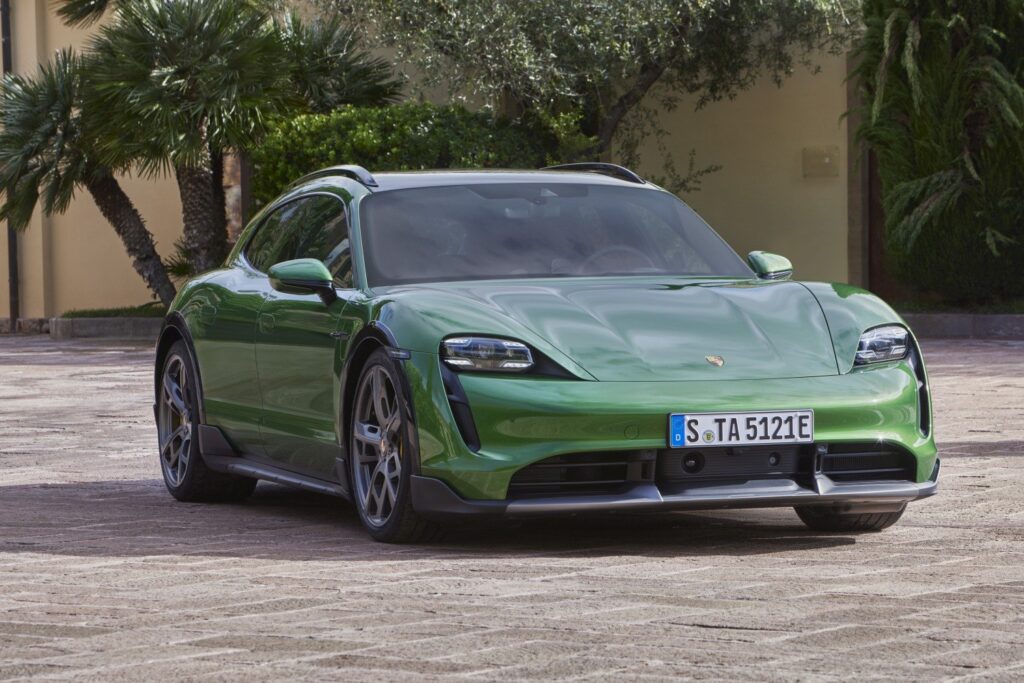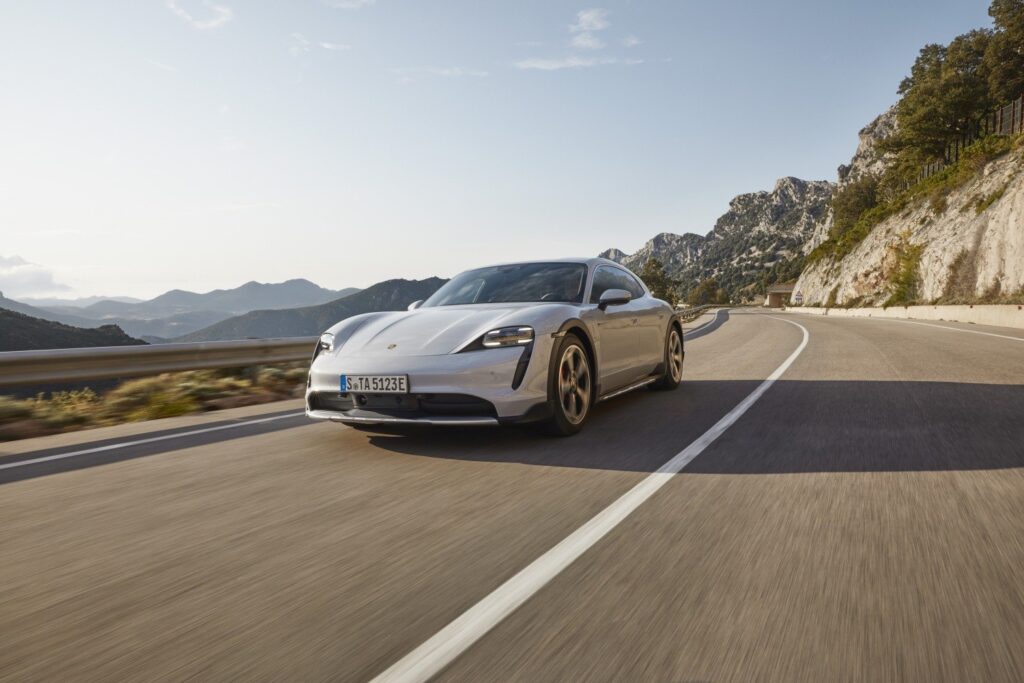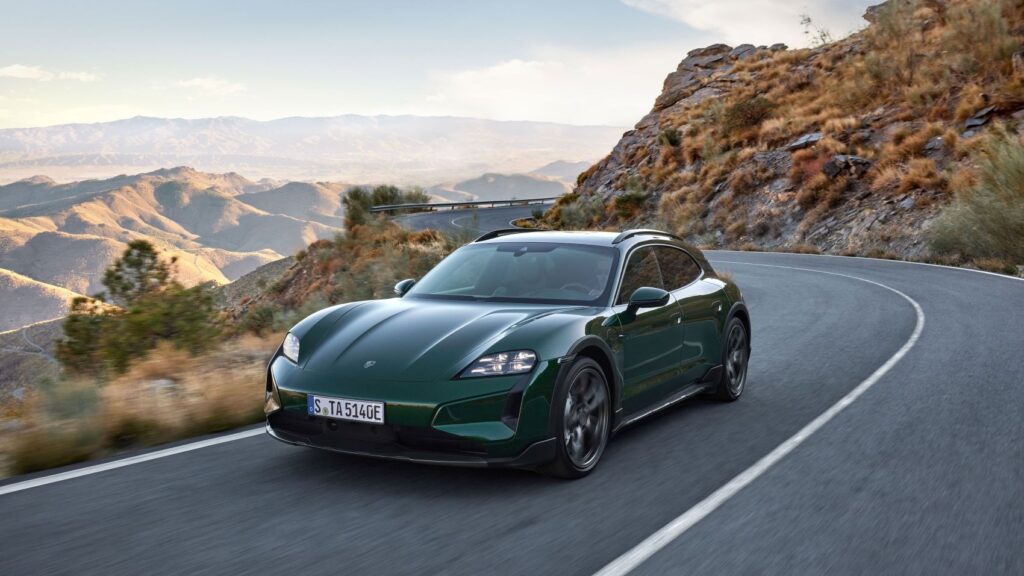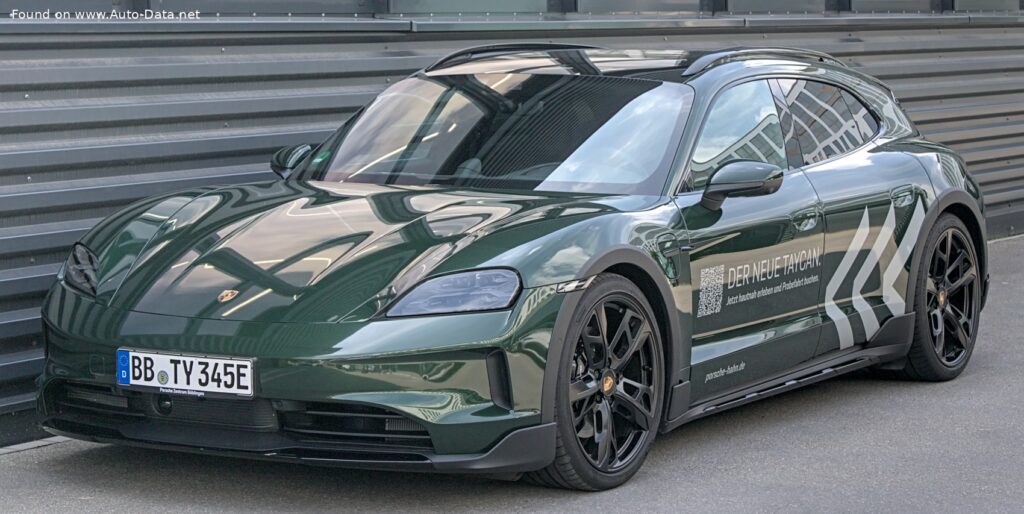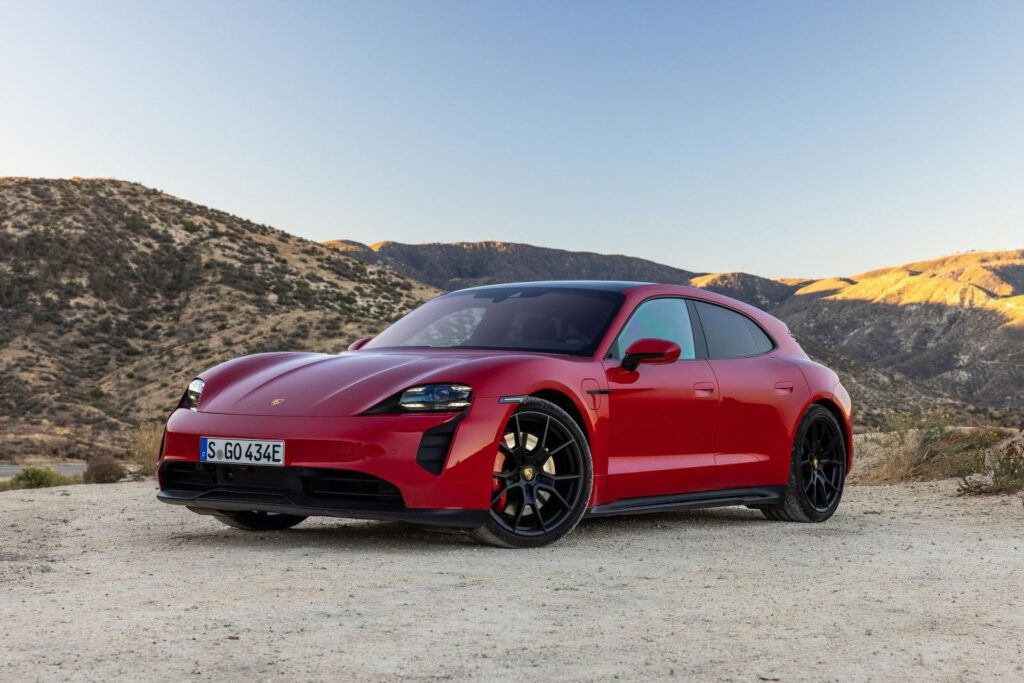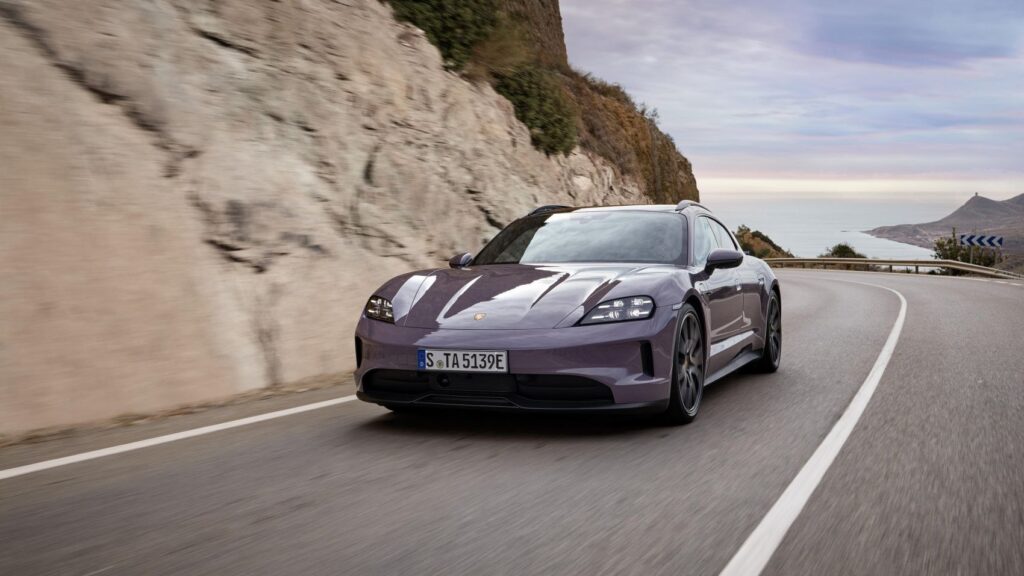
The Porsche Taycan Sport Turismo is an all-electric, five-door station wagon (estate) that represents Porsche’s entry into the burgeoning electric vehicle market. Introduced as part of the Taycan family in 2020, the Sport Turismo variant distinguishes itself with a more practical and spacious cargo area compared to the standard Taycan sedan. The 2024 model year represents a significant facelift (Y1A) for the Taycan line, bringing updated styling, enhanced technology, and improved performance. Positioned in the premium electric vehicle segment, the Taycan Sport Turismo competes with models like the Tesla Model S, Audi e-tron GT, and Mercedes-Benz EQS. This particular version, equipped with an 89 kWh battery pack, delivers 408 horsepower and focuses on blending Porsche’s renowned driving dynamics with the practicality of a wagon body style.
Porsche Taycan Sport Turismo: A Detailed Overview
The Taycan Sport Turismo is not simply an electric Porsche; it’s a statement about the future of performance and luxury. Porsche’s commitment to electric mobility is evident in the vehicle’s advanced technology, including its 800-volt architecture, which allows for exceptionally fast charging times. The Sport Turismo body style adds a layer of versatility, making it suitable for both daily commutes and longer journeys. The 2024 facelift brings subtle but impactful changes to the exterior design, interior features, and overall driving experience, solidifying the Taycan’s position as a leader in the electric vehicle space.
Engine & Performance
The 2024 Porsche Taycan Sport Turismo 89 kWh model is powered by a single, permanently excited synchronous electric motor located on the rear axle. This motor produces 408 horsepower and 410 Nm (302.4 lb.-ft.) of torque. The system power and torque remain at 408 Hp and 410 Nm respectively. The vehicle utilizes a two-speed automatic transmission, optimized for both acceleration and efficiency. This configuration allows for quick off-the-line acceleration, achieving 0-60 mph in approximately 4.6 seconds, 0-62 mph in 4.8 seconds, and 0-100 km/h in 4.8 seconds. The top speed is electronically limited to 230 km/h (142.92 mph). A key feature of the Taycan is its 800-volt architecture, enabling charging from 5% to 80% in approximately 22.5 minutes using a DC fast charger. The vehicle also boasts a recuperation output of 400 kW, maximizing energy recovery during deceleration. The weight-to-power ratio is 5.2 kg/Hp, and the weight-to-torque ratio is 5.2 kg/Nm.
Design & Features
The Taycan Sport Turismo features a sleek, aerodynamic design characteristic of Porsche. The wagon body style provides a more generous cargo area compared to the sedan, with a minimum trunk capacity of 446 liters (15.75 cu. ft.) and a maximum capacity of 1212 liters (42.8 cu. ft.) with the rear seats folded down. The exterior design incorporates Porsche’s signature styling cues, including sculpted lines, a low-slung profile, and distinctive headlights. The 2024 facelift includes subtle revisions to the front and rear fascias, enhancing the vehicle’s visual appeal. Inside, the Taycan Sport Turismo offers a luxurious and technologically advanced cabin. Key features include a large touchscreen infotainment system, a fully digital instrument cluster, and premium materials throughout. The vehicle is equipped with advanced driver-assistance systems, including ABS, and electric power steering. Air suspension is standard on both the front and rear axles, providing a comfortable and controlled ride. The drag coefficient of 0.25 contributes to the vehicle’s efficiency and range.
Technical Specifications
| Brand | Porsche |
| Model | Taycan |
| Generation | Taycan Sport Turismo (Y1A, facelift 2024) |
| Type (Engine) | 89 kWh (408 Hp) |
| Start of production | February, 2024 |
| Powertrain Architecture | BEV (Electric Vehicle) |
| Body type | Station wagon (estate) |
| Seats | 4-5 |
| Doors | 5 |
| Fuel Type | Electricity |
| Acceleration 0 – 100 km/h | 4.8 sec |
| Acceleration 0 – 62 mph | 4.8 sec |
| Acceleration 0 – 60 mph | 4.6 sec |
| Acceleration 0 – 200 km/h | 16.8 sec |
| Maximum speed | 230 km/h (142.92 mph) |
| Weight-to-power ratio | 5.2 kg/Hp |
| Weight-to-torque ratio | 5.2 kg/Nm |
| Gross battery capacity | 89 kWh |
| Net (usable) battery capacity | 82.3 kWh |
| Battery voltage | 800 V |
| Battery technology | Lithium-ion (Li-Ion) |
| Battery location | Below the floor |
| Recuperation output | 400 kW |
| All-electric range (WLTP) | 477-566 km (296.39 – 351.7 mi) |
| Average Energy consumption (WLTP) | 17.5-20.6 kWh/100 km (28.16 – 33.15 kWh/100 mi) |
| Electric motor power | 408 Hp |
| Electric motor Torque | 410 Nm (302.4 lb.-ft.) |
| Electric motor location | Rear axle, Transverse |
| Electric motor type | Synchronous |
| System power | 408 Hp |
| System torque | 410 Nm (302.4 lb.-ft.) |
| Kerb Weight | 2115 kg (4662.78 lbs.) |
| Max. weight | 2770 kg (6106.8 lbs.) |
| Max load | 655 kg (1444.03 lbs.) |
| Trunk (boot) space – minimum | 446 l (15.75 cu. ft.) |
| Trunk (boot) space – maximum | 1212 l (42.8 cu. ft.) |
| Max. roof load | 75 kg (165.35 lbs.) |
| Length | 4963 mm (195.39 in.) |
| Width | 1966 mm (77.4 in.) |
| Width including mirrors | 2144 mm (84.41 in.) |
| Height | 1390 mm (54.72 in.) |
| Wheelbase | 2900 mm (114.17 in.) |
| Front track | 1710 mm (67.32 in.) |
| Rear (Back) track | 1693 mm (66.65 in.) |
| Ride height (ground clearance) | 127 mm (5 in.) |
| Drag coefficient (Cd) | 0.25 |
| Minimum turning circle (turning diameter) | 11.7 m (38.39 ft.) |
| Approach angle | 11.1° |
| Departure angle | 14.2° |
| Ramp-over (brakeover) angle | 10.6° |
| Drivetrain Architecture | One electric motor drives the rear wheels. |
| Drive wheel | Rear wheel drive |
| Number of gears and type of gearbox | 2 gears, automatic transmission |
| Front suspension | Double wishbone, Air suspension |
| Rear suspension | Independent multi-link suspension, Air suspension |
| Front brakes | Ventilated discs, 360×36 mm |
| Rear brakes | Ventilated discs, 358×28 mm |
| Assisting systems | ABS (Anti-lock braking system) |
| Steering type | Steering rack and pinion |
| Power steering | Electric Steering |
| Tires size Front | 225/55 R19; 245/45 R20; 245/40 R21; 265/35 R21 |
| Tires size Rear | 275/45 R19; 285/40 R20; 285/35 R21; 305/30 R21 |
| Wheel rims size Front | 8J x 19; 9J x 20; 9J x 21; 9.5J x 21 |
| Wheel rims size Rear | 10J x 19; 11J x 20; 11J x 21; 11.5J x 21 |