
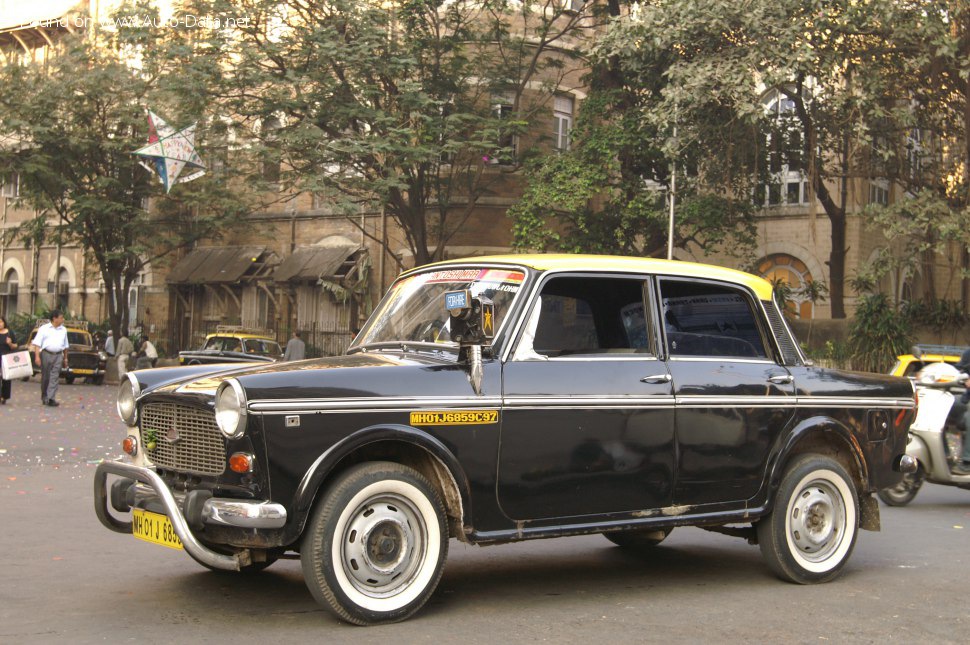
The Premier Padmini 1.1, producing 42 horsepower, was a mainstay of the Indian automotive market from 1964 to 2000. Based heavily on the Fiat 1100D, the Padmini represented a significant step towards indigenous automobile production in India. This particular variant, with its 1.1-liter engine, served as the entry-level model in the Padmini lineup for much of its production run, offering affordable transportation to a burgeoning middle class. It was produced by Premier Automobiles Limited, and its longevity is a testament to its robust design and suitability for Indian road conditions. The Padmini was built on a body-on-frame construction, a common practice at the time, and became an iconic vehicle, often associated with family transport and even serving as the ubiquitous “taxi” in many Indian cities.
The 1.1-Liter Padmini: Entry Point to Automotive Ownership
The 1.1-liter Padmini occupied the base trim level within the Padmini range. While later iterations saw the introduction of 1.3-liter engines and diesel options, the 1.1 remained in production for a considerable period, appealing to buyers prioritizing economy and affordability. It was positioned below the more powerful and refined 1.3-liter models, which catered to those seeking a more premium driving experience. Compared to the later diesel variants, the 1.1 offered a lighter vehicle weight and a simpler mechanical layout, though at the expense of outright power and fuel efficiency. The target audience for this model was primarily families and individuals seeking reliable, no-frills transportation.
Powertrain & Engine Architecture
The heart of the Premier Padmini 1.1 was its 1089 cc (66.45 cubic inches) inline-four cylinder engine. This engine, derived from the Fiat 1100D, featured a cast iron block and cylinder head, and utilized a single overhead valve (SOHV) valvetrain with two valves per cylinder. The engine code is not widely documented, but it closely mirrored the original Fiat design. Fuel delivery was managed by a single downdraft carburetor, a common feature for engines of this era. The compression ratio was 7.8:1, contributing to its ability to run on the relatively low-octane gasoline available in India at the time. The engine produced 42 hp at 4800 rpm and 71 Nm (52.37 lb-ft) of torque at 3000 rpm. The engine was mounted longitudinally in the front of the vehicle. The Padmini 1.1 was exclusively offered with a four-speed manual transmission, driving the rear wheels.
Driving Characteristics
The driving experience in the Padmini 1.1 was characterized by its simplicity and robustness rather than outright performance. With only 42 horsepower propelling a vehicle weighing approximately 895 kg (1973.14 lbs), acceleration was modest. The 0 to 60 mph time was not officially recorded, but estimates place it well over 15 seconds. The four-speed manual transmission featured relatively long gear ratios, prioritizing fuel economy and ease of driving over spirited performance. The rear-wheel-drive layout provided predictable handling, although the suspension – consisting of coil springs at the front and a rigid axle with leaf springs at the rear – resulted in a somewhat bumpy ride, particularly on uneven surfaces. Compared to the later 1.3-liter models, the 1.1 felt noticeably slower, especially when fully loaded with passengers and cargo. However, its lighter weight made it more nimble in city traffic.
Equipment & Trim Levels
The Premier Padmini 1.1 was known for its spartan, functional interior. Standard equipment was minimal, reflecting its position as the entry-level model. The interior typically featured vinyl upholstery, a basic dashboard with minimal instrumentation (speedometer, fuel gauge, and temperature gauge), and simple door panels. Features like a radio, heater, or whitewall tires were typically optional extras. The steering wheel was a large, two-spoke design. Trim levels were largely defined by the availability of optional equipment. Later models saw some minor cosmetic updates, such as revised grille designs and interior trim materials, but the overall interior layout remained largely unchanged throughout its production run. The focus was on providing a durable and practical interior that could withstand the rigors of daily use.
Chassis & Braking
The Premier Padmini 1.1 utilized a traditional body-on-frame construction, providing a robust and durable chassis. The front suspension consisted of independent coil springs, while the rear suspension employed a rigid axle with leaf springs. This setup was common for vehicles of this era and prioritized durability over sophisticated handling. The braking system consisted of drum brakes on all four wheels. Power steering and anti-lock braking systems (ABS) were not available on the 1.1-liter model. The relatively simple braking system was adequate for the vehicle’s performance capabilities, but required a firm pedal input. The track width was 1230 mm (48.43 in) at the front and 1215 mm (47.83 in) at the rear, contributing to its stable, if somewhat unrefined, handling characteristics.
Market Reception & Comparison
The Premier Padmini 1.1 enjoyed considerable success in the Indian market, largely due to its affordability and reliability. Critics at the time praised its robust construction and ease of maintenance. However, it was also criticized for its outdated design and relatively low performance. Compared to the later 1.3-liter Padmini models, the 1.1 offered lower fuel consumption but significantly less power. The diesel variants, introduced later in the production run, provided even better fuel economy but were considerably more expensive. The Padmini 1.1 competed primarily with other locally manufactured vehicles, such as the Hindustan Ambassador, which offered a similar level of practicality and affordability. The Padmini’s reputation for durability and its relatively simple mechanical design made it a popular choice for taxi operators.
Technical Specifications
| Engine Displacement | 1089 cm3 (66.45 cu. in.) |
| Engine Configuration | Inline-4 |
| Number of Cylinders | 4 |
| Valve Configuration | 2 valves per cylinder (SOHV) |
| Fuel Injection System | Carburetor |
| Maximum Power | 42 hp @ 4800 rpm |
| Maximum Torque | 71 Nm (52.37 lb-ft) @ 3000 rpm |
| Compression Ratio | 7.8:1 |
| Transmission | 4-speed manual |
| Drive Wheels | Rear |
| Kerb Weight | 895 kg (1973.14 lbs) |
| Maximum Weight | 1270 kg (2799.87 lbs) |
| Fuel Tank Capacity | 38 l (10.04 US gal | 8.36 UK gal) |
| Length | 3930 mm (154.72 in) |
| Width | 1460 mm (57.48 in) |
| Height | 1470 mm (57.87 in) |
| Wheelbase | 2340 mm (92.13 in) |
| Fuel Consumption (Urban) | 10 l/100 km (23.5 US mpg) |
| Fuel Consumption (Extra Urban) | 7 l/100 km (33.6 US mpg) |
| Fuel Consumption (Combined) | 9 l/100 km (26.1 US mpg) |
| Maximum Speed | 119 km/h (73.94 mph) |
Legacy
The Premier Padmini 1.1, despite being discontinued in 2000, remains a beloved and iconic vehicle in India. Its simple mechanical design and readily available spare parts contribute to its continued presence on Indian roads. While not known for exceptional reliability compared to more modern vehicles, the Padmini 1.1 is generally considered to be a durable and relatively easy-to-maintain car. In the used car market, well-maintained examples command a premium, often sought after by enthusiasts and collectors. The Padmini’s legacy extends beyond its mechanical attributes; it represents a significant chapter in the history of Indian automotive manufacturing and remains a symbol of a bygone era.
