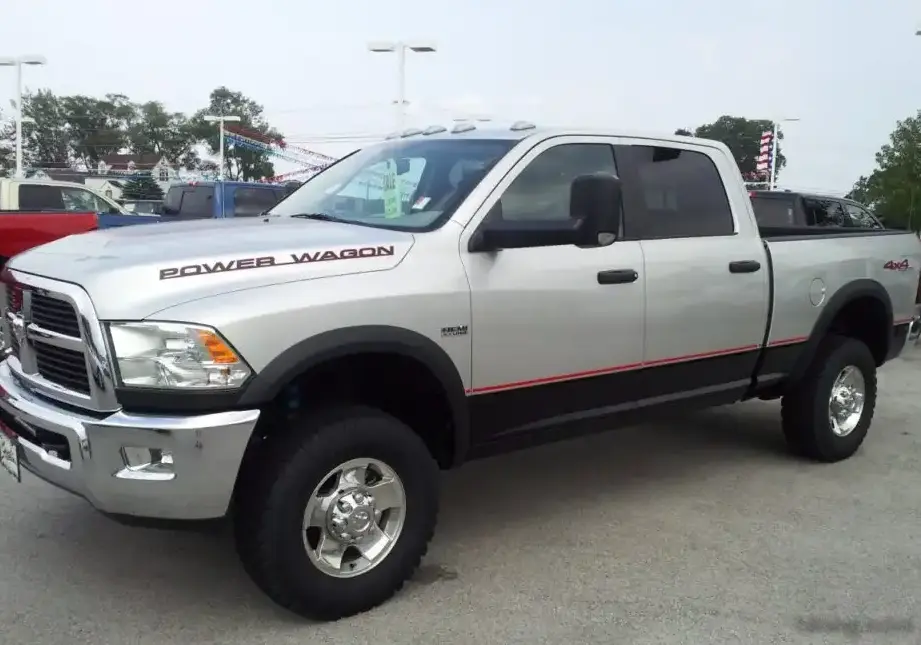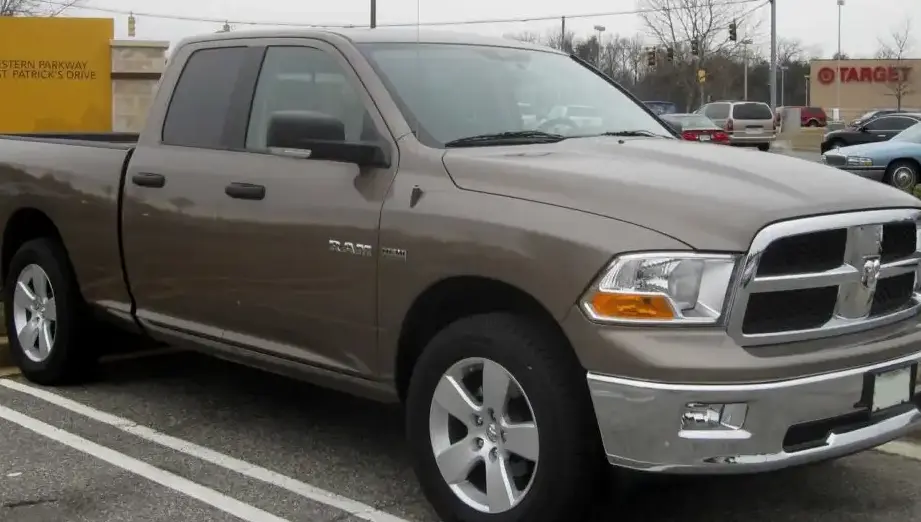
The RAM 1500 Quad Cab (DS) 3.7 V6 Automatic, produced from 2010 to 2012, represented an entry-level offering within the second generation of the RAM 1500 full-size pickup truck. Positioned below the more powerful 4.7L V8 and the flagship 5.7L HEMI V8 models, the 3.7L V6 aimed to provide a more fuel-efficient and affordable option for buyers primarily focused on light-duty tasks. This variant was a key part of RAM’s strategy to broaden its appeal in a competitive segment, offering a balance between capability and economy. The “DS” designation refers to the trim level, typically indicating a step up from the base model with added features.
Technical Specifications
| Brand | RAM |
| Model | 1500 |
| Generation | 1500 Quad Cab (DS) |
| Type (Engine) | 3.7 V6 (215 Hp) Automatic |
| Start of production | 2010 |
| End of production | 2012 |
| Powertrain Architecture | Internal Combustion engine |
| Body type | Pick-up |
| Seats | 5-6 |
| Doors | 4 |
| Fuel consumption (urban) | 14.8 l/100 km (15.9 US mpg / 19.1 UK mpg) |
| Fuel consumption (extra urban) | 10 l/100 km (23.5 US mpg / 28.2 UK mpg) |
| Fuel Type | Petrol (Gasoline) |
| Weight-to-power ratio | 10.4 kg/Hp |
| Weight-to-torque ratio | 7 kg/Nm |
| Power | 215 Hp @ 5200 rpm |
| Power per litre | 58.1 Hp/l |
| Torque | 319 Nm @ 4000 rpm (235.28 lb.-ft. @ 4000 rpm) |
| Maximum engine speed | 6000 rpm |
| Engine layout | Front, Longitudinal |
| Engine Model/Code | EKG |
| Engine displacement | 3701 cm3 (225.85 cu. in.) |
| Number of cylinders | 6 |
| Engine configuration | V-engine |
| Cylinder Bore | 93 mm (3.66 in.) |
| Piston Stroke | 90.8 mm (3.57 in.) |
| Compression ratio | 9.7:1 |
| Number of valves per cylinder | 2 |
| Fuel injection system | Multi-port manifold injection |
| Engine aspiration | Naturally aspirated engine |
| Valvetrain | SOHC |
| Engine oil capacity | 4.7 l (4.97 US qt | 4.14 UK qt) |
| Coolant capacity | 13 l (13.74 US qt | 11.44 UK qt) |
| Kerb Weight | 2232 kg (4920.72 lbs.) |
| Max. weight | 3039 kg (6699.85 lbs.) |
| Max load | 807 kg (1779.13 lbs.) |
| Trunk (boot) space – maximum | 1628 l (57.49 cu. ft.) |
| Fuel tank capacity | 98 l (25.89 US gal | 21.56 UK gal) |
| Permitted trailer load with brakes (12%) | 1542 kg (3399.53 lbs.) |
| Length | 5816 mm (228.98 in.) |
| Width including mirrors | 2016 mm (79.37 in.) |
| Height | 1906 mm (75.04 in.) |
| Wheelbase | 3569 mm (140.51 in.) |
| Front track | 1728 mm (68.03 in.) |
| Rear (Back) track | 1714 mm (67.48 in.) |
| Drag coefficient (Cd) | 0.36 |
| Minimum turning circle (turning diameter) | 13.7 m (44.95 ft.) |
| Approach angle | 18.8° |
| Departure angle | 25.1° |
| Ramp-over (brakeover) angle | 21.4° |
| Drivetrain Architecture | Rear wheel drive |
| Number of gears and type of gearbox | 4 gears, automatic transmission |
| Front suspension | Double wishbone |
| Rear suspension | Independent multi-link suspension |
| Front brakes | Ventilated discs |
| Rear brakes | Disc |
| Assisting systems | ABS (Anti-lock braking system) |
| Tires size | 265/70 R17 |
| Wheel rims size | 7.0J x 17 |
Powertrain & Engine Architecture
The heart of the RAM 1500 Quad Cab (DS) 3.7 V6 was the EKG engine, a 3.7-liter (3701 cc) naturally aspirated V6. This engine utilized a single overhead camshaft (SOHC) valvetrain with two valves per cylinder. Fuel delivery was managed by a multi-port fuel injection system, providing adequate, though not exceptional, performance. The engine produced 215 horsepower at 5200 rpm and 235 lb-ft of torque at 4000 rpm. The engine’s longitudinal mounting and rear-wheel-drive configuration were standard for full-size American pickup trucks. The transmission paired with the 3.7L V6 was a four-speed automatic, chosen for its simplicity and cost-effectiveness. While not offering the responsiveness of a manual transmission or the efficiency of a more modern automatic with additional gears, it provided smooth and predictable shifts for everyday driving.
Driving Characteristics
The 3.7L V6-equipped RAM 1500 offered a noticeably different driving experience compared to its V8 siblings. Acceleration was adequate for typical commuting and light hauling, but it lacked the robust power of the larger engines, especially when fully loaded or towing. The four-speed automatic transmission, while reliable, contributed to a less refined feel, with wider gear ratios and a tendency to hunt for the right gear under heavy load. The gear ratios were optimized for fuel economy rather than outright performance. Compared to the 4.7L V8, the 3.7L felt less confident during highway merging and passing maneuvers. However, the lighter engine weight contributed to slightly improved handling and a more comfortable ride, particularly on rough roads.
Equipment & Trim Levels
The “DS” trim level of the RAM 1500 Quad Cab typically included standard features such as air conditioning, power windows and locks, a basic audio system, and cloth upholstery. Optional extras included upgraded audio systems, alloy wheels, a towing package, and various convenience features like a power-adjustable driver’s seat. The interior design was functional and durable, prioritizing practicality over luxury. The Quad Cab configuration offered seating for up to six passengers, with a smaller rear seat compared to the Crew Cab models. The dashboard layout was straightforward, with easy-to-read gauges and logically placed controls.
Chassis & Braking
The RAM 1500 utilized a body-on-frame construction, providing a robust and durable platform for hauling and towing. The front suspension featured a double wishbone design, while the rear suspension employed an independent multi-link setup. This combination aimed to balance ride comfort with handling stability. Braking duties were handled by ventilated discs at the front and solid discs at the rear. Anti-lock braking system (ABS) was standard, enhancing safety during emergency braking situations. The chassis was tuned to accommodate the lower weight of the 3.7L V6 engine, resulting in a slightly softer ride compared to the heavier V8 models.
Market Reception & Comparison
The RAM 1500 3.7L V6 Automatic received mixed reviews. Critics generally praised its fuel economy, which was noticeably better than the V8 options, but often criticized its lack of power and the dated four-speed automatic transmission. Compared to competitors like the Ford F-150 with its 3.7L V6, the RAM 1500 offered a similar level of fuel efficiency but was often perceived as having a less refined driving experience. The 3.7L V6 was primarily targeted at buyers who prioritized affordability and fuel economy over outright performance, making it a popular choice for fleet vehicles and individuals who primarily used their trucks for light-duty tasks.
Legacy
The 3.7L V6 engine in the RAM 1500, while not known for exceptional performance or longevity compared to the HEMI V8s, proved to be a reasonably reliable powertrain when properly maintained. Common issues included oil leaks and occasional sensor failures. In the used car market, these models are often found at lower price points, making them an attractive option for budget-conscious buyers. However, potential buyers should be aware of the engine’s limitations and the age of the vehicle. The 3.7L V6 served as an important stepping stone for RAM, demonstrating the brand’s commitment to offering a wider range of powertrain options to meet diverse customer needs. While it didn’t achieve the iconic status of the HEMI, it provided a viable and economical alternative for many truck buyers.