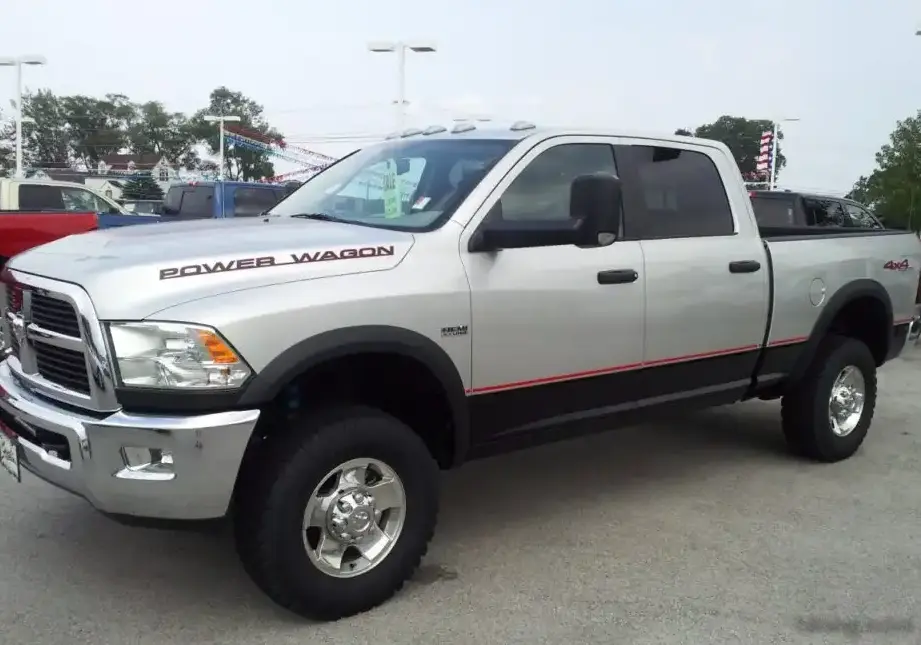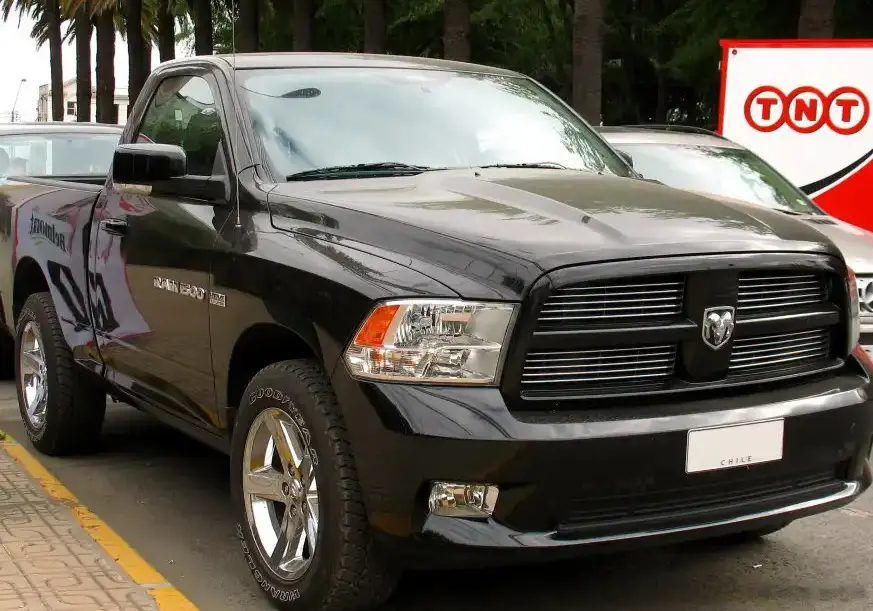
The RAM 1500 Regular Cab (DS) equipped with the 4.7-liter V8 engine producing 310 horsepower and paired with a four-speed automatic transmission, was a mainstay of the full-size pickup truck market in North America from 2010 to 2012. This configuration represented a balance between capability and affordability within the broader 1500 lineup, serving as a work-focused option for buyers who didn’t require the added complexity or expense of higher trim levels or more powerful engines. It was part of the second generation of the redesigned Dodge Ram (later RAM) 1500, known for its improved interior and ride quality compared to its predecessor.
Technical Specifications
| Brand | RAM |
| Model | 1500 |
| Generation | 1500 Regular Cab (DS) |
| Type (Engine) | 4.7 V8 (310 Hp) 4×4 Automatic |
| Start of production | 2010 |
| End of production | 2012 |
| Powertrain Architecture | Internal Combustion engine |
| Body type | Pick-up |
| Seats | 2-3 |
| Doors | 2 |
| Fuel consumption (urban) | 16.7 l/100 km (14.1 US mpg) |
| Fuel consumption (extra urban) | 11.4 l/100 km (20.6 US mpg) |
| Fuel Type | Petrol (Gasoline) |
| Weight-to-power ratio | 7.1 kg/Hp |
| Weight-to-torque ratio | 4.9 kg/Nm |
| Power | 310 Hp @ 5650 rpm |
| Power per litre | 65.9 Hp/l |
| Torque | 447 Nm @ 3950 rpm (329.69 lb.-ft. @ 3950 rpm) |
| Maximum engine speed | 6000 rpm |
| Engine layout | Front, Longitudinal |
| Engine Model/Code | EVE |
| Engine displacement | 4701 cm3 (286.87 cu. in.) |
| Number of cylinders | 8 |
| Engine configuration | V-engine |
| Cylinder Bore | 93 mm (3.66 in.) |
| Piston Stroke | 86.5 mm (3.41 in.) |
| Compression ratio | 9.8:1 |
| Number of valves per cylinder | 2 |
| Fuel injection system | Multi-port manifold injection |
| Engine aspiration | Naturally aspirated engine |
| Valvetrain | SOHC |
| Engine oil capacity | 5.7 l (6.02 US qt | 5.02 UK qt) |
| Coolant | 13 l (13.74 US qt | 11.44 UK qt) |
| Kerb Weight | 2191 kg (4830.33 lbs.) |
| Max. weight | 2880 kg (6349.31 lbs.) |
| Max load | 689 kg (1518.98 lbs.) |
| Trunk (boot) space – maximum | 1628 l (57.49 cu. ft.) |
| Fuel tank capacity | 98 l (25.89 US gal | 21.56 UK gal) |
| Permitted trailer load with brakes (12%) | 2948 kg (6499.23 lbs.) |
| Length | 5308 mm (208.98 in.) |
| Width including mirrors | 2016 mm (79.37 in.) |
| Height | 1910 mm (75.2 in.) |
| Wheelbase | 3061 mm (120.51 in.) |
| Front track | 1732 mm (68.19 in.) |
| Rear (Back) track | 1714 mm (67.48 in.) |
| Drag coefficient (Cd) | 0.36 |
| Minimum turning circle (turning diameter) | 12.0 m (39.37 ft.) |
| Approach angle | 20.5° |
| Departure angle | 25.6° |
| Ramp-over (brakeover) angle | 18.7° |
| Drive wheel | All wheel drive (4×4) |
| Number of gears and type of gearbox | 5 gears, automatic transmission |
| Front suspension | Double wishbone |
| Rear suspension | Independent multi-link suspension |
| Front brakes | Ventilated discs |
| Rear brakes | Disc |
| Assisting systems | ABS (Anti-lock braking system) |
| Tires size | 265/70 R17 |
| Wheel rims size | 7.0J x 17 |
Powertrain & Engine Architecture
The heart of this RAM 1500 variant was the 4.7-liter (286.87 cubic inch) V8 engine, internally designated as the EVE engine. This engine was a member of Chrysler’s third-generation small-block V8 family. It featured a cast iron block with aluminum cylinder heads, a single overhead camshaft (SOHC) valvetrain operating two valves per cylinder, and multi-port fuel injection. The 9.8:1 compression ratio was a compromise between performance and the ability to run on regular unleaded gasoline. The engine produced 310 horsepower at 5650 rpm and 329.69 lb-ft of torque at 3950 rpm. The four-speed automatic transmission (typically the 42RE) was chosen for its durability and cost-effectiveness, prioritizing functionality over outright performance. This transmission featured electronic control for smoother shifting and improved fuel efficiency compared to older designs.
Driving Characteristics
The 4.7L V8 with the four-speed automatic delivered adequate, but not exhilarating, performance. Acceleration was reasonable for everyday driving and towing, but it lacked the punch of the optional 5.7L HEMI V8. The automatic transmission’s gear ratios were optimized for towing and hauling, resulting in a relatively conservative feel. The first gear was geared for quick starts with a load, while higher gears focused on fuel economy during highway cruising. Compared to the manual transmission equipped 1500s, the automatic version felt less responsive, and engine braking was less pronounced. However, the automatic offered a more relaxed driving experience, particularly in stop-and-go traffic.
Equipment & Trim Levels
The RAM 1500 Regular Cab (DS) 4.7L 4×4 Automatic typically fell into the mid-range of available trim levels. Standard features generally included air conditioning, a basic audio system with an AM/FM radio and CD player, vinyl upholstery, and power windows and locks. The “DS” designation often indicated a step up from the base model, potentially including features like cruise control and upgraded interior trim. Optional extras could include a premium sound system, power-adjustable seats, alloy wheels, and a towing package. The interior was functional and durable, designed to withstand the rigors of work-truck use.
Chassis & Braking
The RAM 1500 utilized a body-on-frame construction, providing a robust platform for hauling and towing. The front suspension consisted of a double wishbone setup, while the rear featured an independent multi-link suspension. This configuration aimed to balance ride comfort with load-carrying capacity. Braking duties were handled by ventilated discs at the front and solid discs at the rear. Anti-lock brakes (ABS) were standard, enhancing safety during emergency braking situations. The 4×4 system employed a part-time transfer case, allowing the driver to switch between two-wheel drive and four-wheel drive as needed.
Market Reception & Comparison
Critics generally viewed the 4.7L V8/automatic combination as a competent, if unremarkable, powertrain. It was praised for its reliability and affordability, but often criticized for its lack of refinement and relatively low fuel economy compared to competitors. The fuel consumption figures of 14.1 US mpg (16.7 l/100 km) in the city and 20.6 US mpg (11.4 l/100 km) on the highway were typical for a full-size pickup truck of that era, but lagged behind some of the newer, more fuel-efficient options. Compared to the 5.7L HEMI V8, the 4.7L offered significantly less power and performance, but it was also less expensive to purchase and maintain. The 4.7L was often favored by buyers who prioritized value and durability over outright performance.
Legacy
The 4.7L V8 engine proved to be a relatively reliable powertrain, although it was not without its issues. Common concerns included oil leaks, particularly around the valve cover gaskets, and occasional problems with the automatic transmission. However, with proper maintenance, these engines could provide many years of service. In the used car market, the RAM 1500 Regular Cab (DS) 4.7L 4×4 Automatic remains a popular choice for buyers seeking an affordable and capable work truck. Its simplicity and durability make it a relatively easy vehicle to maintain and repair, and its ample cargo capacity and towing capacity continue to be valuable assets.