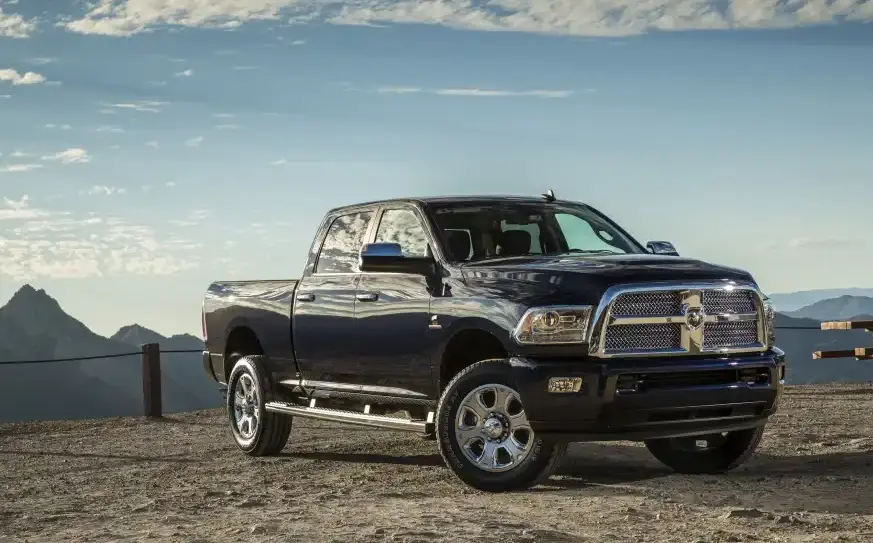
The RAM 2500/3500 Crew Cab I, specifically the 2500 model equipped with the 6.7-liter Cummins turbocharged diesel engine producing 350 horsepower, represents a significant offering in the American heavy-duty pickup truck market. Produced from 2010 to 2012, this variant occupied a crucial position within the broader 2500/3500 lineup, catering to buyers needing substantial towing and hauling capabilities combined with the comfort of a crew cab configuration. This generation, internally designated as the fourth generation of the Dodge/RAM heavy-duty series, built upon the foundation of its predecessors, offering increased refinement and capability.
Technical Specifications
| Brand | RAM |
| Model | 2500/3500 |
| Generation | 2500/3500 Crew Cab I |
| Type (Engine) | 2500 6.7 Cummins TD (350 Hp) 4×4 |
| Start of production | 2010 |
| End of production | 2012 |
| Powertrain Architecture | Internal Combustion engine |
| Body type | Pick-up |
| Seats | 5-6 |
| Doors | 4 |
| Fuel Type | Diesel |
| Weight-to-power ratio | 9.4 kg/Hp, 106.3 Hp/tonne |
| Weight-to-torque ratio | 4 kg/Nm, 251.1 Nm/tonne |
| Power | 350 Hp @ 3013 rpm |
| Power per litre | 52.3 Hp/l |
| Torque | 827 Nm @ 1400 rpm (609.96 lb.-ft. @ 1400 rpm) |
| Engine Model/Code | ETJ |
| Engine displacement | 6690 cm3 (408.25 cu. in.) |
| Number of cylinders | 6 |
| Engine configuration | Inline |
| Cylinder Bore | 107 mm (4.21 in.) |
| Piston Stroke | 124 mm (4.88 in.) |
| Fuel injection system | Diesel Commonrail |
| Engine aspiration | Turbocharger, Intercooler |
| Engine oil capacity | 11.4 l (12.05 US qt | 10.03 UK qt) |
| Coolant | 21.4 l (22.61 US qt | 18.83 UK qt) |
| Kerb Weight | 3293 kg (7259.82 lbs.) |
| Max. weight | 4354 kg (9598.93 lbs.) |
| Max load | 1061 kg (2339.1 lbs.) |
| Trunk (boot) space – maximum | 1628 l (57.49 cu. ft.) |
| Fuel tank capacity | 129 l (34.08 US gal | 28.38 UK gal) |
| Permitted trailer load with brakes (12%) | 5715 kg (12599.42 lbs.) |
| Length | 6030 mm (237.4 in.) |
| Width including mirrors | 2009 mm (79.09 in.) |
| Height | 1974 mm (77.72 in.) |
| Wheelbase | 3782 mm (148.9 in.) |
| Front track | 1735 mm (68.31 in.) |
| Rear (Back) track | 1732 mm (68.19 in.) |
| Minimum turning circle (turning diameter) | 13.3 m (43.64 ft.) |
| Approach angle | 21.8° |
| Departure angle | 27.0° |
| Ramp-over (brakeover) angle | 18.2° |
| Drive wheel | All wheel drive (4×4) |
| Number of gears and type of gearbox | 6 gears, manual transmission |
| Front suspension | Independent multi-link suspension |
| Rear suspension | Leaf spring |
| Front brakes | Disc |
| Rear brakes | Disc |
| Assisting systems | ABS (Anti-lock braking system) |
| Tires size | 245/70 R17; 265/70 R17; 275/70 R18 |
| Wheel rims size | 7.5J x 17; 8J x 17; 8J x 18 |
Powertrain & Engine Architecture
The heart of this RAM 2500 is the 6.7-liter Cummins inline-six diesel engine, designated as the ETJ code. This engine represented a significant upgrade over previous Cummins offerings, featuring a common-rail fuel injection system for improved efficiency and reduced emissions. The turbocharger and intercooler combination maximized power output and minimized turbo lag. The engine’s robust construction, with a cast iron block and head, was renowned for its durability. The 6.7L Cummins produced 350 horsepower at 3013 rpm and a substantial 827 Nm (609.96 lb-ft) of torque at just 1400 rpm. This torque figure was particularly crucial for heavy towing and hauling applications. The engine’s large displacement and six-cylinder configuration provided a smooth and relatively quiet operation compared to smaller displacement engines. This specific model came standard with a 6-speed manual transmission, optimized for the engine’s torque curve and providing precise control for demanding tasks.
Driving Characteristics
The 2500 6.7L Cummins with the manual transmission delivered a driving experience focused on capability rather than outright speed. The substantial torque available from low engine speeds allowed for effortless towing and hauling, even with heavy loads. The 6-speed manual transmission provided a direct connection to the engine, allowing drivers to precisely control gear selection and maximize efficiency. While not a sports truck, the 350 horsepower output provided adequate acceleration for everyday driving. Compared to the gasoline-powered RAM 2500 models, the diesel offered significantly better fuel economy, especially when towing. The manual transmission, while offering more control, required more driver involvement than the available automatic options.
Equipment & Trim Levels
The RAM 2500/3500 Crew Cab I offered a range of trim levels, with the 6.7L Cummins engine typically found in higher trims like the SLT, Laramie, and Limited. Standard features included air conditioning, power windows and locks, a basic audio system, and cloth upholstery. Higher trims added features such as leather upholstery, heated seats, a premium audio system, navigation, and a sunroof. The Crew Cab configuration provided ample space for passengers, making it a comfortable option for families or work crews. Optional extras included a trailer brake controller, a fifth-wheel hitch, and various appearance packages.
Chassis & Braking
The RAM 2500/3500 featured a robust chassis designed to handle heavy loads. The front suspension utilized an independent multi-link setup for improved ride quality and handling, while the rear suspension employed a traditional leaf spring design for durability and load-carrying capacity. Brakes were discs on all four wheels, providing ample stopping power even with heavy loads. An Anti-lock Braking System (ABS) was standard. The heavy-duty suspension and braking system were crucial for maintaining control and stability when towing or hauling. Tire sizes varied depending on the trim level, with options ranging from 245/70 R17 to 275/70 R18.
Market Reception & Comparison
The RAM 2500/3500 with the 6.7L Cummins diesel engine was well-received by critics and buyers alike. It was praised for its powerful engine, robust construction, and comfortable interior. Compared to competing trucks from Ford and General Motors, the RAM offered a unique combination of features and capabilities. The Cummins engine was widely regarded as one of the most reliable and durable diesel engines on the market. Fuel economy was a strong point, particularly when compared to gasoline-powered trucks. However, the diesel engine did come with a higher initial cost and potentially higher maintenance expenses.
Legacy
The 2010-2012 RAM 2500/3500 Crew Cab I with the 6.7L Cummins diesel engine has established a strong reputation for reliability and longevity. These trucks remain popular in the used car market, commanding relatively high prices due to their proven durability and capability. The 6.7L Cummins engine is known for its ability to withstand high mileage and heavy use. While maintenance costs can be higher than gasoline-powered trucks, the long-term reliability and resale value make it a worthwhile investment for many buyers. The engine’s continued use in subsequent RAM heavy-duty trucks is a testament to its enduring design and performance.