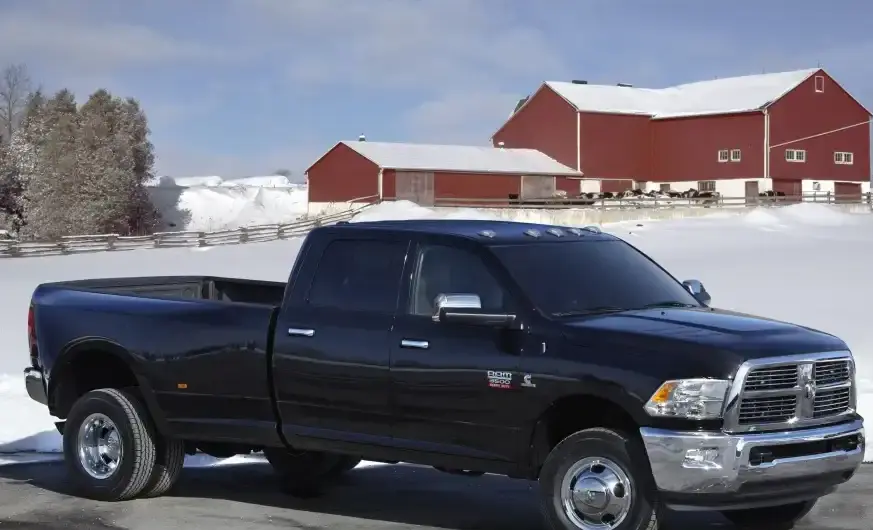
The RAM 2500/3500 Crew Cab Long I, specifically the 2500 model equipped with the 6.7-liter Cummins turbocharged diesel engine producing 350 horsepower and paired with an automatic transmission, was a significant offering in the American heavy-duty pickup truck market from 2010 to 2012. This configuration represented a sweet spot for buyers needing substantial towing and hauling capability without opting for the highest, and often more expensive, power outputs available in the RAM lineup. It fell within the third generation of the RAM heavy-duty series, sharing its platform with the 3500 model and offering a crew cab configuration designed for passenger comfort alongside work-oriented utility. This variant was positioned as a robust, reliable workhorse, appealing to both commercial users and individuals requiring a powerful truck for recreational purposes.
Technical Specifications
| Brand | RAM |
| Model | 2500/3500 |
| Generation | 2500/3500 Crew Cab Long I |
| Type (Engine) | 2500 6.7 Cummins TD (350 Hp) Automatic |
| Start of production | 2010 |
| End of production | 2012 |
| Powertrain Architecture | Internal Combustion engine |
| Body type | Pick-up |
| Seats | 5-6 |
| Doors | 4 |
| Fuel Type | Diesel |
| Weight-to-power ratio | 8.8 kg/Hp, 113.5 Hp/tonne |
| Weight-to-torque ratio | 3.5 kg/Nm, 285.7 Nm/tonne |
| Power | 350 Hp @ 3000 rpm |
| Power per litre | 52.3 Hp/l |
| Torque | 881 Nm @ 1500 rpm (649.79 lb.-ft. @ 1500 rpm) |
| Engine Model/Code | ETJ |
| Engine displacement | 6690 cm3 (408.25 cu. in.) |
| Number of cylinders | 6 |
| Engine configuration | Inline |
| Cylinder Bore | 107 mm (4.21 in.) |
| Piston Stroke | 124 mm (4.88 in.) |
| Fuel injection system | Diesel Commonrail |
| Engine aspiration | Turbocharger, Intercooler |
| Engine oil capacity | 11.4 l (12.05 US qt | 10.03 UK qt) |
| Coolant | 21.4 l (22.61 US qt | 18.83 UK qt) |
| Kerb Weight | 3084 kg (6799.06 lbs.) |
| Max. weight | 4082 kg (8999.27 lbs.) |
| Max load | 998 kg (2200.21 lbs.) |
| Trunk (boot) space – maximum | 2115 l (74.69 cu. ft.) |
| Fuel tank capacity | 132 l (34.87 US gal | 29.04 UK gal) |
| Permitted trailer load with brakes (12%) | 4082 kg (8999.27 lbs.) |
| Length | 6589 mm (259.41 in.) |
| Width including mirrors | 2009 mm (79.09 in.) |
| Height | 1867 mm (73.5 in.) |
| Wheelbase | 4303 mm (169.41 in.) |
| Front track | 1742 mm (68.58 in.) |
| Rear (Back) track | 1732 mm (68.19 in.) |
| Minimum turning circle (turning diameter) | 16.2 m (53.15 ft.) |
| Approach angle | 12.5° |
| Departure angle | 22.7° |
| Ramp-over (brakeover) angle | 14.1° |
| Drivetrain Architecture | The Internal combustion engine (ICE) drives the rear wheels of the vehicle. |
| Drive wheel | Rear wheel drive |
| Number of gears and type of gearbox | 6 gears, automatic transmission |
| Front suspension | Double wishbone |
| Rear suspension | Leaf spring |
| Front brakes | Disc |
| Rear brakes | Disc |
| Assisting systems | ABS (Anti-lock braking system) |
| Tires size | 245/70 R17; 265/70 R17; 275/70 R18 |
| Wheel rims size | 7.5J x 17; 8J x 17; 8J x 18 |
Powertrain & Engine Architecture
The heart of this RAM 2500 was the 6.7-liter Cummins inline-six diesel engine, designated with the ETJ code. This engine represented a significant evolution of Cummins’ heavy-duty diesel offerings. It featured a cast iron block, a 24-valve cylinder head, and a robust turbocharger with an intercooler to enhance power and efficiency. The engine utilized a high-pressure common rail fuel injection system, delivering precise fuel metering for optimal combustion and reduced emissions. This system, coupled with the engine’s variable geometry turbocharger, contributed to its impressive torque output of 881 Nm (649.79 lb-ft) at a relatively low 1500 rpm. The automatic transmission paired with this engine was typically a six-speed unit, designed to handle the substantial torque and provide smooth shifting. The transmission was calibrated to prioritize towing and hauling performance, with gear ratios optimized for maintaining engine speed within the peak torque range.
Driving Characteristics
The 350 hp and 881 Nm of torque delivered by the 6.7L Cummins in this configuration provided substantial performance, even with the weight of a full-size crew cab pickup. While not as quick as gasoline-powered alternatives, the diesel engine’s low-end torque made it exceptionally capable for towing and hauling heavy loads. The automatic transmission, while smooth, wasn’t geared for rapid acceleration. Instead, it focused on providing consistent power delivery and maintaining engine efficiency. Compared to the higher-output Cummins variants (often exceeding 400 hp), this 350 hp version offered a more balanced driving experience, prioritizing usability and fuel economy over outright power. Manual transmission equipped models offered more driver control and potentially slightly better fuel economy, but the automatic was favored by many for its convenience, especially in demanding work applications.
Equipment & Trim Levels
The 2500/3500 Crew Cab Long I with the 6.7L Cummins and automatic transmission was typically offered in several trim levels, ranging from base work trucks to more luxurious configurations. Standard features generally included air conditioning, power windows and locks, and a basic audio system. Higher trim levels added features such as leather upholstery, heated seats, a premium sound system, navigation, and various convenience features. The Crew Cab configuration provided ample space for passengers, making it suitable for both work and family use. Optional extras included upgraded towing packages, off-road packages, and various appearance enhancements.
Chassis & Braking
The RAM 2500/3500 chassis was built for durability and heavy-duty use. It featured a robust frame and a heavy-duty suspension system designed to handle substantial loads. The front suspension utilized a double wishbone setup, while the rear suspension employed leaf springs. Braking duties were handled by disc brakes on all four wheels, often paired with an Anti-lock Braking System (ABS) for enhanced safety. The rear axle ratios varied depending on the specific configuration and intended use, with lower ratios providing better towing capacity and higher ratios prioritizing fuel economy. Stabilizer bars were typically included to reduce body roll and improve handling.
Market Reception & Comparison
The RAM 2500/3500 with the 6.7L Cummins and automatic transmission received generally positive reviews. Critics praised its powerful engine, comfortable ride (especially in the Crew Cab configuration), and impressive towing and hauling capabilities. Compared to competing trucks from Ford and General Motors, the RAM offered a unique combination of power, comfort, and value. Fuel economy, while not exceptional, was considered reasonable for a heavy-duty pickup truck. Reliability was generally good, although some owners reported issues with the fuel injection system and turbocharger over the long term. The 350 hp/automatic combination was often seen as a practical choice for buyers who didn’t need the maximum power output offered by higher-trim models.
Legacy
The 6.7L Cummins engine has become legendary for its durability and longevity. Even today, well-maintained examples of the 2010-2012 RAM 2500/3500 with this powertrain command respectable prices in the used car market. The engine’s robust construction and relatively simple design contribute to its long-term reliability. While maintenance costs can be higher than those of gasoline-powered trucks, the Cummins engine’s reputation for dependability makes it a popular choice among buyers seeking a capable and long-lasting heavy-duty pickup. The 2010-2012 models represent a pivotal point in the evolution of the Cummins engine, laying the foundation for future generations of this iconic powerplant.