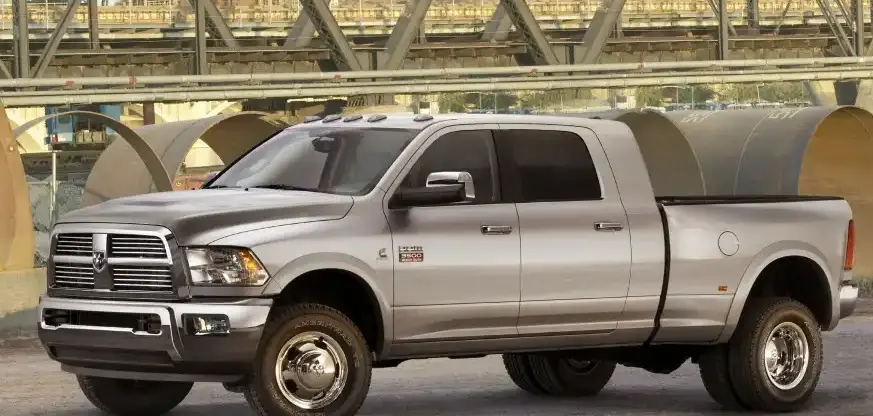
The RAM 2500/3500 Mega Cab I, specifically the 2500 model equipped with the 6.7-liter Cummins turbocharged diesel engine producing 350 horsepower, represents a significant offering in the heavy-duty pickup truck segment. Produced from 2010 to 2012, this variant occupied a crucial position within the broader RAM HD lineup, catering to buyers needing substantial towing and hauling capabilities without necessarily opting for the highest output engine available. It was part of the third generation of the RAM HD series, known for its robust construction and focus on work-truck practicality combined with increasing levels of interior refinement.
Technical Specifications
| Brand | RAM |
| Model | 2500/3500 |
| Generation | 2500/3500 Mega Cab I |
| Type (Engine) | 2500 6.7 Cummins TD (350 Hp) |
| Start of production | 2010 |
| End of production | 2012 |
| Powertrain Architecture | Internal Combustion engine |
| Body type | Pick-up |
| Seats | 5-6 |
| Doors | 4 |
| Fuel Type | Diesel |
| Weight-to-power ratio | 9.3 kg/Hp, 108.1 Hp/tonne |
| Weight-to-torque ratio | 3.9 kg/Nm, 255.3 Nm/tonne |
| Power | 350 Hp @ 3013 rpm |
| Power per litre | 52.3 Hp/l |
| Torque | 827 Nm @ 1400 rpm (609.96 lb.-ft. @ 1400 rpm) |
| Engine Model/Code | ETJ |
| Engine displacement | 6690 cm3 (408.25 cu. in.) |
| Number of cylinders | 6 |
| Engine configuration | Inline |
| Cylinder Bore | 107 mm (4.21 in.) |
| Piston Stroke | 124 mm (4.88 in.) |
| Fuel injection system | Diesel Commonrail |
| Engine aspiration | Turbocharger, Intercooler |
| Engine oil capacity | 11.4 l (12.05 US qt | 10.03 UK qt) |
| Coolant | 21.4 l (22.61 US qt | 18.83 UK qt) |
| Kerb Weight | 3239 kg (7140.77 lbs.) |
| Max. weight | 4082 kg (8999.27 lbs.) |
| Max load | 843 kg (1858.5 lbs.) |
| Trunk (boot) space – maximum | 1628 l (57.49 cu. ft.) |
| Fuel tank capacity | 129 l (34.08 US gal | 28.38 UK gal) |
| Permitted trailer load with brakes (12%) | 5761 kg (12700.83 lbs.) |
| Length | 6309 mm (248.39 in.) |
| Width including mirrors | 2009 mm (79.09 in.) |
| Height | 1882 mm (74.09 in.) |
| Wheelbase | 4077 mm (160.51 in.) |
| Front track | 1742 mm (68.58 in.) |
| Rear (Back) track | 1732 mm (68.19 in.) |
| Minimum turning circle (turning diameter) | 15.4 m (50.52 ft.) |
| Approach angle | 14.0° |
| Departure angle | 24.2° |
| Ramp-over (brakeover) angle | 15.8° |
| Drivetrain Architecture | The Internal combustion engine (ICE) drives the rear wheels of the vehicle. |
| Drive wheel | Rear wheel drive |
| Number of gears and type of gearbox | 6 gears, manual transmission |
| Front suspension | Double wishbone |
| Rear suspension | Leaf spring |
| Front brakes | Disc |
| Rear brakes | Disc |
| Assisting systems | ABS (Anti-lock braking system) |
| Tires size | 245/70 R17; 265/70 R17; 275/70 R18 |
| Wheel rims size | 7.5J x 17; 8J x 17; 8J x 18 |
INTRODUCTION
The 2010-2012 RAM 2500/3500 Mega Cab I with the 6.7L Cummins diesel was a workhorse designed for demanding tasks. Positioned within the RAM HD lineup, it offered a balance between capability and cost, slotting below the higher-output Cummins variants. The “Mega Cab” configuration provided significantly increased rear-seat space, making it popular with those needing to transport passengers alongside work equipment. This generation of RAM HD trucks represented a move towards more refined interiors and improved ride quality compared to previous iterations, while still maintaining the rugged durability expected of a heavy-duty pickup.
Powertrain & Engine Architecture
The heart of this variant is the 6.7-liter Cummins inline-six diesel engine, designated ETJ. This engine utilizes a common-rail direct fuel injection system, delivering fuel at extremely high pressures for optimized combustion. A variable geometry turbocharger (VGT) and intercooler work in tandem to boost power and efficiency. The engine’s robust construction, featuring a cast iron block and head, is renowned for its longevity. While a six-speed manual transmission was standard, an optional six-speed automatic transmission was available, though less common with this engine configuration. The automatic transmission was designed to handle the substantial torque output of the Cummins engine, featuring heavy-duty components and a lock-up torque converter for improved fuel economy at highway speeds.
Driving Characteristics
The 350-horsepower and 827 lb-ft of torque provided by the 6.7L Cummins, even in this “lower” output configuration, delivered impressive performance. While not as quick as the higher-horsepower Cummins variants, the 350hp engine offered ample power for towing heavy loads and navigating challenging terrain. The manual transmission provided precise control, while the automatic, when equipped, offered smooth shifts and ease of use, particularly in stop-and-go traffic. The truck’s substantial weight and heavy-duty suspension resulted in a firm ride, but it was well-suited for carrying heavy payloads. The gear ratios in the six-speed transmission were optimized for both towing and fuel efficiency, with a relatively low first gear for launching heavy loads and a high sixth gear for relaxed highway cruising.
Equipment & Trim Levels
The RAM 2500/3500 Mega Cab I 6.7L Cummins typically came standard with features like air conditioning, power windows and locks, and a basic audio system. Higher trim levels, such as SLT and Laramie, added features like leather upholstery, heated seats, a premium sound system, and navigation. The Mega Cab configuration itself was a significant feature, offering a cavernous rear seat area. Optional extras included a sunroof, upgraded wheels, and various towing packages. Interior materials varied depending on the trim level, with base models featuring durable cloth upholstery and vinyl flooring, while higher trims offered more luxurious appointments.
Chassis & Braking
The chassis of the RAM 2500/3500 was built around a robust ladder frame, designed to withstand the stresses of heavy-duty use. The front suspension utilized a double wishbone setup, while the rear suspension employed leaf springs. This combination provided a good balance of ride comfort and load-carrying capacity. Braking duties were handled by disc brakes on all four wheels, with ABS as standard equipment. The braking system was sized appropriately for the truck’s weight and towing capacity. Stabilizer bars were included to reduce body roll during cornering, although the truck’s high center of gravity still resulted in noticeable body lean.
Market Reception & Comparison
The RAM 2500/3500 with the 6.7L Cummins diesel received generally positive reviews. Critics praised its powerful engine, robust construction, and comfortable interior (especially in higher trim levels). Compared to the higher-output Cummins variants, this 350hp version offered a more affordable entry point into the heavy-duty truck market. It also provided a better balance between power and fuel economy. Compared to competitors like the Ford Super Duty and Chevrolet Silverado HD, the RAM offered a unique combination of features and a distinctive styling. Some reviewers noted that the ride quality was not as refined as some competitors, but the RAM’s overall value proposition was strong.
Legacy
The 6.7L Cummins engine, in all its iterations, has earned a reputation for exceptional reliability and longevity. The 2010-2012 RAM 2500/3500 Mega Cab I 6.7L Cummins remains a popular choice in the used truck market today. These trucks are often sought after by those needing a capable and durable work truck. While maintenance costs can be higher than those of gasoline-powered trucks, the Cummins engine’s long lifespan and strong resale value often offset these costs. Common maintenance items include regular oil changes, fuel filter replacements, and occasional repairs to the turbocharger or fuel injection system. Overall, this variant represents a well-built and capable heavy-duty pickup truck that continues to provide reliable service for many years.