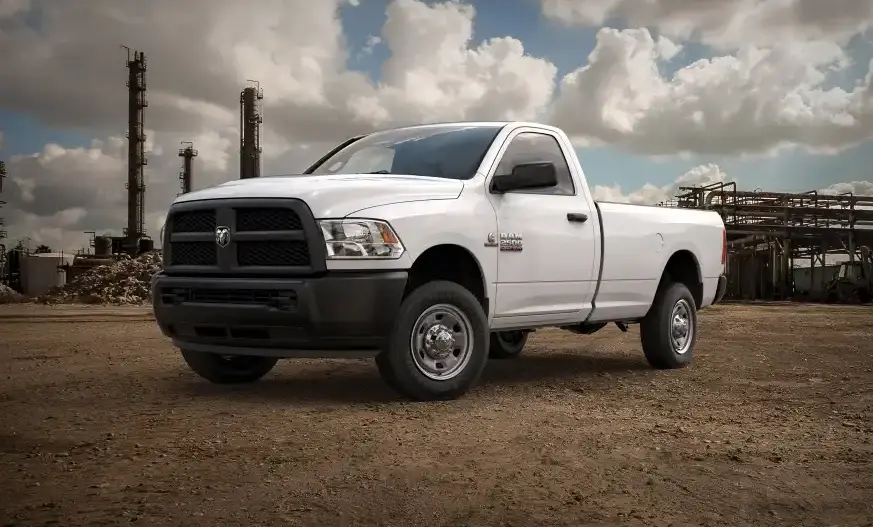
The RAM 2500/3500 Regular Cab I (facelifted in 2013) represented a significant update to the heavy-duty truck lineup from RAM, continuing a legacy of robust American pickup trucks. Specifically, the 2500 model equipped with the 6.7-liter Cummins turbocharged diesel engine producing 350 horsepower and paired with a six-speed manual transmission, offered from 2013 to 2018, was a popular choice for those needing substantial towing and hauling capability. This configuration occupied a sweet spot in the lineup, providing a balance between power, efficiency, and cost, appealing to both commercial users and individual truck enthusiasts. It built upon the foundation of the previous generation, enhancing interior refinement and incorporating updated technology while maintaining the core values of durability and work-ready performance.
Technical Specifications
| Brand | RAM |
| Model | 2500/3500 |
| Generation | 2500/3500 Regular Cab I (facelift 2013) |
| Type (Engine) | 2500 6.7 Cummins TD (350 Hp) 4×4 |
| Start of production | 2013 |
| End of production | 2018 |
| Powertrain Architecture | Internal Combustion engine |
| Body type | Pick-up |
| Seats | 2-3 |
| Doors | 2 |
| Fuel Type | Diesel |
| Weight-to-power ratio | 9.1 kg/Hp, 109.7 Hp/tonne |
| Weight-to-torque ratio | 3.6 kg/Nm, 276.2 Nm/tonne |
| Power | 350 Hp @ 2800 rpm |
| Power per litre | 52.3 Hp/l |
| Torque | 881 Nm @ 1400 rpm (649.79 lb.-ft. @ 1400 rpm) |
| Maximum engine speed | 3200 rpm |
| Engine layout | Front, Longitudinal |
| Engine Model/Code | ETJ |
| Engine displacement | 6690 cm3 (408.25 cu. in.) |
| Number of cylinders | 6 |
| Engine configuration | Inline |
| Cylinder Bore | 107 mm (4.21 in.) |
| Piston Stroke | 124 mm (4.88 in.) |
| Compression ratio | 16.2:1 |
| Number of valves per cylinder | 4 |
| Fuel injection system | Diesel Commonrail |
| Engine aspiration | Turbocharger, Intercooler |
| Valvetrain | OHV |
| Engine oil capacity | 11.4 l (12.05 US qt | 10.03 UK qt) |
| Coolant capacity | 21.4 l (22.61 US qt | 18.83 UK qt) |
| Kerb Weight | 3190 kg (7032.75 lbs.) |
| Max. weight | 4082 kg (8999.27 lbs.) |
| Max load | 892 kg (1966.52 lbs.) |
| Trunk (boot) space – maximum | 2115 l (74.69 cu. ft.) |
| Fuel tank capacity | 121 l (31.96 US gal | 26.62 UK gal) |
| Permitted trailer load with brakes (12%) | 7620 kg (16799.22 lbs.) |
| Length | 5867 mm (230.98 in.) |
| Width including mirrors | 2004 mm (78.9 in.) |
| Height | 1923 mm (75.71 in.) |
| Wheelbase | 3556 mm (140 in.) |
| Front track | 1735 mm (68.31 in.) |
| Rear (Back) track | 1732 mm (68.19 in.) |
| Minimum turning circle (turning diameter) | 12.6 m (41.34 ft.) |
| Approach angle | 23.0° |
| Departure angle | 21.6° |
| Ramp-over (brakeover) angle | 16.9° |
| Drive wheel | All wheel drive (4×4) |
| Number of gears and type of gearbox | 6 gears, manual transmission |
| Front suspension | Independent multi-link suspension |
| Rear suspension | Independent multi-link suspension |
| Front brakes | Disc |
| Rear brakes | Disc |
| Assisting systems | ABS (Anti-lock braking system) |
| Tires size | 275/70 R18 118T |
| Wheel rims size | 8J x 18 ET43 |
Powertrain & Engine Architecture
The heart of this RAM 2500 was the 6.7-liter Cummins inline-six diesel engine, designated with the ETJ code. This engine was a workhorse, renowned for its durability and torque output. It featured a cast iron block and head, contributing to its longevity. The engine utilized a Bosch common rail fuel injection system, delivering highly pressurized fuel directly into the cylinders for efficient combustion. A variable geometry turbocharger with an intercooler maximized power and minimized turbo lag. The overhead valve (OHV) valvetrain, while a more traditional design, proved reliable and well-suited for the demands of heavy-duty trucking. The six-speed manual transmission provided precise control and allowed drivers to fully utilize the engine’s substantial torque. This manual transmission was favored by many for its robustness and direct connection to the engine, especially when towing or hauling heavy loads.
Driving Characteristics
The 2500 with the 6.7L Cummins and manual transmission delivered a distinctly truck-like driving experience. While not designed for nimble handling, it excelled at its intended purpose: moving substantial weight. The engine produced peak torque at a relatively low 1400 rpm, providing effortless pulling power from a standstill. The manual transmission required a more engaged driving style, but offered greater control when navigating challenging terrain or managing heavy loads. Compared to the automatic transmission options, the manual provided a more direct feel and reduced parasitic loss, potentially improving fuel economy slightly. The gear ratios were optimized for towing, with lower gears providing ample grunt for steep inclines and heavy hauls. The ride quality, while firm, was acceptable for a heavy-duty truck, and the robust suspension effectively absorbed bumps and vibrations.
Equipment & Trim Levels
The RAM 2500 Regular Cab in this configuration typically came with a fairly basic level of equipment, focusing on functionality rather than luxury. Standard features included air conditioning, a basic audio system, vinyl upholstery, and manually adjustable seats. However, several options were available, including power windows and locks, upgraded audio systems, and cloth or leather upholstery. The interior was designed with durability in mind, featuring hard-wearing materials and a straightforward layout. The Regular Cab configuration offered seating for two or three passengers, depending on the chosen trim level.
Chassis & Braking
The chassis of the RAM 2500 was built to withstand the stresses of heavy-duty use. It featured a robust frame and a heavy-duty suspension system. The front suspension utilized an independent multi-link design, while the rear suspension also employed a multi-link setup. This configuration provided a good balance of ride comfort and load-carrying capacity. Braking duties were handled by disc brakes on all four wheels, providing ample stopping power even when heavily loaded. An Anti-lock Braking System (ABS) was standard, enhancing safety and control during emergency braking situations.
Market Reception & Comparison
The 6.7L Cummins-powered RAM 2500 was well-received by critics and consumers alike. It was praised for its powerful engine, robust construction, and impressive towing capacity. Compared to gasoline-powered alternatives, the diesel engine offered significantly better fuel economy and torque. Within the RAM 2500 lineup, this configuration offered a compelling value proposition, providing a balance between performance and affordability. While the higher trim levels offered more luxurious features, the base model with the manual transmission appealed to those prioritizing functionality and durability.
Legacy
The 6.7L Cummins engine has become legendary for its reliability and longevity. Properly maintained, these engines can easily exceed 300,000 miles, and many have surpassed 500,000 miles. The 2013-2018 RAM 2500 with this powertrain remains a popular choice in the used truck market, commanding relatively high prices due to its reputation for dependability. The manual transmission, while less common than the automatic, is highly sought after by enthusiasts who appreciate its robustness and direct driving experience. These trucks continue to be used for a variety of applications, from commercial hauling to recreational towing, demonstrating their enduring appeal and capability.