
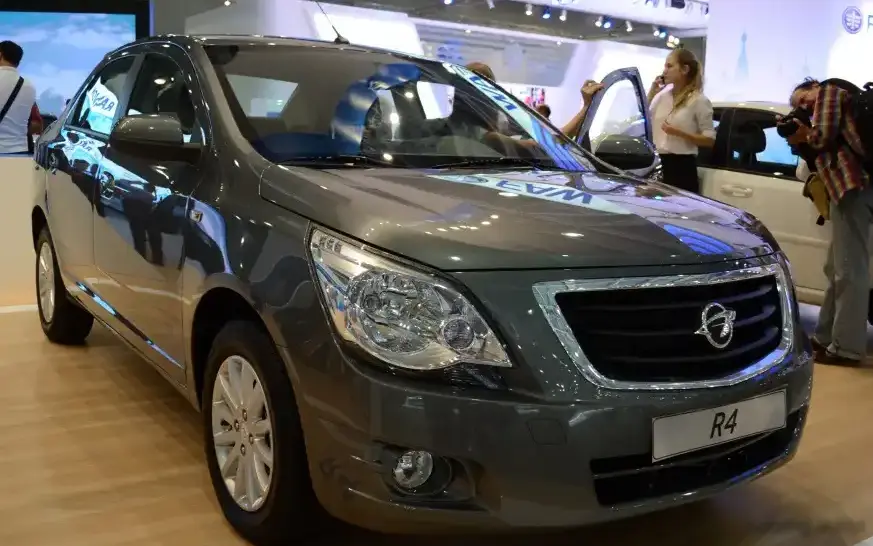
The Ravon R4 1.5 (106 Hp) Automatic, launched in 2016, represented a key offering in the Ravon brand’s initial foray into the sedan market. Positioned as a mainstream, affordable option, the R4 aimed to provide a balance of practicality, fuel efficiency, and modern features. This particular variant, equipped with a 1.5-liter engine and a six-speed automatic transmission, was intended to appeal to buyers seeking ease of use and convenience, particularly in urban driving environments. The R4 itself was based on the SM7 platform, originally developed by SsangYong, and represented Ravon’s attempt to establish a foothold in the competitive compact sedan segment.
Technical Specifications
| Brand | Ravon |
| Model | R4 |
| Generation | R4 |
| Type (Engine) | 1.5 (106 Hp) Automatic |
| Start of production | 2016 |
| Powertrain Architecture | Internal Combustion engine |
| Body type | Sedan |
| Seats | 5 |
| Doors | 4 |
| Fuel consumption (urban) | 10.4 l/100 km (22.6 US mpg, 27.2 UK mpg, 9.6 km/l) |
| Fuel consumption (combined) | 6.7 l/100 km (35.1 US mpg, 42.2 UK mpg, 14.9 km/l) |
| Fuel Type | Petrol (Gasoline) |
| Acceleration 0 – 100 km/h | 12.6 sec |
| Acceleration 0 – 62 mph | 12.6 sec |
| Acceleration 0 – 60 mph | 12 sec |
| Maximum speed | 170 km/h (105.63 mph) |
| Emission standard | Euro 5 |
| Power | 106 Hp @ 5800 rpm |
| Power per litre | 71.4 Hp/l |
| Torque | 134 Nm @ 4000 rpm (98.83 lb.-ft. @ 4000 rpm) |
| Engine layout | Front, Transverse |
| Engine displacement | 1485 cm3 (90.62 cu. in.) |
| Number of cylinders | 4 |
| Engine configuration | Inline |
| Compression ratio | 10.2:1 |
| Number of valves per cylinder | 4 |
| Engine aspiration | Naturally aspirated engine |
| Fuel tank capacity | 47 l (12.42 US gal, 10.34 UK gal) |
| Length | 4479 mm (176.34 in.) |
| Width | 1735 mm (68.31 in.) |
| Height | 1514 mm (59.61 in.) |
| Wheelbase | 2620 mm (103.15 in.) |
| Front track | 1509 mm (59.41 in.) |
| Rear track | 1509 mm (59.41 in.) |
| Drivetrain Architecture | Front wheel drive, Internal Combustion Engine |
| Drive wheel | Front wheel drive |
| Number of gears and type of gearbox | 6 gears, automatic transmission |
| Front suspension | Independent type McPherson |
| Rear suspension | Semi-independent, coil spring |
| Front brakes | Disc |
| Rear brakes | Drum |
| Assisting systems | ABS (Anti-lock braking system) |
| Steering type | Steering rack and pinion |
| Power steering | Hydraulic Steering |
Powertrain & Engine Architecture
The Ravon R4 1.5 Automatic is powered by a 1.5-liter inline-four cylinder gasoline engine. This engine, while not particularly technologically advanced, was designed for reliability and fuel efficiency. It utilizes a multi-point fuel injection system and a single overhead camshaft (SOHC) valvetrain with four valves per cylinder. The engine’s 106 horsepower output at 5800 rpm and 134 Nm (98.83 lb-ft) of torque at 4000 rpm were modest, but sufficient for everyday driving. The six-speed automatic transmission was a conventional torque converter type, prioritizing smooth shifts over outright performance. The transmission’s gear ratios were tuned for fuel economy and comfortable cruising, rather than aggressive acceleration. The engine code is not widely documented, but it shares similarities with engines used in other SsangYong vehicles of the period.
Driving Characteristics
The driving experience in the Ravon R4 1.5 Automatic was characterized by its smoothness and ease of operation. The automatic transmission provided seamless gear changes, making it well-suited for city traffic. However, the 106 horsepower engine and the weight of the vehicle resulted in relatively slow acceleration – 0-60 mph took approximately 12 seconds. Overtaking maneuvers required careful planning. Compared to potential higher-output engine options (which were not widely available in many markets), the 1.5L automatic felt noticeably less responsive. The steering was light and easy, but lacked significant feedback. The suspension, tuned for comfort, absorbed bumps reasonably well, but didn’t offer particularly sporty handling. The gear ratios were optimized for fuel efficiency, meaning the engine often operated at lower RPMs during highway cruising.
Equipment & Trim Levels
The Ravon R4 1.5 Automatic typically came standard with features such as air conditioning, power windows, power door locks, and a basic audio system with USB connectivity. Safety features included ABS brakes and dual front airbags. Higher trim levels, when available, added features like alloy wheels, a more advanced audio system with Bluetooth connectivity, and a rear parking sensor. Interior upholstery was typically cloth, with a simple and functional dashboard layout. Optional extras included a sunroof and a navigation system, though these were not commonly specified.
Chassis & Braking
The R4 utilized a front-wheel-drive layout with an independent McPherson strut suspension in the front and a semi-independent coil spring suspension in the rear. The front brakes were disc brakes, providing adequate stopping power, while the rear brakes were drum brakes, a cost-saving measure. The steering system was a rack and pinion type with hydraulic power assistance. The chassis was designed for comfort and practicality, rather than sporty handling. Stabilizer bars were present, but relatively thin, contributing to a noticeable degree of body roll during cornering.
Market Reception & Comparison
The Ravon R4 1.5 Automatic received mixed reviews from automotive critics. It was generally praised for its affordability, comfortable ride, and fuel efficiency. However, it was often criticized for its lack of power, uninspired styling, and relatively basic interior. Compared to competitors like the Hyundai Accent or Kia Rio, the R4 offered a similar level of equipment at a comparable price point, but lacked the brand recognition and established reputation of those Korean rivals. Fuel economy was a strong point, achieving around 35 mpg in combined driving, which was competitive for its class. Reliability reports were limited due to the brand’s relatively short lifespan, but initial indications suggested that the powertrain was generally dependable.
Legacy
The Ravon brand ultimately failed to gain significant traction in most markets, and production of the R4 was discontinued after a relatively short run. However, the R4 1.5 Automatic remains a relatively affordable and practical used car option. The 1.5-liter engine and six-speed automatic transmission have proven to be reasonably reliable, although regular maintenance is essential. Parts availability can be a challenge due to the brand’s limited presence, but many components are shared with SsangYong vehicles, which can simplify sourcing. The R4 represents a curious footnote in automotive history – a vehicle that aimed to offer value and practicality, but ultimately lacked the brand recognition and refinement to compete effectively in the crowded compact sedan segment.
