The Renault Clio IV (Phase I) 0.9 (90 Hp) Energy TCE Start&Stop: A European Supermini Standard
The Renault Clio IV, specifically the Phase I model produced from 2012 to 2016, represents a significant chapter in the history of Renault’s highly successful supermini lineup. This generation marked a bold stylistic departure from its predecessors, introducing a more expressive and dynamic design language that would influence subsequent Renault models. The variant under review, the Renault Clio IV (Phase I) 0.9 (90 Hp) Energy TCE Start&Stop, epitomized the European trend towards downsizing and efficiency, leveraging a compact, turbocharged three-cylinder engine to deliver a compelling balance of performance and fuel economy. While never officially sold in the United States, the Clio IV was a perennial best-seller in its primary European markets, contending fiercely in the highly competitive B-segment (subcompact car segment) against rivals like the Ford Fiesta, Volkswagen Polo, and Peugeot 208. Its role was crucial in offering accessible, stylish, and economical transportation to a broad demographic, from first-time drivers to small families, cementing its status as a benchmark for practical urban mobility.
Engine & Performance: The Efficient Heart of the Renault Clio IV (Phase I)
At the core of the Renault Clio IV (Phase I) 0.9 (90 Hp) Energy TCE Start&Stop lies a remarkably compact yet sophisticated powertrain. The vehicle is propelled by an 899 cm3 (0.9-liter) inline three-cylinder gasoline engine, designated by the code H4B 408. Despite its small displacement, this engine is a testament to modern engineering, featuring a turbocharger and intercooler to significantly boost its output. It delivers a respectable 90 horsepower at 5000 revolutions per minute (rpm), translating to an impressive 100.1 horsepower per liter – a figure often associated with much larger, sportier engines.
Torque production is equally notable for an engine of this size, with 135 Newton-meters (99.57 lb.-ft.) available from a low 2500 rpm. This broad torque band is crucial for urban driving, providing responsive acceleration without the need to constantly rev the engine high. Power is sent to the front wheels via a five-speed manual transmission, a common and efficient setup for a vehicle in this class.
Performance figures for the Clio IV 0.9 Energy TCE are competitive within its segment. It accelerates from 0 to 60 mph in a calculated 11.6 seconds, or 0 to 100 km/h in 12.2 seconds, before reaching a maximum speed of 113.09 mph (182 km/h). These numbers highlight its capability for both city driving and occasional highway journeys. A key feature contributing to its efficiency is the standard Start&Stop system, which automatically shuts off the engine when the vehicle is stationary and restarts it instantly when the driver intends to move. This system, combined with the engine’s inherent efficiency, allows the Clio IV to achieve excellent fuel economy: an estimated 52.3 US mpg (4.5 l/100 km) combined, 42 US mpg (5.6 l/100 km) in urban conditions, and an impressive 60.3 US mpg (3.9 l/100 km) on the extra-urban cycle. The vehicle also met the Euro 5 emission standard, reflecting its commitment to environmental performance for its era.
Design & Features of the Renault Clio IV (Phase I)
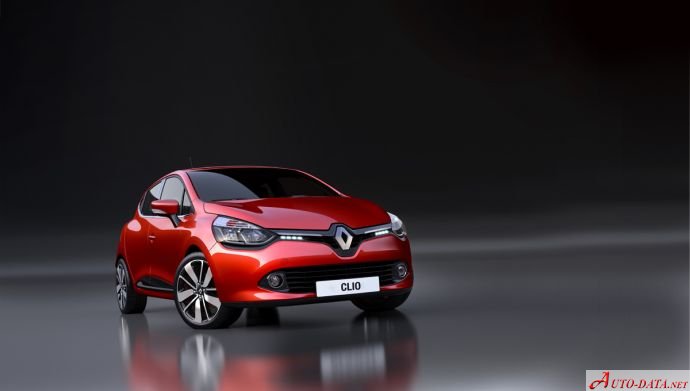
The Renault Clio IV represented a bold step forward in design for the French automaker, ushering in the brand’s new design language under Laurens van den Acker. The Phase I model, a five-door hatchback, featured a more curvaceous and muscular aesthetic compared to its more conservative predecessors. Its sleek profile, hidden rear door handles integrated into the C-pillar, and prominent front grille with an enlarged Renault emblem gave it a distinctive and modern appearance. The car’s dimensions – 159.92 inches (4062 mm) in length, 69.96 inches (1777 mm) in width, and 57.01 inches (1448 mm) in height, with a 101.93-inch (2589 mm) wheelbase – contributed to its agile handling and spacious-for-its-class interior.
Inside, the Clio IV offered seating for five occupants, with a focus on ergonomics and contemporary styling. While the 0.9 Energy TCE variant was often positioned as an entry-to-mid-range model, it still benefited from standard features designed for comfort and convenience. The electric power steering system provided light and precise control, ideal for navigating tight city streets and parking maneuvers. Safety was addressed with standard Anti-lock Braking System (ABS) and ventilated front disc brakes, ensuring confident stopping power. The suspension system, featuring independent McPherson struts with coil springs and an anti-roll bar at the front, provided a comfortable ride quality characteristic of European superminis, balancing compliance with respectable handling dynamics. The vehicle was equipped with tires sized 185/65 R15 88T or 195/55 R16 87H, depending on the specific trim and options, mounted on 15-inch or 16-inch wheel rims.
The Start&Stop system, a prominent feature in its powertrain, was not just a performance spec but also a user-facing technology that enhanced the driving experience, particularly in congested urban environments, by reducing noise and emissions at idle. With a curb weight of just 2224.46 lbs (1009 kg), the Clio IV 0.9 Energy TCE was a lightweight contender, contributing further to its agility and efficiency. Its 11.89 US gallon (45 liter) fuel tank provided a substantial cruising range, making it a practical choice for daily commutes and longer trips alike.
Technical Specifications: Renault Clio IV (Phase I) 0.9 (90 Hp) Energy TCE Start&Stop
| Category | Specification | US Equivalent (where applicable) |
|---|---|---|
| General Information | ||
| Brand | Renault | |
| Model | Clio | |
| Generation | Clio IV (Phase I) | |
| Type (Engine) | 0.9 (90 Hp) Energy TCE Start&Stop | |
| Production Start | 2012 | |
| Production End | 2016 | |
| Powertrain Architecture | Internal Combustion Engine | |
| Body Type | Hatchback | |
| Seats | 5 | |
| Doors | 5 | |
| Performance Specs | ||
| Fuel Consumption (Urban) | 5.6 l/100 km | 42 US mpg |
| Fuel Consumption (Extra Urban) | 3.9 l/100 km | 60.3 US mpg |
| Fuel Consumption (Combined) | 4.5 l/100 km | 52.3 US mpg |
| Fuel Type | Petrol (Gasoline) | |
| Acceleration 0 – 60 mph | 11.6 sec | |
| Acceleration 0 – 100 km/h | 12.2 sec | |
| Maximum Speed | 182 km/h | 113.09 mph |
| Emission Standard | Euro 5 | |
| Weight-to-Power Ratio | 11.2 kg/Hp | 89.2 Hp/tonne |
| Weight-to-Torque Ratio | 7.5 kg/Nm | 133.8 Nm/tonne |
| Engine Specs | ||
| Power | 90 Hp @ 5000 rpm | |
| Power per Liter | 100.1 Hp/l | |
| Torque | 135 Nm @ 2500 rpm | 99.57 lb.-ft. @ 2500 rpm |
| Engine Layout | Front, Transverse | |
| Engine Model/Code | H4B 408 | |
| Engine Displacement | 899 cm3 | 0.9 liters / 54.86 cu. in. |
| Number of Cylinders | 3 | |
| Engine Configuration | Inline | |
| Number of Valves per Cylinder | 4 | |
| Fuel Injection System | Multi-port manifold injection | |
| Engine Aspiration | Turbocharger, Intercooler | |
| Engine Oil Capacity | 4.1 l | 4.33 US qt |
| Engine Oil Specification | (Specific type not detailed in provided data) | |
| Coolant Capacity | 5 l | 5.28 US qt |
| Engine Systems | Start & Stop System | |
| Space, Volume and Weights | ||
| Kerb Weight | 1009 kg | 2224.46 lbs. |
| Max. Weight | 1588 kg | 3500.94 lbs. |
| Max Load | 579 kg | 1276.48 lbs. |
| Fuel Tank Capacity | 45 l | 11.89 US gal |
| Dimensions | ||
| Length | 4062 mm | 159.92 in. |
| Width | 1777 mm | 69.96 in. |
| Height | 1448 mm | 57.01 in. |
| Wheelbase | 2589 mm | 101.93 in. |
| Drivetrain, Brakes and Suspension | ||
| Drivetrain Architecture | Front-wheel drive, Internal Combustion Engine | |
| Drive Wheel | Front-wheel drive | |
| Number of Gears & Type | 5 gears, manual transmission | |
| Front Suspension | Independent, McPherson with coil spring and anti-roll bar | |
| Front Brakes | Ventilated discs | |
| Assisting Systems | ABS (Anti-lock Braking System) | |
| Steering Type | Steering rack and pinion | |
| Power Steering | Electric Steering | |
| Tire Size | 185/65 R15 88T; 195/55 R16 87H | |
| Wheel Rims Size | 15 inches; 16 inches |
Legacy & Market Impact: The Clio IV’s European Dominance
The Renault Clio IV, and particularly the efficient 0.9 (90 Hp) Energy TCE Start&Stop variant, carved out a significant legacy in the European automotive landscape. As a core offering in the fiercely contested supermini segment, the Clio IV consistently ranked among the best-selling cars in several European countries throughout its production run. Its blend of stylish design, practical five-door hatchback body, competitive pricing, and excellent fuel economy resonated strongly with European consumers.
In its primary markets, the Clio IV faced stiff competition from segment stalwarts. Key rivals included the Ford Fiesta, known for its dynamic handling; the Volkswagen Polo, celebrated for its robust build quality and refined driving experience; and the Peugeot 208, another French contender offering distinctive styling and a comfortable ride. The Clio IV differentiated itself with its bold, emotional design language, which helped it stand out in a crowded market. Its emphasis on personalization, with various color and trim options, also appealed to a younger demographic.
The introduction of downsized, turbocharged engines like the 0.9-liter Energy TCE was a critical factor in its success, aligning with growing consumer demand for vehicles that offered lower running costs and reduced environmental impact without sacrificing too much in terms of performance. The Start&Stop system, a standard feature on this specific variant, underscored Renault’s commitment to efficiency and meeting increasingly stringent European emission standards.
While the Clio never made it to the U.S. market, its significance globally cannot be overstated. It represented Renault’s strength in the compact car segment and demonstrated the feasibility of pairing small-displacement engines with forced induction for mainstream applications. The Clio IV’s success helped solidify Renault’s reputation as a leader in innovative and stylish small cars, proving that practicality and efficiency could coexist with engaging design. Its widespread adoption across Europe meant it played a crucial role in shaping the daily mobility experience for millions, cementing its place as an iconic and influential model in automotive history.