The Renault Clio IV (Phase I) 1.2 16V (75 Hp): A European Supermini Standard
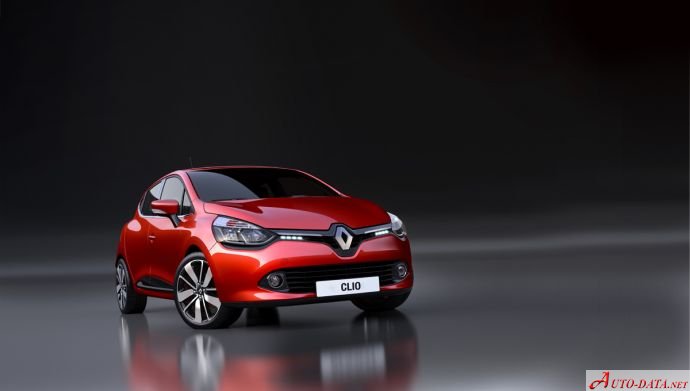
The Renault Clio IV (Phase I), launched in 2012, represented a significant evolution for Renault’s highly successful subcompact car, known as a supermini in Europe. As a cornerstone of the French automaker’s lineup, the Clio has consistently been one of Europe’s best-selling cars, and the fourth generation continued this legacy with a fresh design language and improved efficiency. The specific variant under review, the 1.2 16V (75 Hp), served as an accessible and economical entry point into the Clio IV range, primarily targeting urban drivers and those seeking a practical, fuel-efficient daily commuter in its home market and across Europe. This model was produced from 2012 until 2016, before receiving a mid-cycle refresh. While the Renault Clio is not officially sold in the United States, its impact and popularity in the highly competitive European B-segment are undeniable, setting benchmarks for design, practicality, and cost-effectiveness.
Engine and Performance: The 1.2 16V Heart of the Renault Clio IV (Phase I)
Powering this particular variant of the Renault Clio IV (Phase I) is a naturally aspirated 1.2-liter (1149 cm³ or 70.12 cu. in.) inline four-cylinder engine, designated by Renault with the code D4F 740. This robust and well-proven engine configuration features 16 valves (four per cylinder) and utilizes a multi-port manifold injection system. It delivers a modest 75 horsepower at 5500 rpm, which translates to a power-per-liter output of 65.3 Hp/l. Torque output stands at 78.92 lb.-ft. (107 Nm) peaking at 4250 rpm. This powertrain architecture is front-transverse, driving the front wheels through a 5-speed manual transmission, a common and efficient setup for a vehicle of this class.
While not designed for exhilarating performance, the 1.2 16V engine provides adequate propulsion for city driving and comfortable cruising on extra-urban roads. The acceleration from 0 to 60 mph is achieved in a calculated 13.8 seconds (or 0-62 mph in 14.5 seconds), with a maximum speed of 103.77 mph (167 km/h). These figures highlight its primary focus on economy and everyday usability rather than outright speed. Fuel efficiency is a strong suit, with a combined consumption rating of 42.8 US mpg (5.5 l/100 km), and an impressive 50 US mpg (4.7 l/100 km) on extra-urban cycles. The urban consumption is rated at 33.6 US mpg (7 l/100 km). This engine complies with the Euro 5 emission standard, reflecting its relatively clean operation for its time. The car’s light curb weight of 2160.53 lbs (980 kg) contributes significantly to its agility and efficiency, resulting in a weight-to-power ratio of 13.1 kg/Hp.
Design and Features: A Bold Statement in the Supermini Segment
The Clio IV marked a pivotal moment for Renault’s design language, being the first production model to fully embody the vision of then-new design chief Laurens van den Acker. The design of the Renault Clio IV (Phase I) was characterized by its more expressive, flowing lines and a prominent front grille featuring a large Renault lozenge badge. This generation was exclusively offered as a 5-door hatchback, measuring 159.92 inches (4062 mm) in length, 69.96 inches (1777 mm) in width, and 57.01 inches (1448 mm) in height, with a wheelbase of 101.93 inches (2589 mm). Its dynamic proportions and concealed rear door handles gave it a coupé-like silhouette, a popular styling cue in the segment.
Inside, the Clio IV offered a modern and ergonomically designed cabin with seating for five occupants. While materials were typical for the segment, the layout was intuitive, and higher trims offered customizable color accents. Standard features for the 1.2 16V variant typically included electric power steering, which provided ease of maneuverability in urban settings, and essential safety systems like ABS (Anti-lock Braking System) for enhanced braking control. The car rode on 15-inch or 16-inch wheels, shod with tire sizes 185/65 R15 88T or 195/55 R16 87H, respectively, providing a comfortable and stable ride characteristic of European small cars. The fuel tank capacity of 11.89 US gallons (45 liters) combined with its efficient engine offered a respectable driving range, further enhancing its appeal as a practical daily driver.
Technical Specifications
| Category | Specification |
|---|---|
| General Information | |
| Brand | Renault |
| Model | Clio |
| Generation | Clio IV (Phase I) |
| Engine Type | 1.2 16V (75 Hp) |
| Production Start | 2012 |
| Production End | 2016 |
| Powertrain Architecture | Internal Combustion Engine |
| Body Type | Hatchback |
| Seats | 5 |
| Doors | 5 |
| Performance Specs | |
| Fuel Consumption (Urban) | 7 l/100 km (33.6 US mpg) |
| Fuel Consumption (Extra Urban) | 4.7 l/100 km (50 US mpg) |
| Fuel Consumption (Combined) | 5.5 l/100 km (42.8 US mpg) |
| Fuel Type | Petrol (Gasoline) |
| Acceleration 0 – 60 mph | 13.8 sec |
| Acceleration 0 – 100 km/h | 14.5 sec |
| Maximum Speed | 103.77 mph (167 km/h) |
| Emission Standard | Euro 5 |
| Weight-to-Power Ratio | 13.1 kg/Hp (76.5 Hp/tonne) |
| Weight-to-Torque Ratio | 9.2 kg/Nm (109.2 Nm/tonne) |
| Engine Specs | |
| Power | 75 Hp @ 5500 rpm |
| Power Per Liter | 65.3 Hp/l |
| Torque | 78.92 lb.-ft. (107 Nm) @ 4250 rpm |
| Engine Layout | Front, Transverse |
| Engine Model/Code | D4F 740 |
| Engine Displacement | 1149 cm³ (70.12 cu. in.) |
| Number of Cylinders | 4 |
| Engine Configuration | Inline |
| Valves Per Cylinder | 4 |
| Fuel Injection System | Multi-port manifold injection |
| Engine Aspiration | Naturally aspirated engine |
| Engine Oil Capacity | 4.23 US qt (4 l) |
| Coolant Capacity | 5.28 US qt (5 l) |
| Space, Volume and Weights | |
| Kerb Weight | 2160.53 lbs (980 kg) |
| Max. Weight | 3445.83 lbs (1563 kg) |
| Max Load | 1285.29 lbs (583 kg) |
| Fuel Tank Capacity | 11.89 US gal (45 l) |
| Dimensions | |
| Length | 159.92 in. (4062 mm) |
| Width | 69.96 in. (1777 mm) |
| Height | 57.01 in. (1448 mm) |
| Wheelbase | 101.93 in. (2589 mm) |
| Drivetrain, Brakes and Suspension Specs | |
| Drivetrain Architecture | Front-wheel drive, Internal Combustion Engine |
| Drive Wheel | Front wheel drive |
| Transmission | 5 gears, manual transmission |
| Front Brakes | Ventilated discs |
| Assisting Systems | ABS (Anti-lock braking system) |
| Steering Type | Steering rack and pinion |
| Power Steering | Electric Steering |
| Tires Size | 185/65 R15 88T; 195/55 R16 87H |
| Wheel Rims Size | 15; 16 |
Legacy and Market Impact: A European B-Segment Dominator
The Renault Clio IV (Phase I), particularly in its 1.2 16V (75 Hp) guise, played a crucial role in maintaining the Clio’s status as a leading contender in the fiercely competitive European supermini segment. It built upon the strong foundation laid by its predecessors, which collectively had sold millions of units since the original Clio’s debut in 1990. The fourth generation, with its more emotional and youthful design, effectively broadened its appeal, attracting both traditional Renault buyers and a new generation of consumers looking for style combined with practicality.
In its primary markets, the Clio IV faced stiff competition from rivals such as the Ford Fiesta, Volkswagen Polo, Peugeot 208, Opel Corsa, and Fiat Punto. Against these formidable competitors, the Clio IV distinguished itself with its striking design, comfortable ride, and strong value proposition. The 1.2 16V engine, while not the most powerful option, was a popular choice due to its low running costs, proven reliability, and respectable fuel economy, making it ideal for the high fuel prices prevalent in Europe. Its compliance with Euro 5 emissions standards also made it an environmentally conscious choice for the period.
The Clio IV’s success significantly contributed to Renault’s overall sales performance in Europe during its production run. It consistently ranked among the top-selling models, demonstrating Renault’s ability to innovate and adapt to consumer preferences in a crucial segment. The vehicle’s impact was not just commercial; its design language influenced subsequent Renault models, establishing a new visual identity for the brand. The combination of its practical 5-door hatchback body, efficient powertrain, and modern features solidified the Clio IV’s reputation as a well-rounded and historically significant vehicle in the European automotive landscape. Even today, used examples of the Clio IV remain popular choices for those seeking an affordable, reliable, and stylish subcompact car.