Introduction to the Renault Clio IV (Phase II, 2016) 1.5 Energy dCi (110 Hp) S&S
The Renault Clio, a cornerstone of the European B-segment (subcompact) market, has consistently been one of the best-selling models for the French automaker. The fourth generation, introduced in 2012, received a significant mid-cycle refresh in 2016, designated as Phase II. This update brought subtle but impactful design enhancements, updated interior features, and refined powertrain options, maintaining its competitive edge against formidable rivals. The specific variant under examination, the Renault Clio IV (Phase II, 2016) 1.5 Energy dCi (110 Hp) S&S, represents a highly efficient and capable diesel offering within the Clio lineup, primarily targeted at European consumers where such powertrains remain popular for their fuel economy and robust torque characteristics.
While the Renault Clio is not officially sold in the United States market, its global significance in the compact car segment cannot be overstated. It embodies the European philosophy of balancing compact dimensions with ample interior space, dynamic driving characteristics, and impressive fuel efficiency. The 2016 Phase II model, produced until 2018, continued this tradition, offering a modern hatchback package that appealed to a broad demographic, from young urban drivers to small families. This particular 1.5 Energy dCi variant, with its 110 horsepower and advanced Start & Stop system, was a prime example of Renault’s commitment to delivering economical yet engaging vehicles within its primary markets.
Engine and Performance of the Renault Clio IV (Phase II, 2016) 1.5 Energy dCi (110 Hp) S&S
At the heart of the Renault Clio IV (Phase II, 2016) 1.5 Energy dCi (110 Hp) S&S lies Renault’s well-regarded K9K 646 1.5-liter Energy dCi turbodiesel engine. This four-cylinder, inline configuration powerplant is mounted transversely at the front, driving the front wheels. It delivers a respectable 110 horsepower at 4000 rpm, which translates to a power-to-liter ratio of 75.3 horsepower per liter, showcasing efficient output for its displacement. More notably, the engine generates a robust 260 Nm (191.77 lb.-ft.) of torque available at a low 1750 rpm. This characteristic low-end torque is crucial for a vehicle designed for urban environments and highway cruising, providing excellent responsiveness and reducing the need for frequent downshifts.
Performance figures for this diesel hatchback are competitive within its segment. The Clio IV (Phase II) 1.5 Energy dCi accelerates from 0 to 60 mph in an estimated 10.6 seconds (0-100 km/h in 11.19 seconds), making it agile enough for daily driving and merging onto highways. Its maximum speed reaches 120.55 mph (194 km/h). Power delivery is managed by a smooth and precise 6-speed manual transmission, offering drivers full control over the engine’s output.
Fuel efficiency and environmental consciousness are key strengths of this powertrain. The engine features a Diesel Commonrail fuel injection system, a turbocharger with an intercooler for optimized air intake, and a Particulate Filter to reduce harmful emissions. Crucially, it incorporates Renault’s Start & Stop (S&S) system, which automatically shuts off the engine when the vehicle is stationary and restarts it instantly when the clutch is pressed, significantly reducing fuel consumption and emissions in stop-and-go traffic. This commitment to efficiency is further underscored by its compliance with the stringent Euro 6 b emission standard, a critical benchmark for modern European vehicles. The vehicle’s weight-to-power ratio stands at 10.9 kg/Hp (91.4 Hp/tonne), and its weight-to-torque ratio is 4.6 kg/Nm (215.9 Nm/tonne), indicating a well-balanced package for its size and intended use.
Design and Features of the Renault Clio IV (Phase II, 2016)
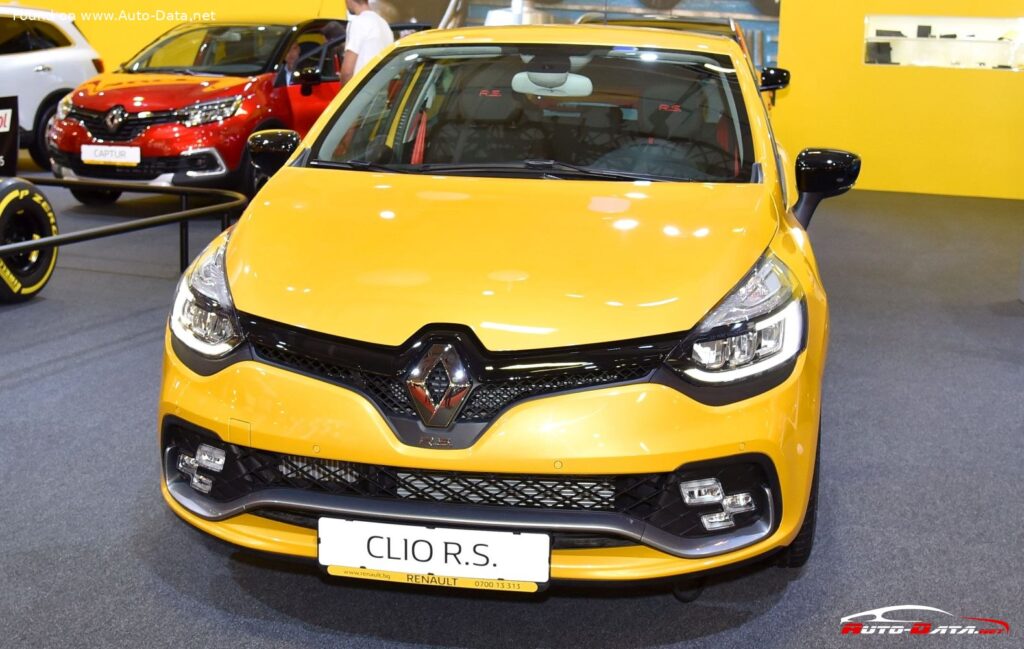
The Renault Clio IV (Phase II, 2016) retained the sleek, dynamic styling that debuted with the fourth generation, a design language penned by Laurens van den Acker. The Phase II facelift introduced subtle but effective changes to keep the Clio fresh. These updates included revised front and rear bumpers, a new grille design that visually widened the car, and updated C-shaped LED daytime running lights (DRLs) that integrated seamlessly into the headlamp clusters, giving the car a more sophisticated and modern appearance. At the rear, the taillights also received a minor revision, enhancing the overall cohesive design.
As a 5-door hatchback, the Clio IV (Phase II) prioritizes practicality and versatility, a hallmark of the compact segment. With seating for five occupants, it offers a comfortable and surprisingly spacious interior for its external dimensions. The car measures 159.92 inches (4062 mm) in length, 68.15 inches (1731 mm) in width (76.57 inches or 1945 mm including mirrors), and 57.01 inches (1448 mm) in height. Its wheelbase of 101.93 inches (2589 mm) contributes to both stable handling and a decent amount of passenger room. The design cleverly incorporates the rear door handles into the C-pillar, giving the appearance of a sportier 3-door model while maintaining the convenience of five doors.
Inside, the Phase II update brought improved material quality and new trim options, elevating the perceived cabin ambiance. While specific infotainment features are not detailed in the raw data, typical for a 2016 European compact, the Clio would have offered Renault’s R-Link Evolution or MediaNav Evolution infotainment systems, featuring touchscreens, satellite navigation, and smartphone connectivity. Safety features, standard for modern European vehicles, would include ABS (Anti-lock braking system) as listed, along with multiple airbags, electronic stability control (ESC), and possibly advanced driver-assistance systems (ADAS) like parking sensors or a rearview camera on higher trims. The steering system is a responsive rack and pinion setup, ensuring nimble handling. The vehicle offers a choice of tire sizes, including 185/65 R15, 195/55 R16, and 205/45 R17, paired with corresponding wheel rims, allowing for varying levels of grip and ride comfort. Braking is handled by ventilated discs at the front and drum brakes at the rear, a common and effective setup for vehicles of this class.
Technical Specifications
| Category | Specification | Value |
|---|---|---|
| General Information | ||
| Brand | Renault | |
| Model | Clio | |
| Generation | Clio IV (Phase II, 2016) | |
| Type (Engine) | 1.5 Energy dCi (110 Hp) S&S | |
| Start of production | 2016 year | |
| End of production | 2018 year | |
| Powertrain Architecture | Internal Combustion engine | |
| Body type | Hatchback | |
| Seats | 5 | |
| Doors | 5 | |
| Performance Specs | ||
| Fuel Type | Diesel | |
| Acceleration 0 – 60 mph | (Calculated by Auto-Data.net) | 10.6 sec |
| Acceleration 0 – 100 km/h | 11.19 sec | |
| Acceleration 0 – 62 mph | 11.19 sec | |
| Maximum speed | 194 km/h (120.55 mph) | |
| Emission standard | Euro 6 b | |
| Weight-to-power ratio | 10.9 kg/Hp (91.4 Hp/tonne) | |
| Weight-to-torque ratio | 4.6 kg/Nm (215.9 Nm/tonne) | |
| Engine Specs | ||
| Power | 110 Hp @ 4000 rpm | |
| Power per liter | 75.3 Hp/l | |
| Torque | 260 Nm @ 1750 rpm (191.77 lb.-ft. @ 1750 rpm) | |
| Engine layout | Front, Transverse | |
| Engine Model/Code | K9K 646 | |
| Engine displacement | 1461 cm3 (1.5 l / 89.16 cu. in.) | |
| Number of cylinders | 4 | |
| Engine configuration | Inline | |
| Number of valves per cylinder | 2 | |
| Fuel injection system | Diesel Commonrail | |
| Engine aspiration | Turbocharger, Intercooler | |
| Engine oil capacity | 4.5 l (4.76 US qt) | |
| Coolant | 5 l (5.28 US qt) | |
| Engine Systems | ||
| Start & Stop System | Yes | |
| Particulate filter | Yes | |
| Space, Volume and Weights | ||
| Kerb Weight | 1204-1205 kg (2654.37 – 2656.57 lbs.) | |
| Max. weight (Gross weight) | 1706-1716 kg (3761.09 – 3783.13 lbs.) | |
| Max load | 502-511 kg (1106.72 – 1126.56 lbs.) | |
| Dimensions | ||
| Length | 4062 mm (159.92 in.) | |
| Width | 1731 mm (68.15 in.) | |
| Width including mirrors | 1945 mm (76.57 in.) | |
| Height | 1448 mm (57.01 in.) | |
| Wheelbase | 2589 mm (101.93 in.) | |
| Front track | 1506 mm (59.29 in.) | |
| Rear (Back) track | 1506 mm (59.29 in.) | |
| Front overhang | 851 mm (33.5 in.) | |
| Rear overhang | 622 mm (24.49 in.) | |
| Ride height (ground clearance) | 120 mm (4.72 in.) | |
| Drivetrain, Brakes and Suspension Specs | ||
| Drivetrain Architecture | The Internal combustion engine (ICE) drives the front wheels of the vehicle. | |
| Drive wheel | Front wheel drive | |
| Number of gears and type of gearbox | 6 gears, manual transmission | |
| Front brakes | Ventilated discs | |
| Rear brakes | Drum | |
| Assisting systems | ABS (Anti-lock braking system) | |
| Steering type | Steering rack and pinion | |
| Tires size | 185/65 R15; 195/55 R16; 205/45 R17 | |
| Wheel rims size | 15; 16; 17 | |
Legacy and Market Impact of the Renault Clio IV (Phase II, 2016)
The Renault Clio has enjoyed an illustrious history in the European automotive landscape since its inception in 1990, consistently ranking among the continent’s best-selling cars. The fourth-generation Clio, and particularly its Phase II iteration from 2016, continued this legacy of success. It cemented its reputation as a stylish, practical, and economical choice in the fiercely competitive B-segment, often vying for top sales spots with perennial rivals such as the Ford Fiesta, Volkswagen Polo, Peugeot 208, and Opel/Vauxhall Corsa.
The Renault Clio IV (Phase II, 2016) 1.5 Energy dCi (110 Hp) S&S played a crucial role in the Clio’s market strategy. In European markets, diesel engines, especially in compact cars, were highly valued for their superior fuel economy and strong torque, making them ideal for both long-distance commuting and urban driving. This specific 110 horsepower variant offered an appealing blend of performance and efficiency, positioning it as a premium diesel option within the range. Its Euro 6 b compliance and Start & Stop system were significant selling points, appealing to environmentally conscious buyers and those seeking lower running costs. The car’s low kerb weight, ranging from 2654 to 2657 lbs. (1204-1205 kg), further contributed to its agility and efficiency.
The Clio’s impact extended beyond just sales figures. Its bold design language, which moved away from the more conservative styling of previous generations, influenced other models in Renault’s lineup and helped redefine the aesthetic expectations for compact cars. The Phase II refresh ensured that the design remained contemporary and appealing, preventing the model from feeling dated amidst new entrants. Furthermore, the Clio IV’s platform and technologies, including the efficient dCi engines and infotainment systems, served as a foundation for other Renault-Nissan Alliance vehicles, demonstrating its engineering significance.
Despite the broader shift away from diesel engines in passenger cars in later years, the 2016-2018 Clio IV 1.5 Energy dCi (110 Hp) S&S stands as a testament to the peak of diesel technology in the compact class. It represented a period where diesel offered a compelling proposition for efficiency and performance, making it a highly significant model for Renault and a strong contender in the European subcompact segment. Its enduring popularity on the used car market in Europe continues to reflect its solid build quality, low running costs, and attractive design.