<!DOCTYPE html>
<html lang=”en”>
<head>
<meta charset=”UTF-8″>
<meta name=”viewport” content=”width=device-width, initial-scale=1.0″>
<title>Renault Clio IV (Phase II, 2016) 1.5 Energy dCi (90 Hp) S&S</title>
</head>
<body>
<h2>The Renault Clio IV (Phase II, 2016) 1.5 Energy dCi (90 Hp) S&S: A European Subcompact Powerhouse</h2>
<p>
The Renault Clio IV (Phase II, 2016) 1.5 Energy dCi (90 Hp) S&S represents a significant refresh of the fourth-generation Clio, a cornerstone model for the French automaker Renault. Launched in 2016 and produced until 2019, this particular variant highlights Renault’s commitment to efficiency and practicality within the highly competitive European B-segment, often referred to as the subcompact class in the United States. While the Clio itself is a globally recognized nameplate, this specific diesel-powered model was primarily targeted at European and other international markets where such powertrains are popular and fuel economy is a paramount concern. It was never officially sold in the North American market, yet its influence on global automotive design and engineering principles for small, efficient cars is undeniable.
</p>
<p>
The Clio IV, originally introduced in 2012, received its mid-cycle refresh, or “Phase II,” in 2016, bringing updated styling, enhanced technology, and refined powertrains. The 1.5 Energy dCi (90 Hp) S&S model, with its advanced diesel engine and Start & Stop system, stood out as an exceptionally economical choice, perfectly suited for urban commuting and longer journeys across the continent. This five-door hatchback configuration offered a blend of dynamic styling, practical interior space for five occupants, and a driving experience tailored for European roads.
</p>
<h2>Engine and Performance of the Renault Clio IV (Phase II, 2016)</h2>
<p>
At the heart of the Renault Clio IV (Phase II, 2016) 1.5 Energy dCi (90 Hp) S&S lies Renault’s venerable K9K 628 1.5-liter Energy dCi diesel engine. This inline four-cylinder unit, with a displacement of 1461 cubic centimeters (approximately 89.16 cubic inches), is a testament to efficient diesel engineering. It produces a respectable 90 horsepower at 4000 rpm, a figure that might seem modest by American standards but is entirely adequate for a vehicle of its size and intended use. More importantly, the engine generates a robust 220 Newton-meters (162.26 lb.-ft.) of torque at a low 1750 rpm. This ample low-end torque is characteristic of diesel engines and provides excellent responsiveness and effortless driving, particularly in city traffic and during highway overtaking maneuvers, without the need to constantly downshift.
</p>
<p>
The powertrain architecture features a front, transverse engine layout, driving the front wheels through a precise 5-speed manual transmission. This setup is common for subcompact vehicles, offering a good balance of packaging efficiency and driving dynamics. The engine benefits from a sophisticated common rail diesel fuel injection system, augmented by a turbocharger and intercooler, which significantly boosts both power output and fuel efficiency while minimizing turbo lag.
</p>
<p>
Performance figures for the Clio 1.5 Energy dCi underscore its focus on economy rather than outright speed. It accelerates from 0 to 60 mph in a calculated 11.4 seconds, with a top speed of 111.85 mph (180 km/h). These numbers are competitive within its segment and more than sufficient for general European driving conditions, including highway cruising. A key highlight of this model is its remarkable fuel economy. The combined cycle fuel consumption is rated at an impressive 3.2 liters per 100 kilometers, translating to an outstanding 73.5 US miles per gallon. This efficiency is further bolstered by the standard Start & Stop system, which automatically shuts off the engine when the vehicle is stationary and restarts it seamlessly when the driver intends to move, reducing fuel consumption and emissions in urban environments. The vehicle also features a particulate filter to meet strict European emission standards, specifically Euro 6b, with CO2 emissions as low as 85 g/km.
</p>
<h3>Design and Features: The Practicality and Style of the Clio IV (Phase II)</h3>
<p>
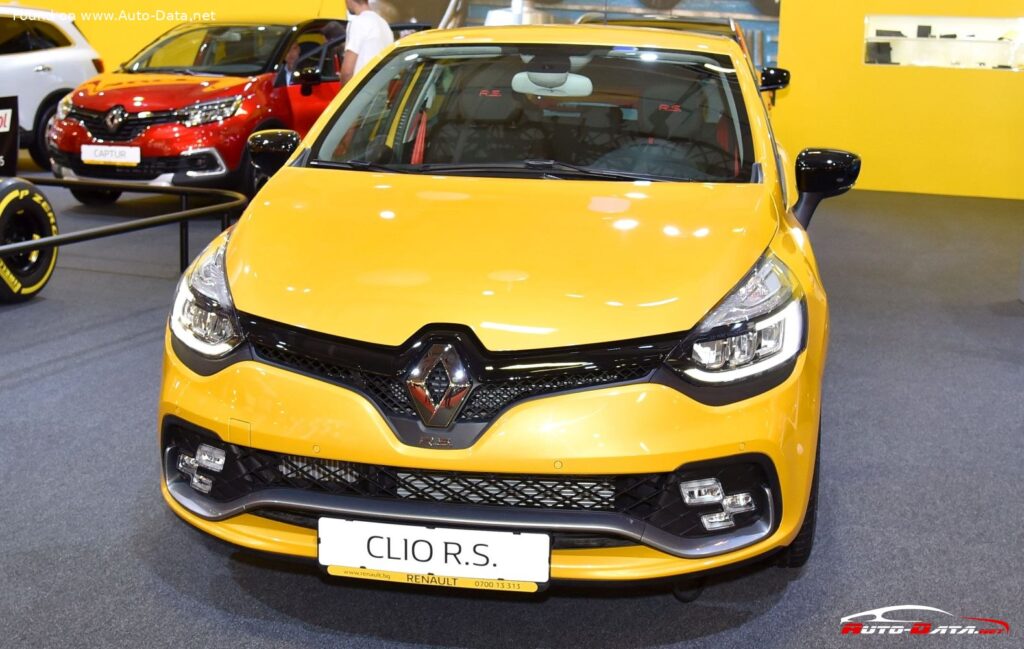
The Renault Clio IV (Phase II, 2016) retained the sleek, contemporary design language that made the fourth generation a visual standout in its class. As a 5-door hatchback, it expertly blended sporty aesthetics with everyday practicality. The Phase II refresh introduced subtle but effective changes, including redesigned front and rear bumpers, a more prominent grille, and updated LED lighting signatures (C-shaped daytime running lights and full LED “Pure Vision” headlights on higher trims) that gave it a more sophisticated and modern appearance. Its dimensions – 159.92 inches in length, 68.15 inches in width (76.57 inches including mirrors), and 57.01 inches in height – made it agile for city driving and easy to park, while its 101.93-inch wheelbase ensured a stable ride and maximized interior space.
</p>
<p>
Inside, the Clio IV offered a comfortable and well-appointed cabin for five passengers. While specific interior features varied by trim, the Phase II generally brought improved material quality, new upholstery options, and updated infotainment systems, often including Renault’s R-Link or Media Nav Evolution with touchscreens, navigation, and smartphone integration capabilities, although these are not explicitly detailed in the provided data. Safety was a priority, with standard features like ABS (Anti-lock Braking System) and a comprehensive airbag system. The vehicle’s kerb weight ranged from 2403.04 to 2605.86 pounds, contributing to its nimble handling. The suspension system, typical for a car of its segment, provided a comfortable ride while maintaining composure. Front brakes were ventilated discs, while the rear utilized drum brakes, a cost-effective and adequate solution for a vehicle of this size and performance. Steering was handled by a precise rack and pinion system.
</p>
<h2>Technical Specifications</h2>
<table border=”1″ style=”width:100%; border-collapse: collapse;”>
<tr>
<th style=”padding: 8px; text-align: left; background-color: #f2f2f2;”>Attribute</th>
<th style=”padding: 8px; text-align: left; background-color: #f2f2f2;”>Specification</th>
</tr>
<tr>
<td style=”padding: 8px; border: 1px solid #ddd;”>Brand</td>
<td style=”padding: 8px; border: 1px solid #ddd;”>Renault</td>
</tr>
<tr>
<td style=”padding: 8px; border: 1px solid #ddd;”>Model</td>
<td style=”padding: 8px; border: 1px solid #ddd;”>Clio</td>
</tr>
<tr>
<td style=”padding: 8px; border: 1px solid #ddd;”>Generation</td>
<td style=”padding: 8px; border: 1px solid #ddd;”>Clio IV (Phase II, 2016)</td>
</tr>
<tr>
<td style=”padding: 8px; border: 1px solid #ddd;”>Engine Type</td>
<td style=”padding: 8px; border: 1px solid #ddd;”>1.5 Energy dCi (90 Hp) S&S</td>
</tr>
<tr>
<td style=”padding: 8px; border: 1px solid #ddd;”>Production Start</td>
<td style=”padding: 8px; border: 1px solid #ddd;”>2016 year</td>
</tr>
<tr>
<td style=”padding: 8px; border: 1px solid #ddd;”>Production End</td>
<td style=”padding: 8px; border: 1px solid #ddd;”>2019 year</td>
</tr>
<tr>
<td style=”padding: 8px; border: 1px solid #ddd;”>Body Type</td>
<td style=”padding: 8px; border: 1px solid #ddd;”>Hatchback</td>
</tr>
<tr>
<td style=”padding: 8px; border: 1px solid #ddd;”>Seats</td>
<td style=”padding: 8px; border: 1px solid #ddd;”>5</td>
</tr>
<tr>
<td style=”padding: 8px; border: 1px solid #ddd;”>Doors</td>
<td style=”padding: 8px; border: 1px solid #ddd;”>5</td>
</tr>
<tr>
<td style=”padding: 8px; border: 1px solid #ddd;”>Fuel Type</td>
<td style=”padding: 8px; border: 1px solid #ddd;”>Diesel</td>
</tr>
<tr>
<td style=”padding: 8px; border: 1px solid #ddd;”>Fuel Consumption (Combined)</td>
<td style=”padding: 8px; border: 1px solid #ddd;”>3.2 l/100 km (73.5 US mpg)</td>
</tr>
<tr>
<td style=”padding: 8px; border: 1px solid #ddd;”>CO2 Emissions</td>
<td style=”padding: 8px; border: 1px solid #ddd;”>85 g/km</td>
</tr>
<tr>
<td style=”padding: 8px; border: 1px solid #ddd;”>Emission Standard</td>
<td style=”padding: 8px; border: 1px solid #ddd;”>Euro 6 b</td>
</tr>
<tr>
<td style=”padding: 8px; border: 1px solid #ddd;”>Acceleration 0-60 mph</td>
<td style=”padding: 8px; border: 1px solid #ddd;”>11.4 sec</td>
</tr>
<tr>
<td style=”padding: 8px; border: 1px solid #ddd;”>Maximum Speed</td>
<td style=”padding: 8px; border: 1px solid #ddd;”>180 km/h (111.85 mph)</td>
</tr>
<tr>
<td style=”padding: 8px; border: 1px solid #ddd;”>Power</td>
<td style=”padding: 8px; border: 1px solid #ddd;”>90 Hp @ 4000 rpm</td>
</tr>
<tr>
<td style=”padding: 8px; border: 1px solid #ddd;”>Torque</td>
<td style=”padding: 8px; border: 1px solid #ddd;”>220 Nm (162.26 lb.-ft.) @ 1750 rpm</td>
</tr>
<tr>
<td style=”padding: 8px; border: 1px solid #ddd;”>Engine Displacement</td>
<td style=”padding: 8px; border: 1px solid #ddd;”>1461 cm³ (1.5 Liters / 89.16 cu. in.)</td>
</tr>
<tr>
<td style=”padding: 8px; border: 1px solid #ddd;”>Number of Cylinders</td>
<td style=”padding: 8px; border: 1px solid #ddd;”>4, Inline</td>
</tr>
<tr>
<td style=”padding: 8px; border: 1px solid #ddd;”>Fuel Injection System</td>
<td style=”padding: 8px; border: 1px solid #ddd;”>Diesel Commonrail</td>
</tr>
<tr>
<td style=”padding: 8px; border: 1px solid #ddd;”>Engine Aspiration</td>
<td style=”padding: 8px; border: 1px solid #ddd;”>Turbocharger, Intercooler</td>
</tr>
<tr>
<td style=”padding: 8px; border: 1px solid #ddd;”>Engine Oil Capacity</td>
<td style=”padding: 8px; border: 1px solid #ddd;”>4.5 l (4.76 US qt)</td>
</tr>
<tr>
<td style=”padding: 8px; border: 1px solid #ddd;”>Coolant Capacity</td>
<td style=”padding: 8px; border: 1px solid #ddd;”>5 l (5.28 US qt)</td>
</tr>
<tr>
<td style=”padding: 8px; border: 1px solid #ddd;”>Kerb Weight</td>
<td style=”padding: 8px; border: 1px solid #ddd;”>1090-1182 kg (2403.04 – 2605.86 lbs.)</td>
</tr>
<tr>
<td style=”padding: 8px; border: 1px solid #ddd;”>Max. Weight</td>
<td style=”padding: 8px; border: 1px solid #ddd;”>1695-1702 kg (3736.84 – 3752.27 lbs.)</td>
</tr>
<tr>
<td style=”padding: 8px; border: 1px solid #ddd;”>Length</td>
<td style=”padding: 8px; border: 1px solid #ddd;”>4062 mm (159.92 in.)</td>
</tr>
<tr>
<td style=”padding: 8px; border: 1px solid #ddd;”>Width</td>
<td style=”padding: 8px; border: 1px solid #ddd;”>1731 mm (68.15 in.)</td>
</tr>
<tr>
<td style=”padding: 8px; border: 1px solid #ddd;”>Height</td>
<td style=”padding: 8px; border: 1px solid #ddd;”>1448 mm (57.01 in.)</td>
</tr>
<tr>
<td style=”padding: 8px; border: 1px solid #ddd;”>Wheelbase</td>
<td style=”padding: 8px; border: 1px solid #ddd;”>2589 mm (101.93 in.)</td>
</tr>
<tr>
<td style=”padding: 8px; border: 1px solid #ddd;”>Drive Wheel</td>
<td style=”padding: 8px; border: 1px solid #ddd;”>Front wheel drive</td>
</tr>
<tr>
<td style=”padding: 8