The Unconventional Hot Hatch: Renault Clio Sport (Phase II) 3.0i V6 24V (254 Hp)
The automotive landscape of the early 2000s saw a fascinating departure from convention with the introduction of the
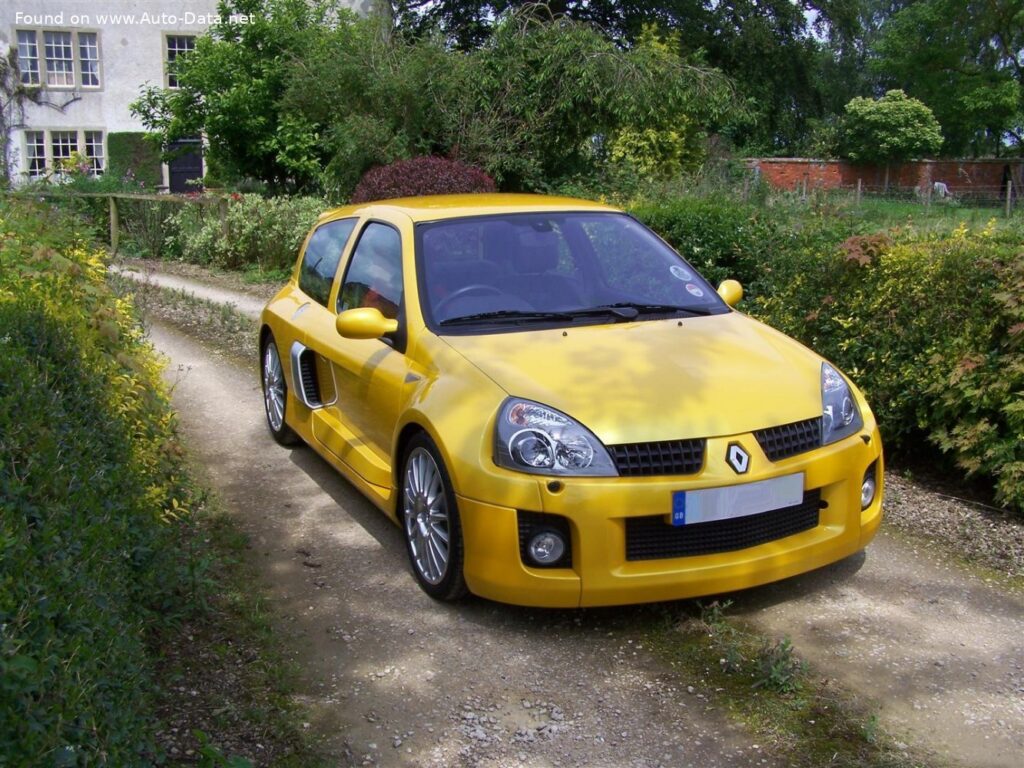
The automotive landscape of the early 2000s saw a fascinating departure from convention with the introduction of the Renault Clio Sport (Phase II) 3.0i V6 24V (254 Hp). Far from a typical front-wheel-drive hot hatchback, this vehicle was a radical reinterpretation of the compact car, transforming it into a mid-engined, rear-wheel-drive pocket rocket. Produced by Renault Sport, the high-performance division of the French automaker, the Clio V6 was a bold statement, originally conceived as a road-going homologation special for racing. The Phase II, launched in June 2003 and produced until July 2005, represented a significant evolution over its predecessor, addressing initial criticisms and refining the exhilarating, albeit challenging, driving experience. While never officially sold in the United States, the Clio V6 achieved legendary status in Europe and among enthusiasts worldwide, celebrated for its unique engineering and raw performance. It carved out a niche in the performance car segment, offering an exotic layout typically reserved for supercars within the unassuming shell of a subcompact hatchback.
Engineering Excellence: The Powertrain of the Renault Clio Sport (Phase II)
At the heart of the Renault Clio Sport (Phase II) 3.0i V6 24V (254 Hp) was a longitudinally mounted 3.0-liter (2946 cm3 or 179.78 cu. in.) naturally aspirated V6 engine, designated L7X 762. This was a significant upgrade from the Phase I’s 230 horsepower unit. For the Phase II, Renault Sport engineers painstakingly re-tuned the engine, boosting output to a robust 254 horsepower at a soaring 7150 rpm. This high-revving characteristic was a hallmark of Renault Sport engines, delivering an intoxicating power band. Torque also saw an increase, reaching 221.27 lb.-ft. (300 Nm) at 4650 rpm, providing a more usable spread of power throughout the rev range. The engine’s configuration, with four valves per cylinder and Double Overhead Cams (DOHC), ensured efficient breathing and high performance. Fuel delivery was managed by a multi-port manifold injection system, optimized for responsiveness and power.
The most defining characteristic of the Clio V6’s powertrain architecture was its placement: not under the hood, but behind the two front seats, where the rear passenger compartment would typically be. This mid-engine layout, coupled with a rear-wheel-drive system, completely transformed the car’s dynamics. Power was channeled through a precise 6-speed manual transmission, offering direct engagement for the driver. This setup allowed the Clio V6 Phase II to accelerate from 0 to 60 mph in a blistering 5.5 seconds (0-100 km/h in 5.8 seconds) and achieve a top speed of 155.34 mph (250 km/h). Such figures were highly competitive for its era, especially for a vehicle of its compact size. The car’s weight-to-power ratio stood at an impressive 5.5 kg/Hp (181.4 Hp/tonne), underscoring its performance credentials.
Design, Chassis, and Distinctive Features
The exterior design of the Renault Clio Sport (Phase II) 3.0i V6 24V (254 Hp) was a visual declaration of its performance intent. While retaining the basic silhouette of a standard Clio hatchback, it was dramatically widened to accommodate the mid-mounted V6 engine and a significantly wider track. The flared wheel arches, aggressive front and rear bumpers, and large side air intakes (essential for cooling the rear-mounted engine) gave it an unmistakable, muscular stance. The Phase II further refined this aesthetic with subtle tweaks to the front fascia, headlights, and taillights, lending it a more modern and cohesive look compared to its predecessor.
Inside, the commitment to performance and the unique layout meant a strict two-seat configuration. The space typically occupied by the rear seats was now home to the V6 engine, while a small trunk space, ranging from 1.59 to 2.37 cu. ft. (45 to 67 liters), was available behind the engine. The cabin featured sporty accents, including bolstered seats and specific instrumentation, reflecting its performance pedigree.
Underneath its widened bodywork, the Clio V6 boasted a bespoke chassis. Both the front and rear suspensions utilized independent McPherson struts with hydraulic elements, tuned for optimal handling. The braking system was equally serious, featuring large 330 mm ventilated discs at the front and 300 mm ventilated discs at the rear, complemented by an Anti-lock Braking System (ABS) for enhanced stopping power. The car rode on staggered wheel and tire setups, with 205/45 R17 or 205/40 R18 tires on 7J x 17 or 7J x 18 rims at the front, and wider 225/45 R17 or 245/40 R18 tires on 8.5J x 17 or 8.5J x 18 rims at the rear, ensuring maximum grip and stability for its rear-wheel-drive layout. The steering was a rack and pinion system, providing direct feedback crucial for a high-performance machine.
Technical Specifications: Renault Clio Sport (Phase II) 3.0i V6 24V (254 Hp)
| Category | Specification | US Equivalent (where applicable) |
|---|---|---|
| General Information | ||
| Brand | Renault | |
| Model | Clio | |
| Generation | Clio Sport (Phase II) | |
| Type (Engine) | 3.0i V6 24V (254 Hp) | |
| Start of Production | June 2003 | |
| End of Production | July 2005 | |
| Powertrain Architecture | Internal Combustion engine | |
| Body Type | Hatchback | |
| Seats | 2 | |
| Doors | 2 | |
| Performance Specs | ||
| Fuel Consumption (Urban) | 15.6 l/100 km | 15.1 US mpg |
| Fuel Consumption (Extra Urban) | 9.8 l/100 km | 24 US mpg |
| Fuel Consumption (Combined) | 11.9 l/100 km | 19.8 US mpg |
| CO2 Emissions | 285 g/km | |
| Fuel Type | Petrol (Gasoline) | |
| Acceleration 0 – 60 mph | 5.5 sec | |
| Acceleration 0 – 100 km/h | 5.8 sec | |
| Maximum Speed | 250 km/h | 155.34 mph |
| Emission Standard | Euro 3 D4 | |
| Weight-to-Power Ratio | 5.5 kg/Hp | 181.4 Hp/tonne |
| Weight-to-Torque Ratio | 4.7 kg/Nm | 214.3 Nm/tonne |
| Engine Specs | ||
| Power | 254 Hp @ 7150 rpm | |
| Power per Liter | 86.2 Hp/l | |
| Torque | 300 Nm @ 4650 rpm | 221.27 lb.-ft. @ 4650 rpm |
| Engine Layout | Rear, Transverse | |
| Engine Model/Code | L7X 762 | |
| Engine Displacement | 2946 cm3 | 179.78 cu. in. |
| Number of Cylinders | 6 | |
| Engine Configuration | V-engine | |
| Cylinder Bore | 87 mm | 3.43 in. |
| Piston Stroke | 82.6 mm | 3.25 in. |
| Compression Ratio | 11.4:1 | |
| Valves per Cylinder | 4 | |
| Fuel Injection System | Multi-port manifold injection | |
| Engine Aspiration | Naturally aspirated | |
| Valvetrain | DOHC | |
| Engine Oil Capacity | 5.25 l | 5.55 US qt |
| Coolant Capacity | 15 l | 15.85 US qt |
| Space, Volume and Weights | ||
| Kerb Weight | 1400 kg | 3086.47 lbs. |
| Max. Weight | 1610 kg | 3549.44 lbs. |
| Max Load | 210 kg | 462.97 lbs. |
| Trunk Space (Min) | 45 l | 1.59 cu. ft. |
| Trunk Space (Max) | 67 l | 2.37 cu. ft. |
| Fuel Tank Capacity | 61 l | 16.11 US gal |
| Dimensions | ||
| Length | 3841 mm | 151.22 in. |
| Width | 1830 mm | 72.05 in. |
| Width (incl. mirrors) | 1940 mm | 76.38 in. |
| Height | 1351 mm | 53.19 in. |
| Wheelbase | 2532 mm | 99.69 in. |
| Front Track | 1518 mm | 59.76 in. |
| Rear Track | 1470 mm | 57.87 in. |
| Front Overhang | 753 mm | 29.65 in. |
| Rear Overhang | 556 mm | 21.89 in. |
| Minimum Turning Circle | 14.4 m | 47.24 ft. |
| Drivetrain, Brakes and Suspension Specs | ||
| Drivetrain Architecture | Internal Combustion engine drives the rear wheels. | |
| Drive Wheel | Rear-wheel drive | |
| Number of Gears/Type | 6 gears, manual transmission | |
| Front Suspension | Hydraulic elements, Independent McPherson | |
| Rear Suspension | Hydraulic elements, McPherson | |
| Front Brakes | Ventilated discs, 330 mm | |
| Rear Brakes | Ventilated discs, 300 mm | |
| Assisting Systems | ABS (Anti-lock braking system) | |
| Steering Type | Steering rack and pinion | |
| Front Wheel Tires | 205/45 R17; 205/40 R18 | |
| Rear Wheel Tires | 225/45 R17; 245/40 R18 | |
| Front Wheel Rims | 7J x 17; 7J x 18 | |
| Rear Wheel Rims | 8.5J x 17; 8.5J x 18 | |
Legacy and Market Impact of the Clio V6
The Renault Clio Sport (Phase II) 3.0i V6 24V (254 Hp) stands as one of the most audacious and memorable hot hatches ever conceived. Its radical mid-engine, rear-wheel-drive configuration within a compact hatchback body ensured it had no direct competitors in the traditional sense. While other performance hatchbacks like the Volkswagen Golf R32, Ford Focus RS, or Honda Civic Type R offered impressive front-wheel-drive performance, none dared to challenge the fundamental layout of the hot hatch quite like the Clio V6. Its closest spiritual rivals were perhaps smaller, lightweight sports cars like the Lotus Elise or even higher-end performance vehicles, rather than its peers in the hatchback class.
The Clio V6 was more than just a fast car; it was a halo product for Renault Sport, demonstrating the division’s engineering prowess and willingness to push boundaries. Production numbers were limited, with only a few thousand units built across both Phase I and Phase II generations, making it an instant collectible. This exclusivity, combined with its unique character, has cemented its place as a cult classic. Its challenging driving dynamics, particularly for the Phase I, meant it demanded respect from its drivers, rewarding skill and punishing overconfidence. The Phase II, with its refined suspension geometry and increased power, was widely regarded as a more capable and forgiving car, improving on the initial concept while retaining its raw appeal.
Today, the Renault Clio V6, especially the more desirable Phase II, commands significant attention in the collector car market. Its historical significance lies in its bold engineering statement and its role in challenging perceptions of what a compact car could be. It represents a golden era of automotive experimentation, where manufacturers were willing to create niche, high-performance vehicles driven by passion rather than pure commercial viability. The Clio V6’s legacy is that of a truly iconic and unconventional machine, a testament to the creativity and engineering talent of Renault Sport, and a thrilling chapter in the history of European performance cars.