The Renault Clio Symbol 1.4 i 16V Automatic: A Global Compact Sedan
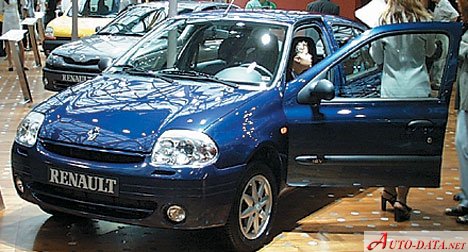
The Renault Clio Symbol 1.4 i 16V Automatic represents a significant chapter in Renault’s strategy to cater to diverse global markets, particularly those with a strong preference for traditional sedan body styles over hatchbacks. Launched in 1999 and produced until 2002, this specific iteration of the Clio Symbol was built upon the successful underpinnings of the second-generation Renault Clio hatchback. While the Clio hatchback garnered widespread acclaim in Western Europe, the Symbol variant, known in some markets as the Clio Sedan or Thalia, was strategically developed for emerging economies and regions where a compact, affordable, and practical three-box sedan was highly sought after. This particular model, equipped with a 1.4-liter 16-valve engine and an automatic transmission, offered a blend of modest performance, fuel efficiency, and a comfortable ride, positioning it as a compelling contender in the subcompact sedan segment of its time. Its role was to provide a robust and spacious family vehicle that was economical to run and maintain, a crucial factor for its target demographic across Eastern Europe, Turkey, North Africa, and parts of Latin America.
Engine and Performance: Powering the Renault Clio Symbol 1.4 i 16V Automatic
At the heart of the Renault Clio Symbol 1.4 i 16V Automatic lies Renault’s dependable K4J engine, a 1.4-liter (1390 cm³ or 84.82 cu. in.) naturally aspirated inline-four cylinder unit. This engine, featuring a multi-port manifold injection system and a Single Overhead Cam (SOHC) valvetrain with four valves per cylinder, was engineered to deliver a balanced combination of power and economy for urban and extra-urban driving. It produced a respectable 98 horsepower at 5700 rpm and 93.67 lb.-ft. of torque at 4250 rpm. With a compression ratio of 10:1, the engine was designed for efficient combustion using regular gasoline.
Mated to a 4-speed automatic transmission, this powertrain aimed to provide a smooth and convenient driving experience, particularly beneficial in congested city environments. While not designed for outright speed, the Clio Symbol 1.4 i 16V Automatic offered adequate performance for its segment. It could accelerate from 0 to 60 mph in a calculated 12.9 seconds, reaching a maximum speed of 115.58 mph. The vehicle’s weight-to-power ratio stood at 9.7 kg/Hp, or approximately 103.2 Hp per tonne, indicating its focus on practical, everyday usability rather than sporty dynamics.
Fuel efficiency was a key consideration for the Clio Symbol’s target markets. The 1.4-liter engine, despite being paired with an automatic transmission, delivered competitive fuel economy figures for its era. In urban driving conditions, it achieved approximately 23.5 US mpg, while on the highway, it could reach an impressive 40.6 US mpg. These figures, combined with a 13.21 US gallon fuel tank capacity, provided a practical cruising range, reducing the frequency of fuel stops and contributing to lower running costs for owners.
Design and Features: Practicality in a Compact Package
The Renault Clio Symbol adopted a classic four-door, five-seat sedan body type, distinguishing it from its hatchback sibling. Measuring 163.39 inches in length, 64.53 inches in width, and 55.75 inches in height, with a wheelbase of 97.32 inches, the Symbol presented a compact footprint that made it agile in city traffic and easy to park. Despite its compact exterior dimensions, Renault engineers prioritized interior space and practicality, particularly focusing on trunk capacity—a critical selling point for families in its intended markets.
One of the most notable features of the Clio Symbol was its surprisingly generous trunk space, offering a minimum of 18.01 cu. ft. (510 liters). This expansive cargo area was a major differentiator from many compact hatchbacks and was a significant advantage for families requiring ample luggage capacity for travel or daily errands. The interior provided comfortable seating for five occupants, with a design that emphasized durability and functionality.
In terms of chassis and safety, the Clio Symbol featured a front-wheel-drive architecture, utilizing coil spring suspension at both the front and rear for a comfortable and compliant ride, well-suited for varying road conditions found in its markets. Braking was handled by disc brakes at the front and drum brakes at the rear, a common setup for vehicles in this class during the late 1990s and early 2000s. Crucially, the vehicle was equipped with an Anti-lock Braking System (ABS), an important safety feature that enhanced control during emergency braking. Steering was managed by a rack and pinion system with hydraulic power steering, ensuring ease of maneuverability at low speeds and a reassuring feel at higher velocities. The car rode on 175/65 R14 tires, mounted on 14-inch wheel rims, providing a good balance of grip and ride comfort.
Technical Specifications: Renault Clio Symbol 1.4 i 16V Automatic (1999-2002)
| Category | Specification |
|---|---|
| General Information | |
| Brand | Renault |
| Model | Clio Symbol |
| Generation | Clio Symbol |
| Engine Type | 1.4 i 16V (98 Hp) Automatic |
| Production Start | 1999 |
| Production End | 2002 |
| Powertrain Architecture | Internal Combustion Engine |
| Body Type | Sedan |
| Seats | 5 |
| Doors | 4 |
| Performance Specs | |
| Fuel Consumption (Urban) | 23.5 US mpg (10 l/100 km) |
| Fuel Consumption (Extra Urban) | 40.6 US mpg (5.8 l/100 km) |
| Fuel Type | Petrol (Gasoline) |
| Acceleration 0-60 mph | 12.9 seconds |
| Maximum Speed | 115.58 mph (186 km/h) |
| Weight-to-Power Ratio | 9.7 kg/Hp (21.38 lbs/Hp) |
| Weight-to-Torque Ratio | 7.5 kg/Nm |
| Engine Specs | |
| Power | 98 Hp @ 5700 rpm |
| Power per Liter | 70.5 Hp/l |
| Torque | 93.67 lb.-ft. @ 4250 rpm (127 Nm) |
| Engine Layout | Front, Transverse |
| Engine Model/Code | K4J |
| Engine Displacement | 1.4 liters (1390 cm³ / 84.82 cu. in.) |
| Number of Cylinders | 4 |
| Engine Configuration | Inline |
| Cylinder Bore | 3.13 inches (79.5 mm) |
| Piston Stroke | 2.76 inches (70 mm) |
| Compression Ratio | 10:1 |
| Valves per Cylinder | 4 |
| Fuel Injection System | Multi-port manifold injection |
| Engine Aspiration | Naturally aspirated |
| Valvetrain | SOHC |
| Engine Oil Capacity | 5.18 US qt (4.9 l) |
| Coolant Capacity | 6.02 US qt (5.7 l) |
| Space, Volume and Weights | |
| Kerb Weight | 2094.39 lbs (950 kg) |
| Maximum Weight | 3251.82 lbs (1475 kg) |
| Maximum Load | 1157.43 lbs (525 kg) |
| Trunk (Boot) Space – Minimum | 18.01 cu. ft. (510 l) |
| Fuel Tank Capacity | 13.21 US gal (50 l) |
| Dimensions | |
| Length | 163.39 inches (4150 mm) |
| Width | 64.53 inches (1639 mm) |
| Height | 55.75 inches (1416 mm) |
| Wheelbase | 97.32 inches (2472 mm) |
| Front Track | 55.35 inches (1406 mm) |
| Rear Track | 54.57 inches (1386 mm) |
| Drivetrain, Brakes and Suspension | |
| Drivetrain Architecture | Front-wheel drive (ICE drives front wheels) |
| Drive Wheel | Front-wheel drive |
| Gearbox | 4-speed automatic transmission |
| Front Suspension | Coil spring |
| Rear Suspension | Coil spring |
| Front Brakes | Disc |
| Rear Brakes | Drum |
| Assisting Systems | ABS (Anti-lock braking system) |
| Steering Type | Steering rack and pinion |
| Power Steering | Hydraulic Steering |
| Tires Size | 175/65 R14 |
| Wheel Rims Size | 14 inches |
Legacy and Market Impact
The Renault Clio Symbol, particularly the 1.4 i 16V Automatic variant, carved out a significant niche for itself in the global automotive landscape. While the standard Clio hatchback was a best-seller in Western Europe, the Symbol’s existence underscored Renault’s understanding of market specificities. In many parts of the world, including countries in Eastern Europe, Russia, Turkey, and Latin America, the sedan body style was traditionally preferred by consumers, often viewed as more prestigious, secure, and practical for family use than a hatchback. The Symbol directly addressed this demand, offering the proven mechanics and design language of the Clio in a more conventional three-box format.
Its primary competitors in these markets included other compact sedans such as the Fiat Palio Weekend/Sedan, Skoda Fabia Sedan, and various Japanese or Korean offerings that tailored models for similar segments. The Clio Symbol stood out due to its comfortable ride, robust construction, and relatively modern (for its time) engine technology, especially the 16-valve architecture that offered a good balance of power and efficiency. The availability of an automatic transmission further broadened its appeal, catering to a growing demographic of drivers seeking ease of use in increasingly congested urban environments.
The car’s reputation was built on its reliability, low running costs, and spacious interior, particularly the class-leading trunk capacity. These attributes made it an ideal choice for families and fleet operators alike. Its success helped solidify Renault’s presence and market share in these crucial emerging economies, demonstrating the brand’s adaptability and commitment to global expansion. The Clio Symbol, in all its iterations, proved to be a durable and practical vehicle, often enduring challenging road conditions and serving as a dependable workhorse for many years after its initial purchase. Its legacy is that of a pragmatic and successful response to specific market demands, a testament to Renault’s strategic prowess in international automotive markets. The 1.4 i 16V Automatic variant, in particular, offered a refined and accessible driving experience, contributing significantly to its overall positive reception and long-term impact in the regions it served.