The Renault Clio V (Phase I) TCe 100 (100 Hp) GPL: A European Bi-Fuel Mainstay
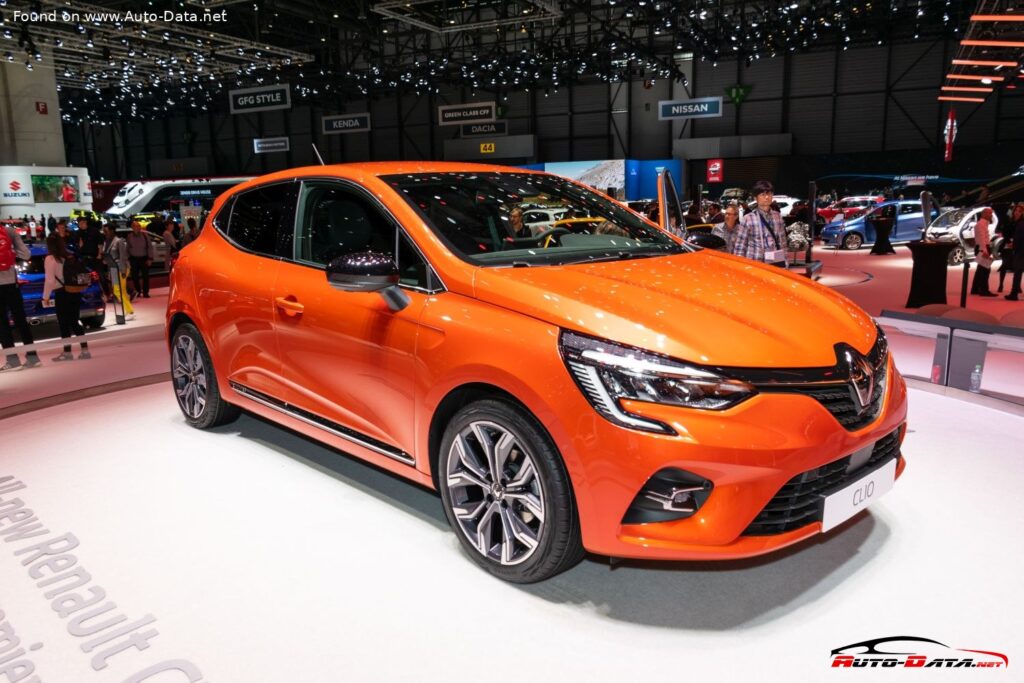
The Renault Clio V (Phase I) TCe 100 (100 Hp) GPL represents a significant offering within Europe’s highly competitive B-segment, or supermini class. Launched in August 2020 as the initial iteration of the fifth-generation Clio, this particular variant stands out for its innovative bi-fuel powertrain, capable of running on both gasoline and Liquefied Petroleum Gas (LPG). Produced until March 2023, the Clio V (Phase I) continued the model’s legacy as a cornerstone of Renault’s lineup, blending contemporary design, urban practicality, and a focus on fuel efficiency and reduced emissions—a critical consideration for the European market.
As a five-door hatchback, the Clio V (Phase I) TCe 100 (100 Hp) GPL was engineered to meet the diverse demands of European drivers, from city commuting to longer journeys, all while providing a compelling balance of performance and economy. Its GPL integration underscores Renault’s commitment to offering accessible, lower-emission alternatives in an increasingly environmentally conscious automotive landscape, positioning it as a smart choice for consumers seeking reduced running costs and a smaller carbon footprint without compromising on everyday usability.
Engine and Performance
At the heart of the Renault Clio V (Phase I) TCe 100 (100 Hp) GPL lies a sophisticated 1.0-liter (999 cm3 or 60.96 cu. in.) inline three-cylinder engine, designated by the code H4D 460. This compact powerhouse is equipped with a turbocharger and a multi-port manifold injection system, allowing it to produce a respectable 100 horsepower at 5000 revolutions per minute. Torque figures are equally impressive for its class, delivering 118.01 lb.-ft. at 2750 rpm, ensuring responsive acceleration and flexible performance in various driving conditions. The engine’s architecture, featuring four valves per cylinder and a front, transverse layout, is optimized for efficiency and packaging within the Clio’s compact dimensions.
A defining characteristic of this particular Clio variant is its bi-fuel capability, seamlessly switching between gasoline and LPG. This system is not merely an aftermarket addition but an integrated solution, providing drivers with the flexibility to choose their fuel source based on availability, cost, or environmental considerations. Power is delivered to the front wheels via a smooth-shifting 5-speed manual transmission, a common and popular choice in the European market for its driver engagement and efficiency.
In terms of raw performance, the Clio V TCe 100 (100 Hp) GPL accelerates from 0 to 60 mph in a calculated 11.9 seconds, with a top speed of 116.82 mph (188 km/h). While not designed as a performance hot hatch, these figures are more than adequate for urban and highway driving. Crucially, the vehicle incorporates a Start & Stop System, a modern efficiency feature that automatically shuts off the engine when the car is stationary and restarts it when the driver intends to move, further reducing fuel consumption and emissions, particularly in stop-and-go traffic.
Fuel economy is a key selling point for the GPL variant. On gasoline, the combined WLTP cycle registers 45.2 US mpg (5.2 l/100 km), with CO2 emissions between 117-118 g/km. When running on LPG, the car demonstrates even lower CO2 emissions, ranging from 94-100 g/km (NEDC), highlighting the environmental benefits of this alternative fuel. The dual fuel tanks—a 10.3 US gallon (39 l) gasoline tank and an 8.58 UK gallon (32 l) LPG tank—provide an extended range, a significant advantage for drivers in regions with well-developed LPG infrastructure.
Design and Features
The Renault Clio V (Phase I) TCe 100 (100 Hp) GPL embodies the modern evolution of Renault’s design philosophy, characterized by dynamic lines, sculpted surfaces, and a confident stance. As a five-door hatchback, it balances a sporty aesthetic with practical utility. The exterior dimensions of 159.45 inches in length, 70.79 inches in width (78.27 inches including mirrors), and 56.69 inches in height contribute to its agility and ease of maneuvering in congested urban environments, a hallmark of the supermini segment. The 101.69-inch wheelbase provides a stable ride and contributes to a surprisingly spacious interior for its class.
Inside, the Clio V is designed to accommodate five occupants comfortably, with attention paid to material quality and ergonomic layout. The trunk space is generous for a vehicle of its size, offering a minimum of 13.81 cubic feet (391 liters) with the rear seats in place, which expands significantly to 37.75 cubic feet (1069 liters) when the rear seats are folded down. This versatility makes the Clio a practical choice for varied lifestyles, from daily commutes to weekend errands or short trips.
Standard features for the era include an Anti-lock Braking System (ABS), enhancing safety and control during emergency braking. The vehicle is also equipped with a front independent McPherson strut suspension and a semi-independent, coil spring rear suspension, designed to offer a comfortable ride quality while maintaining responsive handling. A range of tire and wheel rim sizes (15, 16, or 17 inches) allows for customization and further influences the car’s aesthetic and driving dynamics. The minimum turning circle of 34.19 feet (10.42 meters) further underscores its urban dexterity.
Technical Specifications
| Category | Specification |
|---|---|
| Brand | Renault |
| Model | Clio |
| Generation | Clio V (Phase I) |
| Type (Engine) | TCe 100 (100 Hp) GPL |
| Start of Production | August, 2020 |
| End of Production | March, 2023 |
| Powertrain Architecture | Internal Combustion engine |
| Body Type | Hatchback |
| Seats | 5 |
| Doors | 5 |
| Performance Specifications | |
| Combined Fuel Consumption (WLTP) | 5.2 l/100 km (45.2 US mpg, 54.3 UK mpg) |
| CO2 Emissions (WLTP) | 117-118 g/km |
| Fuel Consumption (Urban – NEDC) | 5.9-6.2 l/100 km (39.9 – 37.9 US mpg) |
| Fuel Consumption (Urban – LPG – NEDC) | 7.3-7.5 l/100 km |
| Fuel Consumption (Extra Urban – NEDC) | 3.8-4.0 l/100 km (61.9 – 58.8 US mpg) |
| Fuel Consumption (Extra Urban – LPG – NEDC) | 4.8-5.3 l/100 km |
| Fuel Consumption (Combined – NEDC) | 4.6-4.8 l/100 km (51.1 – 49 US mpg) |
| Fuel Consumption (Combined – LPG – NEDC) | 5.7-6.1 l/100 km |
| CO2 Emissions (NEDC) | 105-110 g/km |
| CO2 Emissions (LPG – NEDC) | 94-100 g/km |
| Fuel Type | Petrol / LPG |
| Acceleration 0 – 60 mph | 11.9 seconds |
| Maximum Speed | 116.82 mph (188 km/h) |
| Emission Standard | Euro 6 |
| Weight-to-Power Ratio | 11.4 kg/Hp (88 Hp/tonne) |
| Weight-to-Torque Ratio | 7.1 kg/Nm (140.7 Nm/tonne) |
| Engine Specifications | |
| Power | 100 Hp @ 5000 rpm |
| Power per Liter | 100.1 Hp/l |
| Torque | 118.01 lb.-ft. (160 Nm) @ 2750 rpm |
| Engine Layout | Front, Transverse |
| Engine Model/Code | H4D 460 |
| Engine Displacement | 1.0 liter (999 cm3 / 60.96 cu. in.) |
| Number of Cylinders | 3 |
| Engine Configuration | Inline |
| Number of Valves per Cylinder | 4 |
| Fuel Injection System | Multi-port manifold injection |
| Engine Aspiration | Turbocharger |
| Engine Oil Capacity | 3.7 l (3.91 US qt) |
| Engine Oil Specification | Log in to see. |
| Coolant Capacity | 6.4 l (6.76 US qt) |
| Engine Systems | Start & Stop System |
| Space, Volume and Weights | |
| Kerb Weight | 2506.66 lbs. (1137 kg) |
| Max. Weight | 3595.74 lbs. (1631 kg) |
| Max Load | 1089.08 lbs. (494 kg) |
| Trunk (Boot) Space – Minimum | 13.81 cu. ft. (391 l) |
| Trunk (Boot) Space – Maximum | 37.75 cu. ft. (1069 l) |
| Fuel Tank Capacity (Petrol) | 10.3 US gal (39 l) |
| Fuel Tank Capacity (LPG) | 8.58 UK gal (32 l) |
| Permitted Trailer Load with Brakes (12%) | 1984.16 lbs. (900 kg) |
| Dimensions | |
| Length | 159.45 in. (4050 mm) |
| Width | 70.79 in. (1798 mm) |
| Width Including Mirrors | 78.27 in. (1988 mm) |
| Height | 56.69 in. (1440 mm) |
| Wheelbase | 101.69 in. (2583 mm) |
| Front Overhang | 32.68 in. (830 mm) |
| Rear Overhang | 25.08 in. (637 mm) |
| Minimum Turning Circle (Turning Diameter) | 34.19 ft. (10.42 m) |
| Drivetrain, Brakes and Suspension Specifications | |
| Drivetrain Architecture | The Internal combustion engine (ICE) drives the front wheels of the vehicle. |
| Drive Wheel | Front wheel drive |
| Number of Gears and Type of Gearbox | 5 gears, manual transmission |
| Front Suspension | Independent type McPherson |
| Rear Suspension | Semi-independent, coil spring |
| Assisting Systems | ABS (Anti-lock braking system) |
| Tires Size | 185/65 R15 88H; 195/55 R16 87H; 205/45 R17 88H |
| Wheel Rims Size | 15; 16; 17 |
Legacy and Market Impact
The Renault Clio has long been an iconic nameplate in the European automotive market, consistently ranking among the best-selling cars in its segment for decades. The fifth-generation Clio, particularly the Phase I TCe 100 (100 Hp) GPL variant, continued this tradition by offering a compelling package that resonated with a broad spectrum of buyers. In the highly competitive European B-segment, the Clio faced formidable rivals such as the Volkswagen Polo, Ford Fiesta, Peugeot 208, and Opel Corsa. What set the GPL variant apart was its unique proposition of bi-fuel capability, offering a distinct advantage in terms of running costs and environmental performance.
The integration of LPG as a factory-fitted option underscored Renault’s strategic foresight in providing practical, real-world solutions for reducing emissions and fuel expenses, bridging the gap between conventional gasoline cars and the more expensive electric vehicles. For many European consumers, particularly in countries with established LPG networks and favorable tax incentives, the Clio GPL presented an economically sensible and ecologically responsible alternative. Its lower CO2 emissions compared to the gasoline-only equivalent contributed to a greener image and potentially lower ownership costs in certain markets.
The Clio V (Phase I) built on the model’s reputation for stylish design, comfortable interiors, and agile handling. Its modern exterior, characterized by a refined and dynamic aesthetic, ensured it remained visually competitive. Inside, the focus on user-friendly technology and improved material quality elevated the cabin experience. The car’s strong sales performance throughout its production run from 2020 to 2023 solidifies its position as a segment leader and a testament to Renault’s understanding of the European market’s demands.
Ultimately, the Renault Clio V (Phase I) TCe 100 (100 Hp) GPL is remembered as a smart, efficient, and well-rounded supermini that effectively addressed contemporary automotive challenges. It showcased Renault’s commitment to innovation in powertrain technology, offering a practical bi-fuel solution that provided tangible benefits to consumers while maintaining the Clio’s established appeal as a versatile, enjoyable, and enduring presence on European roads. Its legacy lies in its ability to combine heritage with forward-thinking efficiency, securing its place as a significant chapter in the Clio’s storied history.