Introduction to the Renault Clio VI (Phase I) 1.2 TCe (115 Hp) EDC
The Renault Clio, a cornerstone of the European B-segment (subcompact) market, enters its sixth generation with the Clio VI.
Specifically, the Phase I iteration, launched in October 2025, continues to build on a heritage of style, practicality,
and technological innovation. The variant under review, the Renault Clio VI (Phase I) 1.2 TCe (115 Hp) EDC,
represents a modern internal combustion engine (ICE) offering within the lineup, designed to deliver a compelling
blend of efficiency, performance, and everyday usability for its primary European audience. While not typically
sold in the United States, the Clio’s influence as a global benchmark for small car design and engineering is
undeniable, embodying the latest trends in automotive development with a focus on compact dimensions, fuel economy,
and advanced driver technologies.
This latest generation of the Clio aims to reinforce its position as a segment leader, facing stiff competition
from other European stalwarts. Renault’s strategy with the Clio VI (Phase I) 1.2 TCe (115 Hp) EDC is clear:
to offer a highly competent, well-appointed hatchback that caters to the demands of urban and suburban drivers,
prioritizing low running costs, a comfortable driving experience, and contemporary connectivity.
The inclusion of an Efficient Dual Clutch (EDC) automatic transmission underscores its commitment to ease of
use and refined driving dynamics, a common desire in modern European city cars.
Engine and Performance: The Renault Clio VI (Phase I) 1.2 TCe (115 Hp) EDC Powertrain
At the heart of this particular Renault Clio VI (Phase I) model lies a sophisticated 1.2-liter TCe (Turbo Control Efficiency)
gasoline engine. This inline three-cylinder powerplant, identified by the engine code H5F G6,
is a testament to modern downsizing trends, delivering impressive output for its displacement. It generates a robust
115 horsepower, available across a broad rev range from 4350 to 5500 rpm, ensuring flexible performance for various
driving conditions. More critically, the engine produces a substantial 140.14 lb.-ft. of torque, accessible from a low
1750 rpm up to 4000 rpm. This wide torque band is crucial for responsive acceleration and relaxed cruising,
reducing the need for frequent downshifts.
The engine’s advanced architecture includes direct fuel injection, a turbocharger, and an intercooler, all working
in concert to optimize combustion efficiency and power delivery. With four valves per cylinder, the engine breathes
efficiently, contributing to its power-per-liter rating of 95.9 horsepower per liter. Performance figures are
commendable for a vehicle in its class: the Clio VI (Phase I) 1.2 TCe (115 Hp) EDC can accelerate from 0 to 60 mph
in an estimated 9.6 seconds, with a top speed of 111.85 mph. These figures highlight its capability for both city
driving and longer highway journeys.
Fuel efficiency is a major strong suit, with a combined WLTP fuel consumption rating of 45.2 to 46.1 US mpg.
This exceptional economy is aided by modern engine systems such as a Start & Stop system, which automatically
shuts off the engine when the vehicle is stationary, and a particulate filter to reduce emissions. The vehicle
meets the stringent Euro 6-bis emission standard, reflecting its environmental consciousness with CO2 emissions
ranging from 115 to 118 g/km. Power is sent to the front wheels via a smooth-shifting 6-speed EDC (Efficient Dual Clutch)
automatic transmission, offering both convenience and efficiency.
Design and Features: Modern Hatchback Aesthetics and Practicality
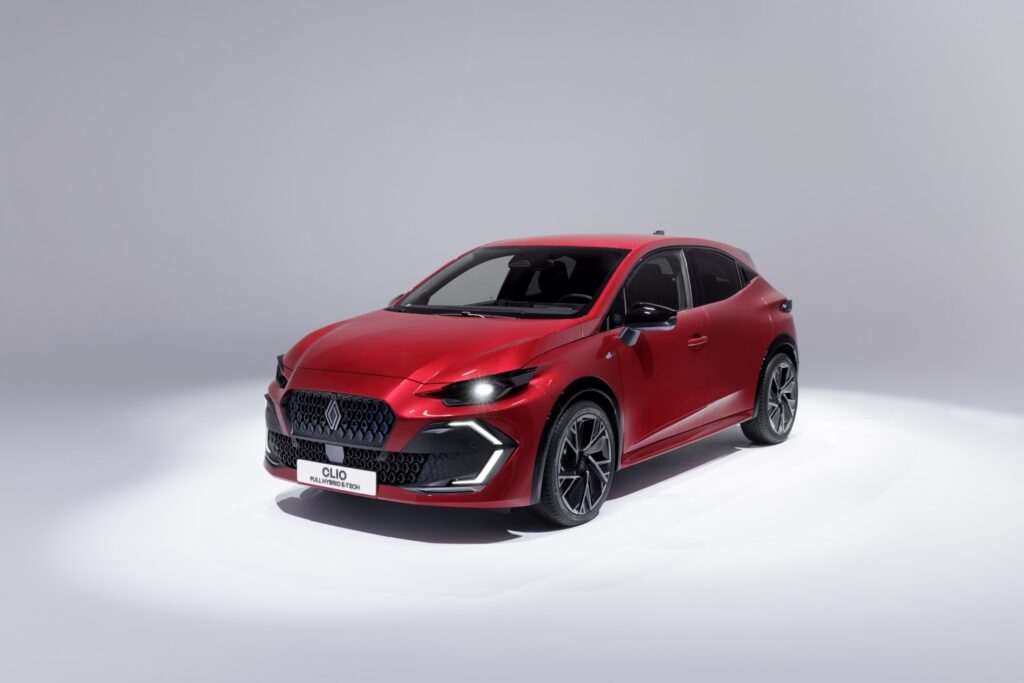
The Renault Clio VI (Phase I) maintains its characteristic hatchback silhouette, a five-door, five-seat configuration
that has proven immensely popular in its segment. With a length of 162.05 inches, a width of 69.61 inches (78.98 inches
including mirrors), and a height of 57.13 inches, the Clio is perfectly sized for urban environments, offering
excellent maneuverability with a minimum turning circle of just 34.12 feet. Its design language is contemporary,
featuring sculpted lines and distinctive lighting signatures that align with Renault’s latest aesthetic direction.
Inside, the Clio is designed for practicality and comfort. The 102.01-inch wheelbase contributes to a spacious
cabin for its class, accommodating five occupants comfortably. Storage is ample, with a minimum trunk space of
13.81 cubic feet, expanding significantly to 41.53 cubic feet with the rear seats folded, making it versatile
for various cargo needs. The kerb weight of 2597.05 lbs. contributes to its agile handling and efficiency.
From a features standpoint, the Clio VI (Phase I) 1.2 TCe (115 Hp) EDC comes equipped with a range of modern
amenities and safety systems. The front suspension utilizes an independent McPherson strut setup, while the rear
features a torsion beam, a common and effective arrangement for compact cars that balances ride comfort and handling.
Braking is handled by disc brakes at both the front and rear, complemented by an Anti-lock Braking System (ABS)
for enhanced safety. Steering is an electric power-assisted rack and pinion system, providing light and precise
control. The vehicle rides on either 195/60 R16 or 205/45 R18 tires, depending on the trim, mounted on corresponding
16-inch or 18-inch wheel rims, which further enhance its dynamic appearance and road holding.
Technical Specifications
| Category | Specification |
|---|---|
| General Information | |
| Brand | Renault |
| Model | Clio |
| Generation | Clio VI (Phase I) |
| Type (Engine) | 1.2 TCe (115 Hp) EDC |
| Start of Production | October, 2025 year |
| Powertrain Architecture | Internal Combustion engine |
| Body Type | Hatchback |
| Seats | 5 |
| Doors | 5 |
| Performance Specs | |
| Combined Fuel Consumption (WLTP) | 5.1-5.2 l/100 km (46.1 – 45.2 US mpg) |
| CO2 Emissions (WLTP) | 115-118 g/km |
| Fuel Type | Petrol (Gasoline) |
| Acceleration 0 – 60 mph | 9.6 sec |
| Acceleration 0 – 100 km/h | 10.1 sec |
| Maximum Speed | 180 km/h (111.85 mph) |
| Emission Standard | Euro 6-bis |
| Weight-to-Power Ratio | 10.2 kg/Hp, 97.6 Hp/tonne |
| Weight-to-Torque Ratio | 6.2 kg/Nm, 161.3 Nm/tonne |
| Engine Specs | |
| Power | 115 Hp @ 4350-5500 rpm. |
| Power per Liter | 95.9 Hp/l |
| Torque | 190 Nm @ 1750-4000 rpm (140.14 lb.-ft.) |
| Engine Layout | Front, Transverse |
| Engine Model/Code | H5F G6 |
| Engine Displacement | 1199 cm3 (1.2 l, 73.17 cu. in.) |
| Number of Cylinders | 3 |
| Engine Configuration | Inline |
| Number of Valves per Cylinder | 4 |
| Fuel Injection System | Direct injection |
| Engine Aspiration | Turbocharger, Intercooler |
| Engine Systems | Start & Stop System, Particulate filter |
| Space, Volume and Weights | |
| Kerb Weight | 1178 kg (2597.05 lbs.) |
| Max. Weight | 1680 kg (3703.77 lbs.) |
| Max Load | 502 kg (1106.72 lbs.) |
| Trunk (boot) Space – Minimum | 391 l (13.81 cu. ft.) |
| Trunk (boot) Space – Maximum | 1176 l (41.53 cu. ft.) |
| Fuel Tank Capacity | 39 l (10.3 US gal) |
| Permitted Trailer Load with Brakes (12%) | 900 kg (1984.16 lbs.) |
| Dimensions | |
| Length | 4116 mm (162.05 in.) |
| Width | 1768 mm (69.61 in.) |
| Width Including Mirrors | 2006 mm (78.98 in.) |
| Height | 1451 mm (57.13 in.) |
| Wheelbase | 2591 mm (102.01 in.) |
| Front Track | 1503 mm (59.17 in.) |
| Rear (Back) Track | 1503 mm (59.17 in.) |
| Front Overhang | 859 mm (33.82 in.) |
| Rear Overhang | 667 mm (26.26 in.) |
| Minimum Turning Circle (Turning Diameter) | 10.4 m (34.12 ft.) |
| Drivetrain, Brakes and Suspension Specs | |
| Drivetrain Architecture | The Internal combustion engine (ICE) drives the front wheels of the vehicle. |
| Drive Wheel | Front wheel drive |
| Number of Gears and Type of Gearbox | 6 gears, automatic transmission EDC |
| Front Suspension | Independent type McPherson |
| Rear Suspension | Torsion |
| Front Brakes | Disc |
| Rear Brakes | Disc |
| Assisting Systems | ABS (Anti-lock braking system) |
| Steering Type | Steering rack and pinion |
| Power Steering | Electric Steering |
| Tires Size | 195/60 R16; 205/45 R18 |
| Wheel Rims Size | 16; 18 |
Legacy and Market Impact of the Renault Clio VI (Phase I)
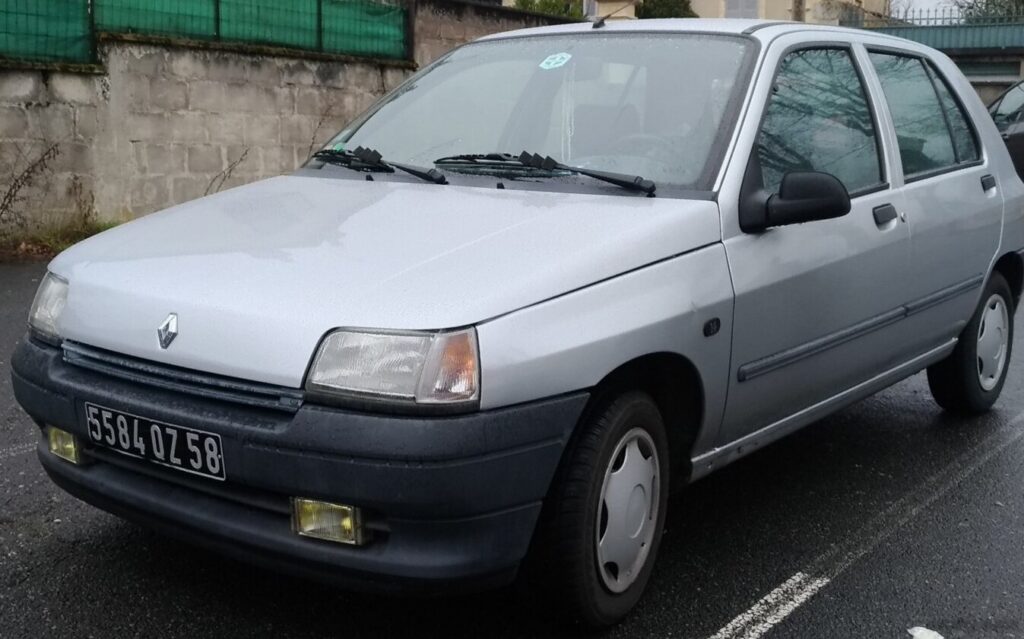
The Renault Clio has enjoyed an illustrious history in Europe, consistently ranking among the best-selling vehicles
in its class since its introduction in 1990. Each generation has built upon the last, cementing its reputation
for attractive styling, practical packaging, and accessible technology. The Clio VI (Phase I) 1.2 TCe (115 Hp) EDC
is poised to continue this legacy, adapting to the evolving demands of the European automotive market.
In its competitive landscape, the Clio VI faces formidable rivals such as the Volkswagen Polo, Peugeot 208, Opel Corsa,
and Ford Fiesta (though the Fiesta’s production is ending, highlighting the Clio’s continued commitment to the segment).
The Clio differentiates itself with a blend of French flair in design, a focus on comfort, and a strong emphasis
on efficient powertrains like the 1.2 TCe. Its continued success is vital for Renault, serving as a volume seller
and a gateway model for many first-time car buyers and families.
The 1.2 TCe (115 Hp) EDC variant specifically targets buyers who prioritize a balance of performance and fuel economy
without venturing into hybrid or fully electric options. Its compliance with the Euro 6-bis emission standard
ensures its relevance in increasingly strict regulatory environments. The automatic EDC transmission appeals to
a broad demographic, especially in urban areas where ease of driving is paramount. The Clio’s consistent evolution,
from its early days as a simple, affordable supermini to its current status as a technologically advanced and
refined subcompact, showcases Renault’s ability to innovate and adapt.
The Clio VI (Phase I) is more than just a car; it’s a statement of Renault’s commitment to the compact segment,
demonstrating that efficiency, modern features, and engaging driving dynamics can coexist in a practical and
stylish package. Its market impact is expected to be significant, maintaining Renault’s strong foothold in one
of Europe’s most competitive segments and continuing the Clio’s storied legacy as a beloved and highly capable
everyday vehicle.