The Renault Espace III: A European Minivan Icon
The Renault Espace III, specifically the JE generation produced between 1996 and 2000, represents a significant chapter in the history of the European Multi-Purpose Vehicle (MPV) segment. As a third-generation model, the Espace continued to redefine family transport on the continent, building upon the groundbreaking success of its predecessors. This particular variant, equipped with the 2.0-liter (114 Hp) automatic powertrain, was a popular choice for families seeking a blend of practicality, comfort, and ease of driving in the competitive European market. While the Espace nameplate was synonymous with innovative family solutions across Europe, it was never officially sold in the United States, where the minivan segment was dominated by domestic and Japanese manufacturers offering different design philosophies and market expectations. The Espace III, however, solidified its reputation as a benchmark for versatility and interior space, offering a distinctively French take on the family hauler.
Evolution of the Renault Espace III (JE)
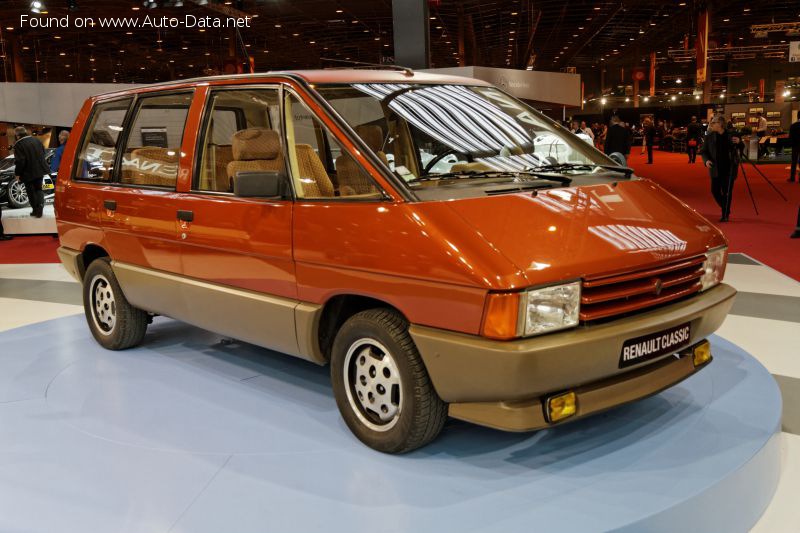
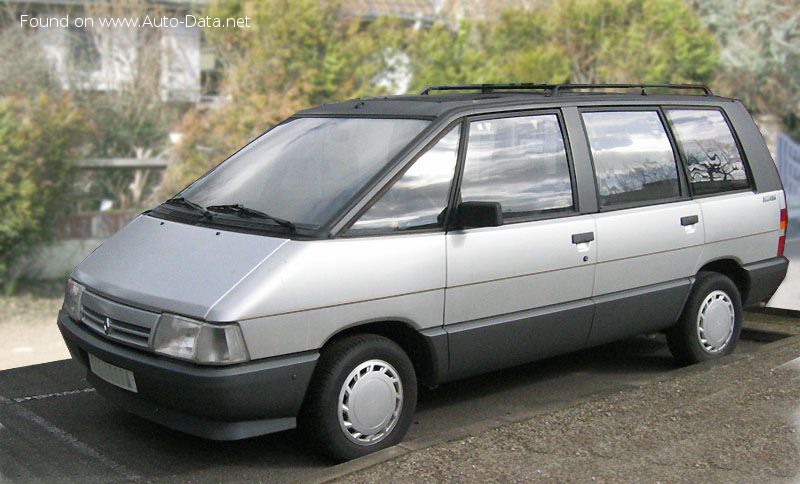
The Espace lineage began in 1984, widely credited as one of the first successful European minivans, predating many of its competitors. The third generation, codenamed JE, arrived in 1996, marking a significant evolution from its predecessors. Unlike the earlier models which featured a fiberglass body over a galvanized steel chassis, the Espace III adopted a more conventional steel unibody construction, albeit retaining composite body panels for certain elements. This shift allowed for improved manufacturing efficiency and structural rigidity, while still maintaining the distinctive, flowing design language that characterized the Espace. The JE generation was celebrated for its futuristic interior design, particularly its central digital instrument cluster, and its highly modular seating arrangements, which were crucial for its appeal to European families.
Engine and Performance of the Renault Espace III
The powertrain for the Renault Espace III (JE) 2.0 (114 Hp) Automatic was designed with reliability and practical performance in mind, rather than outright speed. It featured a 2.0-liter (1998 cm³ or 121.93 cu. in.) naturally aspirated inline-four engine, designated by the engine code F3R. This unit produced a respectable 114 horsepower at 5400 rpm and 123.91 pound-feet (168 Nm) of torque at 3500 rpm. This output was well-suited for the Espace’s primary role as a family vehicle, providing adequate power for urban commuting and comfortable cruising on European highways.
The engine’s configuration included a single overhead camshaft (OHC) with two valves per cylinder and a multi-port manifold injection system, a common and robust setup for the era. Its compression ratio stood at 9.7:1. Paired with a 4-speed automatic transmission, the Espace III delivered power to the front wheels, prioritizing smooth shifts and ease of driving. While not a performance powerhouse, the vehicle could accelerate from 0 to 60 mph in a calculated 14.3 seconds, reaching a top speed of 105.63 mph (170 km/h).
Fuel economy, an important consideration in Europe, was rated at an estimated 22.4 US mpg combined (10.5 l/100 km). Urban driving saw consumption figures of approximately 15.7 US mpg (15 l/100 km), while extra-urban conditions improved to 28.7 US mpg (8.2 l/100 km). The vehicle complied with the Euro 2 emission standard, emitting 252 g/km of CO2, which was typical for a gasoline-powered vehicle of its size and era. The engine had an oil capacity of 5.81 US quarts and required 7.4 US quarts of coolant, indicating a well-engineered thermal management system for consistent performance.
Design and Features
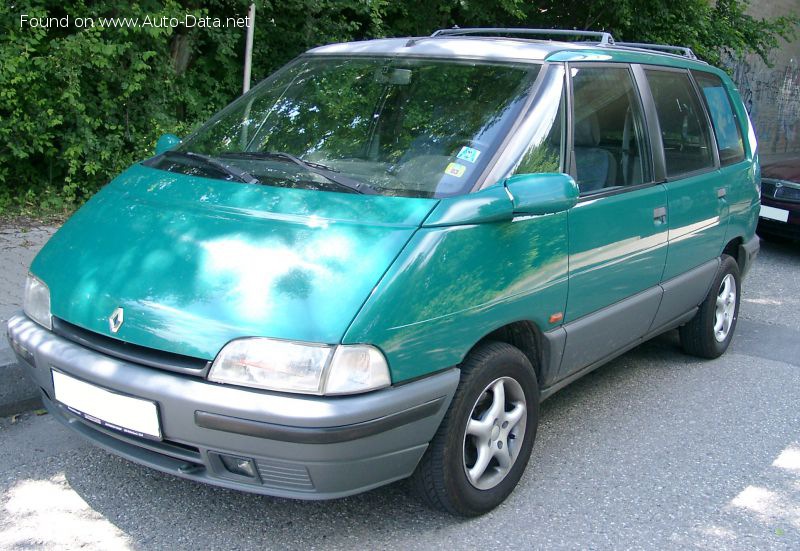
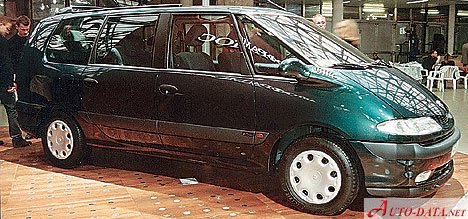
The design of the Renault Espace III (JE) was a masterclass in functional aesthetics for its time. It retained the distinctive “one-box” silhouette that blurred the lines between a car and a van, a characteristic that defined the Espace from its inception. As a minivan or MPV, it featured five doors and offered seating for up to seven occupants. Its exterior dimensions were generous for a European vehicle, measuring 177.83 inches in length, 71.26 inches in width, and 69.8 inches in height, all riding on a 106.38-inch wheelbase. These dimensions contributed to a spacious interior, a hallmark of the Espace.
Inside, the Espace III truly shone with its innovative and highly adaptable cabin. The rear seats were individually removable, allowing for an impressive range of cargo configurations. With all seats in place, the trunk space was a modest 9.71 cubic feet (275 liters), but with the rear seats removed, this expanded dramatically to an cavernous 100.65 cubic feet (2850 liters), transforming the Espace into a highly capable cargo hauler. This modularity was a key selling point, offering unparalleled flexibility for families, adventurers, and even small businesses.
From a structural and safety perspective, the Espace III was equipped with features that were becoming standard in the late 1990s. It included an Anti-lock Braking System (ABS) for enhanced stopping control. The suspension system comprised an independent McPherson strut setup with coil springs and an anti-roll bar at the front, paired with a semi-independent coil spring rear suspension, designed to provide a comfortable ride quality suitable for long journeys. Braking was handled by ventilated discs at the front and drum brakes at the rear. The vehicle also featured hydraulic power steering, utilizing a rack and pinion system, to ensure effortless maneuverability despite its size. Standard tire size was 195/65 R15 on 15-inch wheel rims.
Technical Specifications: Renault Espace III (JE) 2.0 (114 Hp) Automatic
| Category | Specification |
|---|---|
| General Information | |
| Brand | Renault |
| Model | Espace III (JE) |
| Type (Engine) | 2.0 (114 Hp) Automatic |
| Production Years | 1996 – 2000 |
| Body Type | Minivan, MPV |
| Seats | 7 |
| Doors | 5 |
| Performance Specs | |
| Fuel Consumption (Urban) | 15.7 US mpg (15 l/100 km) |
| Fuel Consumption (Extra Urban) | 28.7 US mpg (8.2 l/100 km) |
| Fuel Consumption (Combined) | 22.4 US mpg (10.5 l/100 km) |
| CO2 Emissions | 252 g/km |
| Fuel Type | Petrol (Gasoline) |
| Acceleration 0 – 60 mph | 14.3 seconds |
| Maximum Speed | 105.63 mph (170 km/h) |
| Emission Standard | Euro 2 |
| Weight-to-Power Ratio | 13.3 kg/Hp |
| Engine Specs | |
| Power | 114 Hp @ 5400 rpm |
| Torque | 123.91 lb.-ft. (168 Nm) @ 3500 rpm |
| Engine Layout | Front, Transverse |
| Engine Model/Code | F3R |
| Engine Displacement | 2.0 Liters (1998 cm³ / 121.93 cu. in.) |
| Number of Cylinders | 4, Inline |
| Cylinder Bore | 3.26 inches (82.7 mm) |
| Piston Stroke | 3.66 inches (93 mm) |
| Compression Ratio | 9.7:1 |
| Valves per Cylinder | 2 |
| Fuel Injection System | Multi-port manifold injection |
| Engine Aspiration | Naturally aspirated |
| Valvetrain | OHC |
| Engine Oil Capacity | 5.81 US quarts (5.5 l) |
| Coolant Capacity | 7.4 US quarts (7 l) |
| Space, Volume and Weights | |
| Kerb Weight | 3351.03 lbs. (1520 kg) |
| Max. Weight (GVWR) | 5070.63 lbs. (2300 kg) |
| Max Load Capacity | 1719.61 lbs. (780 kg) |
| Trunk Space (Min) | 9.71 cu. ft. (275 l) |
| Trunk Space (Max) | 100.65 cu. ft. (2850 l) |
| Fuel Tank Capacity | 20.61 US gallons (78 l) |
| Permitted Trailer Load (with brakes) | 3527.4 lbs. (1600 kg) |
| Permitted Trailer Load (without brakes) | 1653.47 lbs. (750 kg) |
| Dimensions | |
| Length | 177.83 inches (4517 mm) |
| Width | 71.26 inches (1810 mm) |
| Height | 69.8 inches (1773 mm) |
| Wheelbase | 106.38 inches (2702 mm) |
| Front Track | 60.39 inches (1534 mm) |
| Rear Track | 60.63 inches (1540 mm) |
| Front Overhang | 36.57 inches (929 mm) |
| Rear Overhang | 34.88 inches (886 mm) |
| Ride Height (Ground Clearance) | 4.33 inches (110 mm) |
| Minimum Turning Circle | 37.4 ft. (11.4 m) |
| Drivetrain, Brakes and Suspension | |
| Drivetrain Architecture | Front-wheel drive, Internal Combustion Engine |
| Drive Wheel | Front-wheel drive |
| Number of Gears | 4-speed automatic transmission |
| Front Suspension | Independent, McPherson with coil spring and anti-roll bar |
| Rear Suspension | Semi-independent, coil spring |
| Front Brakes | Ventilated discs |
| Rear Brakes | Drum |
| Assisting Systems | ABS (Anti-lock braking system) |
| Steering Type | Steering rack and pinion |
| Power Steering | Hydraulic Steering |
| Tires Size | 195/65 R15 |
| Wheel Rims Size | 15 inches |
Legacy and Market Impact of the Renault Espace III
The Renault Espace III continued the model’s tradition as a leading contender in the European MPV segment. Its primary market was, of course, Europe, where large families and those valuing versatility appreciated its unique blend of space, comfort, and distinctive styling. The Espace had a strong reputation for being a pioneer, and the third generation built on this by offering enhanced refinement and practicality. Its modular interior, combined with a comfortable ride, made it a popular choice for long-distance family travel across the continent.
In its competitive landscape, the Espace III faced rivals such as the Ford Galaxy, Volkswagen Sharan, and SEAT Alhambra (a joint venture trio known for their robust build and more conventional styling), as well as the ‘Eurovans’ produced by the PSA Group and Fiat, which included the Peugeot 806, Citroën Evasion, Fiat Ulysse, and Lancia Zeta. While these competitors offered similar functionality, the Espace often stood out with its more adventurous design and perceived greater interior flexibility. The 2.0-liter automatic variant, in particular, catered to a demographic that valued ease of driving in congested urban environments and for longer journeys, without requiring the higher performance or fuel consumption of larger engines.
The Espace III’s historical significance lies in its role in solidifying the MPV as a viable and desirable family vehicle in Europe. It demonstrated that a family hauler could be stylish, comfortable, and highly adaptable, rather than merely utilitarian. Its innovative interior packaging influenced subsequent minivan designs and helped shape consumer expectations for what a family car could offer. Although it never crossed the Atlantic to the American market, the Renault Espace III remains a testament to European automotive design and engineering, embodying a period when manufacturers were pushing the boundaries of what a family vehicle could be, prioritizing space, modularity, and a distinct character. Its legacy is one of innovation and a commitment to serving the evolving needs of the modern family.