Introduction to the Renault Espace III (JE, Phase II, 2000)
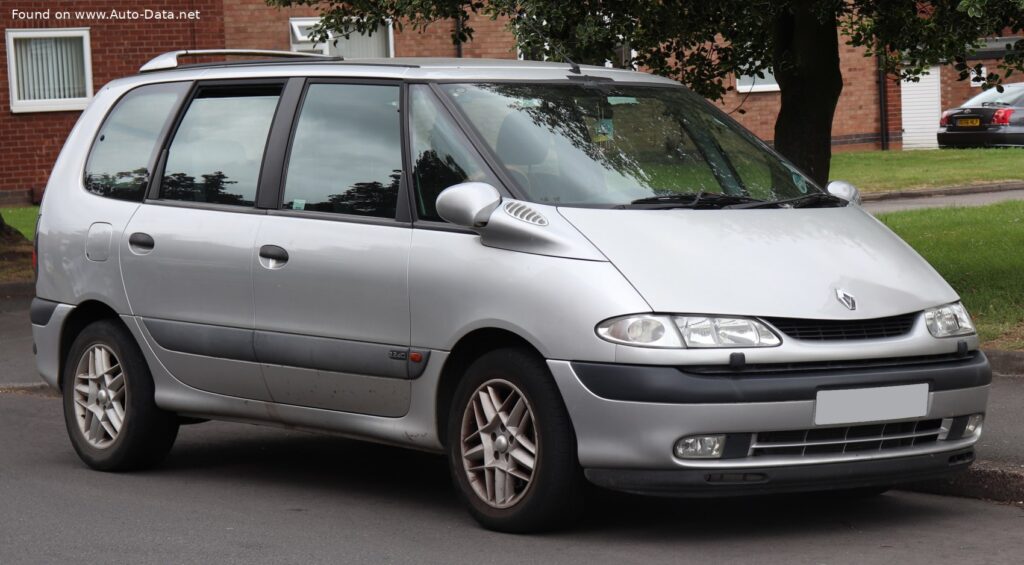
The Renault Espace, a name synonymous with the European minivan segment, has long been celebrated for its innovative design and family-oriented practicality. The third generation, known as the Espace III (JE), continued this legacy, introducing a more refined and technologically advanced package. This article focuses on a specific variant from the latter part of its production run, the Renault Espace III (JE, Phase II, 2000) 2.0i 16V (140 Hp) Automatic. Produced between 2000 and 2002, this model represented the culmination of the third generation’s design and engineering, offering a compelling blend of comfort, versatility, and performance for the European market.
While never officially sold in the United States, the Espace holds a significant place in automotive history, particularly in Europe, where it pioneered the Multi-Purpose Vehicle (MPV) concept. The Espace III, launched in 1996, moved away from the fiberglass body of its predecessors, adopting a steel monocoque chassis with composite body panels, enhancing structural rigidity and safety. The Phase II refresh in 2000 brought subtle styling updates and improved equipment levels, ensuring the Espace remained competitive in an increasingly crowded segment. This 2.0-liter automatic variant was a popular choice, balancing everyday usability with adequate power for family journeys.
Engine and Performance: The 2.0i 16V Powertrain
Under the hood of the Renault Espace III (JE, Phase II, 2000) 2.0i 16V Automatic lies Renault’s robust F4R engine. This naturally aspirated 2.0-liter (1998 cm³ or 121.93 cu. in.) inline-four engine, featuring a DOHC (Double Overhead Camshaft) 16-valve configuration, was designed for a balance of smooth power delivery and reasonable efficiency. It produced a respectable 140 horsepower at 5500 rpm, a solid figure for a family vehicle of its era. Torque output stood at 138.66 lb.-ft. (188 Nm) at 3750 rpm, providing ample pulling power for daily driving and highway cruising.
Power was transmitted to the front wheels via a 4-speed automatic transmission, a common offering in European family cars at the turn of the millennium. This gearbox was tuned for smooth shifts and comfortable driving, prioritizing passenger comfort over outright sportiness. Performance figures for this 7-seater MPV were adequate for its segment: acceleration from 0 to 60 mph was achieved in a measured 11.8 seconds, with a top speed of 111.85 mph (180 km/h). While not a performance powerhouse, these numbers allowed for confident merging onto highways and comfortable long-distance travel.
In terms of fuel economy, the 2.0i 16V Automatic model achieved a combined rating of 25 US mpg (9.4 l/100 km), which was competitive for a vehicle of its size and capacity. Urban consumption was rated at 18.2 US mpg (12.9 l/100 km), while extra-urban driving could see up to 31.8 US mpg (7.4 l/100 km). With CO2 emissions of 223 g/km, it met the Euro 3 emission standard, reflecting the environmental regulations of its time. The engine’s multi-port manifold injection system and naturally aspirated design contributed to its reliability and straightforward maintenance.
Design and Features: A Focus on Versatility and Comfort
The Renault Espace III (JE, Phase II, 2000) embodied the quintessential European minivan design, characterized by its aerodynamic, cab-forward silhouette and expansive glass area. With a length of 177.83 inches (4517 mm), a width of 71.26 inches (1810 mm), and a height of 69.8 inches (1773 mm), it offered a substantial footprint that translated directly into generous interior space. The 106.38-inch (2702 mm) wheelbase further contributed to a stable ride and a remarkably spacious cabin, a hallmark of the Espace line.
As a 5-door MPV with seating for up to seven occupants, the Espace III was designed with family flexibility at its core. Its ingenious seating arrangement allowed for individual seats to be removed, slid, or folded, offering numerous configurations from a full seven-seater to a two-seater cargo hauler with a massive 100.65 cu. ft. (2850 liters) of maximum trunk space. Even with all seven seats in place, a minimum of 9.71 cu. ft. (275 liters) was available for luggage. This adaptability was a key selling point, enabling owners to easily reconfigure the interior to suit various needs, whether it was transporting people, luggage, or bulky items.
Safety features for the era included an Anti-lock Braking System (ABS), which was standard, ensuring more controlled stopping in emergency situations. The braking system comprised ventilated discs at the front and disc brakes at the rear, providing effective stopping power for a vehicle of its weight. The front suspension featured an independent McPherson strut setup with coil springs and an anti-roll bar, while the rear utilized a semi-independent design with coil springs, tuned for a comfortable and composed ride. Hydraulic power steering, with a rack and pinion system, offered light and responsive handling, making the Espace surprisingly maneuverable for its size, with a minimum turning circle of 37.4 ft. (11.4 meters). The vehicle rode on 205/65 R15 tires, fitted to 15-inch wheel rims, providing a good balance of comfort and grip.
Technical Specifications
| Category | Specification |
|---|---|
| General Information | |
| Brand | Renault |
| Model | Espace |
| Generation | Espace III (JE, Phase II, 2000) |
| Type (Engine) | 2.0i 16V (140 Hp) Automatic |
| Start of production | 2000 year |
| End of production | 2002 year |
| Powertrain Architecture | Internal Combustion engine |
| Body type | Minivan, MPV |
| Seats | 7 |
| Doors | 5 |
| Performance Specs | |
| Fuel consumption (economy) – urban | 12.9 l/100 km (18.2 US mpg) |
| Fuel consumption (economy) – extra urban | 7.4 l/100 km (31.8 US mpg) |
| Fuel consumption (economy) – combined | 9.4 l/100 km (25 US mpg) |
| CO2 emissions | 223 g/km |
| Fuel Type | Petrol (Gasoline) |
| Acceleration 0 – 60 mph | 11.8 seconds |
| Maximum speed | 111.85 mph (180 km/h) |
| Emission standard | Euro 3 |
| Weight-to-power ratio | 11.4 kg/Hp, 87.8 Hp/tonne |
| Weight-to-torque ratio | 8.5 kg/Nm, 117.9 Nm/tonne |
| Engine Specs | |
| Power | 140 Hp @ 5500 rpm |
| Power per liter | 70.1 Hp/l |
| Torque | 138.66 lb.-ft. (188 Nm) @ 3750 rpm |
| Engine layout | Front, Transverse |
| Engine Model/Code | F4R |
| Engine displacement | 121.93 cu. in. (1998 cm³) |
| Number of cylinders | 4 |
| Engine configuration | Inline |
| Cylinder Bore | 3.26 in. (82.7 mm) |
| Piston Stroke | 3.66 in. (93 mm) |
| Compression ratio | 9.8:1 |
| Number of valves per cylinder | 4 |
| Fuel injection system | Multi-port manifold injection |
| Engine aspiration | Naturally aspirated engine |
| Valvetrain | DOHC |
| Engine oil capacity | 5.6 US qt (5.3 l) |
| Coolant | 9.3 US qt (8.8 l) |
| Space, Volume and Weights | |
| Kerb Weight | 3516.37 lbs. (1595 kg) |
| Max. weight | 5180.86 lbs. (2350 kg) |
| Max load | 1664.49 lbs. (755 kg) |
| Trunk (boot) space – minimum | 9.71 cu. ft. (275 l) |
| Trunk (boot) space – maximum | 100.65 cu. ft. (2850 l) |
| Fuel tank capacity | 20.61 US gal (78 l) |
| Max. roof load | 176.37 lbs. (80 kg) |
| Permitted trailer load with brakes (12%) | 3615.58 lbs. (1640 kg) |
| Permitted trailer load without brakes | 1653.47 lbs. (750 kg) |
| Dimensions | |
| Length | 177.83 in. (4517 mm) |
| Width | 71.26 in. (1810 mm) |
| Width including mirrors | 81.5 in. (2070 mm) |
| Height | 69.8 in. (1773 mm) |
| Wheelbase | 106.38 in. (2702 mm) |
| Front track | 60.39 in. (1534 mm) |
| Rear (Back) track | 60.63 in. (1540 mm) |
| Front overhang | 36.57 in. (929 mm) |
| Rear overhang | 34.88 in. (886 mm) |
| Ride height (ground clearance) | 4.33 in. (110 mm) |
| Minimum turning circle (turning diameter) | 37.4 ft. (11.4 m) |
| Drivetrain, Brakes and Suspension Specs | |
| Drivetrain Architecture | The Internal combustion engine (ICE) drives the front wheels of the vehicle. |
| Drive wheel | Front wheel drive |
| Number of gears and type of gearbox | 4 gears, automatic transmission |
| Front suspension | Independent, type McPherson with coil spring and anti-roll bar |
| Rear suspension | Semi-independent, coil spring |
| Front brakes | Ventilated discs |
| Rear brakes | Disc |
| Assisting systems | ABS (Anti-lock braking system) |
| Steering type | Steering rack and pinion |
| Power steering | Hydraulic Steering |
| Tires size | 205/65 R15 |
| Wheel rims size | 15 inches |
Legacy and Market Impact in Europe
The Renault Espace III, particularly in its Phase II iteration from 2000 to 2002, played a crucial role in solidifying Renault’s dominance in the European MPV segment. Building upon the groundbreaking success of its predecessors, the third generation continued to set benchmarks for interior flexibility, comfort, and family-friendly design. While the North American market largely embraced traditional SUVs and larger minivans like the Chrysler Voyager (which was also sold in Europe as a competitor), the Espace offered a distinctly European interpretation of the family hauler: stylish, versatile, and relatively compact for its interior volume.
During its production, the Espace III faced stiff competition in Europe from a growing array of rivals. Key competitors included the Ford Galaxy, Volkswagen Sharan, and SEAT Alhambra (the so-called “Eurovans”), which offered similar seating capacities and practicality. Other significant rivals included the Citroën C8 and Peugeot 807 (co-developed with Fiat as the Ulysse and Lancia Phedra), as well as more compact MPVs like the Opel Zafira and Volkswagen Touran that emerged slightly later. Despite this intense competition, the Espace maintained a strong reputation for its innovative interior, comfortable ride, and distinctive styling.
The 2.0i 16V Automatic variant, specifically, was a popular choice for families seeking a balance of ease of use and sufficient power. Its automatic transmission made urban driving less fatiguing, while the 140 horsepower engine provided enough grunt for longer journeys across the continent. The Espace’s enduring legacy is its contribution to making the MPV a mainstream choice for European families, influencing subsequent designs and setting high standards for interior versatility. Even after production ended in 2002, the Espace III remained a common sight on European roads for many years, a testament to its robust build quality and timeless practicality. Its impact extended beyond sales figures, shaping the expectations of what a family car could be in terms of space, comfort, and adaptable design.