The Unsung Pioneer: Renault Espace IV (Phase II) 2.0 dCi (173 Hp)
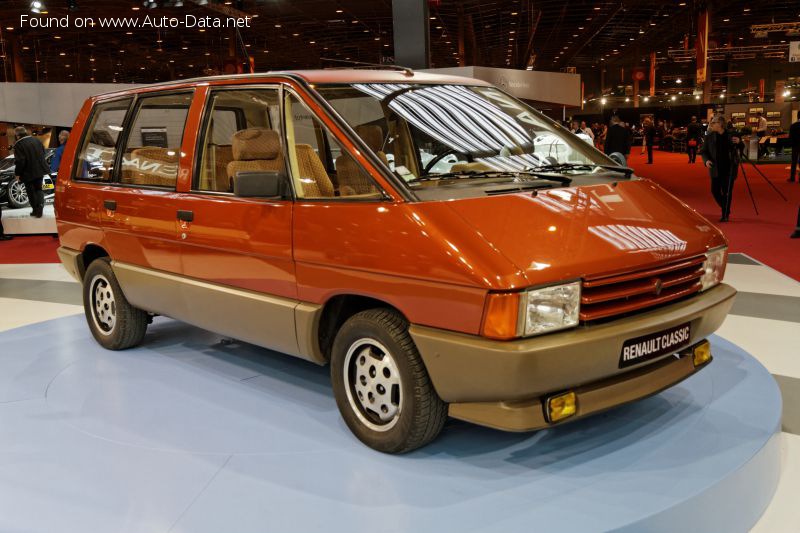
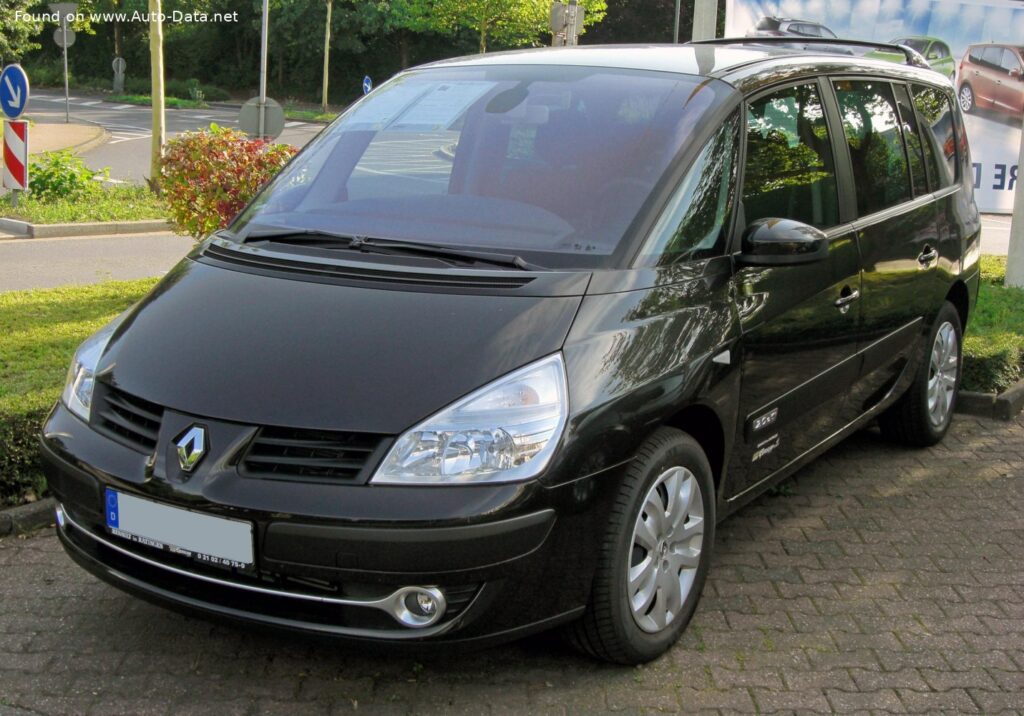
While the minivan segment in North America was dominated by familiar names like the Chrysler Town & Country, Honda Odyssey, and Toyota Sienna, across the Atlantic, a different kind of family hauler reigned supreme: the Renault Espace. A true trailblazer in the Multi-Purpose Vehicle (MPV) category, the Espace carved out a significant niche in European automotive history. The fourth generation, particularly the Phase II refresh from 2006, represented the pinnacle of Renault’s vision for a versatile, comfortable, and efficient family vehicle, exemplified by the potent yet frugal Renault Espace IV (Phase II) 2.0 dCi (173 Hp).
Though never officially imported for sale in the United States or Canada, the Espace’s story is crucial for understanding the global evolution of family transportation. It embodied a distinct European approach to practicality, combining car-like driving dynamics with unparalleled interior flexibility, a concept that continues to influence vehicle design worldwide, even in the SUV-dominated landscape of today.
The Power Behind the People Mover: Renault Espace IV (Phase II) 2.0 dCi (173 Hp)
At the heart of the 2006-2009 Renault Espace IV (Phase II) lay a sophisticated powertrain designed for the demands of European driving: the 2.0-liter dCi diesel engine. Code-named M9R, this inline four-cylinder unit was a testament to Renault’s commitment to advanced diesel technology, offering a blend of robust performance and impressive fuel economy.
This particular iteration delivered a healthy 173 horsepower at 3750 rpm, providing ample thrust for highway cruising and confident overtaking, even with a full complement of passengers and cargo. More critically for a family vehicle, the engine churned out a substantial 265.52 lb-ft of torque from a low 1750 rpm. This torque-rich delivery ensured responsive acceleration from a standstill and effortless hauling capabilities, making the Espace feel surprisingly nimble for its size. Mated to a precise 6-speed manual transmission driving the front wheels, the Espace could sprint from 0 to 60 mph in a respectable 9.3 seconds, eventually reaching a top speed of 126.76 mph.
Beyond raw numbers, the 2.0 dCi engine was engineered for efficiency and refinement. Featuring a Commonrail direct fuel injection system, a turbocharger, and an intercooler, it met stringent Euro 4 emission standards. Its combined fuel consumption rating of 32.2 US mpg (7.3 l/100 km) was a significant selling point in a market where fuel prices were consistently higher than in North America. This efficiency, combined with an 83-liter (21.93 US gal) fuel tank, offered an excellent driving range, making long European road trips a breeze.
Design, Innovation, and Versatility
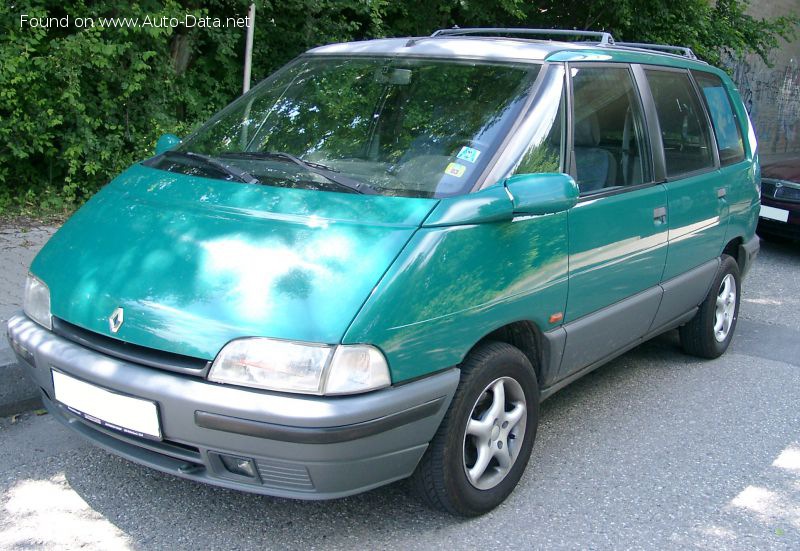
The Renault Espace IV, first launched in 2002, continued to evolve the “monobox” design language pioneered by its predecessors. The Phase II refresh in 2006 brought subtle yet effective updates, including revised front and rear styling, new wheel designs, and interior enhancements. Its distinctive, aerodynamic silhouette, characterized by a steeply raked windshield and expansive glass areas, created an airy and bright cabin environment, a hallmark of European MPV design.
Innovation was at the core of the Espace’s appeal. Renault had perfected the concept of the modular interior, offering seven individual seats that could be easily slid, folded, or removed entirely to configure the cabin for various passenger and cargo needs. This flexibility was revolutionary, transforming the Espace from a comfortable seven-seater to a cavernous cargo van with up to 101 cubic feet (2860 liters) of load space. Even with all seats in place, a respectable 10.28 cubic feet (291 liters) of trunk space remained, ideal for groceries or small luggage.
Safety was also a paramount concern. The Espace IV was among the first vehicles to achieve a full five-star rating in Euro NCAP crash tests, reflecting Renault’s commitment to occupant protection. Standard features like ABS (Anti-lock Braking System) and a comprehensive airbag system underscored its family-friendly credentials. The vehicle’s architecture, with its independent McPherson front suspension and semi-independent rear, along with ventilated disc brakes up front and solid discs at the rear, provided a comfortable ride and stable handling, making it an enjoyable vehicle to drive for its class.
Market Legacy in a North American Context
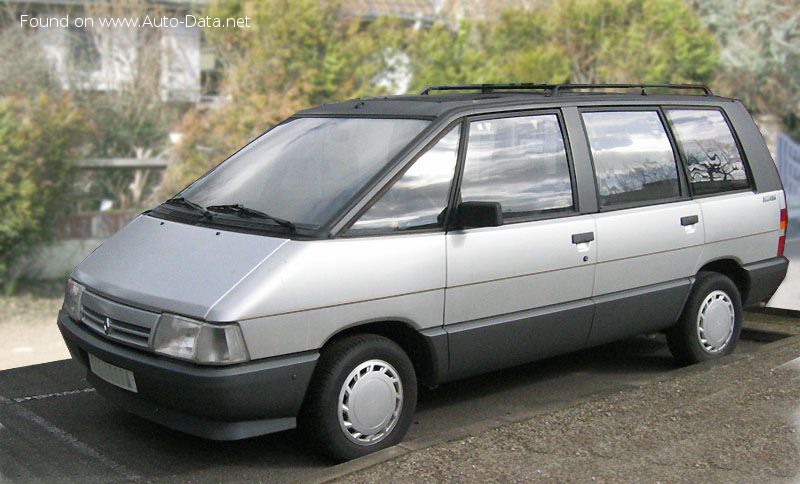
The Renault Espace’s journey began in 1984, pioneering the European MPV segment, predating the North American minivan boom by mere months. It quickly became a sales success and a cultural icon across Europe, establishing Renault as a leader in innovative family transportation. However, by the time the Espace IV (Phase II) arrived in 2006, Renault had long since withdrawn from the North American market, making its direct presence here non-existent.
Had the Espace IV been introduced to the U.S. and Canada, it would have faced a formidable lineup of competitors. Domestically, the Chrysler Town & Country, Dodge Grand Caravan, and Ford Freestar (or later, Flex) were well-entrenched. Japanese rivals like the Honda Odyssey and Toyota Sienna had also solidified their positions, offering compelling packages of reliability, features, and V6 power. The Espace, with its strong diesel focus and distinct European design, would have been a niche offering at best, challenging North American preferences for gasoline V6 engines and a more conventional aesthetic.
Launch pricing for the Espace IV (Phase II) in Europe typically placed it as a premium offering within the MPV segment, reflecting its advanced design, extensive features, and refined driving experience. While exact MSRP figures for North America are speculative, it would likely have been positioned to compete with higher trim levels of existing minivans, or perhaps even cross-shop with early crossover SUVs that were beginning to gain traction.
Ultimately, the Renault Espace IV (Phase II) 2.0 dCi (173 Hp) remains a fascinating footnote for North American automotive enthusiasts. It represents a different path in family vehicle evolution – one that prioritized efficiency, modularity, and a distinct European flair. While not a collectible in the traditional sense for North Americans, its rarity and historical significance as a European MPV pioneer make it an intriguing example of global automotive diversity, often admired by those who appreciate engineering solutions tailored to specific market demands.
Technical Specifications: Renault Espace IV (Phase II) 2.0 dCi (173 Hp)
| General Information | |
| Brand | Renault |
| Model | Espace |
| Generation | Espace IV (Phase II, 2006) |
| Type (Engine) | 2.0 dCi (173 Hp) |
| Start of Production | 2006 year |
| End of Production | 2009 year |
| Powertrain Architecture | Internal Combustion engine |
| Body Type | Minivan, MPV |
| Seats | 7 |
| Doors | 5 |
| Performance Specifications | |
| Fuel Consumption (Urban) | 9.1 l/100 km / 25.8 US mpg |
| Fuel Consumption (Extra Urban) | 6.4 l/100 km / 36.8 US mpg |
| Fuel Consumption (Combined) | 7.3 l/100 km / 32.2 US mpg |
| CO2 Emissions | 193 g/km |
| Fuel Type | Diesel |
| Acceleration 0 – 60 mph | 9.3 sec |
| Acceleration 0 – 100 km/h | 9.8 sec |
| Maximum Speed | 204 km/h / 126.76 mph |
| Emission Standard | Euro 4 |
| Weight-to-Power Ratio | 10.7 kg/Hp, 93.3 Hp/tonne |
| Weight-to-Torque Ratio | 5.2 kg/Nm, 194.1 Nm/tonne |
| Engine Specifications | |
| Power | 173 Hp @ 3750 rpm |
| Power per Litre | 86.7 Hp/l |
| Torque | 360 Nm @ 1750 rpm / 265.52 lb.-ft. @ 1750 rpm |
| Engine Layout | Front, Transverse |
| Engine Model/Code | M9R |
| Engine Displacement | 1995 cm3 / 121.74 cu. in. |
| Number of Cylinders | 4 |
| Engine Configuration | Inline |
| Cylinder Bore | 84 mm / 3.31 in. |
| Piston Stroke | 90 mm / 3.54 in. |
| Compression Ratio | 16:1 |
| Number of Valves per Cylinder | 4 |
| Fuel Injection System | Diesel Commonrail |
| Engine Aspiration | Turbocharger, Intercooler |
| Valvetrain | DOHC |
| Engine Oil Capacity | 6.6 l / 6.97 US qt |
| Space, Volume, and Weights | |
| Kerb Weight | 1855 kg / 4089.57 lbs. |
| Max. Weight | 2555 kg / 5632.81 lbs. |
| Max Load | 700 kg / 1543.24 lbs. |
| Trunk (Boot) Space – Minimum | 291 l / 10.28 cu. ft. |
| Trunk (Boot) Space – Maximum | 2860 l / 101 cu. ft. |
| Fuel Tank Capacity | 83 l / 21.93 US gal |
| Max. Roof Load | 80 kg / 176.37 lbs. |
| Permitted Trailer Load with Brakes (12%) | 2000 kg / 4409.25 lbs. |
| Permitted Trailer Load without Brakes | 750 kg / 1653.47 lbs. |
| Permitted Towbar Download | 80 kg / 176.37 lbs. |
| Dimensions | |
| Length | 4656 mm / 183.31 in. |
| Width | 1860 mm / 73.23 in. |
| Width Including Mirrors | 1894 mm / 74.57 in. |
| Height | 1728 mm / 68.03 in. |
| Wheelbase | 2803 mm / 110.35 in. |
| Front Track | 1574 mm / 61.97 in. |
| Rear (Back) Track | 1556 mm / 61.26 in. |
| Ride Height (Ground Clearance) | 120 mm / 4.72 in. |
| Minimum Turning Circle (Diameter) | 11.3 m / 37.07 ft. |
| Drivetrain, Brakes, and Suspension Specifications | |
| Drivetrain Architecture | The Internal combustion engine (ICE) drives the front wheels of the vehicle. |
| Drive Wheel | Front wheel drive |
| Number of Gears and Type of Gearbox | 6 gears, manual transmission |
| Front Suspension | Independent type McPherson |
| Rear Suspension | Semi-independent, coil spring |
| Front Brakes | Ventilated discs |
| Rear Brakes | Disc |
| Assisting Systems | ABS (Anti-lock braking system) |
| Steering Type | Steering rack and pinion |
| Tires Size | 225/55 R17 |
| Wheel Rims Size | 17 |