The Renault Espace IV (Phase II, 2006): A European Minivan Icon
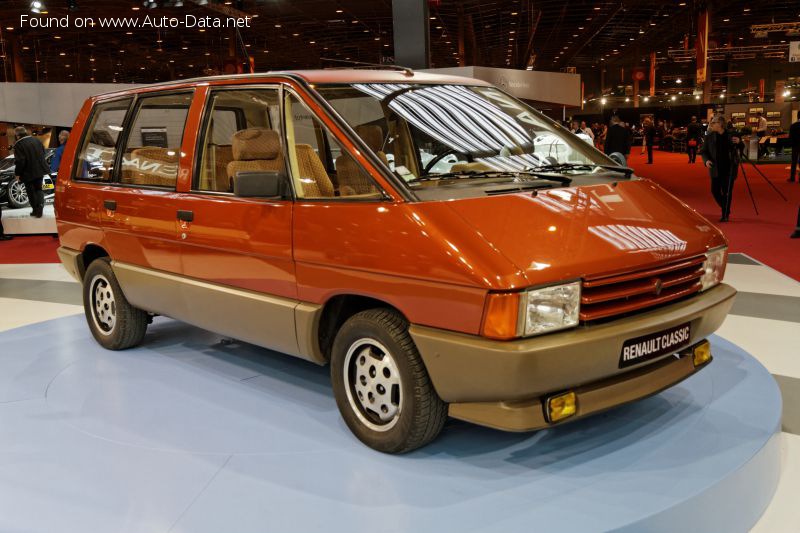
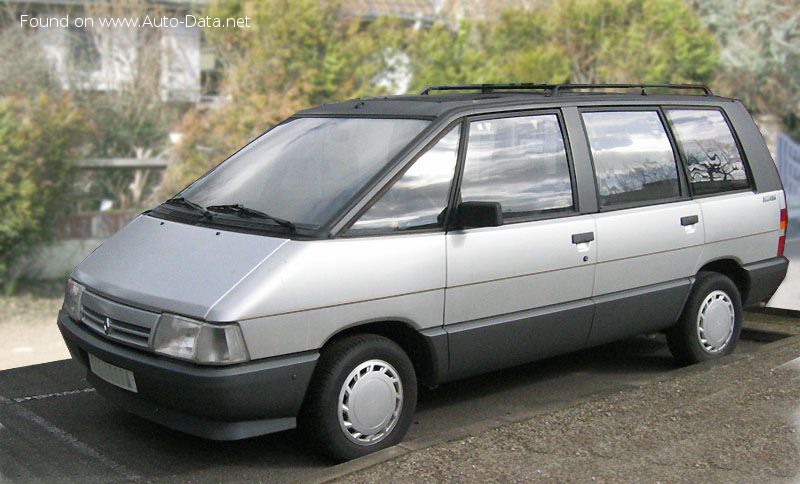
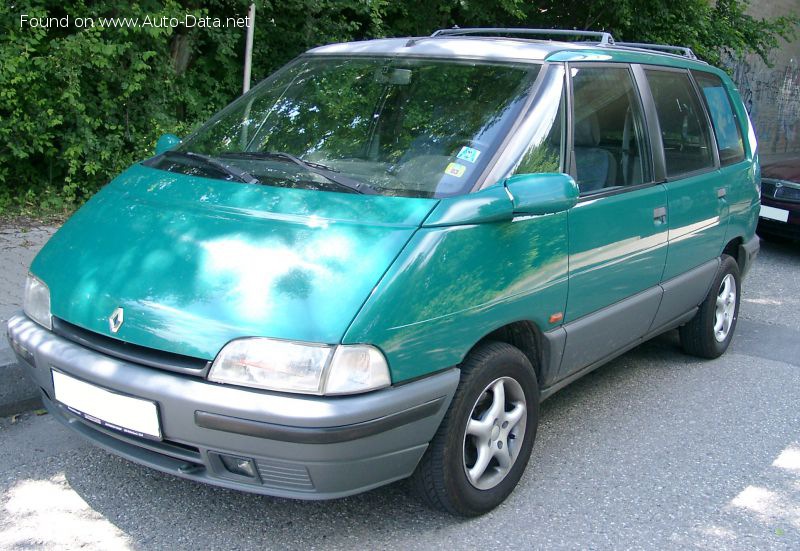
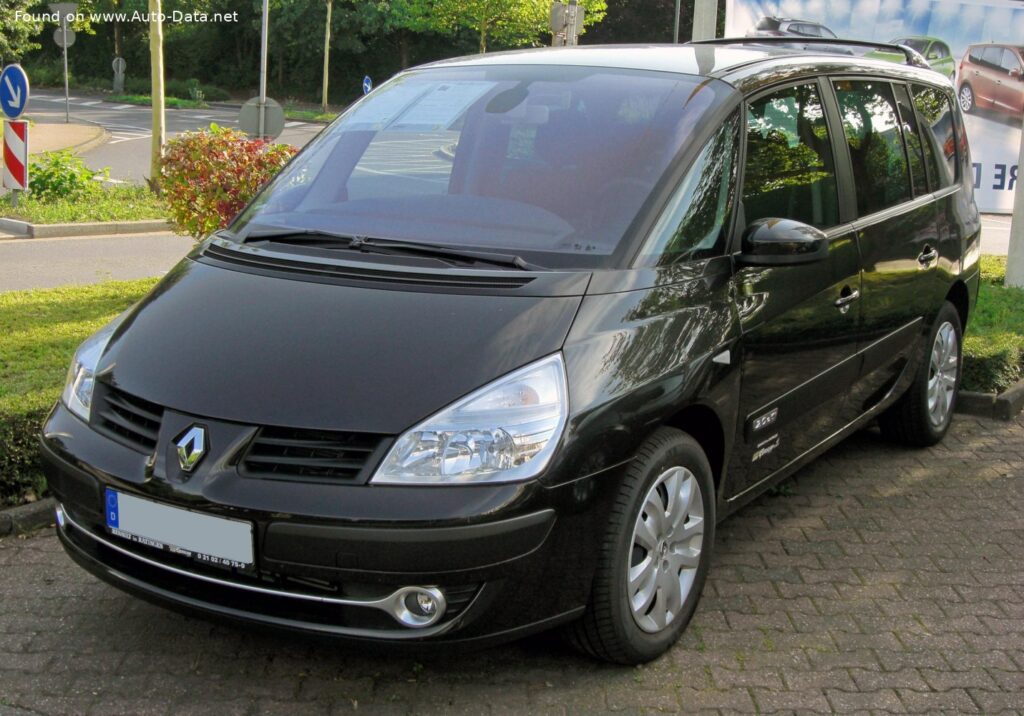
The Renault Espace IV (Phase II, 2006) represents a significant iteration of one of Europe’s most iconic and pioneering multi-purpose vehicles (MPVs), or minivans as they are known in the United States. Launched in 2002, the fourth-generation Espace continued Renault’s legacy of innovation in the family car segment, building on a heritage that began with the original Espace in 1984, often credited with popularizing the minivan concept in Europe. This particular model, the Phase II, introduced in 2006, marked a mid-cycle refresh that brought subtle styling updates, enhanced equipment, and powertrain revisions to keep the vehicle competitive. Designed primarily for the European market, where spacious and versatile family transport is highly valued, the Espace IV was never officially sold in the United States, yet its influence on automotive design and family mobility resonated globally. It stood out for its distinctive styling, comfortable interior, and a range of robust engines, including the 2.0 Turbo 16V variant detailed here, which offered a compelling blend of performance and practicality for the discerning European family.
Engine and Performance of the Renault Espace IV (Phase II, 2006) 2.0 Turbo 16V
At the heart of the Renault Espace IV (Phase II, 2006) 2.0 Turbo 16V lies a sophisticated F4R engine, a 1998 cm3 (121.93 cu. in.) inline four-cylinder unit. This powerplant, featuring a DOHC (Double Overhead Camshaft) valvetrain with 16 valves (four per cylinder), was engineered for a balance of smooth power delivery and reasonable efficiency. Crucially, it benefits from a turbocharger and intercooler, which significantly enhance its output. The engine generates a respectable 170 horsepower at 5000 revolutions per minute (rpm), making it one of the more potent options in the Espace lineup for its time. Torque figures are equally impressive for a family vehicle, peaking at 199.14 lb.-ft. (270 Nm) at a relatively low 3255 rpm. This broad torque band ensures strong pulling power, particularly beneficial for a seven-seater vehicle that might frequently carry a full load of passengers and cargo.
Power is efficiently transferred to the front wheels via a precise 6-speed manual transmission, offering drivers engaging control over the vehicle’s performance. This drivetrain architecture, typical for European minivans, contributed to the Espace’s confident road manners. In terms of acceleration, the 2.0 Turbo 16V variant could reach 60 miles per hour from a standstill in an estimated 9.2 seconds, with 0-62 mph (0-100 km/h) taking 9.7 seconds. Its top speed was rated at 127.38 mph (205 km/h), demonstrating its capability for comfortable highway cruising on European autobahns.
Fuel economy for this turbocharged gasoline engine was rated at a combined 24.8 US mpg (9.5 l/100 km), with urban consumption at 18.7 US mpg (12.6 l/100 km) and extra-urban at 30.2 US mpg (7.8 l/100 km). These figures were competitive for a vehicle of its size and power in the mid-2000s. Emissions were in line with the Euro 4 standard, with CO2 output recorded at 224 g/km, reflecting the environmental considerations of the era. The engine’s robust design and multi-port manifold injection system ensured reliable and consistent performance throughout its production run.
Design and Features
The Renault Espace IV (Phase II, 2006) embodies the minivan body type, characterized by its spacious, single-box silhouette designed for maximum interior volume and versatility. With five doors and seating for seven passengers, it was engineered as the ultimate family transporter. The Phase II refresh brought subtle exterior enhancements, typically involving revised front fascias, lighting signatures, and wheel designs, maintaining the Espace’s distinctive, modern aesthetic that blended practicality with a touch of sophistication. Its aerodynamic profile and large glass areas contributed to an airy cabin and excellent outward visibility, a key aspect for family vehicles.
Inside, the Espace IV was celebrated for its highly modular and adaptable interior. Seats could be individually removed, slid, and folded, allowing for numerous configurations to prioritize passenger space or cargo volume. The minimum trunk space of 10.28 cu. ft. (291 l) expanded dramatically to a cavernous 101 cu. ft. (2860 l) with the rear seats removed, transforming the Espace into a highly capable cargo hauler. Innovative storage solutions, characteristic of French automotive design, were integrated throughout the cabin, catering to the needs of busy families.
From a safety standpoint, the Espace IV was well-equipped for its time. While the data specifically mentions ABS (Anti-lock Braking System), a comprehensive suite of airbags, electronic stability control (ESC), and other active and passive safety features were generally standard or available options, reflecting Renault’s strong emphasis on safety. The vehicle’s dimensions—183.31 inches (4656 mm) in length, 73.23 inches (1860 mm) in width (74.57 inches including mirrors), and 68.03 inches (1728 mm) in height—underscored its substantial road presence and interior volume. A wheelbase of 110.35 inches (2803 mm) provided a stable ride and ample cabin room. The curb weight of 3990.37 lbs. (1810 kg) further highlighted its solid build. The Espace also featured ventilated disc brakes at the front and disc brakes at the rear, ensuring strong stopping power. Its front suspension employed an independent McPherson type, while the rear utilized a semi-independent setup with coil springs, tuned for a comfortable yet controlled ride quality.
Technical Specifications for the Renault Espace IV (Phase II, 2006) 2.0 Turbo 16V (170 Hp)
| Feature | Specification |
|---|---|
| Brand | Renault |
| Model | Espace IV (Phase II, 2006) |
| Engine Type | 2.0 Turbo 16V (170 Hp) |
| Production Years | 2006 – 2010 |
| Body Type | Minivan, MPV |
| Seats | 7 |
| Doors | 5 |
| Powertrain Architecture | Internal Combustion engine, Front-wheel drive |
| Fuel Type | Petrol (Gasoline) |
| Engine Layout | Front, Transverse |
| Engine Model/Code | F4R |
| Engine Displacement | 1998 cm3 (121.93 cu. in.) |
| Number of Cylinders | 4, Inline |
| Valves per Cylinder | 4 |
| Valvetrain | DOHC |
| Cylinder Bore | 3.26 in. (82.7 mm) |
| Piston Stroke | 3.66 in. (93 mm) |
| Compression Ratio | 9.8:1 |
| Fuel Injection System | Multi-port manifold injection |
| Engine Aspiration | Turbocharger, Intercooler |
| Power | 170 Hp @ 5000 rpm |
| Power per Liter | 85.1 Hp/l |
| Torque | 199.14 lb.-ft. (270 Nm) @ 3250 rpm |
| Acceleration 0-60 mph | 9.2 seconds |
| Acceleration 0-62 mph (0-100 km/h) | 9.7 seconds |
| Maximum Speed | 127.38 mph (205 km/h) |
| Fuel Economy – Urban | 18.7 US mpg (12.6 l/100 km) |
| Fuel Economy – Extra Urban | 30.2 US mpg (7.8 l/100 km) |
| Fuel Economy – Combined | 24.8 US mpg (9.5 l/100 km) |
| CO2 Emissions | 224 g/km |
| Emission Standard | Euro 4 |
| Drivetrain | Front-wheel drive |
| Transmission | 6-speed manual transmission |
| Front Suspension | Independent type McPherson |
| Rear Suspension | Semi-independent, coil spring |
| Front Brakes | Ventilated discs |
| Rear Brakes | Disc |
| Assisting Systems | ABS (Anti-lock braking system) |
| Steering Type | Steering rack and pinion |
| Tires Size | 225/60 R16 |
| Wheel Rims Size | 16 inches |
| Length | 183.31 in. (4656 mm) |
| Width | 73.23 in. (1860 mm) |
| Width (incl. mirrors) | 74.57 in. (1894 mm) |
| Height | 68.03 in. (1728 mm) |
| Wheelbase | 110.35 in. (2803 mm) |
| Front Track | 61.97 in. (1574 mm) |
| Rear Track | 61.26 in. (1556 mm) |
| Ground Clearance | 4.72 in. (120 mm) |
| Minimum Turning Circle | 37.07 ft. (11.3 m) |
| Kerb Weight | 3990.37 lbs. (1810 kg) |
| Maximum Weight | 5555.65 lbs. (2520 kg) |
| Maximum Load | 1565.28 lbs. (710 kg) |
| Trunk Space (minimum) | 10.28 cu. ft. (291 l) |
| Trunk Space (maximum) | 101 cu. ft. (2860 l) |
| Fuel Tank Capacity | 21.93 US gal (83 l) |
| Engine Oil Capacity | 5.71 US qt (5.4 l) |
| Coolant Capacity | 9.83 US qt (9.3 l) |
| Max. Roof Load | 176.37 lbs. (80 kg) |
| Permitted Trailer Load (with brakes) | 4409.25 lbs. (2000 kg) |
| Permitted Trailer Load (without brakes) | 1653.47 lbs. (750 kg) |
| Permitted Towbar Download | 176.37 lbs. (80 kg) |
| Weight-to-power ratio | 10.6 kg/Hp (93.9 Hp/tonne) |
| Weight-to-torque ratio | 6.7 kg/Nm (149.2 Nm/tonne) |
Legacy and Market Impact of the Renault Espace IV (Phase II, 2006)
The Renault Espace, particularly the fourth generation, maintained its position as a benchmark in the European minivan segment. Since its inception, the Espace has been synonymous with innovation, modularity, and family-friendly design, carving out a significant niche for itself. The Renault Espace IV (Phase II, 2006) continued this tradition, embodying a vehicle that prioritized passenger comfort and versatility without sacrificing driving dynamics. Its reputation was built on its ability to comfortably transport up to seven individuals and their luggage, making it an indispensable tool for large families and those requiring extensive cargo flexibility across Europe.
In its primary European market, the Espace faced stiff competition from other established players in the large MPV segment. Key rivals included the Ford Galaxy/S-Max, Volkswagen Sharan, Citroën C8, Peugeot 807 (the latter two being platform siblings, often referred to as ‘Eurovans’), and even the Chrysler Grand Voyager, which had a presence in Europe. Despite this strong competition, the Espace held its own with its distinctive French styling, emphasis on comfort, and a wide array of innovative features. Its continued success throughout the 2000s cemented its role as a segment leader and a symbol of practical, yet stylish, European family transport.
The historical significance of the Espace line cannot be overstated. It was a trailblazer, demonstrating the viability and desirability of the minivan concept long before many competitors entered the market. The fourth generation, with its Phase II updates, represented a mature and refined product that showcased Renault’s engineering prowess and commitment to the family segment. While the minivan market eventually saw a decline in favor of SUVs and crossovers, the Espace adapted, with its fifth generation transforming into a more crossover-like vehicle to meet evolving consumer tastes. However, the Espace IV remains a testament to an era when dedicated people movers offered unparalleled space and flexibility. Its absence from the American market highlights the divergent automotive preferences between continents, where minivans, while popular, tended to be larger and often bore different brand badges. Nonetheless, the Renault Espace IV stands as a celebrated chapter in the history of European family cars, leaving a lasting legacy of innovation and ergonomic design.