Introduction to the Renault Espace IV (Phase II, 2006)
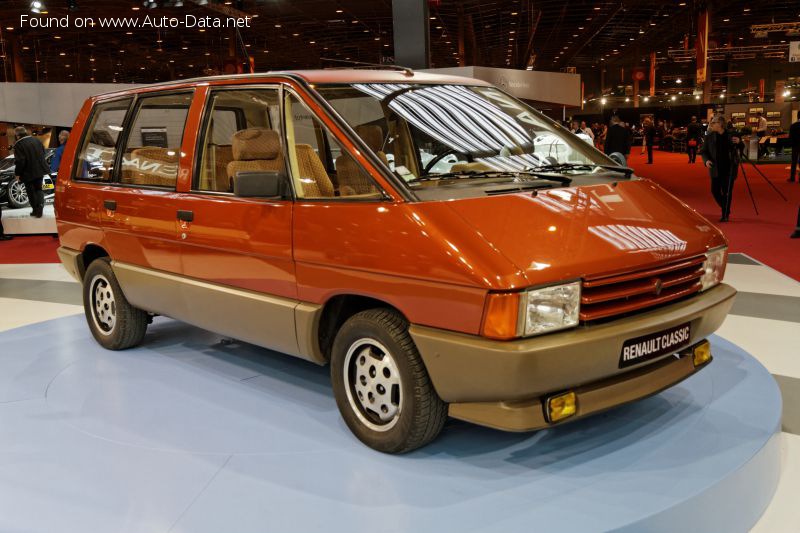
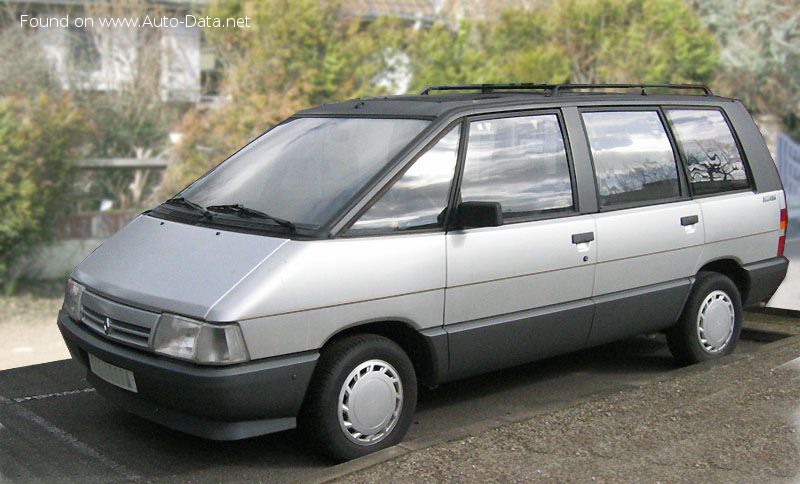
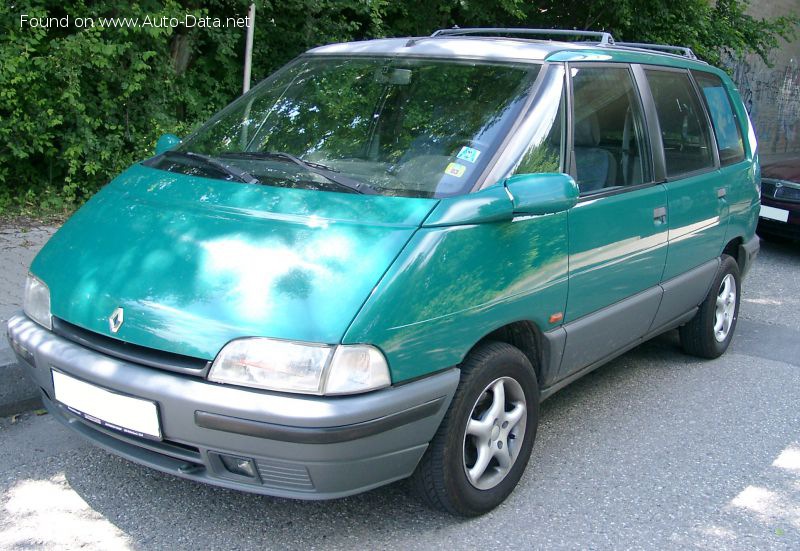
The Renault Espace IV (Phase II, 2006) represents a significant iteration of a pioneering vehicle in the European automotive landscape. Launched in 1984, the Espace series is widely credited with popularizing the multi-purpose vehicle (MPV) segment across the continent, long before the minivan concept gained widespread traction in the United States. The fourth generation, introduced in 2002, marked a radical departure in design and engineering, embracing a more sophisticated, almost crossover-like aesthetic while retaining its core functionality as a spacious family hauler. The Phase II refresh, which debuted in 2006, brought subtle styling enhancements, updated interior features, and refined powertrain options to keep the Espace competitive.
This particular variant, the 3.5 V6 (241 Hp) Automatic, stood at the pinnacle of the Espace lineup, offering a level of performance and refinement uncommon for a family minivan in its primary markets. While the Renault Espace was never officially sold in the United States, it played a crucial role in shaping European family transportation, embodying a blend of innovative design, modular interior space, and a comfortable driving experience. This article delves into the specifics of this powerful, large-displacement Espace model, utilizing American English terminology for its technical specifications and performance metrics.
Engineering and Performance: The 3.5 V6 Powerhouse in the Renault Espace IV (Phase II, 2006)
Underpinning the spirited performance of this particular Espace was a robust 3.5-liter V6 gasoline engine, designated by Renault as the V4Y. This naturally aspirated, DOHC (Double Overhead Camshaft) engine was a proven unit, also found in various Nissan and Infiniti models globally, attesting to its reliability and refinement. It delivered a substantial 241 horsepower at 6000 rpm, paired with a healthy 243.4 lb.-ft. of torque peaking at 3600 rpm. For a family-oriented MPV, these figures were quite impressive, allowing the Espace to perform with considerable verve.
Power was efficiently managed through a 5-speed automatic transmission, directing output to the front wheels. This drivetrain architecture provided a smooth and responsive driving experience, making the Espace IV 3.5 V6 capable of brisk acceleration. The vehicle could sprint from 0 to 60 mph in a swift 7.7 seconds, and reach a top speed of 139.81 mph. These performance metrics were exceptional for its class and size, enabling confident highway merging and effortless overtaking, even with a full complement of seven passengers and their luggage.
Despite its performance capabilities, fuel economy, as expected for a large V6-powered vehicle of its era, was a consideration. The Espace IV 3.5 V6 achieved an estimated 19.6 US mpg combined, with urban consumption around 13.7 US mpg and extra-urban figures reaching 26.1 US mpg. Emissions were rated at 284 g/km of CO2, meeting the Euro 4 emission standard applicable at the time. This powertrain offered a compelling combination of power and comfort, especially suited for long-distance European touring.
Design and Features of the Renault Espace IV (Phase II, 2006)
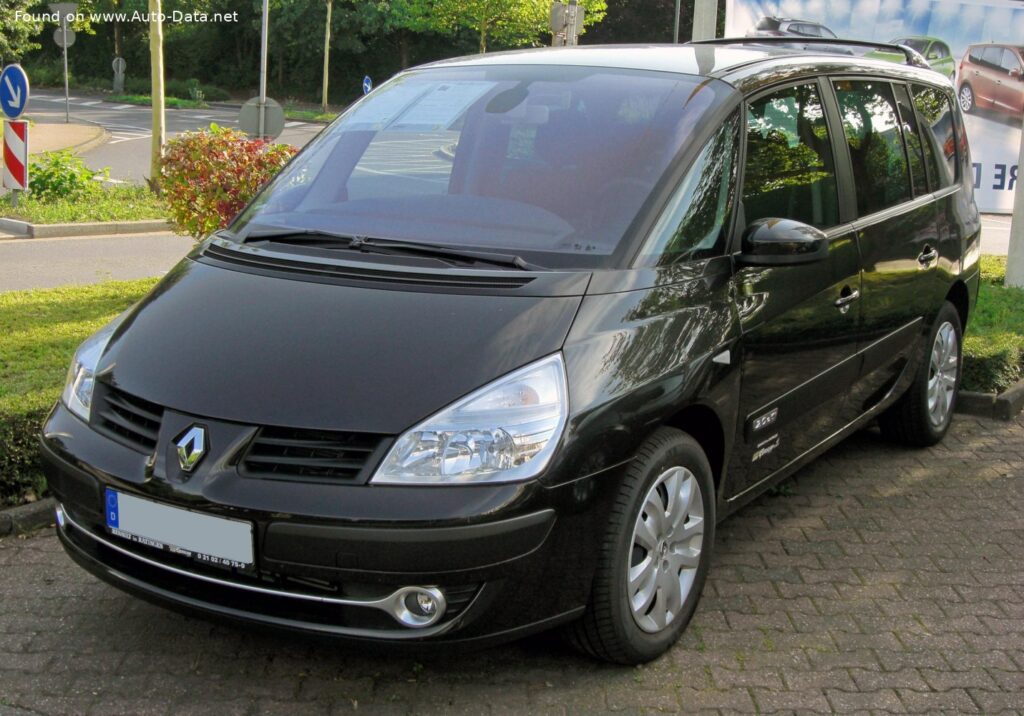
The Renault Espace IV (Phase II, 2006) continued to showcase its distinctive and avant-garde design, a hallmark of its generation. Measuring 183.31 inches in length, 73.23 inches in width (74.57 inches including mirrors), and 68.03 inches in height, it commanded a significant presence on the road. The design emphasized a cab-forward silhouette, large glass areas, and a sleek, aerodynamic profile that belied its substantial interior volume. The Phase II refresh brought minor cosmetic updates, including revised grilles, headlights, and taillights, subtly enhancing its modern aesthetic.
As a true minivan/MPV, the Espace IV was designed with ultimate practicality and modularity in mind. It featured five doors and a versatile 7-seat configuration, allowing for numerous seating and cargo arrangements. The interior was renowned for its spaciousness and airy feel, often augmented by an optional panoramic glass roof (not specified in data, but common for Espace). The rear seats could be individually removed, slid, or folded, transforming the cargo area from a respectable 10.28 cubic feet with all seats in place to a cavernous 101 cubic feet when configured for maximum load. This flexibility made it an ideal vehicle for large families or those needing significant hauling capacity.
Key features for this generation included a sophisticated interior layout with a centrally mounted digital instrument cluster, a characteristic Renault design cue. Safety was a paramount concern, and the Espace IV came equipped with standard features such as an Anti-lock Braking System (ABS) and a comprehensive array of airbags. The ride quality was designed for comfort, thanks to an independent McPherson strut front suspension and a semi-independent, coil spring rear suspension setup. Braking was handled by ventilated discs at the front and solid discs at the rear, providing ample stopping power for the 4067.53-pound (kerb weight) vehicle. The Espace rolled on 225/55 R17 tires, contributing to both ride comfort and handling stability.
Technical Specifications
| Feature | Specification |
|---|---|
| Brand | Renault |
| Model | Espace IV (Phase II, 2006) |
| Type (Engine) | 3.5 V6 (241 Hp) Automatic |
| Production Years | 2006 – 2010 |
| Body Type | Minivan, MPV |
| Seats | 7 |
| Doors | 5 |
| Fuel Type | Petrol (Gasoline) |
| Fuel Consumption (Urban) | 13.7 US mpg |
| Fuel Consumption (Extra Urban) | 26.1 US mpg |
| Fuel Consumption (Combined) | 19.6 US mpg |
| CO2 Emissions | 284 g/km (Euro 4) |
| Acceleration 0-60 mph | 7.7 sec |
| Maximum Speed | 139.81 mph |
| Power | 241 Hp @ 6000 rpm |
| Torque | 243.4 lb.-ft. @ 3600 rpm |
| Engine Displacement | 3498 cm3 (213.46 cu. in.) |
| Number of Cylinders | 6 (V-engine) |
| Bore x Stroke | 3.76 in. x 3.2 in. |
| Compression Ratio | 10.3:1 |
| Valves per Cylinder | 4 |
| Fuel Injection System | Multi-port manifold injection |
| Engine Aspiration | Naturally aspirated |
| Valvetrain | DOHC |
| Engine Oil Capacity | 5.28 US qt |
| Coolant Capacity | 7.61 US qt |
| Kerb Weight | 4067.53 lbs. |
| Maximum Weight | 5610.76 lbs. |
| Maximum Load | 1543.24 lbs. |
| Trunk Space (Minimum) | 10.28 cu. ft. |
| Trunk Space (Maximum) | 101 cu. ft. |
| Fuel Tank Capacity | 21.93 US gal |
| Maximum Roof Load | 176.37 lbs. |
| Permitted Trailer Load (with brakes) | 4409.25 lbs. |
| Permitted Trailer Load (without brakes) | 1653.47 lbs. |
| Permitted Towbar Download | 176.37 lbs. |
| Length | 183.31 in. |
| Width | 73.23 in. |
| Width (including mirrors) | 74.57 in. |
| Height | 68.03 in. |
| Wheelbase | 110.35 in. |
| Front Track | 61.97 in. |
| Rear Track | 61.26 in. |
| Ground Clearance | 4.72 in. |
| Minimum Turning Circle | 37.07 ft. |
| Drivetrain Architecture | Front-wheel drive |
| Gearbox Type | 5-speed automatic |
| Front Suspension | Independent type McPherson |
| Rear Suspension | Semi-independent, coil spring |
| Front Brakes | Ventilated discs |
| Rear Brakes | Disc |
| Assisting Systems | ABS (Anti-lock braking system) |
| Steering Type | Steering rack and pinion |
| Tire Size | 225/55 R17 |
| Wheel Rims Size | 17 inches |
Legacy and Market Impact
The Renault Espace holds an indelible place in European automotive history. As one of the original MPVs, it almost single-handedly created and dominated a segment that prioritized family comfort, versatility, and intelligent space utilization. The Espace IV, launched in 2002 and refreshed in 2006, continued this legacy, adapting to evolving consumer tastes with its more sophisticated design and improved dynamics. Despite its departure from the more utilitarian aesthetic of its predecessors, the fourth generation retained the core values of spaciousness and modularity that defined the Espace name.
In its primary European market, the Renault Espace IV 3.5 V6 Automatic faced competition from other prominent MPVs such as the Ford Galaxy, Volkswagen Sharan, Citroën C8, and Peugeot 807. However, the Espace often stood out for its distinctive styling, refined ride, and innovative interior features. The availability of a powerful 3.5-liter V6 engine, particularly in the Phase II models, offered a premium proposition for buyers seeking performance beyond typical family car expectations. This engine choice, while not the highest volume seller, catered to a niche that appreciated the blend of minivan practicality with executive-level power.
The Espace IV’s impact extended beyond sales figures; it influenced other manufacturers to consider more daring designs and advanced technologies for their family vehicles. It represented a period when Renault was at the forefront of design innovation, challenging conventional automotive norms. Although the MPV segment eventually waned in popularity in favor of SUVs and crossovers, the Espace IV remains a testament to Renault’s commitment to creating practical, comfortable, and often groundbreaking vehicles for the European family. Its strong reputation for safety, combined with its flexible interior and comfortable ride, cemented its status as a benchmark in the European MPV segment throughout its production run from 2006 to 2010. The Espace nameplate itself continued, eventually transitioning into a crossover-style vehicle, but the Espace IV, especially in its potent 3.5 V6 guise, represents a high point of the traditional European minivan.