The Renault Espace IV (Phase III, 2010): A European Minivan Icon
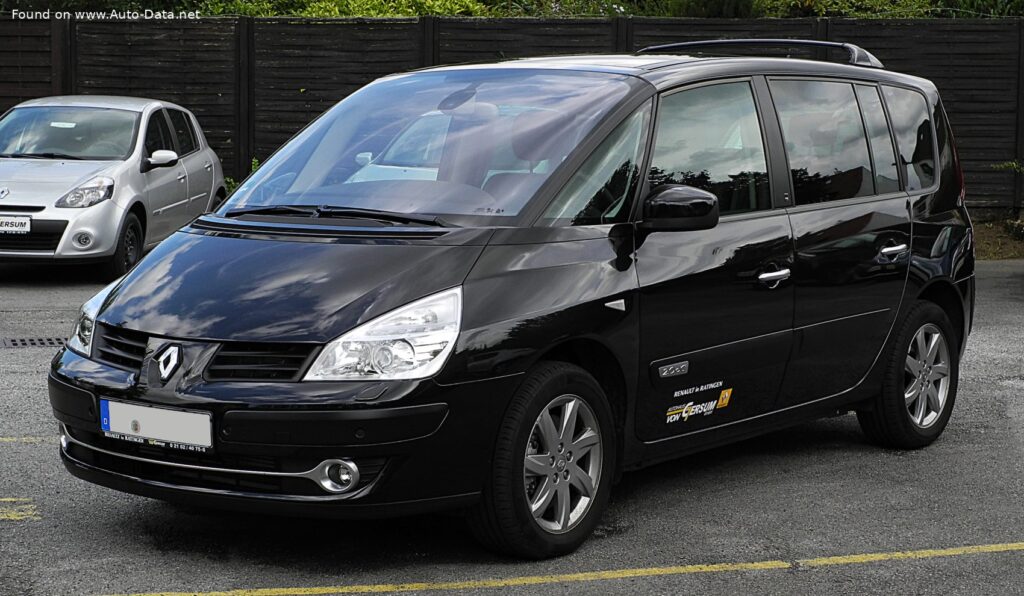
The Renault Espace IV (Phase III, 2010) represents a significant iteration of one of Europe’s most enduring and influential multi-purpose vehicles (MPVs), often referred to as minivans in the United States. Launched in 2010, this Phase III refresh of the fourth-generation Espace continued Renault’s legacy of pioneering the large MPV segment, a market where it had been a dominant force since its inception in 1984. While the Espace was never officially sold in the North American market, its impact on family transportation and vehicle design across Europe and other international markets is undeniable. This particular model, equipped with the 2.0 dCi (150 Hp) diesel engine, was a popular choice for families seeking a blend of space, comfort, and fuel efficiency during its production run from 2010 to 2012.
The Espace IV, initially introduced in 2002, was a departure from its predecessors with its more angular, contemporary styling and a focus on premium features. The Phase III update in 2010 brought subtle aesthetic refinements and technological enhancements, keeping the model competitive in a segment that was beginning to face increasing pressure from crossover SUVs. It retained its core identity as a spacious, versatile 7-seater designed for long-distance family travel and urban utility, embodying the practicality and innovative spirit that defined Renault’s approach to people carriers.
Engine and Performance: The 2.0 dCi Powerplant in the Renault Espace IV
At the heart of this particular Renault Espace IV variant is the M9R 2.0 dCi turbocharged diesel engine, a robust and widely utilized powerplant within the Renault-Nissan Alliance. This inline four-cylinder engine, with a displacement of 1995 cubic centimeters (121.74 cu. in.), delivers a respectable 150 horsepower at 4000 rpm. More importantly for a large family vehicle, it generates a substantial 250.77 lb.-ft. of torque at a low 2000 rpm, providing excellent pulling power and effortless cruising capabilities, even when fully loaded with passengers and luggage.
The engine utilizes a common rail direct fuel injection system and is equipped with a turbocharger and intercooler, ensuring efficient combustion and strong performance across the rev range. Its DOHC (Double Overhead Camshaft) valvetrain with four valves per cylinder contributes to its refined operation and responsiveness. Power is sent to the front wheels via a smooth-shifting 6-speed manual transmission, offering the driver direct control and contributing to the vehicle’s overall efficiency. With an acceleration time of 0 to 60 mph in approximately 10.1 seconds and a top speed of 120.55 mph (194 km/h), the Espace 2.0 dCi provides ample performance for highway travel while maintaining its focus on fuel economy.
Fuel efficiency was a key selling point for this diesel-powered MPV in Europe. The combined fuel consumption is rated at an impressive 36.2 US mpg (6.5 l/100 km), with extra-urban figures reaching 41.3 US mpg (5.7 l/100 km). These figures highlight the economic benefits of diesel technology, especially for longer journeys. Furthermore, the engine meets Euro 5 emission standards, with CO2 emissions of 170 g/km, reflecting Renault’s commitment to environmental responsibility during that period. The inclusion of a particulate filter was standard, further reducing harmful emissions.
Design and Features: Versatility and Comfort
The Renault Espace IV (Phase III, 2010) maintains the distinctive minivan (or MPV) body style that has been its hallmark. Measuring 183.5 inches (4661 mm) in length, 74.57 inches (1894 mm) in width (including mirrors), and 70.91 inches (1801 mm) in height, it commanded a significant road presence. The substantial 110.35-inch (2803 mm) wheelbase contributes to a stable ride and a remarkably spacious interior, capable of comfortably seating seven occupants across three rows. The five-door configuration, with large rear doors, ensures easy access to all seating positions.
The interior design prioritized modularity and comfort, a cornerstone of the Espace philosophy. The rear seats could be individually removed, slid, or folded, allowing for numerous configurations to optimize passenger and cargo space. With all seven seats in place, the trunk space was a modest 10.28 cu. ft. (291 liters), but by removing or folding the rear seats, this expanded dramatically to an cavernous 101 cu. ft. (2860 liters), transforming the Espace into a true cargo hauler. Practical features like an 83-liter (21.93 US gal) fuel tank provided an excellent cruising range, while a maximum roof load of 176.37 lbs. (80 kg) and a braked trailer capacity of 4409.25 lbs. (2000 kg) underscored its utility.
Safety features for the 2010 Espace IV included standard Anti-lock Braking System (ABS), a suite of airbags, and a robust chassis design. The front suspension utilized an independent McPherson strut setup with coil springs and an anti-roll bar, while the rear featured a semi-independent coil spring design, providing a comfortable and stable ride characteristic of a family-oriented vehicle. Braking was handled by ventilated discs at the front and solid discs at the rear, ensuring confident stopping power. The vehicle rode on 225/55 R17 tires mounted on 17-inch wheel rims, balancing ride comfort with adequate grip.
Technical Specifications
| Category | Specification | US Equivalent (Approx.) |
|---|---|---|
| General Information | ||
| Brand | Renault | |
| Model | Espace | |
| Generation | Espace IV (Phase III, 2010) | |
| Type (Engine) | 2.0 dCi (150 Hp) | |
| Start of production | 2010 year | |
| End of production | 2012 year | |
| Powertrain Architecture | Internal Combustion engine | |
| Body type | Minivan, MPV | |
| Seats | 7 | |
| Doors | 5 | |
| Performance Specs | ||
| Fuel consumption (economy) – urban | 8.2 l/100 km | 28.7 US mpg |
| Fuel consumption (economy) – extra urban | 5.7 l/100 km | 41.3 US mpg |
| Fuel consumption (economy) – combined | 6.5 l/100 km | 36.2 US mpg |
| CO2 emissions | 170 g/km | |
| Fuel Type | Diesel | |
| Acceleration 0 – 60 mph (Calculated) | 10.1 sec | |
| Maximum speed | 194 km/h | 120.55 mph |
| Emission standard | Euro 5 | |
| Weight-to-power ratio | 13.2 kg/Hp | 29.1 lbs./Hp |
| Weight-to-torque ratio | 5.8 kg/Nm | 12.8 lbs./lb.-ft. |
| Engine Specs | ||
| Power | 150 Hp @ 4000 rpm | |
| Power per liter | 75.2 Hp/l | |
| Torque | 340 Nm @ 2000 rpm | 250.77 lb.-ft. @ 2000 rpm |
| Engine layout | Front, Transverse | |
| Engine Model/Code | M9R | |
| Engine displacement | 1995 cm3 | 121.74 cu. in. |
| Number of cylinders | 4 | |
| Engine configuration | Inline | |
| Cylinder Bore | 84 mm | 3.31 in. |
| Piston Stroke | 90 mm | 3.54 in. |
| Compression ratio | 16:1 | |
| Number of valves per cylinder | 4 | |
| Fuel injection system | Diesel Commonrail | |
| Engine aspiration | Turbocharger, Intercooler | |
| Valvetrain | DOHC | |
| Engine oil capacity | 6.6 l | 6.97 US qt |
| Engine systems | Particulate filter | |
| Space, Volume and Weights | ||
| Kerb Weight | 1976 kg | 4356.33 lbs. |
| Max. weight | 2605 kg | 5743.04 lbs. |
| Max load | 629 kg | 1386.71 lbs. |
| Trunk (boot) space – minimum | 291 l | 10.28 cu. ft. |
| Trunk (boot) space – maximum | 2860 l | 101 cu. ft. |
| Fuel tank capacity | 83 l | 21.93 US gal |
| Max. roof load | 80 kg | 176.37 lbs. |
| Permitted trailer load with brakes (12%) | 2000 kg | 4409.25 lbs. |
| Permitted trailer load without brakes | 750 kg | 1653.47 lbs. |
| Permitted towbar download | 80 kg | 176.37 lbs. |
| Dimensions | ||
| Length | 4661 mm | 183.5 in. |
| Width including mirrors | 1894 mm | 74.57 in. |
| Height | 1801 mm | 70.91 in. |
| Wheelbase | 2803 mm | 110.35 in. |
| Front track | 1574 mm | 61.97 in. |
| Rear (Back) track | 1556 mm | 61.26 in. |
| Front overhang | 1026 mm | 40.39 in. |
| Rear overhang | 832 mm | 32.76 in. |
| Ride height (ground clearance) | 175 mm | 6.89 in. |
| Minimum turning circle (turning diameter) | 11 m | 36.09 ft. |
| Drivetrain, Brakes and Suspension Specs | ||
| Drivetrain Architecture | The Internal combustion engine (ICE) drives the front wheels of the vehicle. | |
| Drive wheel | Front wheel drive | |
| Number of gears and type of gearbox | 6 gears, manual transmission | |
| Front suspension | Independent, type McPherson with coil spring and anti-roll bar | |
| Rear suspension | Semi-independent, coil spring | |
| Front brakes | Ventilated discs | |
| Rear brakes | Disc | |
| Assisting systems | ABS (Anti-lock braking system) | |
| Steering type | Steering rack and pinion | |
| Tires size | 225/55 R17 | |
| Wheel rims size | 17 inches | |
Legacy and Market Impact in Europe
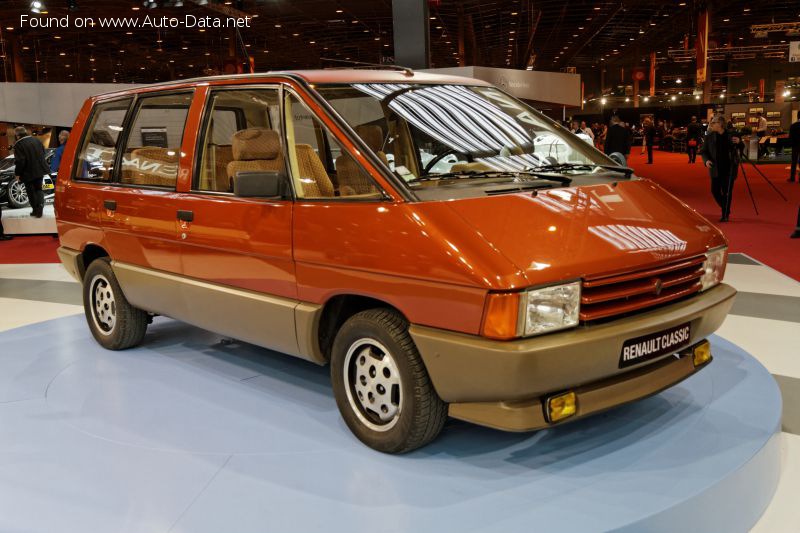
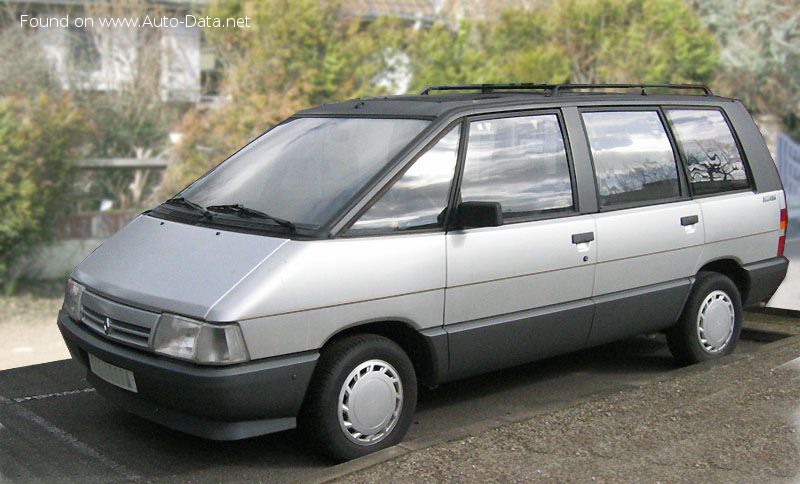
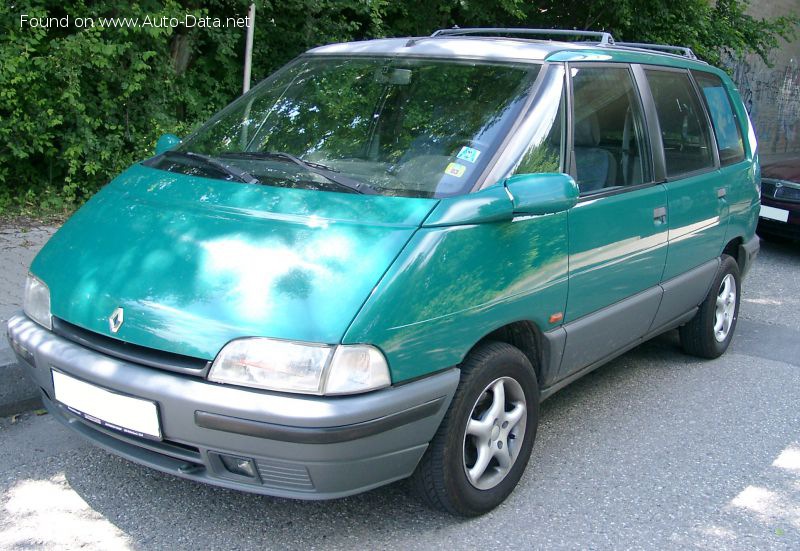
The Renault Espace holds a unique and revered position in European automotive history. Launched in 1984, it is widely credited with inventing the modern European MPV segment, predating similar concepts from other manufacturers. The fourth generation, including the Phase III refresh from 2010, continued this legacy, adapting to evolving market demands while retaining its core strengths.
In its primary market, Europe, the Espace IV competed against a strong lineup of rivals, including the Ford Galaxy, Volkswagen Sharan, Citroën C8, Peugeot 807, and the Chrysler Voyager (which had a significant European presence). What set the Espace apart was its distinctive styling, often perceived as more avant-garde than its competitors, and its focus on interior comfort, modularity, and innovative features. The diesel powertrain, exemplified by the 2.0 dCi (150 Hp) engine, was particularly crucial for its success, offering the fuel economy and torque demanded by European consumers for long-distance family travel.
The Espace IV was known for its comfortable ride, generous interior space, and a feeling of robustness, making it a favorite for large families and those requiring flexible passenger and cargo configurations. Its reliability, particularly with the well-proven dCi engines, contributed to its strong reputation. While the MPV segment faced declining sales in the later 2010s due to the rise of SUVs, the Espace IV maintained a respectable presence until its eventual replacement. Its enduring legacy is that of a vehicle that successfully combined practicality with a touch of French flair, defining a segment for decades and influencing how European families traveled.
Today, the Espace nameplate has evolved significantly, transforming into a crossover SUV to meet contemporary market trends, a testament to the original model’s adaptable spirit. However, the Espace IV (Phase III, 2010) 2.0 dCi (150 Hp) remains a quintessential example of a well-engineered European minivan that perfectly served its purpose and market, embodying a golden era for multi-purpose vehicles before the SUV boom reshaped the automotive landscape.