The Renault Espace V: A European Vision of Family Mobility
The Renault Espace V 1.6 dCi (130 Hp) 7 Seat represents a significant evolution in a model line that pioneered the modern minivan concept in Europe. Launched in 2015, this fifth-generation Espace marked a bold departure from its predecessors’ purely utilitarian minivan aesthetic, embracing a more crossover-inspired design while retaining its core mission as a versatile, family-friendly vehicle. Produced until 2018 in this specific configuration, the Espace V aimed to blend the practicality of a multi-purpose vehicle (MPV) with the contemporary styling cues and higher driving position associated with sport utility vehicles (SUVs), a trend that was rapidly gaining traction across global markets, particularly in Europe where the Espace primarily competes.
Unlike its predecessors, which were distinctly minivans, the Espace V was positioned by Renault as a “crossover” or “large MPV,” reflecting a broader industry shift. While never officially sold in the United States, the Espace has been a staple of the European automotive landscape for decades, known for its innovative packaging and comfortable family transport. This 1.6 dCi variant, with its efficient diesel powertrain and seven-seat configuration, was a particularly relevant offering for European families seeking a blend of space, fuel economy, and driving refinement.
Engine and Performance of the Renault Espace V 1.6 dCi (130 Hp) 7 Seat
At the heart of this particular Renault Espace V variant is a sophisticated 1.6-liter (1598 cm³ or 97.52 cu. in.) dCi inline-four diesel engine, designated by the R9M engine code. This powerplant delivers a respectable 130 horsepower at 4000 rpm, which, when combined with its substantial torque output, makes it well-suited for the demands of a family hauler. Torque peaks at 320 Newton-meters (236.02 lb.-ft.) at a low 1750 rpm, providing ample pulling power for acceleration and highway cruising, even with a full complement of passengers and cargo.
The engine features a common-rail direct fuel injection system, a turbocharger, and an intercooler, all designed to optimize combustion efficiency and power delivery. With four valves per cylinder and a bore of 3.15 inches (80 mm) and a stroke of 3.13 inches (79.5 mm), the engine is a modern, compact unit. A particulate filter is integrated into the exhaust system, helping the vehicle meet the stringent Euro 6 b emission standard, a critical factor for diesel vehicles in the European market.
Performance figures for the Espace V 1.6 dCi (130 Hp) 7 Seat are pragmatic rather than sporty, reflecting its family-oriented purpose. It accelerates from 0 to 60 mph in a measured 10.2 seconds, with 0 to 100 km/h taking 10.7 seconds. The top speed is rated at 118.68 mph (191 km/h). These figures ensure adequate performance for daily driving and highway merges without sacrificing efficiency.
Fuel economy is a strong suit for this diesel variant, a primary reason for its popularity in Europe. The combined cycle consumption is an impressive 4.4 liters per 100 kilometers, translating to approximately 53.5 US miles per gallon. Urban driving yields about 46.1 US mpg (5.1 l/100 km), while extra-urban (highway) driving can achieve up to 58.8 US mpg (4.0 l/100 km). With CO2 emissions of 116 g/km, the Espace V 1.6 dCi stands out as an environmentally conscious choice within its segment. Its 15.32 US gallon (58-liter) fuel tank provides a considerable driving range.
Design and Features
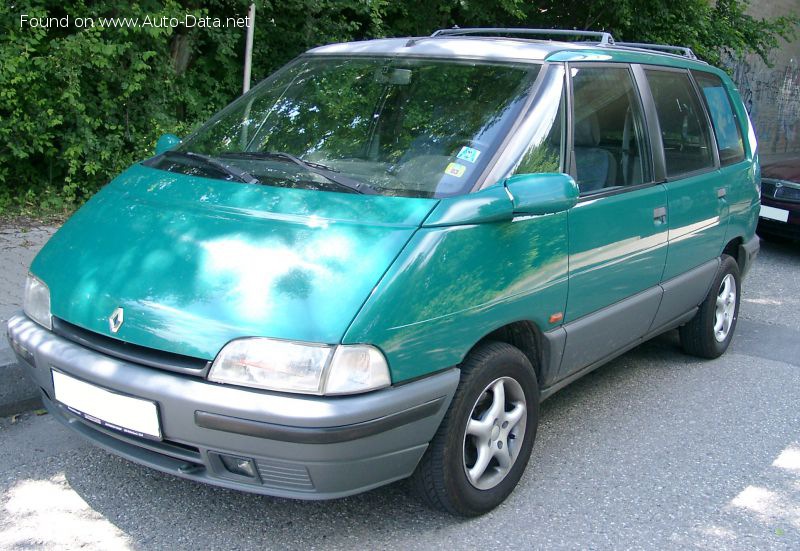
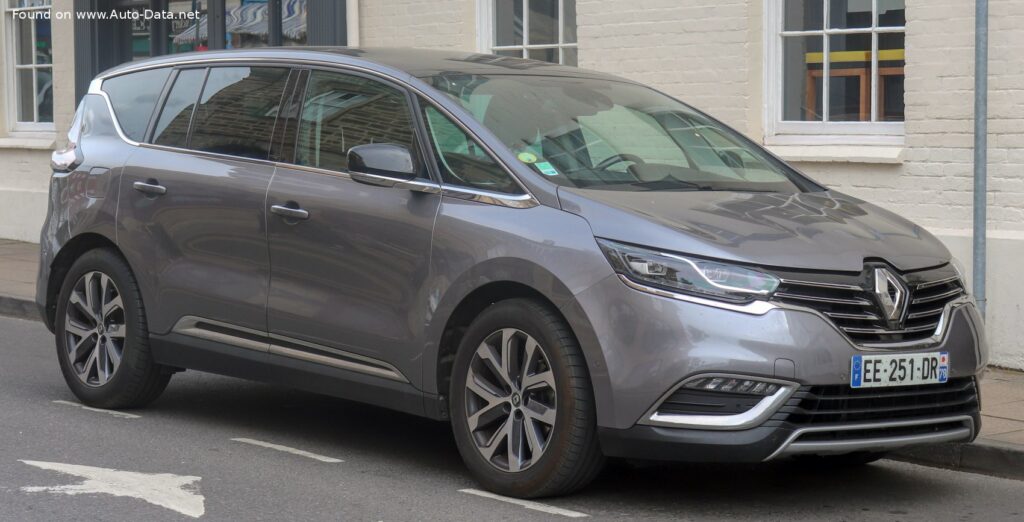
The fifth-generation Espace broke away from the boxy, single-box design that had defined its predecessors. It adopted a more dynamic and sculpted aesthetic, characterized by a higher beltline, prominent wheel arches, and a sleeker roofline, blurring the lines between a traditional minivan and a modern crossover. This design philosophy aimed to appeal to buyers increasingly drawn to the SUV segment, offering a more stylish alternative without sacrificing interior space. The Espace V is a five-door vehicle, facilitating easy access for passengers and cargo.
Measuring 191.22 inches (4857 mm) in length, 74.33 inches (1888 mm) in width (83.78 inches or 2128 mm including mirrors), and 66.02 inches (1677 mm) in height, the Espace V maintains a substantial footprint. Its generous 113.54-inch (2884 mm) wheelbase contributes significantly to interior roominess and ride comfort. With a ground clearance of 6.3 inches (160 mm), it offers a slightly elevated driving position, enhancing visibility and contributing to its crossover appeal. The minimum turning circle of 40.68 feet (12.4 meters) indicates reasonable maneuverability for a vehicle of its size.
Inside, the Espace V offers a highly adaptable seven-seat configuration, a cornerstone of its family-friendly appeal. The trunk space is versatile, ranging from a minimum of 8.72 cubic feet (247 liters) with all three rows in use, expanding significantly to a cavernous 71.87 cubic feet (2035 liters) when the rear seats are folded down, rivaling many larger SUVs.
The vehicle employs a front-wheel-drive architecture, with the internal combustion engine positioned transversely at the front. Power is routed through a precise 6-speed manual transmission, offering direct driver engagement and contributing to the vehicle’s efficiency. The suspension system features an independent McPherson strut setup with coil springs and an anti-roll bar at the front, providing a comfortable yet controlled ride. The rear utilizes a semi-independent coil spring setup. Braking is handled by ventilated discs at the front and solid discs at the rear, supported by an Anti-lock Braking System (ABS) for enhanced safety. Electric power steering makes for effortless maneuverability, while the 235/60 R18 tires on 18-inch wheel rims provide a balanced combination of grip and ride quality.
Technical Specifications
| Category | Specification | Metric / US Equivalent |
|---|---|---|
| General Information | ||
| Brand | Renault | – |
| Model | Espace V | – |
| Type (Engine) | 1.6 dCi (130 Hp) 7 Seat | – |
| Production Start | 2015 | – |
| Production End | 2018 | – |
| Powertrain Architecture | Internal Combustion Engine | – |
| Body type | Minivan, Crossover | – |
| Seats | 7 | – |
| Doors | 5 | – |
| Performance Specifications | ||
| Fuel Consumption (Urban) | 5.1 l/100 km | 46.1 US mpg |
| Fuel Consumption (Extra Urban) | 4.0 l/100 km | 58.8 US mpg |
| Fuel Consumption (Combined) | 4.4 l/100 km | 53.5 US mpg |
| CO2 Emissions | 116 g/km | – |
| Fuel Type | Diesel | – |
| Acceleration 0-60 mph | – | 10.2 sec |
| Acceleration 0-100 km/h | 10.7 sec | – |
| Maximum Speed | 191 km/h | 118.68 mph |
| Emission Standard | Euro 6 b | – |
| Weight-to-Power Ratio | 12.5 kg/Hp | 80.1 Hp/tonne |
| Weight-to-Torque Ratio | 5.1 kg/Nm | 197.3 Nm/tonne |
| Engine Specifications | ||
| Power | 130 Hp @ 4000 rpm | – |
| Power per liter | 81.4 Hp/l | – |
| Torque | 320 Nm @ 1750 rpm | 236.02 lb.-ft. @ 1750 rpm |
| Engine Layout | Front, Transverse | – |
| Engine Model/Code | R9M | – |
| Engine Displacement | 1598 cm³ | 97.52 cu. in. |
| Number of Cylinders | 4 | – |
| Engine Configuration | Inline | – |
| Cylinder Bore | 80 mm | 3.15 in. |
| Piston Stroke | 79.5 mm | 3.13 in. |
| Valves per Cylinder | 4 | – |
| Fuel Injection System | Diesel Commonrail | – |
| Engine Aspiration | Turbocharger, Intercooler | – |
| Engine Oil Capacity | 6.2 l | 6.55 US qt |
| Coolant Capacity | 7.2 l | 7.61 US qt |
| Engine Systems | Particulate filter | – |
| Space, Volume, and Weights | ||
| Kerb Weight | 1622 kg | 3575.9 lbs. |
| Max. Weight (GVWR) | 2353 kg | 5187.48 lbs. |
| Max Load | 731 kg | 1611.58 lbs. |
| Trunk Space (Min) | 247 l | 8.72 cu. ft. |
| Trunk Space (Max) | 2035 l | 71.87 cu. ft. |
| Fuel Tank Capacity | 58 l | 15.32 US gal |
| Permitted Trailer Load (with brakes) | 2000 kg | 4409.25 lbs. |
| Permitted Trailer Load (without brakes) | 750 kg | 1653.47 lbs. |
| Dimensions | ||
| Length | 4857 mm | 191.22 in. |
| Width | 1888 mm | 74.33 in. |
| Width with mirrors folded | 1914 mm | 75.35 in. |
| Width including mirrors | 2128 mm | 83.78 in. |
| Height | 1677 mm | 66.02 in. |
| Wheelbase | 2884 mm | 113.54 in. |
| Front Track | 1630 mm | 64.17 in. |
| Rear Track | 1621 mm | 63.82 in. |
| Front Overhang | 1034 mm | 40.71 in. |
| Rear Overhang | 939 mm | 36.97 in. |
| Ride Height (Ground Clearance) | 160 mm | 6.3 in. |
| Minimum Turning Circle | 12.4 m | 40.68 ft. |
| Drivetrain, Brakes, and Suspension | ||
| Drivetrain Architecture | Front-wheel drive (ICE drives front wheels) | – |
| Drive Wheel | Front wheel drive | – |
| Gearbox Type | 6 gears, manual transmission | – |
| Front Suspension | Independent, McPherson with coil spring and anti-roll bar | – |
| Rear Suspension | Semi-independent, coil spring | – |
| Front Brakes | Ventilated discs | – |
| Rear Brakes | Disc | – |
| Assisting Systems | ABS (Anti-lock braking system) | – |
| Steering Type | Steering rack and pinion | – |
| Power Steering | Electric Steering | – |
| Tires Size | 235/60 R18 | – |
| Wheel Rims Size | 18 inches | – |
Legacy and Market Impact
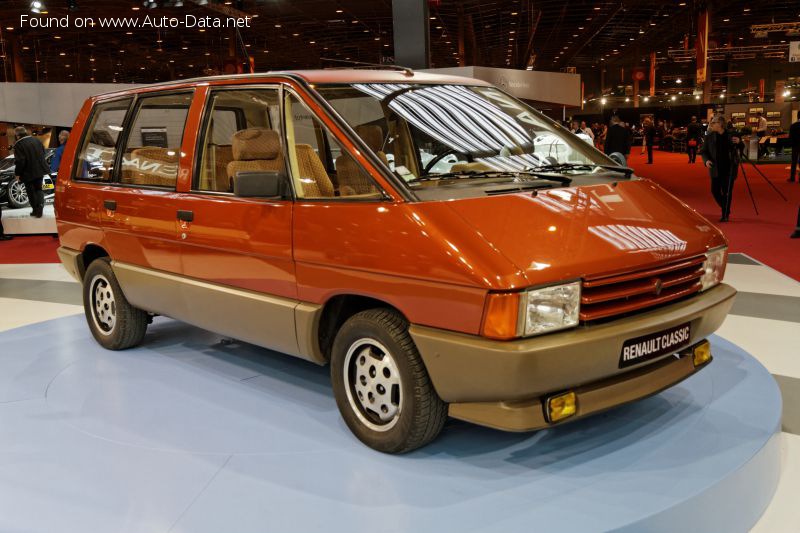
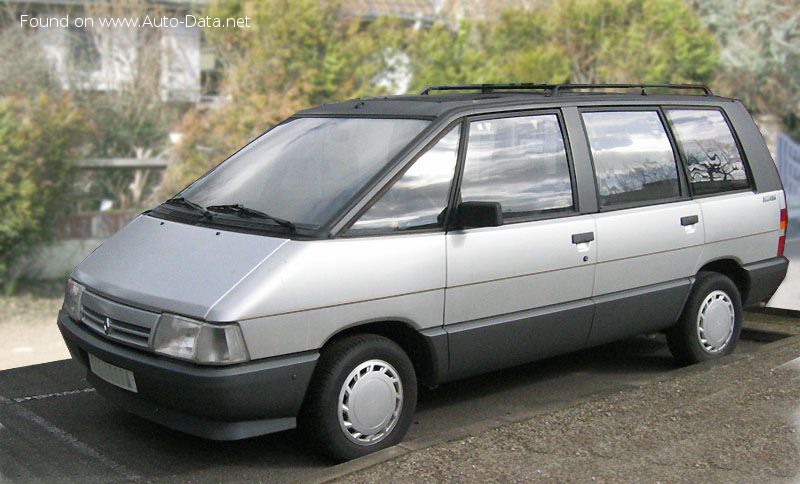
The Renault Espace holds a unique and esteemed position in European automotive history. The original Espace, launched in 1984, is widely credited with creating the modern European minivan (or MPV) segment, influencing countless competitors and establishing Renault as a leader in family transport. By the time the fifth generation arrived in 2015, the market landscape had dramatically shifted. Traditional minivans were losing ground to the burgeoning SUV and crossover segments, prompting Renault to reimagine the Espace.
The Espace V, including the 1.6 dCi (130 Hp) 7 Seat variant, was a direct response to this trend. It offered a compelling proposition: the elevated driving position and rugged styling cues of a crossover, combined with the unparalleled interior flexibility and passenger capacity of a minivan. This strategic pivot allowed the Espace to remain relevant in a highly competitive environment, appealing to families who desired practicality but also sought a more contemporary and less “soccer mom” image than traditional minivans offered.
In its primary European market, the Espace V competed against a diverse range of vehicles. Direct rivals in the large MPV segment included the Ford S-Max, Volkswagen Sharan, SEAT Alhambra, and Citroën C4 Grand Picasso. However, its crossover styling also pitted it against family SUVs like the Nissan X-Trail (Renault-Nissan Alliance partner), Skoda Kodiaq, and Peugeot 5008. The 1.6 dCi engine, in particular, was crucial for its market success, offering a blend of low running costs, robust torque, and acceptable performance that European buyers highly value.
While never making its way to North American shores, the Espace V’s innovative approach to blending vehicle segments offers insights into global automotive trends. In the U.S., the minivan segment has shrunk dramatically, largely replaced by large SUVs and three-row crossovers. The Espace V’s attempt to bridge this gap in Europe demonstrates a different market dynamic where diesel engines and efficient, versatile family vehicles continue to hold significant appeal. Its legacy is one of adaptation and innovation, ensuring that a pioneering nameplate continued to serve the evolving needs of European families in the mid-2010s. The Espace V showcased Renault’s commitment to thoughtful design and practical engineering, even as it embraced new stylistic directions.