Introduction to the Renault Espace V 1.6 dCi (160 Hp) EDC 7 Seat
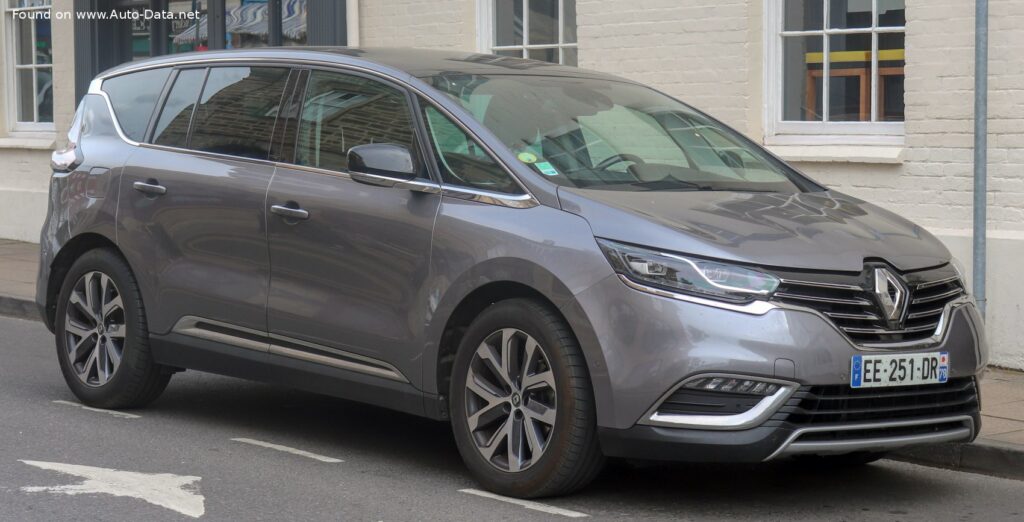
The Renault Espace, a name synonymous with the European multi-purpose vehicle (MPV) segment for decades, underwent a significant transformation with the introduction of its fifth generation, the Espace V, in 2015. This iteration marked a bold departure from its traditional minivan silhouette, evolving into a more crossover-inspired design while retaining its core principles of spaciousness and family utility. The specific variant, the Renault Espace V 1.6 dCi (160 Hp) EDC 7 Seat, produced from 2015 to 2018, stood as a testament to Renault’s commitment to efficiency and technological advancement in its flagship family hauler.
While never officially sold in the United States market, the Espace V played a crucial role in Europe, competing in a fiercely contested segment that was increasingly influenced by the burgeoning popularity of SUVs. Renault strategically positioned the Espace V to offer the best of both worlds: the elevated driving position and rugged aesthetics of a crossover, combined with the flexible interior and passenger capacity of a minivan. This particular model, equipped with a potent yet economical 1.6-liter diesel engine and an efficient automatic transmission, aimed to provide a premium and practical motoring experience for European families.
Engine and Performance: Powering the Renault Espace V
At the heart of the Renault Espace V 1.6 dCi (160 Hp) EDC 7 Seat lies a sophisticated 1.6-liter (1598 cm3 or 97.52 cubic inches) inline-four diesel engine, designated by the R9M code. This powerplant, featuring a common-rail fuel injection system, turbocharger, and intercooler, was engineered to deliver a compelling blend of power and fuel efficiency. It generates a robust 160 horsepower at 4000 rpm, providing ample thrust for a vehicle of its size and purpose. The torque output is equally impressive, peaking at 280.27 lb.-ft. (380 Nm) at a low 1750 rpm, ensuring strong acceleration and effortless cruising, even when fully loaded or towing.
Power is transmitted to the front wheels via a 6-speed EDC (Efficient Dual Clutch) automatic transmission. This advanced gearbox offers smooth and rapid gear changes, contributing significantly to both driving comfort and fuel economy. The combination allows the Espace V to accelerate from 0 to 60 mph in a respectable 9.4 seconds (0-100 km/h in 9.9 seconds) and reach a top speed of 125.52 mph (202 km/h).
Fuel efficiency was a key selling point for this diesel variant. The Espace V 1.6 dCi achieved impressive figures, with a combined fuel economy of 50-51.1 US mpg (4.6-4.7 L/100 km). Urban driving returned 46.1-47 US mpg (5.0-5.1 L/100 km), while extra-urban cycles saw it reach 53.5 US mpg (4.4 L/100 km). These figures, coupled with CO2 emissions of 123 g/km, allowed the vehicle to comply with the stringent Euro 6b emission standard, making it an environmentally conscious choice for its time. The engine also included a particulate filter, a crucial component for reducing diesel emissions.
Design and Features of the {original_focus_keyword}
The fifth-generation Espace fundamentally reimagined the family hauler. Shedding the boxy, utilitarian form of its predecessors, the Renault Espace V adopted a sleeker, more dynamic profile, blurring the lines between a traditional minivan and a modern crossover. Its body type is officially classified as a Minivan/Crossover, reflecting this dual identity. With five doors and a versatile seven-seat configuration, it offered exceptional practicality for larger families.
Measuring 191.22 inches (4857 mm) in length, 74.33 inches (1888 mm) in width (83.78 inches or 2128 mm including mirrors), and 66.02 inches (1677 mm) in height, the Espace V commanded a significant road presence. A substantial wheelbase of 113.54 inches (2884 mm) contributed to both ride comfort and interior volume, while a ground clearance of 6.3 inches (160 mm) hinted at its crossover aspirations, offering a slightly elevated driving position and improved visibility. The design featured bold lines, a prominent grille, and stylish 18-inch wheels with 235/60 R18 tires, giving it a sophisticated and contemporary look.
Inside, the Espace V was designed with flexibility and comfort in mind. The 7-seat layout was highly adaptable, allowing for various passenger and cargo configurations. The minimum trunk space of 8.72 cubic feet (247 liters) could expand to a cavernous 71.87 cubic feet (2035 liters) with the rear seats folded, making it suitable for everything from daily commutes to long-distance family trips. Features typical of a premium European family vehicle of this era would have included an advanced infotainment system with a large touchscreen, multiple connectivity options, and a comprehensive suite of driver-assistance and safety systems, though specific details are not provided in the technical data. The focus was on creating a serene and comfortable cabin environment, perfect for long journeys.
Technical Specifications
| Category | Specification |
|---|---|
| General Information | |
| Brand | Renault |
| Model | Espace |
| Generation | Espace V |
| Type (Engine) | 1.6 dCi (160 Hp) EDC 7 Seat |
| Start of Production | 2015 year |
| End of Production | 2018 year |
| Powertrain Architecture | Internal Combustion Engine |
| Body type | Minivan, Crossover |
| Seats | 7 |
| Doors | 5 |
| Performance Specs | |
| Fuel consumption (economy) – urban | 47 – 46.1 US mpg (5.0-5.1 l/100 km) |
| Fuel consumption (economy) – extra urban | 53.5 US mpg (4.4 l/100 km) |
| Fuel consumption (economy) – combined | 51.1 – 50 US mpg (4.6-4.7 l/100 km) |
| CO2 emissions | 123 g/km |
| Fuel Type | Diesel |
| Acceleration 0 – 60 mph | 9.4 sec |
| Acceleration 0 – 100 km/h | 9.9 sec |
| Maximum speed | 125.52 mph (202 km/h) |
| Emission standard | Euro 6b |
| Weight-to-power ratio | 10.4 kg/Hp, 96.4 Hp/tonne |
| Weight-to-torque ratio | 4.4 kg/Nm, 229.1 Nm/tonne |
| Engine Specs | |
| Power | 160 Hp @ 4000 rpm |
| Power per liter | 100.1 Hp/l |
| Torque | 280.27 lb.-ft. @ 1750 rpm (380 Nm) |
| Engine layout | Front, Transverse |
| Engine Model/Code | R9M |
| Engine displacement | 97.52 cu. in. (1598 cm3) |
| Number of cylinders | 4 |
| Engine configuration | Inline |
| Cylinder Bore | 3.15 in. (80 mm) |
| Piston Stroke | 3.13 in. (79.5 mm) |
| Number of valves per cylinder | 4 |
| Fuel injection system | Diesel Commonrail |
| Engine aspiration | Turbocharger, Intercooler |
| Engine oil capacity | 6.55 US qt (6.2 l) |
| Coolant | 7.61 US qt (7.2 l) |
| Engine systems | Particulate filter |
| Space, Volume and Weights | |
| Kerb Weight | 3657.47 lbs. (1659 kg) |
| Max. weight | 5447.62 lbs. (2471 kg) |
| Max load | 1790.15 lbs. (812 kg) |
| Trunk (boot) space – minimum | 8.72 cu. ft. (247 l) |
| Trunk (boot) space – maximum | 71.87 cu. ft. (2035 l) |
| Fuel tank capacity | 15.32 US gal (58 l) |
| Permitted trailer load with brakes (12%) | 4409.25 lbs. (2000 kg) |
| Permitted trailer load without brakes | 1653.47 lbs. (750 kg) |
| Dimensions | |
| Length | 191.22 in. (4857 mm) |
| Width | 74.33 in. (1888 mm) |
| Width with mirrors folded | 75.35 in. (1914 mm) |
| Width including mirrors | 83.78 in. (2128 mm) |
| Height | 66.02 in. (1677 mm) |
| Wheelbase | 113.54 in. (2884 mm) |
| Front track | 64.17 in. (1630 mm) |
| Rear (Back) track | 63.82 in. (1621 mm) |
| Front overhang | 40.71 in. (1034 mm) |
| Rear overhang | 36.97 in. (939 mm) |
| Ride height (ground clearance) | 6.3 in. (160 mm) |
| Minimum turning circle (turning diameter) | 40.68 ft. (12.4 m) |
| Drivetrain, Brakes and Suspension Specs | |
| Drivetrain Architecture | The Internal combustion engine (ICE) drives the front wheels of the vehicle. |
| Drive wheel | Front-wheel drive |
| Number of gears and type of gearbox | 6 gears, automatic transmission EDC |
| Front suspension | Independent, type McPherson with coil spring and anti-roll bar |
| Rear suspension | Semi-independent, coil spring |
| Front brakes | Ventilated discs |
| Rear brakes | Disc |
| Assisting systems | ABS (Anti-lock braking system) |
| Steering type | Steering rack and pinion |
| Power steering | Electric Steering |
| Tires size | 235/60 R18 |
| Wheel rims size | 18 |
Legacy and Market Impact
The Renault Espace holds a significant place in European automotive history, often credited with pioneering the MPV segment when it first launched in 1984. By its fifth generation, the Espace V, the market landscape had drastically shifted, with traditional minivans losing ground to the surging popularity of SUVs and crossovers. The Renault Espace V 1.6 dCi (160 Hp) EDC 7 Seat represented Renault’s ambitious attempt to adapt to these changing consumer preferences while preserving the core virtues that made the Espace a family favorite: space, versatility, and comfort.
Its transformation into a “Minivan, Crossover” was a calculated risk. While some purists missed the unadulterated practicality of the earlier generations, the Espace V’s more stylish and assertive design attracted a new segment of buyers who desired SUV aesthetics without sacrificing interior flexibility. In the European market, it faced stiff competition from rivals such as the Ford S-Max, Volkswagen Sharan, SEAT Alhambra, and the Citroën Grand C4 Picasso, each offering their own blend of space, features, and driving dynamics. The Espace V distinguished itself with its emphasis on design, premium interior ambiance, and cutting-edge technology, including its efficient diesel powertrains and advanced automatic transmission.
The 1.6 dCi (160 Hp) variant, in particular, was crucial for its market success. It offered a compelling combination of strong performance, excellent fuel economy for a vehicle of its size, and compliance with strict emission standards, making it an attractive option for families seeking a capable and economical long-distance cruiser. Its reputation for comfortable seating, a quiet cabin, and a smooth ride further solidified its appeal as a refined family vehicle.
Ultimately, the Espace V, including the 1.6 dCi (160 Hp) EDC 7 Seat, carved out its niche as a sophisticated and versatile family car that successfully bridged the gap between traditional MPVs and modern crossovers. While its production run concluded in 2018 for this specific engine variant, the Espace nameplate continued, evolving further to align with contemporary market demands. The Espace V’s legacy lies in its bold reinterpretation of a segment icon, demonstrating Renault’s ability to innovate and adapt in a dynamic automotive world, cementing its place as an important chapter in the history of European family transport.