The Renault Espace V 1.6 TCe (200 Hp) EDC: A European Crossover Reinvention
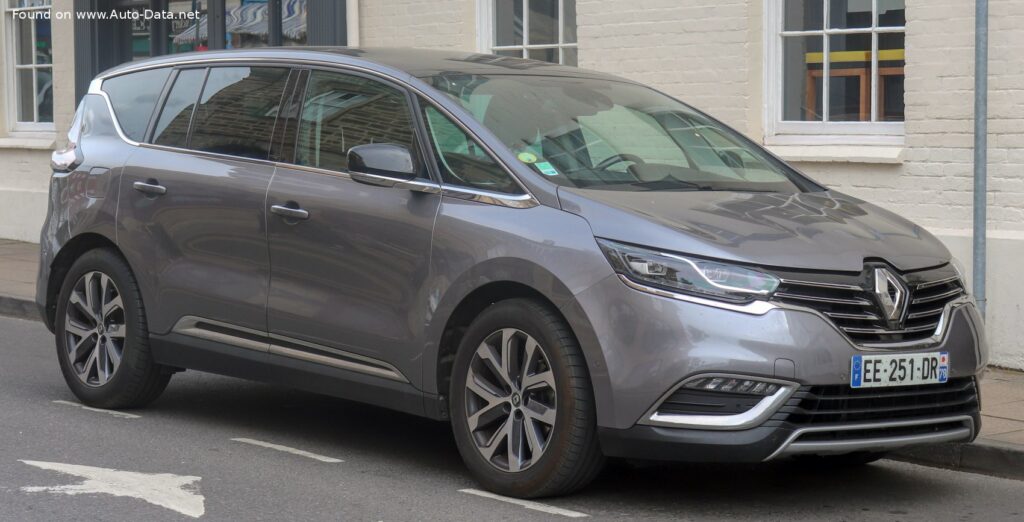
The Renault Espace V 1.6 TCe (200 Hp) EDC represents a significant evolution in the storied history of Renault’s pioneering Espace line. Launched in 2015, this fifth-generation model marked a radical departure from its traditional minivan roots, embracing the burgeoning crossover aesthetic while retaining the core values of spaciousness and family utility that defined its predecessors. Primarily targeting the European and Asian markets, where it competed fiercely in the large family vehicle segment, the Espace V aimed to blend the practicality of a people mover with the styling cues and elevated driving position of an SUV. This specific variant, produced between 2015 and 2017, featured a potent yet efficient 1.6-liter turbocharged gasoline engine paired with a sophisticated dual-clutch automatic transmission, positioning it as a compelling option for discerning families seeking a modern, versatile, and stylish vehicle.
Engineering and Performance: The Renault Espace V 1.6 TCe (200 Hp) EDC Powertrain
At the heart of the Renault Espace V 1.6 TCe (200 Hp) EDC lies a modern and efficient powertrain designed to deliver a balanced blend of performance and fuel economy. The engine, designated M5M, is a 1.6-liter (1618 cm3 or 98.74 cu. in.) inline four-cylinder unit. Utilizing direct fuel injection and a turbocharger with an intercooler, this compact engine generates a robust 200 horsepower at 5750 rpm. This impressive power output for its displacement translates to a power-per-liter ratio of 123.6 HP/l, underscoring Renault’s commitment to advanced engine technology.
Equally crucial to its dynamic character is the torque delivery. The engine produces 260 Nm (191.77 lb-ft) of torque, available from a relatively low 2500 rpm. This broad torque band ensures responsive acceleration and strong pulling power, whether navigating city streets or cruising on the highway. Power is efficiently managed by a 7-speed EDC (Efficient Dual Clutch) automatic transmission, which provides smooth and rapid gear changes, contributing to both driving pleasure and fuel efficiency. The powertrain architecture drives the front wheels, a common setup for vehicles in this segment, optimizing packaging and weight.
Performance figures for the Espace V 1.6 TCe (200 Hp) EDC are commendable for a vehicle of its size and purpose. It can accelerate from 0 to 60 mph in a swift 8.2 seconds and achieve a maximum speed of 131.11 mph (211 km/h). Despite its spirited performance, Renault placed a strong emphasis on fuel efficiency and environmental responsibility. The combined fuel consumption is rated at 6.2 liters per 100 kilometers, which translates to an impressive 37.9 US mpg. Carbon dioxide emissions are kept in check at 140 g/km, allowing the vehicle to meet the stringent Euro 6b emission standard, a key requirement in its primary European market. The vehicle’s weight-to-power ratio stands at 8 kg/Hp (124.3 Hp/tonne), indicating a well-engineered balance of mass and motive force.
Design and Features: Redefining the Family Vehicle
The design of the Renault Espace V marked a pivotal shift for the model, transforming it from a traditional boxy minivan into a sleek, dynamic crossover. Its exterior dimensions – 191.22 inches (4857 mm) in length, 74.33 inches (1888 mm) in width (83.78 inches or 2128 mm including mirrors), and 66.02 inches (1677 mm) in height – give it a commanding presence on the road. The extended wheelbase of 113.54 inches (2884 mm) contributes significantly to interior volume and ride stability, while the ground clearance of 6.3 inches (160 mm) subtly hints at its crossover aspirations without compromising accessibility.
This generation of Espace abandoned the conventional minivan silhouette for a more athletic, sculpted form, featuring a pronounced grille, distinctive LED lighting signatures, and flowing body lines. It offers a 5-door configuration and comfortably seats 5 passengers, emphasizing individual comfort and generous legroom. While traditional Espace models were renowned for their 7-seat modularity, this specific variant focuses on a more spacious 5-seat arrangement, appealing to those who prioritize cargo capacity and passenger comfort over maximum seating.
Inside, the Espace V boasts a sophisticated and technologically advanced cabin. Though specific infotainment details are not provided in the data, a 2015 model would typically feature a large touchscreen interface controlling navigation, media, and vehicle settings, alongside digital instrumentation. The design ethos prioritizes a premium feel with high-quality materials and thoughtful ergonomics.
Practicality remains a strong suit. The trunk space is highly versatile, offering a minimum of 24.01 cubic feet (680 liters) with the seats up, expanding to a cavernous 74.2 cubic feet (2101 liters) with the rear seats folded down. This makes the Espace V exceptionally capable of handling everything from daily groceries to extended family trips.
Chassis and safety features are engineered for comfort and security. The front suspension employs an independent McPherson strut setup with coil springs and an anti-roll bar, providing precise handling and a comfortable ride. The rear features a semi-independent coil spring suspension. Braking is handled by ventilated discs at the front and solid discs at the rear, augmented by an Anti-lock Braking System (ABS) for enhanced control during emergency stops. Electric power steering ensures effortless maneuverability, particularly in urban environments, contributing to a minimum turning circle diameter of 40.68 feet (12.4 meters). The vehicle rides on 18-inch wheels fitted with 235/60 R18 tires, providing a good balance of grip, ride comfort, and aesthetic appeal.
Technical Specifications
| Category | Specification | Value |
|---|---|---|
General Information |
||
| Brand | Renault | |
| Model | Espace | |
| Generation | Espace V | |
| Type (Engine) | 1.6 TCe (200 Hp) EDC | |
| Start of production | 2015 year | |
| End of production | 2017 year | |
| Powertrain Architecture | Internal Combustion engine | |
| Body type | Minivan, Crossover | |
| Seats | 5 | |
| Doors | 5 | |
Performance Specifications |
||
| Fuel consumption (economy) – urban | 7.8 l/100 km (30.2 US mpg) | |
| Fuel consumption (economy) – extra urban | 5.3 l/100 km (44.4 US mpg) | |
| Fuel consumption (economy) – combined | 6.2 l/100 km (37.9 US mpg) | |
| CO2 emissions | 140 g/km | |
| Fuel Type | Gasoline | |
| Acceleration 0 – 60 mph | 8.2 sec | |
| Maximum speed | 131.11 mph (211 km/h) | |
| Emission standard | Euro 6 b | |
| Weight-to-power ratio | 8 kg/Hp (124.3 Hp/tonne) | |
| Weight-to-torque ratio | 6.2 kg/Nm (161.6 Nm/tonne) | |
Engine Specifications |
||
| Power | 200 Hp @ 5750 rpm | |
| Power per liter | 123.6 Hp/l | |
| Torque | 260 Nm (191.77 lb-ft) @ 2500 rpm | |
| Engine layout | Front, Transverse | |
| Engine Model/Code | M5M | |
| Engine displacement | 1618 cm3 (98.74 cu. in.) | |
| Number of cylinders | 4 | |
| Engine configuration | Inline | |
| Cylinder Bore | 79.7 mm (3.14 in.) | |
| Piston Stroke | 81.1 mm (3.19 in.) | |
| Number of valves per cylinder | 4 | |
| Fuel injection system | Direct injection | |
| Engine aspiration | Turbocharger, Intercooler | |
| Engine oil capacity | 4.3 l (4.54 US qt) | |
| Engine oil specification | Not specified | |
| Coolant capacity | 5.4 l (5.71 US qt) | |
Space, Volume and Weights |
||
| Curb Weight | 1609 kg (3547.24 lbs.) | |
| Max. weight (GVWR) | 2410 kg (5313.14 lbs.) | |
| Max load | 801 kg (1765.9 lbs.) | |
| Trunk space – minimum | 680 l (24.01 cu. ft.) | |
| Trunk space – maximum | 2101 l (74.2 cu. ft.) | |
| Fuel tank capacity | 58 l (15.32 US gal) | |
| Permitted trailer load with brakes (12%) | 2000 kg (4409.25 lbs.) | |
| Permitted trailer load without brakes | 750 kg (1653.47 lbs.) | |
Dimensions |
||
| Length | 4857 mm (191.22 in.) | |
| Width | 1888 mm (74.33 in.) | |
| Width with mirrors folded | 1914 mm (75.35 in.) | |
| Width including mirrors | 2128 mm (83.78 in.) | |
| Height | 1677 mm (66.02 in.) | |
| Wheelbase | 2884 mm (113.54 in.) | |
| Front track | 1630 mm (64.17 in.) | |
| Rear (Back) track | 1621 mm (63.82 in.) | |
| Front overhang | 1034 mm (40.71 in.) | |
| Rear overhang | 939 mm (36.97 in.) | |
| Ride height (ground clearance) | 160 mm (6.3 in.) | |
| Minimum turning circle (turning diameter) | 12.4 m (40.68 ft.) | |
Drivetrain, Brakes and Suspension Specifications |
||
| Drivetrain Architecture | Front-wheel drive. Internal Combustion engine. | |
| Drive wheel | Front-wheel drive | |
| Number of gears and type of gearbox | 7 gears, automatic transmission EDC | |
| Front suspension | Independent, McPherson type with coil spring and anti-roll bar | |
| Rear suspension | Semi-independent, coil spring | |
| Front brakes | Ventilated discs | |
| Rear brakes | Disc | |
| Assisting systems | ABS (Anti-lock braking system) | |
| Steering type | Steering rack and pinion | |
| Power steering | Electric Steering | |
| Tires size | 235/60 R18 | |
| Wheel rims size | 18 inches | |
Legacy and Market Impact
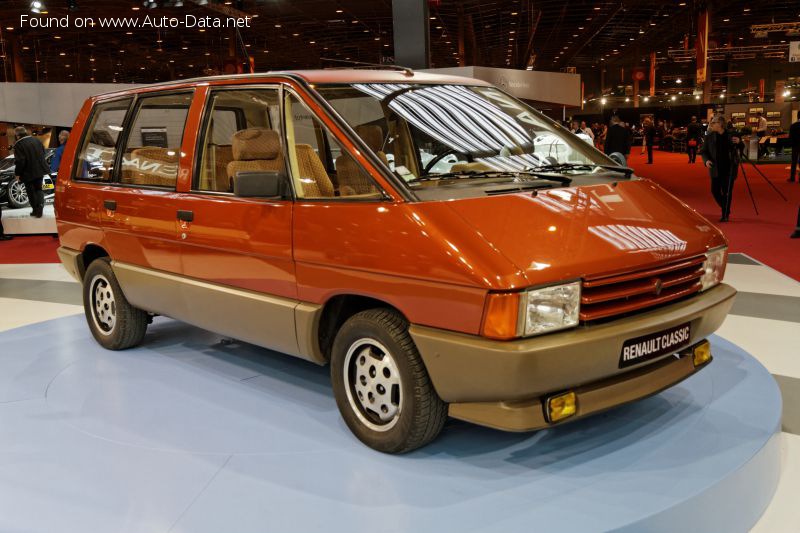
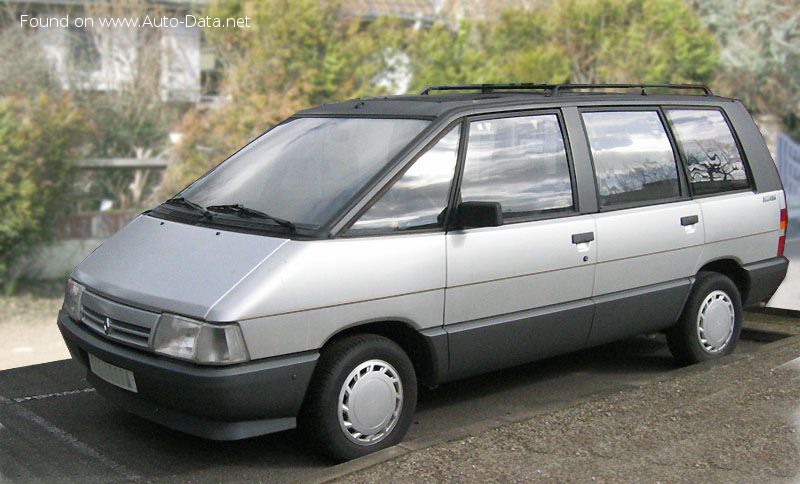
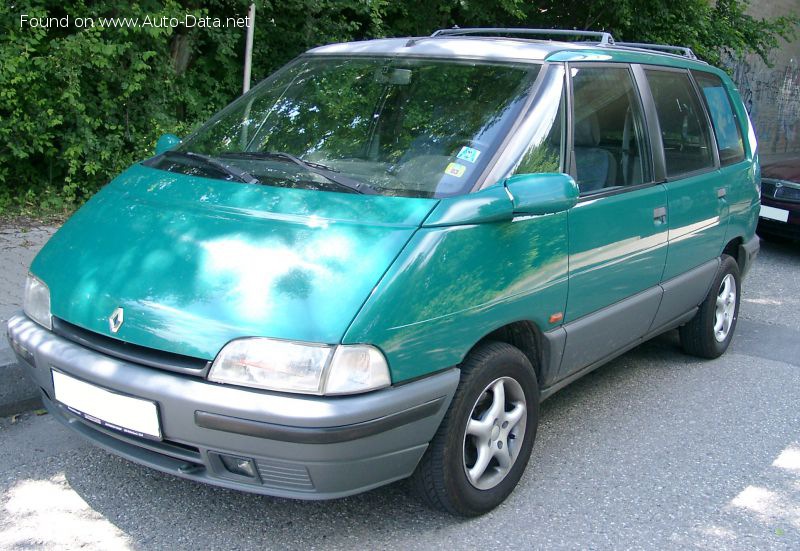
The Renault Espace holds a significant place in automotive history, particularly in Europe, as it pioneered the multi-purpose vehicle (MPV) or minivan segment in the mid-1980s. Its innovative, single-box design offered unparalleled interior space and modularity, quickly becoming the benchmark for family vehicles. By the time the fifth-generation Espace V arrived in 2015, the automotive landscape had dramatically shifted. Traditional minivans were losing ground to the surging popularity of SUVs and crossovers, prompting Renault to reinvent its iconic model.
The Renault Espace V 1.6 TCe (200 Hp) EDC was a bold attempt to adapt to these changing market dynamics. By adopting a more crossover-like stance and design, Renault aimed to inject new appeal into the Espace nameplate, targeting buyers who desired SUV styling without sacrificing the practical advantages of an MPV. This strategic pivot allowed the Espace V to compete more directly with popular European crossovers and large family cars such as the Ford S-Max, Volkswagen Sharan, Peugeot 5008 (in its second generation), and the Citroën Grand C4 Picasso (later Spacetourer).
Its reputation was built on its striking design, comfortable and technology-rich interior, and the refined driving experience offered by powertrains like the 1.6 TCe (200 Hp) EDC. Reviewers often praised its smooth ride, quiet cabin, and the seamless operation of the EDC gearbox. While it may not have recaptured the segment dominance of its earlier generations, the Espace V successfully demonstrated Renault’s ability to innovate and adapt. It remained a strong contender in its niche, valued for its blend of style, space, and a distinctly French approach to automotive comfort and design.
Ultimately, the Espace V served as an important bridge in Renault’s product strategy, showcasing a move towards more emotional and design-led vehicles while retaining core family values. Its production run for this specific variant from 2015 to 2017 highlights its role within the broader Espace V lifecycle, contributing to its legacy as a model that bravely evolved with the times, proving that even a segment pioneer can successfully reinvent itself for a new era.