The Renault Espace V 2.0 Blue dCi (160 Hp) EDC: A European Crossover Evolution
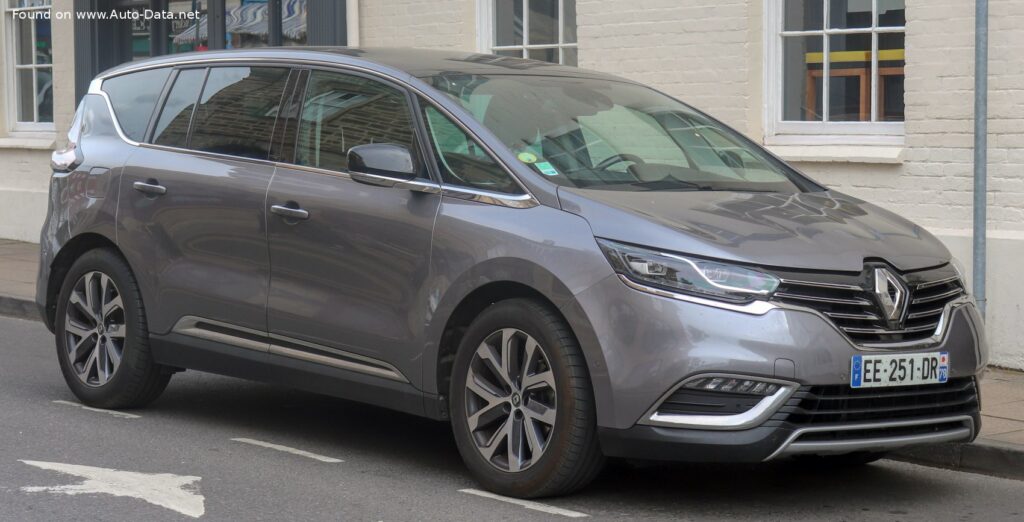
The Renault Espace V 2.0 Blue dCi (160 Hp) EDC represents a pivotal moment in the history of a model line renowned for pioneering the modern minivan segment in Europe. Introduced for the 2018 model year and produced through 2019, this fifth-generation Espace dramatically redefined its identity, shedding its traditional minivan silhouette for a more contemporary, SUV-inspired crossover design. While never officially sold in the United States, the Espace has been a staple of European family transport since its inception in 1984, celebrated for its spaciousness, versatility, and innovative approach to passenger vehicles. This particular variant, equipped with the efficient 2.0-liter Blue dCi diesel engine and an automatic EDC transmission, catered directly to the European market’s demand for fuel economy, lower emissions, and robust torque in a stylish, family-friendly package. It skillfully blended the practicality of a multi-purpose vehicle (MPV) with the elevated stance and rugged aesthetics of a sport utility vehicle (SUV), positioning itself as a sophisticated option for discerning European families.
Engine and Performance: Powering the Renault Espace V 2.0 Blue dCi (160 Hp) EDC
At the heart of the 2018-2019 Renault Espace V 2.0 Blue dCi (160 Hp) EDC lies a sophisticated M9R G6 2.0-liter (1997 cm³) inline four-cylinder diesel engine. This powerplant is a testament to Renault’s commitment to efficiency and performance, delivering a respectable 160 horsepower at 4000 revolutions per minute (rpm). More significantly for a family hauler, it produces a substantial 265.52 pound-feet of torque at a remarkably low 1500 rpm. This low-end torque is crucial for effortless acceleration, particularly when the vehicle is fully loaded with passengers and cargo, ensuring a smooth and responsive driving experience in both urban environments and on the open highway.
The engine’s architecture features a front, transverse layout, and employs a common rail direct fuel injection system, augmented by a turbocharger and an intercooler to maximize power output and fuel efficiency. With four valves per cylinder, the engine breathes efficiently, contributing to its overall performance. Power is seamlessly delivered to the front wheels via a six-speed Efficient Dual Clutch (EDC) automatic transmission, which offers rapid and smooth gear changes, enhancing both comfort and dynamism.
In terms of performance, the Espace V 2.0 Blue dCi accelerates from 0 to 60 miles per hour in a brisk 10 seconds, reaching a maximum speed of 124.27 mph (200 km/h). These figures are impressive for a vehicle of its size and purpose, underscoring its capability for confident highway cruising. Crucially for the European market, this engine is designed to meet strict Euro 6d-TEMP emission standards, thanks to advanced engine systems including a particulate filter and an AdBlue tank (5.81 US gallons capacity), which significantly reduce harmful emissions. The combined fuel economy is an outstanding 46.1 US miles per gallon (5.1 liters per 100 km), showcasing its prowess as an economical long-distance traveler, a key selling point in regions with higher fuel prices.
Design and Features: The Crossover Transformation
The fifth-generation Renault Espace marked a radical departure from its predecessors, embracing a “Minivan, Crossover” body type that blended the best attributes of both segments. Its exterior design presented a more assertive and dynamic stance, characterized by sleek lines, a raised ground clearance of 6.3 inches, and stylish 18-inch wheels wrapped in 235/60 R18 tires. This crossover aesthetic was a deliberate move to appeal to a market increasingly favoring SUVs, offering a more contemporary and less utilitarian look than traditional minivans. With a length of 191.22 inches, a width of 74.33 inches, and a height of 66.02 inches, the Espace V maintained a substantial road presence while remaining maneuverable, boasting a minimum turning circle of 36.42 feet.
Inside, the Espace V was designed with comfort and versatility in mind, offering seating for five occupants. The cabin was characterized by a modern, airy feel, emphasizing quality materials and advanced technology. The large trunk capacity was a major highlight, providing 24.01 cubic feet of space with all seats in place, expandable to a cavernous 74.2 cubic feet with the rear seats folded down. This flexibility made it an ideal choice for families needing ample space for luggage, sports equipment, or even small furniture.
Standard features for a vehicle of this segment in 2018 would typically include a comprehensive infotainment system with navigation, multi-zone climate control, power-adjustable seating, and various connectivity options. While specific interior technology details beyond the engine and dimensions are not provided, the Espace V, as a flagship model for Renault, would have incorporated their latest advancements in driver assistance and comfort features. Safety was also a priority, with the vehicle equipped with essential systems like ABS (Anti-lock Braking System) and a robust chassis, complemented by front and rear ventilated disc brakes (320 mm front, 290 mm rear) to ensure confident stopping power. Electric power steering made for easy handling, contributing to a relaxed driving experience.
Technical Specifications: Renault Espace V 2.0 Blue dCi (160 Hp) EDC
| Category | Specification | Value |
|---|---|---|
| General Information | Brand | Renault |
| Model | Espace | |
| Generation | Espace V | |
| Type (Engine) | 2.0 Blue dCi (160 Hp) EDC | |
| Start of production | 2018 year | |
| End of production | 2019 year | |
| Powertrain Architecture | Internal Combustion engine | |
| Body type | Minivan, Crossover | |
| Seats | 5 | |
| Doors | 5 | |
| Performance Specs | Fuel consumption (economy) – urban | 5.7 l/100 km (41.3 US mpg) |
| Fuel consumption (economy) – extra urban | 4.8 l/100 km (49 US mpg) | |
| Fuel consumption (economy) – combined | 5.1 l/100 km (46.1 US mpg) | |
| CO2 emissions | 135 g/km | |
| Fuel Type | Diesel | |
| Acceleration 0 – 60 mph | 10 sec | |
| Maximum speed | 124.27 mph (200 km/h) | |
| Emission standard | Euro 6d – TEMP | |
| Weight-to-power ratio | 11 kg/Hp (91 Hp/tonne) | |
| Weight-to-torque ratio | 4.9 kg/Nm (204.8 Nm/tonne) | |
| Engine Specs | Power | 160 Hp @ 4000 rpm |
| Power per liter | 80.1 Hp/l | |
| Torque | 265.52 lb.-ft. @ 1500 rpm (360 Nm) | |
| Engine layout | Front, Transverse | |
| Engine Model/Code | M9R G6 | |
| Engine displacement | 121.86 cu. in. (1997 cm³) | |
| Number of cylinders | 4 | |
| Engine configuration | Inline | |
| Number of valves per cylinder | 4 | |
| Fuel injection system | Diesel Commonrail | |
| Engine aspiration | Turbocharger, Intercooler | |
| Engine systems | Particulate filter | |
| Space, Volume and Weights | Kerb Weight | 3875.73 lbs. (1758 kg) |
| Max. weight (GVWR) | 5582.1 lbs. (2532 kg) | |
| Max load | 1706.38 lbs. (774 kg) | |
| Trunk (boot) space – minimum | 24.01 cu. ft. (680 l) | |
| Trunk (boot) space – maximum | 74.2 cu. ft. (2101 l) | |
| Fuel tank capacity | 15.32 US gal (58 l) | |
| AdBlue tank | 5.81 US gal (22 l) | |
| Max. roof load | 176.37 lbs. (80 kg) | |
| Permitted trailer load with brakes (12%) | 4409.25 lbs. (2000 kg) | |
| Permitted trailer load without brakes | 1653.47 lbs. (750 kg) | |
| Dimensions | Length | 191.22 in. (4857 mm) |
| Width | 74.33 in. (1888 mm) | |
| Width with mirrors folded | 75.35 in. (1914 mm) | |
| Width including mirrors | 83.78 in. (2128 mm) | |
| Height | 66.02 in. (1677 mm) | |
| Wheelbase | 113.54 in. (2884 mm) | |
| Front track | 64.17 in. (1630 mm) | |
| Rear (Back) track | 63.82 in. (1621 mm) | |
| Front overhang | 40.71 in. (1034 mm) | |
| Rear overhang | 36.97 in. (939 mm) | |
| Ride height (ground clearance) | 6.3 in. (160 mm) | |
| Minimum turning circle (turning diameter) | 36.42 ft. (11.1 m) | |
| Drivetrain, Brakes and Suspension Specs | Drivetrain Architecture | Front wheel drive (ICE drives front wheels) |
| Drive wheel | Front wheel drive | |
| Number of gears and type of gearbox | 6 gears, automatic transmission EDC | |
| Front brakes | Ventilated discs, 320 mm | |
| Rear brakes | Disc, 290 mm | |
| Assisting systems | ABS (Anti-lock braking system) | |
| Steering type | Steering rack and pinion | |
| Power steering | Electric Steering | |
| Tires size | 235/60 R18 | |
| Wheel rims size | 18 |
Legacy and Market Impact in Europe
The Renault Espace holds a legendary status in European automotive history, having essentially created the modern minivan segment upon its debut in 1984. For decades, it was synonymous with spacious, comfortable, and versatile family transportation. The fifth-generation Espace, particularly the 2.0 Blue dCi (160 Hp) EDC variant from 2018-2019, represented a bold evolution, adapting to changing consumer preferences by morphing into a more crossover-like vehicle. This strategic shift was critical for its continued relevance in a European market increasingly dominated by SUVs and crossovers, which had begun to erode the traditional minivan’s market share.
In its primary European market, the Espace V competed against a diverse range of family vehicles. Its rivals included established minivans like the Volkswagen Sharan, Ford S-Max, and SEAT Alhambra, as well as newer crossover-styled seven-seaters such as the Peugeot 5008 (which also transitioned from an MPV to an SUV-like form) and the Skoda Kodiaq. The Espace V carved out its niche by offering a distinct blend of French style, innovative design, and a premium cabin experience, often perceived as more sophisticated and design-forward than some of its more utilitarian competitors.
The 2.0 Blue dCi engine, with its impressive fuel economy and adherence to strict Euro 6d-TEMP emissions standards, was a key factor in its appeal. Diesel engines, while facing increasing scrutiny, remained a popular choice in Europe for their efficiency and long-distance cruising capabilities, making this Espace a strong contender for families undertaking frequent road trips. Its combination of a powerful yet frugal diesel engine, smooth EDC automatic transmission, and versatile interior positioned it as a compelling option for those seeking a practical family vehicle without compromising on style or driving dynamics.
The Espace V’s legacy is one of adaptation and resilience. It demonstrated Renault’s willingness to reinvent an icon to meet contemporary demands, even if it meant venturing away from its roots. While its production run for this specific engine variant was relatively short (2018-2019), it played an important role in extending the Espace brand’s life by evolving its form factor. It solidified the Espace’s reputation as a pioneer, not just in creating a segment, but also in demonstrating how a beloved family car could successfully transform itself to navigate the ever-changing automotive landscape.