The Renault Espace V 2.0 Blue dCi (160 Hp) EDC 7 Seat: A European Crossover-Minivan Hybrid
The Renault Espace V 2.0 Blue dCi (160 Hp) EDC 7 Seat represents the fifth generation of Renault’s groundbreaking Espace model line, a vehicle that redefined the European multi-purpose vehicle (MPV) segment upon its original introduction. Launched in 2018 and produced through 2019, this particular variant showcases Renault’s strategic evolution of the Espace from a traditional minivan into a more stylish and dynamic crossover-minivan hybrid. While never officially sold in the United States, the Espace holds a significant place in the European automotive landscape, known for its innovative design, exceptional interior flexibility, and family-oriented practicality. This generation, in particular, blended the spaciousness and versatility expected of an Espace with the elevated driving position and more assertive styling cues of an SUV, aiming to capture a broader market amidst the growing popularity of crossovers.
The Espace V, especially with its efficient 2.0 Blue dCi diesel engine and automatic EDC transmission, was positioned as a premium offering in its class, catering to families and business users who required ample space, comfort, and respectable fuel economy for long journeys. Its 7-seat configuration underscored its utility as a people carrier, while its modern features and sophisticated powertrain architecture ensured a comfortable and refined driving experience.
Engine & Performance: The Heart of the Renault Espace V 2.0 Blue dCi (160 Hp) EDC 7 Seat
At the core of the Renault Espace V 2.0 Blue dCi (160 Hp) EDC 7 Seat lies a robust and efficient 2.0-liter (1997 cm³) Blue dCi inline four-cylinder diesel engine, designated with the code M9R G6. This powertrain was meticulously engineered to deliver a compelling balance of performance and fuel efficiency, a critical factor for European buyers. The engine produces a healthy 160 horsepower at 4000 rpm, translating to a power-per-liter output of 80.1 Hp/l, which is commendable for a family-focused diesel unit.
More importantly for a vehicle of its size and purpose, the engine generates a substantial 265.52 lb.-ft. (360 Nm) of torque, available from a low 1500 rpm. This broad and accessible torque band ensures strong pulling power, making the Espace feel responsive in city traffic and capable on the highway, even when fully loaded with passengers and cargo. The engine’s architecture includes an inline configuration with 4 valves per cylinder, a common rail fuel injection system, and is boosted by a turbocharger with an intercooler, optimizing combustion efficiency and power delivery. The “Blue dCi” designation signifies the inclusion of a particulate filter and an AdBlue selective catalytic reduction (SCR) system, allowing the vehicle to meet the stringent Euro 6d-TEMP emission standards prevalent in Europe.
Power is channeled to the front wheels via a smooth-shifting 6-speed EDC (Efficient Dual Clutch) automatic transmission. This advanced gearbox contributes to both driving comfort and efficiency, providing seamless gear changes without the traditional power interruption of a torque converter automatic. Performance figures for this variant include an acceleration from 0 to 60 mph in a respectable 10 seconds, with a top speed of 124.27 mph (200 km/h). Despite its size and capabilities, the Espace V 2.0 Blue dCi excels in fuel economy, achieving an impressive combined rating of 46.1 US mpg (5.1 l/100 km), with even better figures on the highway (49 US mpg or 4.8 l/100 km). CO2 emissions are rated at 135 g/km, reflecting its environmental consciousness.
Design & Features: Blending Utility with Modern Aesthetics
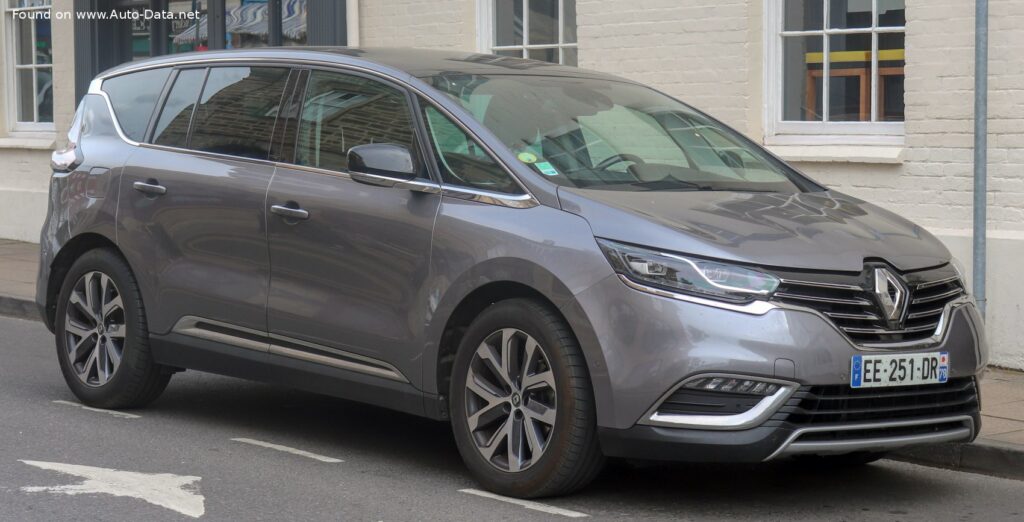
The design of the Renault Espace V marked a significant departure from its predecessors. Moving away from the purely utilitarian minivan aesthetic, Renault embraced a more crossover-inspired silhouette. The result is a vehicle that combines the elevated ride height and rugged appeal of an SUV with the inherent practicality and spaciousness of a minivan. The Espace V features a sleek, aerodynamic body with dynamic lines and a prominent front grille, giving it a sophisticated and contemporary presence on the road. Its dimensions, with a length of 191.22 inches (4857 mm) and a width of 74.33 inches (1888 mm), contribute to its commanding stance.
As a 7-seater, interior versatility is a cornerstone of the Espace V’s design. The cabin is engineered to maximize passenger comfort and cargo flexibility. The second and third rows can be configured in multiple ways, allowing owners to prioritize passenger space or luggage capacity as needed. With all seats in place, the trunk offers a modest 8.72 cubic feet (247 liters) of space, but by folding down the rear seats, this expands dramatically to a cavernous 71.87 cubic feet (2035 liters), making it highly adaptable for various hauling needs. The vehicle also boasts a generous maximum load capacity of 1706.38 lbs (774 kg) and a substantial towing capability of 4409.25 lbs (2000 kg) with brakes, underscoring its utility.
Technological features in the Espace V align with its modern positioning. Standard equipment includes an electric power steering system for effortless maneuverability, especially in urban environments, and an Anti-lock Braking System (ABS) with ventilated discs at the front and disc brakes at the rear, ensuring robust stopping power. The vehicle rides on 235/60 R18 tires, mounted on 18-inch wheel rims, providing a comfortable ride and confident handling. The thoughtful inclusion of an AdBlue tank with a capacity of 5.81 US gallons (22 liters) further highlights its commitment to environmental performance.
Technical Specifications
| Category | Specification |
|---|---|
| Brand | Renault |
| Model | Espace V |
| Type (Engine) | 2.0 Blue dCi (160 Hp) EDC 7 Seat |
| Production Years | 2018 – 2019 |
| Body Type | Minivan, Crossover |
| Seats | 7 |
| Doors | 5 |
| Powertrain Architecture | Internal Combustion engine (Front Wheel Drive) |
| Performance | |
| Power | 160 Hp @ 4000 rpm |
| Torque | 265.52 lb.-ft. (360 Nm) @ 1500 rpm |
| Acceleration 0-60 mph | 10 seconds |
| Maximum Speed | 124.27 mph (200 km/h) |
| Fuel Type | Diesel |
| Fuel Economy (Combined) | 46.1 US mpg (5.1 l/100 km) |
| Fuel Economy (Urban) | 41.3 US mpg (5.7 l/100 km) |
| Fuel Economy (Extra Urban) | 49 US mpg (4.8 l/100 km) |
| CO2 Emissions | 135 g/km |
| Emission Standard | Euro 6d – TEMP |
| Weight-to-power ratio | 11 kg/Hp |
| Weight-to-torque ratio | 4.9 kg/Nm |
| Engine Details | |
| Engine Displacement | 2.0 liters (1997 cm³ / 121.86 cu. in.) |
| Number of Cylinders | 4 |
| Engine Configuration | Inline |
| Valves per Cylinder | 4 |
| Fuel Injection System | Diesel Commonrail |
| Engine Aspiration | Turbocharger, Intercooler |
| Engine Layout | Front, Transverse |
| Engine Model/Code | M9R G6 |
| Engine Systems | Particulate filter |
| Dimensions & Weights | |
| Length | 191.22 in. (4857 mm) |
| Width | 74.33 in. (1888 mm) |
| Height | 66.02 in. (1677 mm) |
| Wheelbase | 113.54 in. (2884 mm) |
| Front Track | 64.17 in. (1630 mm) |
| Rear Track | 63.82 in. (1621 mm) |
| Front Overhang | 40.71 in. (1034 mm) |
| Rear Overhang | 36.97 in. (939 mm) |
| Ground Clearance | 6.3 in. (160 mm) |
| Minimum Turning Circle | 36.42 ft. (11.1 m) |
| Kerb Weight | 3875.73 lbs. (1758 kg) |
| Maximum Weight | 5582.1 lbs. (2532 kg) |
| Maximum Load | 1706.38 lbs. (774 kg) |
| Trunk Space (Min/Max) | 8.72 – 71.87 cu. ft. (247 – 2035 liters) |
| Fuel Tank Capacity | 15.32 US gal (58 liters) |
| AdBlue Tank Capacity | 5.81 US gal (22 liters) |
| Max. Roof Load | 176.37 lbs. (80 kg) |
| Permitted Trailer Load (with brakes) | 4409.25 lbs. (2000 kg) |
| Permitted Trailer Load (without brakes) | 1653.47 lbs. (750 kg) |
| Drivetrain, Brakes & Suspension | |
| Drive Wheel | Front-wheel drive |
| Gearbox Type | 6 gears, automatic transmission EDC |
| Front Brakes | Ventilated discs |
| Rear Brakes | Disc |
| Assisting Systems | ABS (Anti-lock braking system) |
| Steering Type | Steering rack and pinion |
| Power Steering | Electric Steering |
| Tires Size | 235/60 R18 |
| Wheel Rims Size | 18 inches |
Legacy & Market Impact: The Espace’s Evolution in Europe
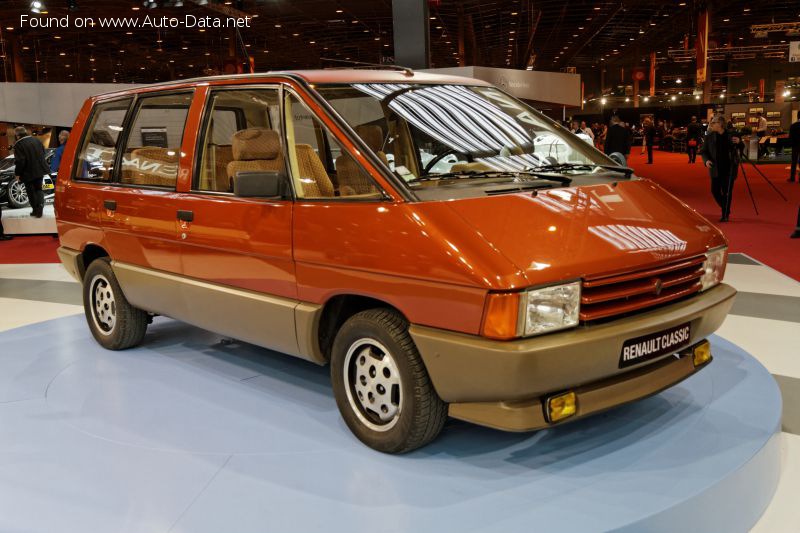
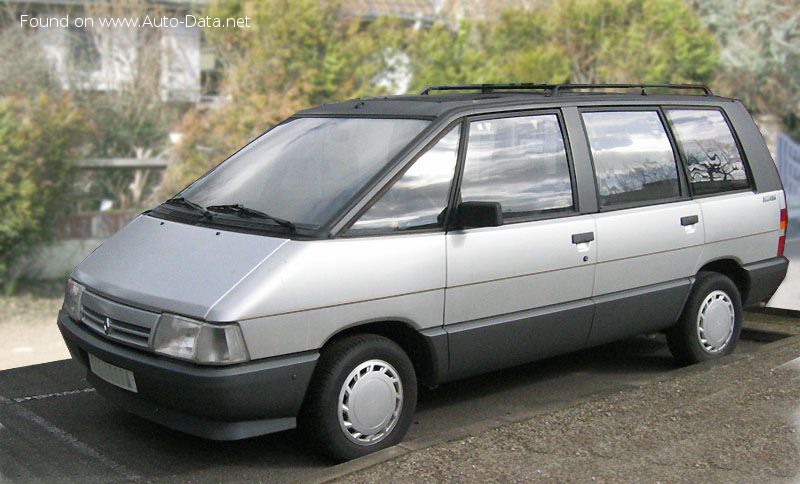
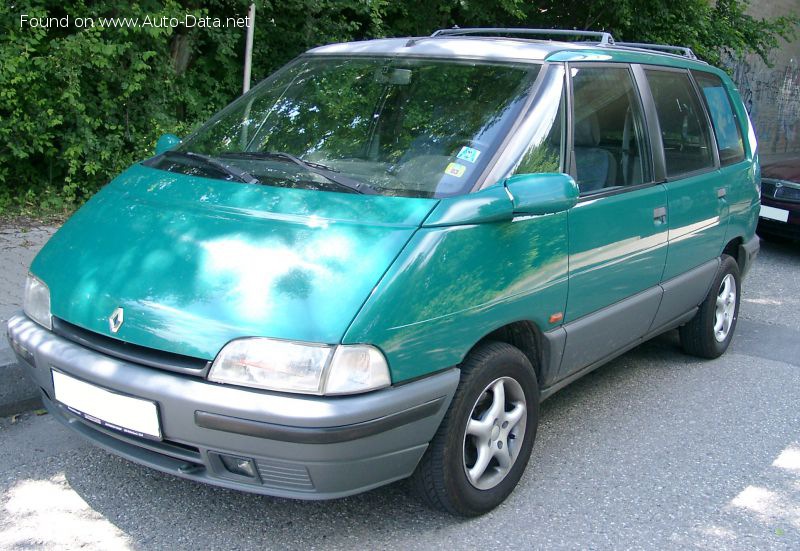
The Renault Espace has a storied legacy in Europe, having pioneered the minivan segment in the mid-1980s. For decades, it was synonymous with family transport, offering unparalleled space and modularity. However, by the time the fifth generation, the Espace V, arrived, the European market had significantly shifted. Traditional minivans were losing ground to the burgeoning popularity of SUVs and crossovers. Renault recognized this trend and boldly reinvented the Espace, transforming it from a pure minivan into a more aspirational and stylish crossover-minivan hybrid.
The Renault Espace V 2.0 Blue dCi (160 Hp) EDC 7 Seat, therefore, played a crucial role in attempting to redefine the brand’s offering in the family vehicle segment. It aimed to attract buyers who still needed the practicality of a 7-seater but desired the visual appeal and elevated driving experience of a crossover. Its sophisticated design, premium interior finishes, and advanced technology, including the efficient Blue dCi engine and EDC transmission, positioned it as a more upscale alternative to its predecessors and many competitors.
In its primary European market, the Espace V competed against a diverse array of family vehicles. Traditional minivan rivals included models like the Ford S-Max and Volkswagen Sharan, while its new crossover styling put it in contention with the growing segment of larger SUVs and crossover-MPVs like the Peugeot 5008 (which also adopted a more SUV-like stance in its second generation). The Espace V’s reputation was built on its distinctive design, comfortable ride, and excellent fuel economy for a vehicle of its size. It was particularly praised for its long-distance cruising comfort and its ability to blend practicality with a touch of luxury.
While the Espace V ultimately did not achieve the same sales dominance as its earlier generations, it demonstrated Renault’s willingness to innovate and adapt to changing market dynamics. It solidified Renault’s image as a manufacturer capable of producing stylish, technologically advanced, and environmentally conscious family vehicles. The 2.0 Blue dCi (160 Hp) EDC 7 Seat variant, in particular, stood out as a highly competent and efficient option within its lineup, embodying the blend of power, economy, and practicality that modern European families sought.