The Renault Espace V 2.0 Blue dCi (200 Hp) EDC: A European Crossover Evolution
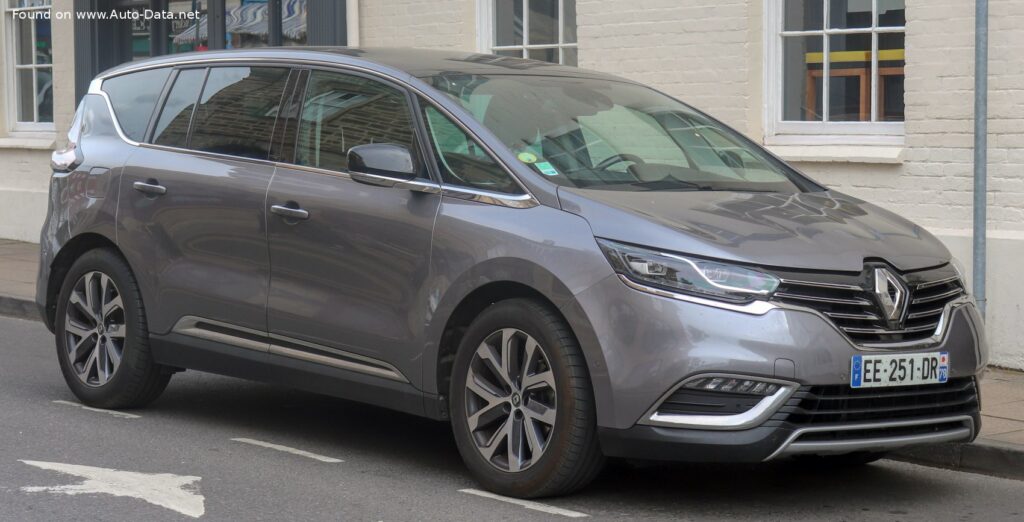
The Renault Espace V 2.0 Blue dCi (200 Hp) EDC represents a pivotal moment in the history of a nameplate synonymous with the European minivan segment. Launched in 2015, the fifth generation Espace marked a significant departure from its predecessors, transforming from a traditional, boxy multi-purpose vehicle (MPV) into a sleek, crossover-styled vehicle, reflecting evolving consumer preferences in its primary European market. The specific variant under consideration, produced between 2018 and 2019, featured a potent 2.0-liter Blue dCi diesel engine paired with an efficient EDC automatic transmission, offering a compelling blend of performance, fuel economy, and versatility. While never officially sold in the United States, the Espace holds a revered status in Europe as a pioneer in family transport, and its fifth iteration sought to reinvent that legacy for a new era, blending the practicality of an MPV with the aspirational design cues of an SUV.
Engine & Performance: The 2.0 Blue dCi (200 Hp) EDC Powertrain
At the heart of this particular Renault Espace V lies the M9R-code 2.0-liter Blue dCi inline-four diesel engine. This unit was engineered to deliver a robust combination of power and efficiency, critical attributes for the European market. It produces a healthy 200 horsepower at 4000 rpm, translating to a power-per-liter output of 100.2 Hp/l, an impressive figure for a diesel powerplant of its class. More importantly for a vehicle designed to carry passengers and cargo, the engine generates a substantial 295.02 lb.-ft. (400 Nm) of torque, available from a low 1750 rpm. This broad torque band ensures strong acceleration and effortless cruising, even when fully loaded.
Power is channeled to the front wheels via a 6-speed EDC (Efficient Dual Clutch) automatic transmission. This advanced gearbox provides smooth and rapid gear changes, contributing to both driving refinement and fuel efficiency. The powertrain enables the Espace V to accelerate from 0 to 60 mph in a respectable 8.6 seconds, with a top speed reaching 133.59 mph (215 km/h). These performance figures underscore its capability as a family hauler that doesn’t compromise on dynamic ability.
Fuel economy is a strong suit for the 2.0 Blue dCi. According to official figures, the combined fuel consumption is an impressive 44.4 US mpg (5.3 l/100 km). Urban driving yields 37.9 US mpg (6.2 l/100 km), while extra-urban driving can achieve up to 50 US mpg (4.7 l/100 km). These figures highlight the inherent efficiency of modern diesel technology, especially when combined with a sophisticated dual-clutch transmission. Furthermore, the engine complies with the stringent Euro 6d-TEMP emission standard, emitting 139 g/km of CO2, thanks in part to its particulate filter and AdBlue injection system, which uses a 5.81 US gallon (22-liter) tank to reduce nitrogen oxide emissions.
Design & Features: Blending MPV Practicality with Crossover Style
The fifth-generation Renault Espace redefined its identity by adopting a more dynamic, crossover-inspired design. Moving away from the utilitarian aesthetic of its predecessors, it featured sculpted lines, a bold front grille, and a higher ground clearance of 6.3 inches (160 mm), giving it a more commanding presence on the road. Despite its crossover styling, the Espace V retained the core practicality for which the nameplate was known. It offered a versatile interior with five seats as standard, designed to maximize comfort and adaptability for families.
With an overall length of 191.22 inches (4857 mm) and a width of 74.33 inches (1888 mm), the Espace V provided ample interior space. The generous 113.54-inch (2884 mm) wheelbase contributed to a spacious cabin and a comfortable ride. Cargo capacity was a key selling point, with a minimum trunk volume of 24.01 cubic feet (680 liters), expanding significantly to a cavernous 74.2 cubic feet (2101 liters) with the rear seats folded, making it ideal for hauling luggage, sports equipment, or large purchases. The vehicle’s kerb weight stood at 3891.16 lbs (1765 kg), with a maximum permissible weight of 5604.15 lbs (2542 kg), allowing for a substantial maximum load of 1712.99 lbs (777 kg).
Key features would have included a modern infotainment system, potentially with a large touchscreen display, navigation, and connectivity options relevant to its production year. Safety was addressed with standard features such as ABS (Anti-lock Braking System), ventilated disc brakes at the front, and disc brakes at the rear. The electric power steering, combined with a relatively tight minimum turning circle of 36.42 feet (11.1 meters), ensured easy maneuverability in urban environments. The Espace V rode on 18-inch wheels fitted with 235/60 R18 tires, contributing to both its visual appeal and handling characteristics.
Technical Specifications: Renault Espace V 2.0 Blue dCi (200 Hp) EDC (2018-2019)
| Category | Specification | US Equivalent (Approx.) |
|---|---|---|
| General Information | ||
| Brand | Renault | |
| Model | Espace | |
| Generation | Espace V | |
| Type (Engine) | 2.0 Blue dCi (200 Hp) EDC | |
| Production Start / End | 2018 – 2019 | |
| Powertrain Architecture | Internal Combustion engine | |
| Body type | Minivan, Crossover | |
| Seats | 5 | |
| Doors | 5 | |
| Performance Specifications | ||
| Fuel consumption (urban) | 6.2 l/100 km | 37.9 US mpg |
| Fuel consumption (extra urban) | 4.7 l/100 km | 50 US mpg |
| Fuel consumption (combined) | 5.3 l/100 km | 44.4 US mpg |
| CO2 emissions | 139 g/km | |
| Fuel Type | Diesel | |
| Acceleration 0 – 60 mph | 8.6 sec | |
| Maximum speed | 215 km/h | 133.59 mph |
| Emission standard | Euro 6d – TEMP | |
| Weight-to-power ratio | 8.8 kg/Hp | 19.4 lbs/Hp |
| Weight-to-torque ratio | 4.4 kg/Nm | 14.5 lbs/lb.-ft. |
| Engine Specifications | ||
| Power | 200 Hp @ 4000 rpm | |
| Power per liter | 100.2 Hp/l | |
| Torque | 400 Nm @ 1750 rpm | 295.02 lb.-ft. @ 1750 rpm |
| Engine layout | Front, Transverse | |
| Engine Model/Code | M9R | |
| Engine displacement | 1997 cm3 | 121.86 cu. in. (2.0 liters) |
| Number of cylinders | 4 | |
| Engine configuration | Inline | |
| Number of valves per cylinder | 4 | |
| Fuel injection system | Diesel Commonrail | |
| Engine aspiration | Turbocharger, Intercooler | |
| Engine oil capacity | 7.6 l | 8.03 US qt |
| Engine systems | Particulate filter | |
| Space, Volume and Weights | ||
| Kerb Weight | 1765 kg | 3891.16 lbs |
| Max. weight | 2542 kg | 5604.15 lbs |
| Max load | 777 kg | 1712.99 lbs |
| Trunk (boot) space – minimum | 680 l | 24.01 cu. ft. |
| Trunk (boot) space – maximum | 2101 l | 74.2 cu. ft. |
| Fuel tank capacity | 58 l | 15.32 US gal |
| AdBlue tank | 22 l | 5.81 US gal |
| Max. roof load | 80 kg | 176.37 lbs |
| Permitted trailer load with brakes (12%) | 2000 kg | 4409.25 lbs |
| Permitted trailer load without brakes | 750 kg | 1653.47 lbs |
| Dimensions | ||
| Length | 4857 mm | 191.22 in. |
| Width | 1888 mm | 74.33 in. |
| Width with mirrors folded | 1914 mm | 75.35 in. |
| Width including mirrors | 2128 mm | 83.78 in. |
| Height | 1677 mm | 66.02 in. |
| Wheelbase | 2884 mm | 113.54 in. |
| Front track | 1630 mm | 64.17 in. |
| Rear (Back) track | 1621 mm | 63.82 in. |
| Front overhang | 1034 mm | 40.71 in. |
| Rear overhang | 939 mm | 36.97 in. |
| Ride height (ground clearance) | 160 mm | 6.3 in. |
| Minimum turning circle (turning diameter) | 11.1 m | 36.42 ft. |
| Drivetrain, Brakes and Suspension Specs | ||
| Drivetrain Architecture | The Internal combustion engine (ICE) drives the front wheels of the vehicle. | |
| Drive wheel | Front wheel drive | |
| Number of gears and type of gearbox | 6 gears, automatic transmission EDC | |
| Front brakes | Ventilated discs | |
| Rear brakes | Disc | |
| Assisting systems | ABS (Anti-lock braking system) | |
| Steering type | Steering rack and pinion | |
| Power steering | Electric Steering | |
| Tires size | 235/60 R18 | |
| Wheel rims size | 18 | |
Legacy & Market Impact of the Renault Espace V
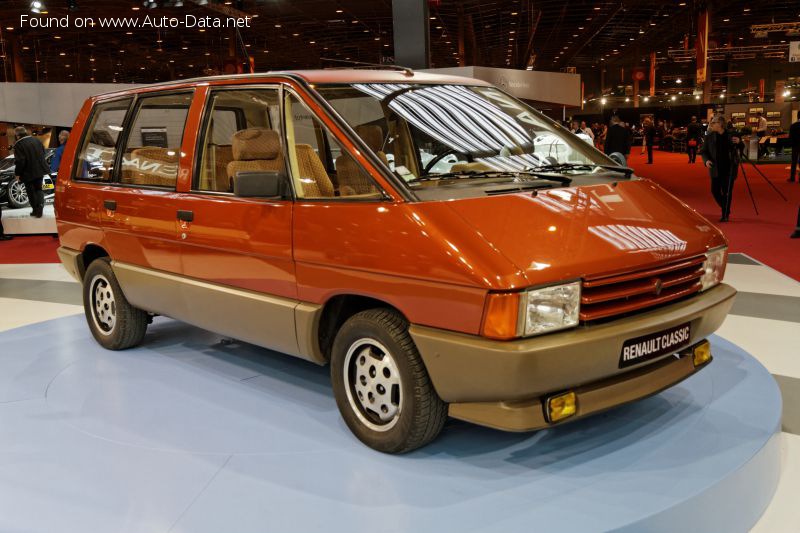
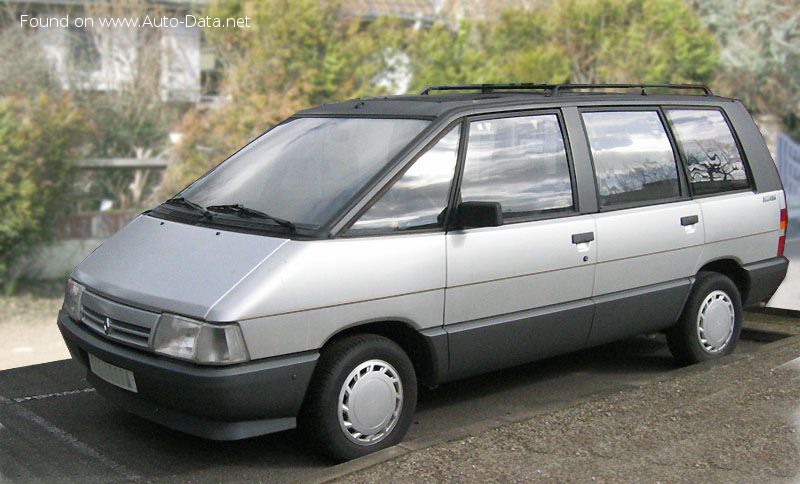
The Renault Espace holds a unique and significant place in European automotive history. The original Espace, launched in 1984, is widely credited as being one of the first successful modern minivans (or MPVs, Multi-Purpose Vehicles, as they are known in Europe), pioneering the concept of versatile, family-friendly transport. Its innovative single-box design and flexible interior quickly made it a benchmark for family cars across the continent. By the time the fifth generation, the Renault Espace V, arrived, the market landscape had dramatically shifted. Traditional minivans were losing ground to the surging popularity of SUVs and crossovers, prompting Renault to make a bold move.
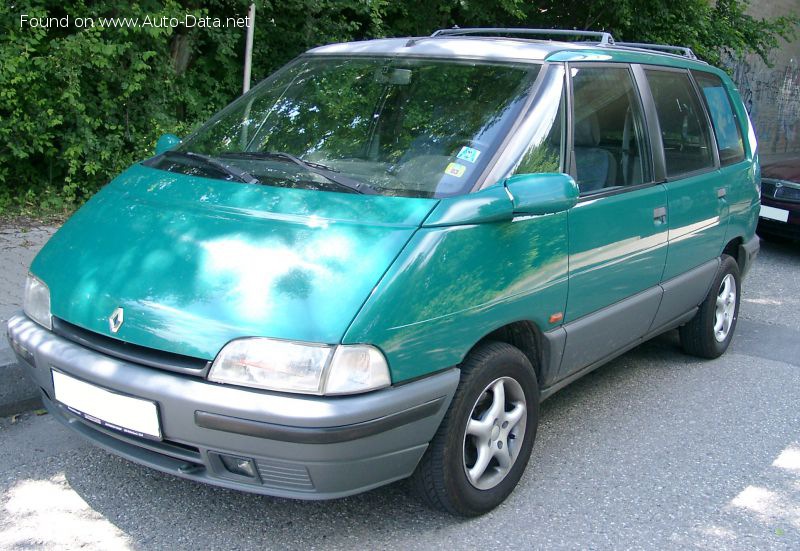
The Espace V’s transformation into a crossover-minivan hybrid was a direct response to this trend. It aimed to capture the emotional appeal and rugged aesthetics of an SUV while retaining the core practicality and spaciousness expected of an Espace. This strategic pivot was crucial for the model’s survival in a highly competitive segment. Its competitors in the European market included other versatile family vehicles such as the Ford S-Max, Volkswagen Sharan, SEAT Alhambra, and the Citroën C4 Grand Picasso, all of which offered varying degrees of MPV functionality. However, the Espace V distinguished itself with its more premium positioning, distinctive styling, and advanced technology, including the efficient Blue dCi diesel engines and EDC transmission.
The 2.0 Blue dCi (200 Hp) EDC variant, in particular, was well-suited for European driving conditions, offering strong performance for highway cruising and excellent fuel economy, which is a significant factor given higher fuel prices in Europe. Its compliance with the Euro 6d-TEMP emission standards also highlighted Renault’s commitment to environmental responsibility, a growing concern for consumers and regulators alike. While the Espace V never achieved the revolutionary impact of its original ancestor, it successfully adapted the concept of the family car for the modern era, demonstrating how a legacy nameplate could evolve to meet contemporary market demands. It cemented its reputation as a stylish, comfortable, and efficient option for European families seeking versatility without sacrificing design or driving dynamics, embodying a sophisticated blend of practicality and aspirational design that continued the Espace legend.