The Renault Espace V (Phase II, 2020): A European Minivan’s Crossover Evolution
The Renault Espace has long been a foundational model in the European automotive landscape, renowned for pioneering the modern minivan concept. The fifth generation, introduced in 2015, marked a significant departure from its predecessors, transforming from a traditional, boxy multi-purpose vehicle (MPV) into a sleek, more crossover-like offering. The Renault Espace V (Phase II, 2020) represents a mid-cycle refresh, bringing updated styling, enhanced technology, and refined powertrains to keep it competitive in a rapidly evolving market. This particular variant, the 1.8 TCe (225 Hp) 4CONTROL EDC FAP, stands out as a performance-oriented and technologically advanced choice within the Espace lineup, catering to European families seeking a blend of practicality, comfort, and driving engagement. While never officially sold in the United States, the Espace holds a significant historical and cultural position in Europe, showcasing Renault’s innovative approach to family transportation.
Powertrain and Performance: The 1.8 TCe (225 Hp) 4CONTROL EDC FAP Experience
At the heart of this specific Renault Espace V (Phase II, 2020) model is a robust 1.8-liter (1798 cm³) turbocharged four-cylinder engine, designated M5P 403. This powerplant delivers a potent 225 horsepower at 5600 rpm, making it one of the more spirited options in its segment. Torque output is equally impressive, peaking at 221.27 lb.-ft. (300 Nm) at a relatively low 2000 rpm, ensuring strong acceleration and flexible in-gear performance. The engine features direct fuel injection and a turbocharger with an intercooler, optimizing both power delivery and fuel efficiency. It also incorporates a particulate filter (FAP), meeting stringent Euro 6 d-TEMP emission standards.
Power is channeled to the front wheels via a sophisticated 7-speed EDC (Efficient Dual Clutch) automatic transmission. This gearbox is known for its smooth shifts and quick response, contributing to a refined driving experience. Performance figures for this Espace variant are commendable for a vehicle of its size and class: it accelerates from 0 to 60 mph in a swift 7.5 seconds (0-100 km/h in 7.9 seconds) and can reach a top speed of 139.19 mph (224 km/h). Fuel economy, while not the primary focus of this higher-output engine, is respectable for its performance, with a combined rating of 30.9 US mpg (7.6 l/100 km), achieving 37.3 US mpg (6.3 l/100 km) on the extra-urban cycle.
A standout feature of this Espace is the inclusion of Renault’s 4CONTROL system. This advanced technology provides four-wheel steering, significantly enhancing agility at low speeds and stability at higher speeds. At lower velocities, the rear wheels turn in the opposite direction to the front wheels, effectively shortening the turning circle to just 36.42 feet (11.1 m), making urban maneuvering and parking surprisingly easy for a vehicle of its dimensions. At higher speeds, the rear wheels turn in the same direction as the front, improving stability during lane changes and cornering. This innovative system truly elevates the driving dynamics of the Espace, offering a more engaging and confident feel than typically expected from a family-oriented crossover.
Design and Features: Blending Style with Practicality
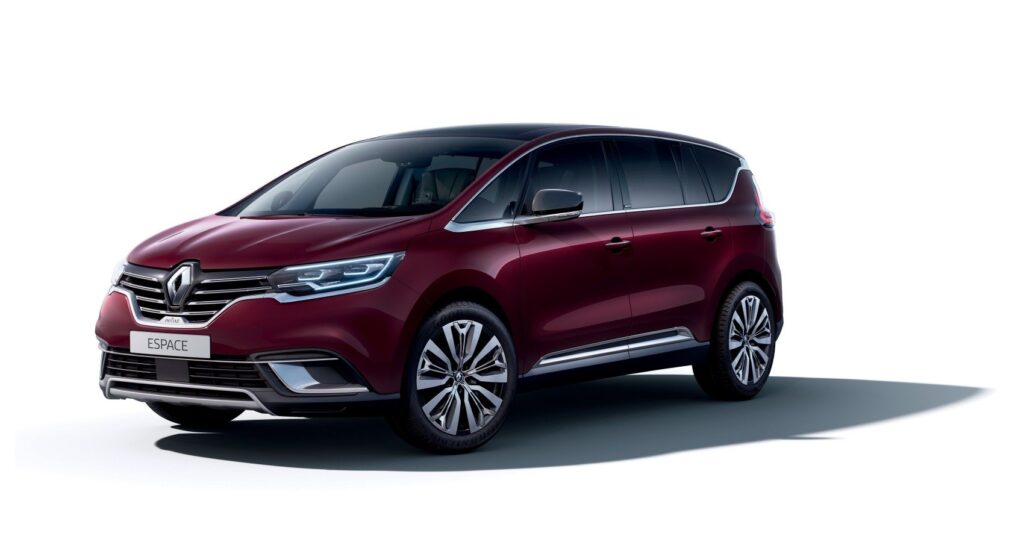
The Renault Espace V (Phase II, 2020) continues the design language established by the fifth generation, presenting a more dynamic and less utilitarian aesthetic than its predecessors. It effectively blurs the lines between a traditional minivan and a modern crossover SUV. Its exterior dimensions – 191.3 inches (4859 mm) long, 74.33 inches (1888 mm) wide (83.78 inches or 2128 mm including mirrors), and 66.18-67.36 inches (1681-1711 mm) tall – contribute to a substantial road presence. The elevated ride height of 6.3 inches (160 mm) further enhances its crossover appeal.
Inside, the Espace offers a spacious and versatile cabin designed for five occupants. Renault prioritized comfort and modularity, providing ample headroom and legroom. While the Phase II refresh brought subtle exterior tweaks like updated lighting signatures and revised bumpers, the interior also saw refinements in material quality and infotainment technology. The large, tablet-style R-Link 2 infotainment system (a common feature in Renault’s premium offerings) provides navigation, media, and connectivity features, often including smartphone integration like Apple CarPlay and Android Auto.
Practicality remains a cornerstone of the Espace. The trunk space is generous, offering a minimum of 27.72 cubic feet (785 liters) with all seats in place, expanding to a cavernous 74.2 cubic feet (2101 liters) with the rear seats folded down. This flexibility makes it ideal for large families, adventurers, or anyone needing significant cargo capacity. Standard features include power steering, independent McPherson front suspension, and a robust braking system with ventilated discs upfront (320 mm) and solid discs at the rear (290 mm), complemented by ABS for enhanced safety. The vehicle rides on 235/60 R18 tires, providing a comfortable and stable ride.
Technical Specifications
| Category | Specification | US Equivalent / Notes |
|---|---|---|
| Brand | Renault | |
| Model | Espace | |
| Generation | Espace V (Phase II, 2020) | |
| Type (Engine) | 1.8 TCe (225 Hp) 4CONTROL EDC FAP | |
| Production Start | February, 2020 | |
| Production End | November, 2020 | |
| Powertrain Architecture | Internal Combustion engine | |
| Body type | Minivan, Crossover | |
| Seats | 5 | |
| Doors | 5 | |
| Performance Specs | ||
| Fuel consumption (urban) | 9.9 l/100 km | 23.8 US mpg |
| Fuel consumption (extra urban) | 6.3 l/100 km | 37.3 US mpg |
| Fuel consumption (combined) | 7.6 l/100 km | 30.9 US mpg |
| CO2 emissions | 174 g/km | |
| Fuel Type | Petrol (Gasoline) | |
| Acceleration 0-60 mph | 7.5 sec | |
| Acceleration 0-100 km/h | 7.9 sec | |
| Maximum speed | 224 km/h | 139.19 mph |
| Emission standard | Euro 6 d-TEMP | |
| Weight-to-power ratio | 7.3 kg/Hp | 137.8 Hp/tonne |
| Weight-to-torque ratio | 5.4 kg/Nm | 183.7 Nm/tonne |
| Engine Specs | ||
| Power | 225 Hp @ 5600 rpm | |
| Power per liter | 125.1 Hp/l | |
| Torque | 300 Nm @ 2000 rpm | 221.27 lb.-ft. @ 2000 rpm |
| Engine layout | Front, Transverse | |
| Engine Model/Code | M5P 403 | |
| Engine displacement | 1798 cm³ | 1.8 Liters / 109.72 cu. in. |
| Number of cylinders | 4 | |
| Engine configuration | Inline | |
| Cylinder Bore | 79.7 mm | 3.14 in. |
| Piston Stroke | 90.1 mm | 3.55 in. |
| Valves per cylinder | 4 | |
| Fuel injection system | Direct injection | |
| Engine aspiration | Turbocharger, Intercooler | |
| Engine systems | Particulate filter | |
| Space, Volume and Weights | ||
| Kerb Weight | 1633 kg | 3600.15 lbs. |
| Max. weight | 2410 kg | 5313.14 lbs. |
| Max load | 777 kg | 1712.99 lbs. |
| Trunk (boot) space – minimum | 785 l | 27.72 cu. ft. |
| Trunk (boot) space – maximum | 2101 l | 74.2 cu. ft. |
| Fuel tank capacity | 56 l | 14.79 US gal |
| Permitted trailer load with brakes (12%) | 2000 kg | 4409.25 lbs. |
| Permitted trailer load without brakes | 750 kg | 1653.47 lbs. |
| Dimensions | ||
| Length | 4859 mm | 191.3 in. |
| Width | 1888 mm | 74.33 in. |
| Width with mirrors folded | 1914 mm | 75.35 in. |
| Width including mirrors | 2128 mm | 83.78 in. |
| Height | 1681-1711 mm | 66.18 – 67.36 in. |
| Wheelbase | 2884 mm | 113.54 in. |
| Front track | 1630 mm | 64.17 in. |
| Rear (Back) track | 1621 mm | 63.82 in. |
| Front overhang | 1030 mm | 40.55 in. |
| Rear overhang | 944 mm | 37.17 in. |
| Ride height (ground clearance) | 160 mm | 6.3 in. |
| Minimum turning circle (turning diameter) | 11.1 m | 36.42 ft. |
| Drivetrain, Brakes and Suspension Specs | ||
| Drivetrain Architecture | The Internal combustion engine (ICE) drives the front wheels of the vehicle. | |
| Drive wheel | Front wheel drive | |
| Number of gears and type of gearbox | 7 gears, automatic transmission EDC | |
| Front suspension | Independent type McPherson | |
| Front brakes | Ventilated discs, 320 mm | |
| Rear brakes | Disc, 290 mm | |
| Assisting systems | ABS (Anti-lock braking system) | |
| Steering type | Steering rack and pinion | |
| Power steering | Electric Steering | |
| Tires size | 235/60 R18 | |
| Wheel rims size | 18 | |
Legacy and Market Impact in Europe
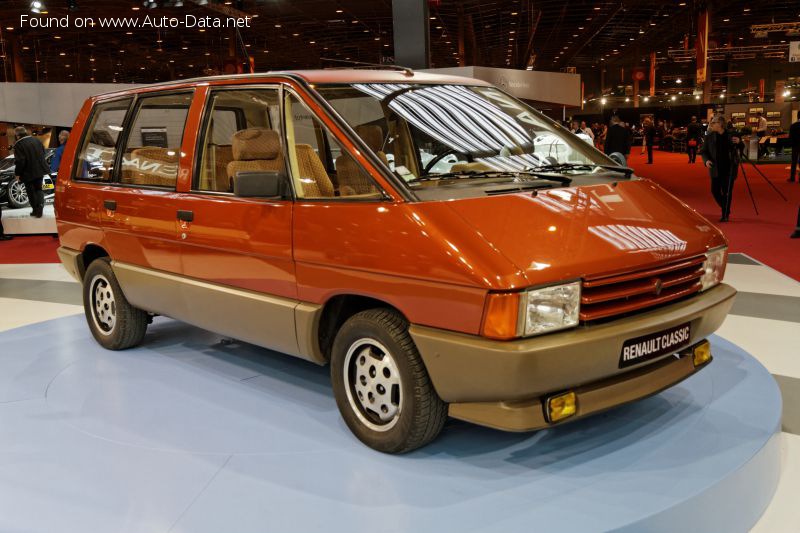
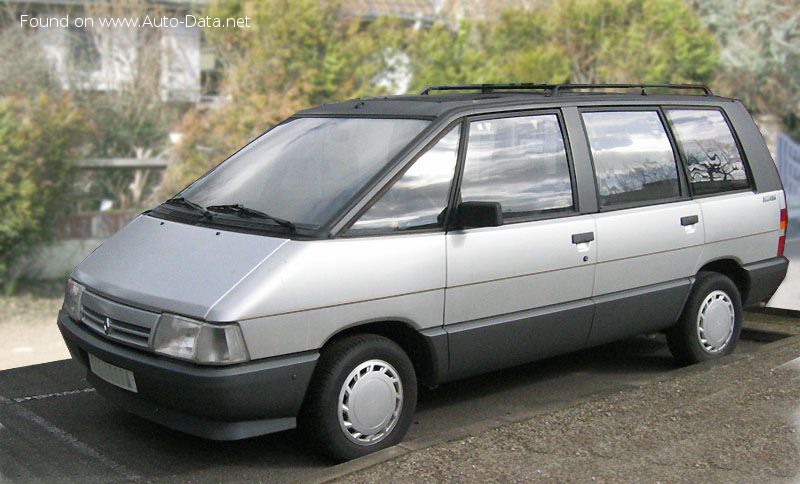
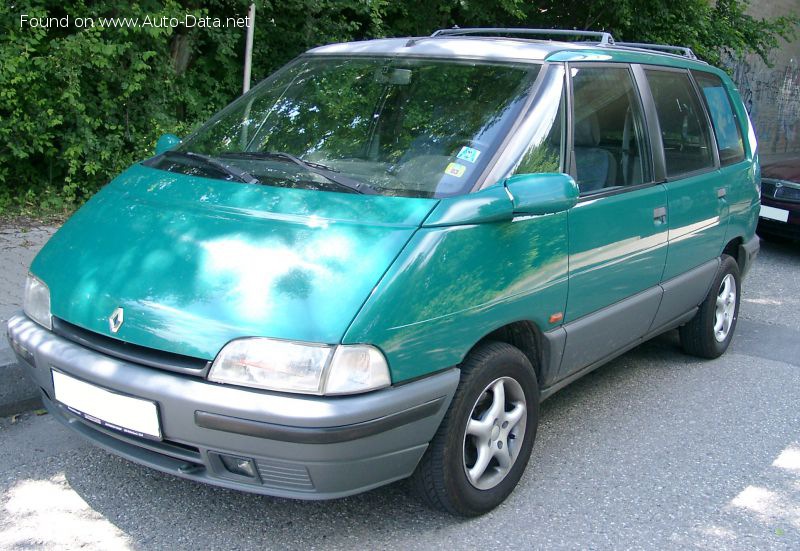
The Renault Espace holds a legendary status in Europe, having launched in 1984 as one of the very first modern minivans. Its innovative, one-box design and flexible interior revolutionized family travel. Over the decades, it evolved through several generations, consistently setting benchmarks for practicality and comfort in its segment. The Espace V, and particularly its Phase II refresh in 2020, marked a strategic shift for Renault. Recognizing the dwindling popularity of traditional minivans and the ascendance of SUVs and crossovers, Renault reimagined the Espace as a more stylish, dynamic, and less overtly utilitarian vehicle.
This transformation helped the Espace remain relevant in a highly competitive European market. Its primary competitors include other large European MPVs and crossovers such as the Volkswagen Sharan/SEAT Alhambra, Ford S-Max/Galaxy, Peugeot 5008, and Citroën Grand C4 Spacetourer. However, the Espace V also found itself competing with a growing array of premium mid-size SUVs, which offered similar elevated driving positions and perceived prestige. The inclusion of advanced technologies like the 4CONTROL all-wheel steering system, combined with a powerful engine option like the 1.8 TCe (225 Hp), allowed the Espace to differentiate itself by offering a more engaging driving experience than many of its rivals, particularly in the family vehicle segment.
The 2020 Espace Phase II continued to build on its reputation for comfort, quality, and innovative design. While its production run for this specific phase was relatively short (February to November 2020), it solidified the Espace’s position as a premium, versatile family vehicle. Its legacy is not just about pioneering a segment but also about adapting to changing consumer tastes. The Espace V demonstrated Renault’s ability to blend its heritage of practical innovation with contemporary design trends and advanced automotive technology, ensuring its enduring appeal to European families who valued space, comfort, and a touch of driving sophistication.