
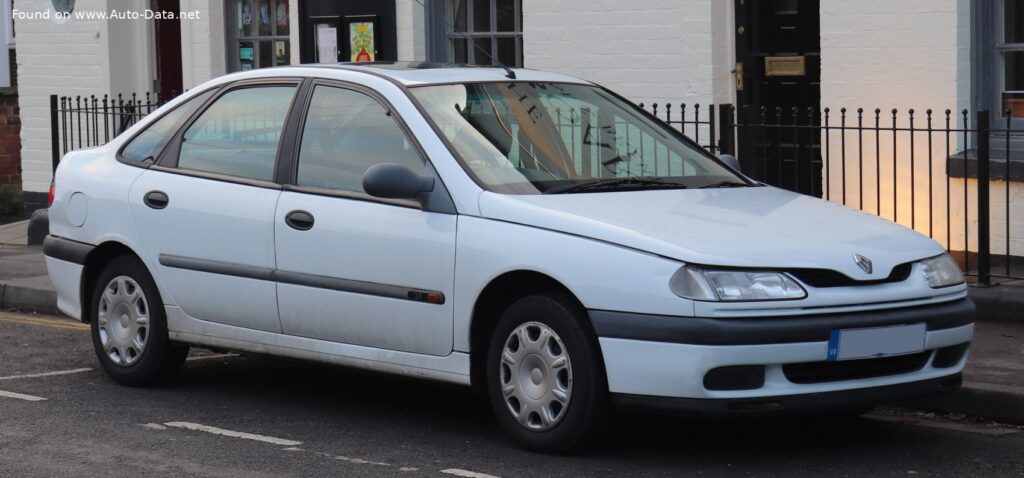
The Renault Laguna, specifically the first-generation model produced between 1993 and 2000, represented a significant offering from the French automaker in the highly competitive European D-segment. Positioned as a large family car or executive car, the Laguna aimed to blend comfort, practicality, and a touch of upscale appeal, succeeding the long-running Renault 21 (or Nevada/Savanna in some markets). While never officially sold in the United States, the Laguna carved out a strong niche in its primary European markets, competing against formidable rivals like the Ford Mondeo, Opel Vectra, and Volkswagen Passat. The variant under review, the Renault Laguna 3.0 (167 Hp), stood out in the lineup for its more potent V6 engine, offering a blend of smooth performance and refined cruising capabilities that appealed to buyers seeking more power than typical four-cylinder options. This particular model, characterized by its five-door hatchback body style, embodied Renault’s design philosophy of the era, emphasizing aerodynamic efficiency and interior spaciousness.
Engine and Performance of the Renault Laguna 3.0 (167 Hp)
At the heart of the Renault Laguna 3.0 (167 Hp) lies a robust 3.0-liter V6 engine, identified by the internal code Z7X. This naturally aspirated internal combustion engine was a key differentiator for the Laguna in a segment often dominated by inline-four powerplants. With a displacement of 2963 cm3 (180.81 cu. in.), the V-engine configuration provided a smooth and balanced power delivery, characteristic of larger displacement units. The engine was designed with an Overhead Camshaft (OHC) valvetrain and featured two valves per cylinder, a common setup for the period that prioritized reliability and low-end torque. Fuel was delivered via a multi-port manifold injection system, ensuring precise fuel metering for optimal combustion efficiency.
The V6 engine produced a respectable 167 horsepower at 5500 revolutions per minute, translating to a power-per-liter figure of 56.4 Hp/l. This output was complemented by a solid torque figure of 235 Nm (173.33 lb.-ft.) available at 4500 rpm. These figures, while not groundbreaking by today’s standards, offered a compelling performance envelope for a family car of the mid-1990s. The engine’s bore measured 93 mm (3.66 in.) and the piston stroke was 72.7 mm (2.86 in.), resulting in a compression ratio of 9.6:1. Power was transmitted to the front wheels through a five-speed manual transmission, a setup that allowed the driver to fully exploit the V6’s power band.
The performance metrics for the Laguna 3.0 (167 Hp) were quite strong for its class and era. It could accelerate from 0 to 60 mph in a swift 8.2 seconds, a testament to the engine’s power and the vehicle’s relatively moderate curb weight of 3020.33 lbs. (1370 kg). The top speed was rated at 136.7 mph (220 km/h), making it a capable cruiser on European highways. Despite its V6 engine, the Laguna offered a combined fuel economy of 21.2 US mpg (11.1 l/100 km), which was competitive for a car of its size and power from that period. The engine required 7 liters (7.4 US qt) of engine oil and a cooling system capacity of 10 liters (10.57 US qt).
Design and Features of the Renault Laguna 3.0 (167 Hp)
The first-generation Renault Laguna, launched in 1993, showcased a design language that was both contemporary and functional. As a five-door hatchback, it offered a blend of sedan-like styling with the practicality of a wagon, a popular configuration in Europe. The exterior design was characterized by smooth, rounded lines and an aerodynamic profile, reflecting the prevailing trends of the early to mid-1990s. Its overall length measured 177.48 inches (4508 mm), with a width of 68.98 inches (1752 mm) and a height of 56.38 inches (1432 mm). The wheelbase of 105.12 inches (2670 mm) contributed to a stable ride and a spacious cabin.
Inside, the Laguna was designed to accommodate five occupants comfortably. The interior emphasized ergonomics and practicality, with controls typically well-placed and easy to operate. For its time, the Laguna offered a generous amount of cargo space, with a minimum trunk volume of 15.96 cu. ft. (452 liters), which could be expanded significantly to 31.22 cu. ft. (884 liters) by folding down the rear seats, making it a highly versatile vehicle for families and long-distance travel. The fuel tank capacity of 17.44 US gallons (66 liters) provided a decent cruising range.
Underneath its refined exterior, the Laguna featured a conventional yet effective chassis setup. The front suspension utilized a spring strut system, while the rear employed a torsion beam, a common and cost-effective solution for front-wheel-drive vehicles that also allowed for ample trunk space. Braking performance was handled by ventilated discs at the front and solid discs at the rear, a combination that provided adequate stopping power. For enhanced safety, the Laguna was equipped with an Anti-lock Braking System (ABS), which was becoming a standard feature on higher-trim models in the mid-90s. Steering was managed by a hydraulic rack and pinion system, offering direct feedback and assistance to the driver. The vehicle rode on 15-inch wheel rims fitted with 205/60 R15 tires, providing a good balance of grip and ride comfort. The combination of these features made the Renault Laguna 3.0 (167 Hp) a compelling package for European consumers seeking a comfortable, powerful, and practical family car with a touch of French flair.
Technical Specifications
| Brand | Renault |
| Model | Laguna |
| Generation | Laguna |
| Type (Engine) | 3.0 (167 Hp) |
| Start of production | 1993 year |
| End of production | 2000 year |
| Powertrain Architecture | Internal Combustion engine |
| Body type | Hatchback |
| Seats | 5 |
| Doors | 5 |
| Fuel consumption (economy) – combined | 21.2 US mpg (11.1 l/100 km) |
| Fuel Type | Petrol (Gasoline) |
| Acceleration 0 – 60 mph | 8.2 sec |
| Maximum speed | 136.7 mph (220 km/h) |
| Weight-to-power ratio | 8.2 kg/Hp (121.9 Hp/tonne) |
| Weight-to-torque ratio | 5.8 kg/Nm (171.5 Nm/tonne) |
| Power | 167 Hp @ 5500 rpm |
| Power per liter | 56.4 Hp/l |
| Torque | 173.33 lb.-ft. @ 4500 rpm (235 Nm) |
| Engine layout | Front, Transverse |
| Engine Model/Code | Z7X |
| Engine displacement | 180.81 cu. in. (2963 cm3) |
| Number of cylinders | 6 |
| Engine configuration | V-engine |
| Cylinder Bore | 3.66 in. (93 mm) |
| Piston Stroke | 2.86 in. (72.7 mm) |
| Compression ratio | 9.6:1 |
| Number of valves per cylinder | 2 |
| Fuel injection system | Multi-port manifold injection |
| Engine aspiration | Naturally aspirated engine |
| Valvetrain | OHC |
| Engine oil capacity | 7.4 US qt (7 l) |
| Coolant | 10.57 US qt (10 l) |
| Kerb Weight | 3020.33 lbs. (1370 kg) |
| Max. weight | 4265.94 lbs. (1935 kg) |
| Max load | 1245.61 lbs. (565 kg) |
| Trunk (boot) space – minimum | 15.96 cu. ft. (452 l) |
| Trunk (boot) space – maximum | 31.22 cu. ft. (884 l) |
| Fuel tank capacity | 17.44 US gal (66 l) |
| Length | 177.48 in. (4508 mm) |
| Width | 68.98 in. (1752 mm) |
| Height | 56.38 in. (1432 mm) |
| Wheelbase | 105.12 in. (2670 mm) |
| Front track | 58.27 in. (1480 mm) |
| Rear (Back) track | 57.32 in. (1456 mm) |
| Drivetrain Architecture | The Internal combustion engine (ICE) drives the front wheels of the vehicle. |
| Drive wheel | Front wheel drive |
| Number of gears and type of gearbox | 5 gears, manual transmission |
| Front suspension | Spring Strut |
| Rear suspension | Torsion |
| Front brakes | Ventilated discs |
| Rear brakes | Disc |
| Assisting systems | ABS (Anti-lock braking system) |
| Steering type | Steering rack and pinion |
| Power steering | Hydraulic Steering |
| Tires size | 205/60 R15 |
| Wheel rims size | 15 |
