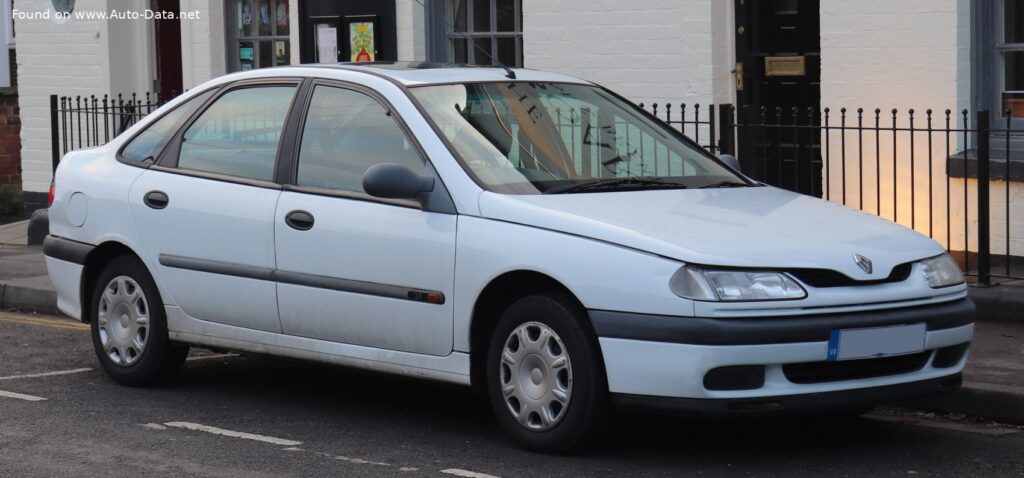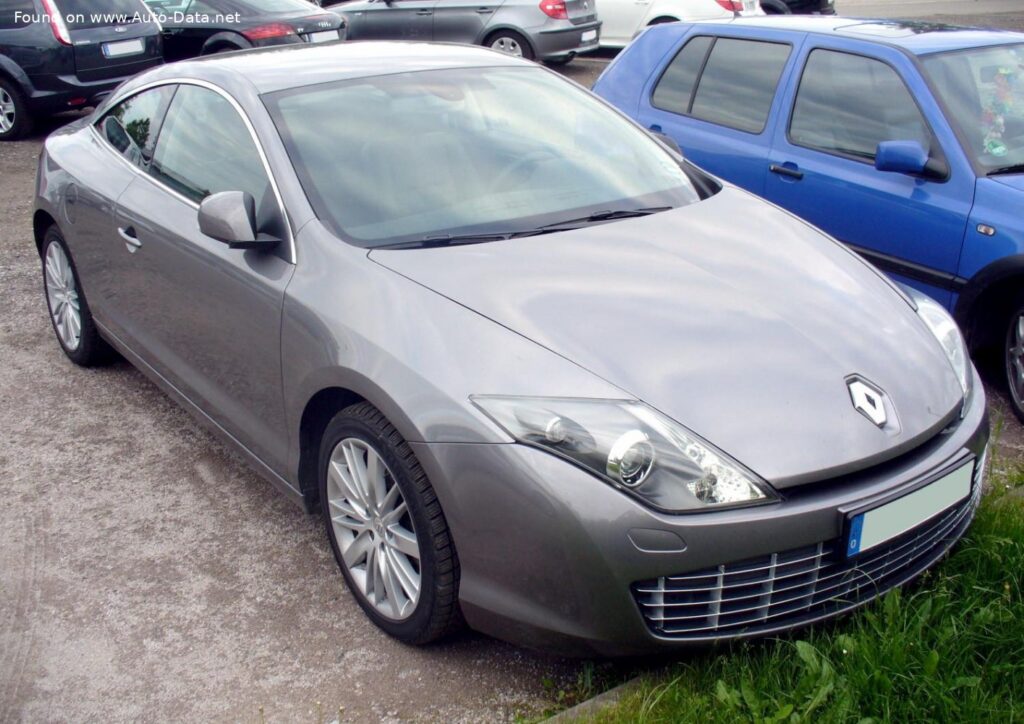
The Renault Laguna Coupe, specifically the 2.0 dCi FAP (150 Hp) Automatic variant, represented a distinctive and elegant offering within the European D-segment during its production run from 2008 to 2012. As a sophisticated two-door, four-seat grand tourer, the Renault Laguna Coupe aimed to blend stylish aesthetics with comfortable long-distance cruising capabilities, a hallmark of its French manufacturer. It was positioned as a more aspirational and emotive choice compared to its sedan and wagon counterparts, reflecting Renault’s ambition to compete in the premium coupe market, albeit with a mainstream badge. While never officially imported to the United States, its technical specifications and design ethos provide a fascinating insight into European automotive engineering and market preferences of its era, particularly its embrace of efficient diesel powertrains.
The Renault Laguna Coupe: Engineering and Market Position
The third-generation Laguna platform served as the foundation for the Coupe, which debuted to critical acclaim for its striking design, often compared favorably to more expensive German rivals. This particular variant, powered by the robust 2.0-liter dCi engine, was a prime example of a vehicle tailored for the European market, where diesel engines were highly favored for their fuel efficiency and torque characteristics. The addition of a Diesel Particulate Filter (FAP) underscored Renault’s commitment to meeting evolving emission standards, specifically Euro 4 regulations, making it a responsible choice for environmentally conscious buyers at the time. The automatic transmission further enhanced its appeal as a refined cruiser, simplifying urban driving and enhancing comfort on extended journeys.
In its primary markets, the Laguna Coupe was seen as a statement car, offering a compelling blend of style, comfort, and practicality for a coupe. Its relatively spacious interior for a two-door, along with a generous trunk, made it a viable option for individuals or small families seeking something beyond the conventional sedan or hatchback. Renault leveraged its experience in creating comfortable and innovative vehicles to craft a coupe that stood out from the crowd, both visually and in terms of its driving dynamics, which prioritized smoothness and stability.
Engine and Performance of the Renault Laguna Coupe
At the heart of this specific Renault Laguna Coupe model lay the M9R engine, a 2.0-liter (1995 cm3 or 121.74 cu. in.) inline four-cylinder diesel unit. This powerplant was engineered for efficiency and robust performance, delivering 150 horsepower at 4000 rpm and a substantial 250.77 lb-ft of torque at a low 2000 rpm. The engine’s architecture featured a DOHC (Double Overhead Camshaft) valvetrain with four valves per cylinder, a common rail direct fuel injection system, and was augmented by a turbocharger and intercooler. This combination ensured a broad torque band, translating into responsive acceleration and effortless highway cruising, characteristics highly valued in a grand touring coupe.
The inclusion of a Diesel Particulate Filter (FAP) was critical for meeting the Euro 4 emission standard, demonstrating Renault’s focus on environmental compliance. This system worked to trap and periodically burn off particulate matter from the exhaust gases, significantly reducing harmful emissions. Power was transmitted to the front wheels via a smooth-shifting 6-speed automatic transmission, which further contributed to the car’s relaxed driving demeanor. Despite its focus on comfort, the Laguna Coupe 2.0 dCi FAP offered respectable performance figures for its class and era. It could accelerate from 0 to 60 mph in approximately 9.3 seconds, with a top speed reaching 129.87 mph. These figures, combined with a weight-to-power ratio of 10.8 kg/Hp (or 92.9 Hp per tonne) and a weight-to-torque ratio of 4.7 kg/Nm (210.7 Nm per tonne), underscored its balanced performance profile.
Fuel efficiency was a strong suit for this diesel coupe, with combined fuel consumption rated at 7 liters per 100 km, which translates to an impressive 33.6 US mpg. On the open highway (extra urban), this figure improved to 5.6 l/100 km, or 42 US mpg, while urban driving saw consumption at 9.6 l/100 km, or 24.5 US mpg. These efficiency numbers made the Laguna Coupe an economical choice for daily commuting and long-distance travel, reducing running costs and extending range, thanks to its 17.44 US gallon fuel tank capacity.
Design and Features of the Renault Laguna Coupe
The design of the Renault Laguna Coupe was undoubtedly its most distinguishing feature. With its sleek, flowing lines, low stance, and distinctive rear end, it exuded a sense of elegance and dynamism. The coupe body type, featuring two doors and seating for four, was characterized by its length of 182.8 inches, a width of 71.3 inches, and a height of 55.12 inches, all sitting on a wheelbase of 105.91 inches. These dimensions contributed to its balanced proportions and road presence, giving it a more substantial feel than its D-segment classification might suggest.
Inside, the Laguna Coupe prioritized comfort and a refined ambiance. While specific trim levels and optional features varied by market, standard equipment for a vehicle of this caliber typically included automatic climate control, a sophisticated infotainment system for its time, and a range of power-operated features. Seating was designed for ergonomic support, especially important for its grand touring aspirations. The trunk space was a commendable 14.94 cu. ft. (423 liters), offering practical luggage capacity for weekend getaways or daily errands, an often-overlooked aspect in many coupes.
Safety and driving dynamics were also key considerations. The Laguna Coupe came equipped with a comprehensive suite of safety features for its time, including an Anti-lock Braking System (ABS) as standard, complemented by ventilated disc brakes at the front and disc brakes at the rear for confident stopping power. The drivetrain architecture featured front-wheel drive, a common and effective layout for balancing traction and packaging efficiency. The suspension system, comprising spring struts at the front and coil springs at the rear, was tuned to provide a comfortable ride while maintaining composed handling. Steering was managed by a hydraulic rack and pinion system, offering a direct and communicative feel that enthusiasts often prefer over purely electric systems. The vehicle rode on 215/50 R17 tires mounted on 17-inch wheel rims, a specification that balanced ride comfort with adequate grip.
Technical Specifications
| Brand | Renault |
| Model | Laguna |
| Generation | Laguna Coupe |
| Type (Engine) | 2.0 dCi FAP (150 Hp) Automatic |
| Start of production | 2008 year |
| End of production | 2012 year |
| Powertrain Architecture | Internal Combustion engine |
| Body type | Coupe |
| Seats | 4 |
| Doors | 2 |
| Fuel consumption (economy) – urban | 9.6 l/100 km (24.5 US mpg) |
| Fuel consumption (economy) – extra urban | 5.6 l/100 km (42 US mpg) |
| Fuel consumption (economy) – combined | 7 l/100 km (33.6 US mpg) |
| Fuel Type | Diesel |
| Acceleration 0 – 62 mph (0-100 km/h) | 9.8 sec |
| Acceleration 0 – 60 mph (Calculated) | 9.3 sec |
| Maximum speed | 209 km/h (129.87 mph) |
| Emission standard | Euro 4 |
| Weight-to-power ratio | 10.8 kg/Hp (92.9 Hp/tonne) |
| Weight-to-torque ratio | 4.7 kg/Nm (210.7 Nm/tonne) |
| Power | 150 Hp @ 4000 rpm |
| Power per liter | 75.2 Hp/l |
| Torque | 340 Nm @ 2000 rpm (250.77 lb.-ft. @ 2000 rpm) |
| Engine layout | Front, Transverse |
| Engine Model/Code | M9R |
| Engine displacement | 1995 cm3 (121.74 cu. in.) |
| Number of cylinders | 4 |
| Engine configuration | Inline |
| Cylinder Bore | 82.7 mm (3.26 in.) |
| Piston Stroke | 93 mm (3.66 in.) |
| Compression ratio | 9.8:1 |
| Number of valves per cylinder | 4 |
| Fuel injection system | Diesel Commonrail |
| Engine aspiration | Turbocharger, Intercooler |
| Valvetrain | DOHC |
| Engine oil capacity | 6.6 l (6.97 US qt) |
| Coolant | 7.8 l (8.24 US qt) |
| Engine systems | Particulate filter |
| Kerb Weight | 1614 kg (3558.26 lbs.) |
| Max. weight | 2017 kg (4446.72 lbs.) |
| Max load | 403 kg (888.46 lbs.) |
| Trunk (boot) space – minimum | 423 l (14.94 cu. ft.) |
| Fuel tank capacity | 66 l (17.44 US gal) |
| Length | 4643 mm (182.8 in.) |
| Width | 1811 mm (71.3 in.) |
| Height | 1400 mm (55.12 in.) |
| Wheelbase | 2690 mm (105.91 in.) |
| Drivetrain Architecture | Front-wheel drive, Internal Combustion engine |
| Drive wheel | Front wheel drive |
| Number of gears and type of gearbox | 6 gears, automatic transmission |
| Front suspension | Spring Strut |
| Rear suspension | Coil spring |
| Front brakes | Ventilated discs |
| Rear brakes | Disc |
| Assisting systems | ABS (Anti-lock braking system) |
| Steering type | Steering rack and pinion |
| Power steering | Hydraulic Steering |
| Tires size | 215/50 R17 |
| Wheel rims size | 17 inches |