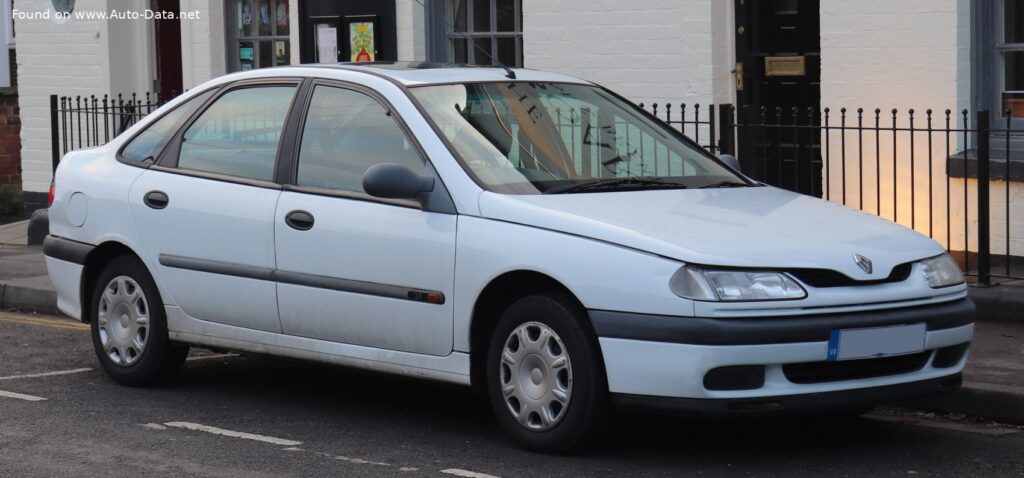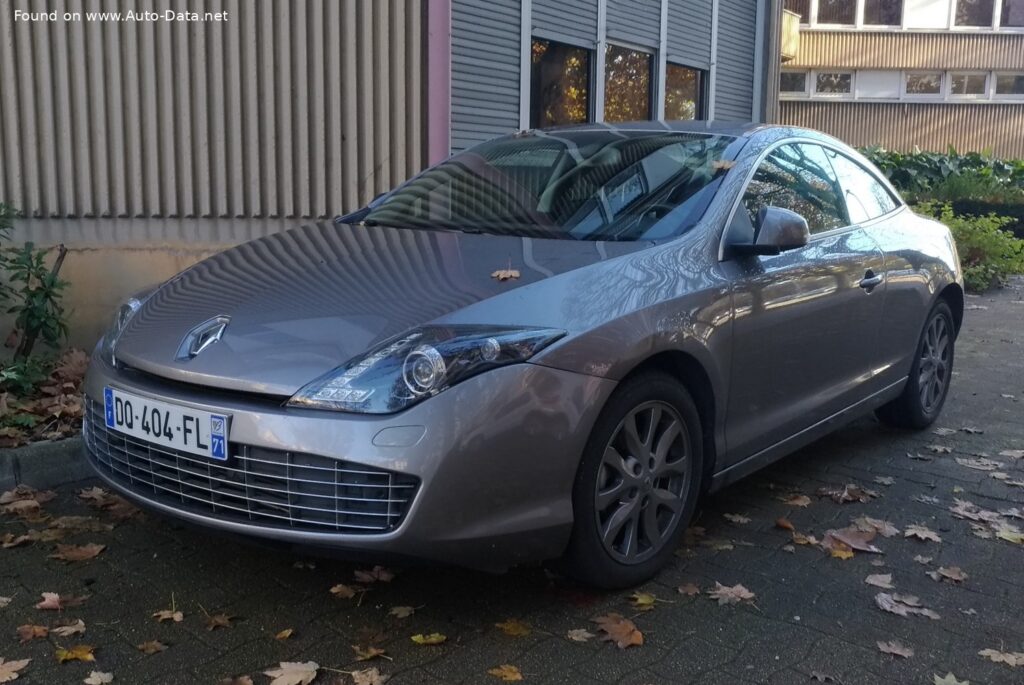
The Renault Laguna Coupe (Phase II) represents a distinctive chapter in the French automaker’s history, serving as the elegant two-door variant of the third-generation Laguna. Launched in 2012 and produced until 2015, this vehicle was a testament to Renault’s ambition to offer a sophisticated Grand Tourer (GT) in the competitive European market. Unlike many of its counterparts, the Laguna Coupe was never officially sold in the United States, cementing its status as a European exclusive. It carved out a niche for itself by combining sleek aesthetics with a focus on comfortable long-distance travel and efficient powertrains. The Phase II designation indicates a mid-cycle refresh, bringing minor updates to styling and technology to keep it current. Positioned as a stylish yet practical four-seater coupe, it aimed to blend luxury, performance, and everyday usability, appealing to buyers seeking a refined driving experience without sacrificing practicality. The model under scrutiny, the 2.0 dCi (150 Hp) variant, was particularly noteworthy for its blend of robust diesel performance and commendable fuel economy, making it a popular choice for consumers looking for an economical yet capable cruiser.
Powertrain and Performance of the Renault Laguna Coupe (Phase II)
At the heart of the Renault Laguna Coupe (Phase II) 2.0 dCi (150 Hp) lies a meticulously engineered diesel engine designed for both power and efficiency. This specific variant is equipped with Renault’s M9R engine, a 2.0-liter (1995 cm3 or 121.74 cu. in.) inline four-cylinder powerplant. It features a modern common rail direct fuel injection system, augmented by a turbocharger and intercooler, which are crucial for extracting maximum power and torque from its relatively modest displacement. The engine delivers a robust 150 HP at 4000 rpm, providing ample power for highway cruising and confident overtaking maneuvers. More impressively, it generates a substantial 340 Nm (250.77 lb.-ft.) of torque at a low 2000 rpm, ensuring strong acceleration from a standstill and excellent tractability in various driving conditions. This high torque output, characteristic of modern diesel engines, contributes significantly to the car’s responsive feel and effortless performance.
The M9R engine is paired with a 6-speed manual transmission, offering precise control over power delivery and further contributing to the vehicle’s engaging driving dynamics. This powertrain architecture sends power to the front wheels, a common configuration for European family cars and coupes, balancing efficiency with predictable handling. Performance figures for the 2.0 dCi are respectable for its class: the Laguna Coupe accelerates from 0 to 60 mph in an estimated 9 seconds (0-100 km/h in 9.5 seconds), and it can reach a maximum speed of 130.49 mph (210 km/h). While not a performance-oriented sports car, these figures underscore its capability as a competent and comfortable Grand Tourer.
One of the standout attributes of this diesel variant is its impressive fuel economy. In urban driving, the Laguna Coupe achieves between 30.2 and 31.8 US mpg (7.4-7.8 l/100 km). On extra-urban routes, where its diesel engine truly shines, it boasts an exceptional 46.1 to 48 US mpg (4.9-5.1 l/100 km). The combined fuel consumption is equally commendable, ranging from 39.2 to 39.9 US mpg (5.9-6.0 l/100 km). These figures highlight its suitability for long-distance travel, where its efficiency translates to fewer fuel stops and lower running costs. Furthermore, with CO2 emissions ranging from 155 to 157 g/km, the vehicle met the Euro 4 emission standard, reflecting a commitment to environmental responsibility for its time. The engine’s compression ratio of 16:1, along with its 4 valves per cylinder, further optimizes combustion efficiency and performance.
Design and Features: A European Grand Tourer Aesthetic
The design of the Renault Laguna Coupe (Phase II) is arguably its most compelling attribute, setting it apart with a distinctive and elegant aesthetic. As a two-door coupe, it maintains a sleek and flowing silhouette that exudes sophistication and dynamism. Its proportions are carefully balanced, featuring a lengthy 182.8-inch (4643 mm) body and a relatively low 55.04-inch (1398 mm) height, which contribute to its sporty stance. The width, at 71.34 inches (1812 mm), gives it a substantial road presence, further enhanced by a wide front track of 60.94 inches (1548 mm) and a rear track of 60.71 inches (1542 mm). The design is not merely for show; its aerodynamic profile, indicated by a drag coefficient (Cd) of 0.30, contributes to both fuel efficiency and reduced wind noise at higher speeds, enhancing the overall driving experience.
Inside, the Laguna Coupe offers a refined cabin designed to accommodate four occupants comfortably. While specific interior features are not detailed in the provided data, a vehicle of this segment and era would typically include amenities such as automatic climate control, a sophisticated infotainment system, and premium upholstery options. The focus would have been on creating a driver-centric cockpit with ergonomic controls and high-quality materials, consistent with its GT aspirations. Practicality is not entirely overlooked, with a respectable trunk (boot) space of 14.94 cu. ft. (423 liters), making it suitable for weekend getaways or daily use. The fuel tank capacity of 17.44 US gallons (66 liters) further supports its long-distance cruising capabilities.
Safety and driving dynamics were also key considerations. The Laguna Coupe (Phase II) is equipped with a comprehensive suite of safety features for its time, prominently featuring an Anti-lock Braking System (ABS) for enhanced stopping control. The braking system itself comprises ventilated discs at the front and solid discs at the rear, providing strong and consistent braking performance. The suspension setup, featuring an independent McPherson type at the front and a semi-independent coil spring system at the rear, aims to strike a balance between ride comfort and agile handling. Steering is managed by a hydraulic rack and pinion system, offering direct feedback and a connected feel to the road, which enthusiasts often prefer over purely electronic systems. The availability of various tire sizes, from 185/65 R16 to 225/45 R18, allowed for customization of ride and handling characteristics, catering to different preferences